Wisdom at Chenango Bridge

Last night I went to an event hosted by my bishop at the Chenango Bridge United Methodist Church. Bishop Webb came to our district to discuss the proposals headed to the Special Session of General Conference scheduled for this February. As I entered the space, I was frazzled. I had believed the event started at 6:00 PM. I arrived on time because my wife is far more focused and capable of remembering times than me. I was tired and suffering exhaustion from a budget meeting after a morning of study and worship.

Let me admit that I was anxious about the meeting. I had hoped to sit with a friend who was unable to attend. I had hoped the meeting was later so I could relax over dinner before entering a space of shared anxiety. I came into the space tired on several levels.

Before I sat down to listen to the presentation, I said hello to Bishop Webb. He asked about my children. Bishop Webb has an excellent memory about such things. I may not agree with everything my bishop says or does, but I appreciate the way he expresses care to his clergy by knowing details about their family. We exchanged pleasantries. I took a seat where I could read the screen easily for the presentation.

There were a few minutes to kill, so I went through the library on my Kindle to see what might be interesting on my tablet. I recently replaced my Kindle. The library was sparse, but one downloaded book was a collection called “Desert Fathers and Mothers: Early Christian Wisdom Sayings—Annotated & Explained” by Christine Valters Paintner.

I recently have spent a lot of time going back to one of the more definitive translations upon which a lot of my Kindle collections of the Desert Ammas and Abbas rely. Benedicta Ward’s translation is normally a wonderful resource, but it is unfortunately not available on Kindle. I opened Paintner’s collection and went forward to the furthest place read. I read the next saying. I was surprised by the applicability of the saying. The next saying was:

“[Abba Nilus] said, ‘Do not be always wanting everything to turn out as you think it should, but rather as God pleases, then you will be undisturbed and thankful in your prayers.’”

This ensnared me given the circumstances. I was in a room full of people who had gathered to listen to their bishop speak about a challenge before the church. There were people who did not know how they intend to perceive events in the years to come. There were people who knew their opinions and hold their convictions firmly. The saying of Abba Nilus was strong in a room filled with people who often want everything to turn out as they desire.

I know this was true of at least one person in the room. I am definitely from a place of personal experience. There have been many times I have sought to have things turn out in the way I desire. There are places I seek to have things turn out the way I desire. There are places I will probably seek to have things turn out the way I desire. I see this is a sign of my humanity. I do not pretend it does not exist.

Living in this self-knowledge, I found myself challenged by Abba Nilus from across the centuries. Do I need to seek that everything turn out as it should? When in a room with dozens of individuals, should I expect things to turn out the way I desire? Is it reasonable to expect that outcome?

More to the point, what is my purpose? Why do I seek to have my way? What if Abba Nilus is correct? What if surrendering my desire to God’s pleasure leads to thankfulness and peace in my prayers? Are those benefits worth more than having my way? Frankly, I believe these blessings are worth more than having my way.

The epistle known as Philippians has something to say about this reality. In the New Revised Standard Version, Philippians 4:6-7 says:

“Do not worry about anything, but in everything by prayer and supplication with thanksgiving let your requests be made known to God. And the peace of God, which surpasses all understanding, will guard your hearts and your minds in Christ Jesus.”

I entered the sanctuary of Chenango Bridge UMC with a sense of anxiety. Abba Nilus called me out on my attitude from across the centuries. As I reflected on the experience that call was confirmed by scripture and Spirit. I have already said I am not perfect in this blog post. Imperfections and all, I will seek to find that peace in these conversations.

I may not always find the peace perfectly. I will still seek that peace through prayer. When necessary, I hope that God will setup reminders to draw me back. Thank you God for Abba Nilus. May words from the past continue to draw me to You and to the scriptures.

IMG_3385.JPG

Today the blog was written on my Chromebook in front of the family aquarium, These Neon Tetras were very interested in reading about Abba Nilus. Maybe they’re kindred spirits?

Space for the joy of “gōd-spellen”

“God of peace,
you strive to set within us
a Gospel joy.
It is there, very nearby,
ever renewed by the trusting way
you behold our lives.”

–Brother Roger of Taizé

For today’s blog I wanted to contemplate this prayer by Brother Roger. Brother Roger’s book of prayers entitled “Praying in Silence of Heart: One Hundred Prayers.” This small paperback collection sits on my office desk for when I cannot find inspiration. As a result, Brother Roger occasionally appears in my sermons, blogs, and contemplations.

My copy of Brother Roger’s book of prayers.

This prayer catches me off guard. What catches my attention is how Brother Roger describes God as active. God strives, places, renews, and beholds. We may find joy within us, but it is a gifted joy. We are recipients of a gift. The joy we receive finds renewal in God’s action. We are passive in this transaction. We receive the gospel joy as God makes space in our souls.

I find this description both theologically sound and realistically upsetting. Theologically, God is a giver of grace. Grace is unmerited favor. The Holy Spirit is described in Galatians 5 as bringing about fruit in the lives of the believers including joy. In that passage joy is counted as a powerful fruit of the Spirit. Joy exists alongside the heavyweights love, peace, patience, kindness, generosity, faithfulness, gentleness, and self-control. Joy is not something that just comes about in life. Joy is a fruit of the Spirit and the Spirit is a gift of grace and love.

Joy is often confused and seen as a synonym of happiness. Traditionally, joy was once something deeper than happiness. Joy was a feast compared to the fast food of happiness. One could be happy for a day, but joy was something with depth and breadth beyond a moment. One of the most irritating memories I have of the holiday season was seeing a poster in a fast-food restaurant asking proclaiming “Joy to the [mass produced and frankly questionable sandwich].” Nearly a decade later, I am still mad at that restaurant for insulting joy. I believe joy should never be used to designate something coming with a side of fries.

Still, I find this realistically upsetting. Why? If this is theologically sound, why be upset? I am upset because I want to force joy into parts of my life. If my wife and I are arguing, I want to force joy into that place of conflict. If my kid is screeching in time with the beating of my pulse through my headache, I want to force joy into my skull alongside peace. If there is a meeting where anger abounds, I want to force joy into that place.

Instead, I must let God renew my joy. I must open my heart and be patient. I must allow the gospel joy to come into my life through God’s work. If I spoke Middle English before around 950 CE, perhaps it would be more clear. When gospel was tied to the phrase go[d]spell (gōd-spellen), it might have been more obvious. Sometimes we must let there be time for the words of the God spell to be spoken into our lives.

So, there’s a prescription offered by Brother Roger. We must let God work in us to find our joy renewed. May we all have the patience to let God renew the joy within us.

The Value of Scripture

So, yesterday I posted a reflection on a verse from Psalm 57. I posted the reflection as my day had been improved by the time I spent in that psalm. I had been nervous and found comfort in that verse.

I found that verse within my morning prayers. On most days of the week, I listen to both the Morning and Evening Prayers broadcast through the internet from The Trinity Mission. I pray along with that podcast on a regular basis because it is a way I can enter into my devotions without using a set of eyes that can often become dry, irritated, and frustrating. I enjoy the time I spend listening to the scriptures and often find those prayers to be a wonderful way to start my day and a wonderful source of comfort as I rock my infant daughter to sleep in the midst of a cloud of prayer.

I often wonder if I am not clear enough in my ministry on the incredible value of regular immersion within the scriptures. On Sunday morning we do not have time to dive deeply into the scriptures and I often wonder if people think I believe that spending time in a passage or two each week is enough. Sometimes I wonder if they think those two or three small passages are all I spend my time studying each week. Nothing could be further from the truth.

I spend a lot of time in the scriptures. I do not share every passage I study, every chapter I read, or every thoughtful verse that I ponder. Like an iceberg, only a certain bit of what I spend my time studying, pondering, praying, ruminating, and reading comes to the surface. I often wonder if the analogy of a milk-cow might be fitting. The scriptures inform my ministry like the grass of a field fuels the milk that comes from the udders. Both are chewed over, digested, chewed over, digested, chewed over, digested, chewed over, and digested before coming to fruition in something to offer others.

Some of you might ask “Why go through all of that effort?” Would it be easier to just read a commentary or quote a blog? It would be easier, but the effort itself blessed others in my ministry and those who come across a person who is made better by his exposure to the wisdom of the scriptures. The scriptures and my time in them are a blessing.

Scripture is one of the primary means of revelation for the Living Word which we worship. The “Word of God” is often interpreted to be the scriptures, but the Bible is a revelation of THE WORD OF GOD revealed in Jesus Christ. It is incredibly important to spend time in the scriptures as they are one way that we have of coming to know the God of love. The more we expose ourselves prayerfully to the scriptures the more we can come to know God is ways that can affect our lives in powerfully wonderful ways. `

To be clear: The scripture is not God, but the scripture reveals God in the same way that the reflection in a mirror is not the thing itself, but a revelation of what it reflects. The scripture is an incredible tool and a wonderful means to know more about God, but the scripture is not the end goal of worship.

I found blessing and solace in Psalm 57 yesterday because I spend time in the scriptures regularly. Just as the power of the community of God grows through regular participation in the worship, service, and the rest of the life of the church, regular exposure to the scripture helps us to grow in faith, to find solace in times of need, and encouragement in times of blessing.

I recommend regularly engaging in Bible study, both together with others in community and in the lives of individuals as a wonderful and powerful means of grace! Times of study can be wonderful means to grow both personally and communally.

Under God’s Wings

“Be merciful to me, O God, be merciful to me,
for in you my soul takes refuge;
in the shadow of your wings I will take refuge,
until the destroying storms pass by.”

—Psalm 57:1 (NRSV)

Tomorrow is election day in the United States. In our town of Maine, there are many choices to make between incumbents and challengers. With the political climate being as it has been lately, there is a lot of tension in many hearts and minds. What will happen if one candidate wins an election? What will happen if another candidate wins? Tension and anxiety are high.

I was pondering the reality of this election before entering morning prayer. The Psalm of the day in my prayers was Psalm 57. The first verse of the Psalm stuck with me. The imagery of the Psalm begins with the image of a petitioner asking God to be merciful as their soul takes refuge. This soul turns to God and seeks safety underneath the wings of God.

The imagery that stuck in my mind was one of a Parent providing safety for a child during a chaotic storm. Images floated through my brain of a robin spreading wings over nestlings during a rainstorm, a father penguin standing over his chick throughout a winter storm while his partner walks to the sea, or a mother goose protecting her goslings.

This imagery stuck in my mind when I finally reached my computer. I felt the urge to click on Facebook, to read the news, and do many of the things I told myself I would not do before Tuesday evening. I thought about what I might absorb from such an anxious world, thought of the imagery of the Psalm, and went about my day.

Tomorrow will be what tomorrow will be regardless of my anxiety. I will vote, I will pray, but I will not be afraid. God is greater than any storm and nothing can separate me from the love of God in Christ Jesus. Tomorrow will come, tomorrow may end with me calling out, but tonight I shall trust that God’s wings are enough to shelter me.

IMG_3222


Courage and Voting

Today’s blog post is two days in the making. I have been pondering what it means to be a Christian in an age where political differences in the United States are resulting in violence. Bombs are being mailed to opponents of the president and Republicans have been threatened at one particular early voting site in North Carolina. The world seems to be more and more violent the closer we get to November’s election.

I am wondering how we should reply to these situations. Scripture tells us to pray for the lands where we find ourselves. Even if some Christians do not appreciate the idea of Christians being a people living in exile, the thrust of Jeremiah 29 still points us to ponder how we relate to the “city where we are sent.”

Of course, none of this is easy. To be honest, in some circles, asking people to take Romans 13 seriously is a dangerous proposition. Calls by Paul to the Romans to be subject to governmental authorities are seen as less than applicable in some contexts, especially when we disagree with those authorities. A person who might quote Paul as sharing the gospel truth in one letter might chafe at considering his words in another. It is natural that we rejoice when governmental powers agree with us. Unfortunately, it seems increasingly common to call for their damnation when they disagree. Calls to respect people of different opinions in Romans 14 and 15 are seen as equally ludicrous at times.

It is difficult to live in such times. Whether you are a democrat, republican, or neither, these days are difficult days. As election day draws closer, there is a real sense of dread building in some circles. Will there be violence if one party loses favor or if another gains favor? Will there be violence if something changes or will there be violence if nothing changes? Heaven knows how many families are dreading Thanksgiving and those often turbulent conversations around the dinner table.

To be honest, I half expect to hear more stories about threats and potential bombings to increase as election day draws nearer. I am not seeking to be a pessimist. I find myself watching a pattern and pondering the outcome. In truth, my own days of believing in the myth of American exceptionalism in terms of believing in a political process that might be free of intimidation and gerrymandering are pretty much at an end. Perhaps I am simply choosing to save my idealism for my life of faith or perhaps I am simply worn thin by the matters of this world.

You may be asking what any of this has to do with being a pastor or spirituality. My simple answer is to say that it relates because these are the days where we need to have courage. Yes, the news is full of stories of challenges and those stories will increase. Yes, the President has warned there will be violence if his party loses the election next month, although it is strange he warns that the violence he seems to fear would be from the party that might gain political power. An honest appraisal might say that violence might occur regardless of who wins. Yes, the world might become a dark place after this election. Yes, these are days that require courage regardless of political party.

Then again, maybe these days are not as dire as it seems. Things might go poorly, but they also might go well. In a sense, these days are like every single day of our lives. Even in the best of times, all of us live with only one day. We all live in today. Yesterday has gone by. Tomorrow is a dream. Today is the only day that any of us has to live within. Since you cannot control the future and cannot change the past, today is like every day of your life. To borrow from the ancient philosopher Heraclitus, you can only step in the same river once.

The world is always changing and the natural uncertainty requires courage. It takes courage to live in a world which might change in a moment due to a blood clot, a missed stop sign, or an unexpected illness. It takes courage to live in a world where someone might leave tomorrow, where you might lose your job at the end of your shift, and where a loose dog might catch you while you wait for the school bus. It takes courage to live in this life and while the future might seem stressful, today is really the only day that any of us have ever had to live within.

I hate to bring in ancient monastics again, but I do enjoy them. There is an applicable gem in my often quoted copy of Benedicta Ward’s “The Sayings of the Desert Fathers: The Alphabetical Collection.” That gem is a quote from Abba Serinus. The quote goes: “Abba Serinus said, ‘I have spent my time in harvesting, sewing, and weaving, and in all these employments if the hand of God has not sustained me, I should not have been fed.’”

If you would prefer a biblical approach to the concept that life is a bit more transitory than some of us expect, Luke 12:13-21 contains a parable where Jesus warns people about the folly of building up riches on earth. A rich man has a bumper crop, plans to tear down his barns, and intends to build bigger barns to hold his massive crop. He plans to live out his days with wealth! Jesus shares that his folly is to plan to live out long days with his massive wealth. The rich man will die that very night. All of the crops from his wonderful harvest will not keep him from his own mortality.

Whether you approach the subject from the Abba’s viewpoint that all of life has led to this moment because God has provided or whether you hear Jesus’ warning about the uncertainty of tomorrow, in my opinion one thing is clear. We all have this one moment. We can respond with gratitude, make assumptions about the future, or even follow the advice of Ecclesiastes 5:18 (“This is what I have seen to be good: it is fitting to eat and drink and find enjoyment in all the toil with which one toils under the sun the few days of the life God gives us; for this is our lot.”). Regardless of how we spend our days, these days are the days we have.

So, how will we spend them? If today is the day you have to live, what will you do? Will you live in fear? Will you decide to ponder what comes in every package, worry about every group of people near every polling place, or will you step forward to take your place in history? If God has brought you to this time and place, is it not your responsibility to live in this moment?


IMG_3222

I invite you to participate…

Two people named James on “Thoughts and Prayers”

I’m currently fighting a sore throat. I say this because the only medicine we had in the house was a “night-time” variety and my cough medicine is making things a bit hazy this morning. My office door is closed, I have disinfectant wipes at the ready, and I am here at my desk trying to sort through my thoughts.

The strange companions on my desk today. “Ugh drops” indeed… Clearly, the local store does not sponsor this blog. Actually, I’m the only one who sponsors this blog…

As a people, we live in challenging times. When I was a child, when we needed to learn something we had to talk to a teacher, go the library, or devise a way to find out on our own. My brother ran a dial up BBS (Bulletin Board System) in our home, but to be entirely honest, the BBS was more useful for playing video games than learning massive amounts of information. The internet may not have been in infancy, but it was certainly a toddler.

These days, we are flooded with information. This blog will reach places that my brother’s BBS would never have reached without a great deal of effort. We have more access to information and misinformation than ever. Facebook, my social media of choice, is filled with information which goes from completely factitious to unfortunately real in the space of a few swipes of a finger.

The world of information has expanded exponentially in my lifetime and I am only in my thirties. There is so much to see, so much to grasp, and only so much emotional energy with which to process it all. My brain may still be the most powerful computer I own, but it runs off of a reserve of energy that is tied to things like my mood, my mental health, my stomach, my body, and all other parts of me. A sore throat might not lessen the amazing processing power of my mind, but my focus is certainly not on the mysteries of the universe when it hurts when I swallow.

In a world that is overwhelming and complicated, it makes sense that sometimes it feels as if all we can do is offer “thoughts and prayers” when things are going awry in the world. What can I do about a bigoted law named HB 1369 stripping the right to vote from Native Americans half a country away in North Dakota when I cannot even talk on the phone without being in pain?

It makes sense, but there’s some part of me that feels a need to push back, even as my throat burns. Ironically, in Benedicta Ward’s compilation and translation “The Sayings of the Desert Fathers: The Alphabetical Collection” which is attributed to Abba James, who shares a name with a letter which also says something on the subject. In her translation, Benedicta Ward points out:

“[Abba James] also said, ‘We do not need words only, for at the present time, there are many words among men, but we need works for this is what is required, not words which do not bear fruit.”

These words are reminiscent of the words from the Letter of James. In the New Revised Standard Version (NRSV), James 1:22-24 says:

“But be doers of the word, and not merely hearers who deceive themselves. For if any are hearers of the word and not doers, they are like those who look at themselves in a mirror; for they look at themselves and, on going away, immediately forget what they were like. But those who look into the perfect law, the law of liberty, and persevere, being not hearers who forget but doers who act—they will be blessed in their doing.”

For me, these words from the Letter of James relate directly to the words from Abba James which were shared centuries later. The letter calls out at people to become doers of the words. Hearing is wonderful, but there is something powerful about moving beyond hearing to acting. As Abba James points out, there are many who hear, many who speak, but not enough who act. This sentiment is forcefully and famously restated in James 2, where its says:

“What good is it, my brothers and sisters, if you say you have faith but do not have works? Can faith save you? If a brother or sister is naked and lacks daily food, and one of you says to them, ‘Go in peace; keep warm and eat your fill,’ and yet you do not supply their bodily needs, what is the good of that? So faith by itself, if it has no works, is dead.”

We must connect our words and our deeds. How does that look when you are sitting in an office with a sore throat and trying not to give anything to a church full of preschoolers, teachers, and paid/volunteer church staff? Well, that is my question to answer for today. How will you respond to a world which needs you to do more than simply speak?

Moving past the Milk

Today I was pondering the scriptures. One of my regular habits is to spend my Monday afternoon going through various books and passages seeking a word for myself, for a congregation member, or for the community. I was reading through a passage from Hebrews 6 and found myself caught up in verses 1-3. Hebrews 6:1-3 says the following in the New Revised Standard Version:

“Therefore let us go on toward perfection, leaving behind the basic teaching about Christ, and not laying again the foundation: repentance from dead works and faith toward God, instruction about baptisms, laying on of hands, resurrection of the dead, and eternal judgment. And we will do this, if God permits.”

Now, I found this passage was catching my eye, so I stopped to ask why it caught my attention. I slowed down and checked context. Hebrews 6:7-8 states:

“Ground that drinks up the rain falling on it repeatedly, and that produces a crop useful to those for whom it is cultivated, receives a blessing from God. But if it produces thorns and thistles, it is worthless and on the verge of being cursed; its end is to be burned over.”

Going further on in the chapter, Hebrews 6 states in verses 10-13:

“For God is not unjust; he will not overlook your work and the love that you showed for his sake in serving the saints, as you still do. And we want each one of you to show the same diligence so as to realize the full assurance of hope to the very end, so that you may not become sluggish, but imitators of those who through faith and patience inherit the promises.”

So, looking forward through the sixth chapter, we see a strong correlation between the warning (do not stay put), with a checking on the results (what is growing in your field), and a reassurance that God will not overlook the work and love of the audience, which is tied to the full assurance of hope.

This ties together with what follows this chapter as a conversation of Melchizedek, the priestly function, and the completeness of the work of our High Priest Jesus Christ. Indeed, the conversation continues until a “therefore” appears in chapter 10. In chapter 10, Hebrews is translated as saying: (10:19-25)

“Therefore, my friends, since we have confidence to enter the sanctuary by the blood of Jesus, by the new and living way that he opened for us through the curtain (that is, through his flesh), and since we have a great priest over the house of God, let us approach with a true heart in full assurance of faith, with our hearts sprinkled clean from an evil conscience and our bodies washed with pure water. Let us hold fast to the confession of our hope without wavering, for he who has promised is faithful. And let us consider how to provoke one another to love and good deeds, not neglecting to meet together, as is the habit of some, but encouraging one another, and all the more as you see the Day approaching.”

So, we have a call to move beyond the basics, a call to good works and love, and ultimately a “therefore” that encourages us to live life assured of faith with clean hearts. We are called not only to have hope, but to hold fast to our hope in the belief that Christ is faithful. From that place of faithfulness and confidence, we are called to ponder how we might provoke each other on toward further good deeds and love. This call to community, good deeds, and love is where we are called to go from the basics listed in Hebrews 6:1-3.

This is challenging, because there are many times in life when it seems easier to focus upon these basic matters. As a United Methodist minister, I am questioned regularly about how many people I get to confess their faith, join my church, and be baptized. There are entire ministries whose only goal seems to be leading others to this place of basic belief (in the eyes of Hebrews), and then to move on to the next person. “Once saved, always saved“ is a motto of some of those who believe this is the only call of Christ.

The writer of Hebrews challenges this belief in my sight. The writer says (immediately preceding the call to move forward in 6:1-3) of those who he is addressing (in chapter 5:11-14):

“About this we have much to say that is hard to explain, since you have become dull in understanding. For though by this time you ought to be teachers, you need someone to teach you again the basic elements of the oracles of God. You need milk, not solid food; for everyone who lives on milk, being still an infant, is unskilled in the word of righteousness. But solid food is for the mature, for those whose faculties have been trained by practice to distinguish good from evil.”

What we need to move beyond… (Image: Santeri Viinamäki [CC BY-SA 4.0 (https://creativecommons.org/licenses/by-sa/4.0)%5D, from Wikimedia Commons))

These basic concepts that the authors of Hebrews is addressing (matters which have concerned the church for millennia and have been the cause of war, debate, and suffering) are listed as the simple matters which should be understood by those who have not progressed beyond the basics. The writer of Hebrews even seems to imply that those who do not progress beyond a focus on such things have a bit of “dullness” around them.

All of this begs the question. Where is God calling the church? Certainly we do not abandon the foundation of what we believe, but where is God calling us? Is it to endlessly repeat the basic foundational principles or to move on toward something greater? Where do those building blocks lead us? Do our ministries spur us on toward good works and love? If they spur us on toward hate or self-service, is it time to consider retooling or scraping those ministries altogether?

There are many things to ponder and I do not offer answers, but the question should be asked? Are we moving beyond the milk? If so, where are we headed?

Simple Response

So, I have been quiet on social media and on my blog lately. There are many reasons for that silence, but one of the largest has been a sense of being overwhelmed by the sorrow of living in the world.

I am raising three daughters and I am married to a woman who has not always had the best experience with the decidedly patriarchal society in which we live. It is not my story to tell, but she has received comments about having children which occasionally make them seem like they are burdens instead of blessings. I have received those comments as well. It can be heartbreaking to have someone categorize a child as a burden.

I have often wondered if people would make the same comments to my wife and I if I had three sons instead of three daughters. I love my daughters, even when they are difficult. I do not live in an age when I have to start saving up for a dowry to pay for someone to take them in. I live in an age where they will be a blessing to anyone who is lucky enough to allow them the honor of their partnership.

Still, it is a weary process to be a father in a culture which is so patriarchal. Do I benefit from the patriarchy? Yes, but I want my kids to have a bright future where they are treated with equity and fraternity (Aside: I do not mean fraternity as in “a group of men with a common purpose,” but “the state or feeling of friendship and mutual support within a group.” Unfortunately, the original word comes from Latin and Latin has no wonderful gender-neutral possibility and sorority never really gained the same meaning in popular understanding (i.e., French Motto “Liberty, equality, fraternity!”)… Language fails me in this case, as “siblinghood” does not have the same meaning either). I want that world for all of our children.

One quote that has been circling through several parts of my thoughts comes from the 1984 edition of “The Sayings of the Desert Fathers: The Alphabetical Collection” by Benedicta Ward. In particular, I have this saying from the collection surrounding Abba Anthony hanging in my shower. The section goes:

Abba Pambo asked Abba Anthony, ‘What ought I to do?’ and the old man said to him, ‘Do not trust in your own righteousness, do not worry about the past, but control your tongue and your stomach.’


The quote sticks out to me on deep levels.

I am not righteous enough to take on this battle through my own goodness. I have made mistakes, I have benefited in ways I have yet to recognize, I will likely struggle to deny those benefits when I see them, and I am frankly not Jesus Christ. The world has a Savior and there is no need to pretend that it needs me to be another. My trust does not belong in my own holiness or in my own strength.

I also live in a place where I cannot constantly dwell on the past. While there is room for reconciliation, for recompense, and for restoration, to live only in the past has the potential to swallow me up in the knowledge of my own weakness, my own frailties, and my own brokenness. There is a difference between being mindful and living in worry.

In addition, living in the past sometimes cripples my ability to be an asset to the present and the future. If one lives in the past, it is difficult to be present in the now. There needs to be a balance between understanding the ramifications of the past on the present, mourning the injustice of the past, accepting our own limitations, and avoiding obsessive worry about the past.

Finally, it is good to control both tongue and stomach. If the tongue is where the words of my soul enter into the world, it is a good analogy for all I do to affect the world. In controlling my lips, I gain the self-control to control my fists, my feet, and even my thoughts.

If the stomach is the place I take things into in order to find life (or death), then the call to control my stomach is the call to mind my appetites in all senses. Guard your teeth, guard your ears, guard your eyes, and guard your soul.

So, how do I react to all of this stuff going on in the world? I remember it is my job to be a part of the long arc of history towards justice. I remember what has gone by, honor it, but do not let it cripple my present advocacy for justice or my efforts to seek a more just future for our world. I control what comes out of me and seek to fill myself with what is good in holy moderation.

In the meantime, keep the faith friends.

IMG_3279

Patriarchy is pleasant for me, but this one, like all awesome children of God, deserves better than to be looked down on her whole life because of her gender.

Sermon: “Dear Sophia”

Dear “Sophia,”

Blessings to you, Wisdom personified in the name of God! For the last few weeks, we have been looking into your book during worship. We have pondered your calling on the streets, considered the powerful reminders you share to seek your face before calamity strikes, and have thought through some bits of your advice.

I wanted to write to you today because we’re dealing with one of the most powerful passages in Proverbs. We’ve been reading through the 31st chapter and this is a strange passage to consider, especially given all of the conversations around sexuality and womanhood in our culture as of late. Between conversations around the #MeToo movement and conversations around current events in the news, this is a weird time for Proverbs 31 to come around in the lectionary. I might not have chosen it on my own.

There is a challenge in approaching almost any scripture passage because the scriptures were written down long ago. We come to ancient passages and need to ponder their meaning both in context of their origins and our present. The challenge we face is that scripture is often interpreted based on our own perspective. On one hand, these words of Proverbs have created a vivid image of strength that has brought comfort to many people over time.

Interestingly, the passage speaks of a woman who does not find her value in ornamentation or in sensuality. The woman described is one who works hard and is appreciated by her husband. She is prudent and wise in many ways. She is charitable with what she has when she sees someone in need. She does not dismiss her handiwork as junk, but finds value in the work of her fingers. She is confident, strong, and dignified. Her family and her children see her worth.

For someone who sees this goal as an achievable one, this is an image of comfort. Some might say “If I am prudent and wise then I can be like that woman in Proverbs.” Some might consider the skill of their hands, the appreciation of their mate, or even their practicality as signposts of their similarity to the image found in scripture. That can be really comforting coming from that perspective, but let’s be clear. There’s almost always more than one perspective even when we read scripture.

Sophia, let’s be real for a moment. This is one image of femininity, but it also isn’t the only image of femininity. As much as I appreciate your wisdom, there are times when I look at what you say and question where you’re coming from in your words.

I understand that even these words in scripture come from a place of a particular context and cultural placement, but some of the advice you share occasionally just seems like bad advice. Just a few verses before this passage you encourage the wisdom one should have to “Give strong drink to one who is perishing, and wine to those in bitter distress; let them drink and forget their poverty, and remember their misery no more.”

Seriously Sophia?

I appreciate a lot of your wisdom, but there’s something dreadfully naive at times in the ways in which people read these passages. They see this image of a talented industrious woman in the scriptures and then look into the mirror. They don’t always like what they see in the mirror and sometimes the very words your scriptures express can cause real harm. Sometimes the words of others from the past or the present can cause similar harm.

Sophia, my job is to share wisdom around these words today. How am I to share these words with someone who has lost control over their fingers? If a person cannot knit, or stitch, or even control shaking due to accident or illness, are they not as capable as this woman? You praise the generosity of this woman, but your own words can cause real harm sometimes. I have seen beloved children of God struggle with Parkinson’s disease and lose control. I have seen beloved children of God with neurological conditions that precluded learning to control their fingers with such dexterity. Sophia, these words can hurt.

What do I say when their fingers are capable, but they have other hurdles to face in their lives? Do I say that mental illness, language barriers, or even just their God-given personality is unfortunately a barrier? Are capable women always this successful or is there room for the refugee and the immigrant to live God-fearing lives? Is a woman less capable because she is born to a people under oppression?

What’s more, what do I say to address the capable woman who can have no children and is left by her partner? What do I say to the women who work long and hard to cultivate this personality only to never find a partner? Are they any less in the eyes of God? Are they any less in your estimation?

Now, I know that your words record the words of another. At the beginning of this chapter, these words are attributed to a king who was trying to teach his son the wisdom his mother once taught him. In many ways, the good king is trying to advise a son on how to choose a good partner. I understand that culturally, the words that are being used would have probably been good advice, but those days are not these days. People take these words to heart and at times it hurts them and drives them to tears.

Sophia, if I might interject on behalf of the women I know who I have seen hurt by these words. What’s more, if I might interject on behalf of all people who struggle with these words.

The woman you describe is someone who has confidence in herself. She sees that the work of her hands have value and does not let the world demean her. She believes in herself. You don’t have to weave garments to find pride in what you do. If God has made you a baker, you bake your heart out! If God has made you a singer, then sing with gusto. If God has made you a great listener, then share your gift with those you love. No matter what gift God has given you, believe in yourself and understand that you have been entrusted with a gifting because you matter.

The woman you describe has a healthy relationship with someone who does not take her for granted. Many people would love to have a healthy relationship like the one described, but sometimes things happen that go beyond our control. We act trustworthy but those we love cannot trust. We act lovingly but the ones we love cannot express love. If the intention here is to express that worthiness comes from the love of a partner, then I have to disagree. Too many people have looked in the mirror and seen bruises. “If I just try harder, then they won’t hurt me.”

Real value does not rest in the appreciation of others. Real value requires a level of respect that we see challenged regularly and rightly by things like the #MeToo movement. It might feel nice to be appreciated, but ultimately our sense of value and worth cannot rest solely on another human being. Occasionally our sense of value requires us to speak out against those who would take advantage of us or keep us silent in the face of past transgressions.

Sophia, the woman you describe is strong both in character and in body. She works hard and is never idle. Some of the strongest women I know have spent years with walkers, wheelchairs, and canes. They are worth no less than someone who can curl a full skein of heavy wool. Value lies in the reality of the person who bears the image of God throughout all of the seasons of their life.

Sophia, I do not wish to dismiss those who find value in your words. I know that there are many folks who do find value and praise God that your words inspire and uplift them. May they remain uplifted! I just wish the people of God to know that their value does not rest on one image of femininity. Folks who bear up life with integrity, respect their own worth, and seek value in right relationship–they all have value in the eyes of the God I know, no matter what gender they claim.

Sophia, as I seek to enter into prayer with the people of God, I hope you hear and understand my respect for you and your words. May your wisdom dwell within us all as we pray, as we go forward, and go out into the world.

Truly,

Rev. R

Let us Ramble: Music, Veggie Pulp, and Rice

It is Monday morning at the Maine Federated Church. My normally quiet office is filled with the distant beeping of an alert as we have a low battery somewhere in the dark halls of the church. Earlier I was listening to classical music from my favorite philharmonic orchestra (London Philharmonic Orchestra). I was hoping it would be just loud enough to drown out the methodical beeping.

In time the note started to bother me despite the music. I found a chromatic tuner, sat patiently, and learned that the alarm was only slightly off from being a B♭, although it was annoyingly a little sharp and thus out of tune with the music scales. I went on a hunt, loaded up Boccherini’s Streichquartett no. 2 in G minor, opus 27 so that the note would be only slightly out of tune instead of wildly discordant.

Such things may seem strange, but they are part of a fairly normal Monday morning when my energy is low and I need simplicity for my soul’s sake. Sunday is exhausting for me as a minister. I pour my heart and soul into preparing for worship. After I spend my time talking with folks who are loved by God. I try to remember all of the names of people who matter to them, all of the history I know of their lives, and do my very best to be a loving and encouraging person. As someone who increasingly enjoys spending time in secluded peaceful spaces, that effort exhausts me in deep ways.

Monday is about sermon and worship prep for me. I read, I study, I pray, and I seek to get a head start on the week ahead, because you never know when something will happen which will require a few days of concentrated effort. Emergency room visits, deaths, and other life concerns cannot be scheduled. Monday is a time to make certain most of my ducks are in a row, even if that row usually requires a few days to straighten out.

In a lot of ways, as a pastor, Monday for me is about resetting the rhythm from one week to the next, which is something close to what other folks hopefully experience on Sunday mornings. I give thanks for what has happened, pray for guidance for the week ahead, and prepare for meetings, sermons, and even for the prayers I will share in the week ahead. For me, these rhythms of gratitude, prayer, and study are acts of worship.

Let me give a concrete simile. Life on Monday for me is like what is currently cooking in my rice cooker. For breakfast this morning I made smoothies for my family. I juiced carrots, a tomato, and a lot of spinach leaves. I took the juice and mixed in some homemade yogurt. We had a cup and a half of goodness each to start our day.

After my wife went to work, I started to clean things up. I grabbed the juicer pulp of carrot, spinach, and tomato. I scraped it into our smart rice cooker. I added some dried peppers, water, and dehydrated beef broth. I left the pulp cooking away for a few hours. When lunchtime approached, I added a bit more water, some homemade curry powder, and some wild rice.

Now, after a morning of working on worship preparation, lunchtime is approaching, and I will set the table with what is effectively vegetable porridge with rice. Nothing special was added to the pot. I worked with some dried spices, dried broth, dried rice, and leftover vegetable pulp. I simply used what was on hand, but in a short while I will enjoy something life-giving which will hopefully allow me to be a blessing to others.

On Mondays, I scrape out the bits of me that are filled with worry and doubt. I remove the parts and pieces which are covered with gunk and I clean them out. I wash away my irritation with playing the wrong notes on guitar, pick out the bits of me that went to bed wondering if I did well, and I prepare my heart and soul for another week of service. This week I may need to be ready to bring life into conversations around death, bring hope into places where people feel hopeless, and proclaim the gospel with and without words. I cannot do that if I am living in doubt or frustration about things that nobody will remember and nobody will care about in a week, a month, or a year.

On Mondays, I start to look around for what will be needed. I have an appointment this week on Tuesday that will require my heart to be open to listen, to advise, and to care. I have to search the cupboards of my being for my compassion and make certain it is ready to be used. I have (another!) sermon coming up this week and it takes more than time with a commentary to really engage the text with God’s beloved. Today is the day when I get my head into the scriptures, into the plans, and see if all will still be well with what I planned weeks ago. This is the day when I pull together what lifegiving bits of my heart and soul are still healthy and begin to simmer them with the spices of the week. In particular, today I am thinking with joy about sending kids to camp yesterday and mixing that in with a hope for people I will be in ministry with this next week. It should be a great week.

In truth, this is the day upon which a lot of my ministry rests. How does one survive in pastoral ministry for more than a decade with ups and downs? Monday morning is part of how I live into the rhythm of pastoral ministry. As the string quartet hums along with the slowly repeating beeping noise, I find space and energy in the silence to prepare for what is coming and where I will need to go. As such, today is not about making appointments. Today my appointment is with my God and my heart so that I can go about living out ministry throughout the rest of week.

I hope that you find a place of peace today as you go about your life. If you cannot find peace today, I invite you to consider that Sabbath is not entirely about one day a week. Sabbath is also about finding moments to focus on what is truly important. May you find life and love in your silences, your companionships, or whatever feeds your soul this day.

Rob’s Veggie Rice Bowl
(makes enough for several lunches for 3-4 hungry folks)

Okay, so it could be more photogenic, but you don’t know what you are missing until you taste the creaminess of the veggie pulp alongside the nuttiness of wild rice. Also, I really do recommend a dollop of butter!

3 cups Veggie Pulp
1 quart & 1 cup water, divided
1.5 TBSP Dehydrated Beef Broth
⅛ cup Dried peppers
1 cup Wild Rice
2 teaspoons curry powder (I smoked mine with a cold smoker to add flavor)

Combine pulp, one quart of water, dehydrated beef broth, and peppers in a slow cooker, fuzzy logic rice cooker, or an oven proof bowl. Cook for three hours on a low setting (or in an oven at 190℉). Place into rice cooker and cook with the brown rice setting along with water and curry powder. Stir and cook on brown rice setting. Serve warm with a dollop of butter!

Let us Ramble: Prejudice and Wisdom

When I was a young boy I visited with my relatives down south in Georgia. My grandfather’s sisters lived in a small town where they spent their days in a house that was quite large and quite ornate. I wondered at the house, the railroad tracks that ran past the front yard, and the massive properties on the side of the tracks on which they lived. As a kid I was more interested and terrified of fire ants than I was of the social situation, but even I noticed that the people who helped my grandfather’s sisters maintain the property came from the smaller homes on the other side of the railroad tracks. As an adult, it took me forever to realize that they looked different too.

I do remember hearing negative things. When things went missing it was never because they were misplaced. The “help” had taken them. Even when those things were found, it was still the fault of the people who came to help the two elderly women in their home. I realize now that there was a world of things going on behind the scenes. There were likely issues of race, prejudice, class, and economics at play. There were also questions of grief as two women lost the ability to control first their bodies and then their minds. I don’t excuse the behavior, but I did have the seeds of my first nightmares about Alzheimer’s disease in those days.

As an adult who is now removed nearly three decades from those events, I do not blame myself for having neither the wisdom nor the education to ask questions. What small child really knows enough to ask those questions? Furthermore, would my proper southern relatives have even taken me seriously? I do my best to act with the wisdom gained in my day to day life now, which is where this post originates.

I identify as a millennial but I am not a young adult. I have three children who I am raising to the best of my ability. I pay my taxes, dutifully pay off massive student loans, and understand that I cannot be bailed out of every challenge by my father. I do my best to be a constructive part of society. I also listen to a lot of complaints about millennials.

Perhaps it is my sensitivity to hearing people complain about my generation that caused me to notice something I found disrespectful the other day. Several folks that I know shared a couple of memes suggesting that eighteen year old students are spoiled. One or two of the folks pointed out that eighteen year old kids used to charge the beaches of Normandy and other folks pointed out that eighteen year olds used to serve in Vietnam. They proceeded to mock eighteen year old kids as being spoiled.

It begged a question in my mind. Who do they think serves in the Armed Forces today? Who do they believe are recovering from wounds from IEDs in hospitals and clinics or leaving children without parents after ambushes? What’s more, when they come to an age where they need care to live out the end of their lives, who do they believe will be the doctors or nurses? Who do they believe will care for the needs of their property? Who will teach their children? Who will serve in the fire departments, police forces, and even on road crews when they are no longer capable?

To me it was mind boggling. I remember my relatives saying that my grandfather’s sisters did not understand what they were saying about other people. I also remember a few choice moments when the generation who raised me made a few choice comments that were not so gracious. For all of the criticism of the people who came before, my own family has struggled to leave behind the bad habit of criticizing others for being different, whether that be in terms of race, age, ability, or education.

The memes gave me pause because it seemed as if another generation had been raised up to sit on their lawn and insult other people for having the audacity to live life differently than they once lived. What’s worse, I am almost certain that somewhere in my life I do the same thing. I might even be doing it now.

So, let me apologize for those moments when I forget the lessons I learned from the mistakes and missteps of my ancestors. Let me apologize for people who do not see what they are doing in their attempt to be funny, opinionated, or simply a part of a disastrous movement who wants to disenfranchise as many people as necessary to maintain the way things have always been. Let me apologize for the things that I will miss in my own heart and my own actions. Please forgive me.

Eighteen year old soldiers, students, and human beings… You have my respect. Please, live a life that is incredible and help me to live a great one as well.

Let us Ramble: Tradition, Worldview, and Action

Today I wanted to continue the discussion around the three worlds involved in any reading of scripture. The world inspiring the text, the world we live in, and the world within the text work together to birth something within us. Our everyday life is inherited from the world which inspired the creation of our scriptures and eventually delivered to us our scriptures through faithful transmission from generation to generation. As we open our scriptures, we find ourselves engaging in a conversation between author and reader which has happened before and will happen again.

So, what do we do with that conversation? Do we allow the Jesus of the scriptures to speak with us? Do we allow that Jesus to inform our actions and challenge our own world?

Another layer to this conversation comes into play when we consider the fact that each of us either consciously or subconsciously allow our tradition to enter into conversation. Perhaps we focus on a particular passage like Micah 6:8 or read our scripture through the lens of our culture. All of us come to scripture with some tradition, even if that tradition is so ingrained that it never reaches our consciousness.

I think that the theologian and Biblical scholar George Pixley puts it well in the opening chapter of “Resistance: The New Role of Progressive Christians. Pixley wrote: (5)

“Tradition is present everywhere, and apart from it there could be no shared life. Everyone comes into a community that has beliefs and practices shaped by its history; and all assimilate many of them before being in a position to evaluate them. Everyone engages in some process of selection from other traditions. This process is shaped by what makes sense and by personal and collective experience.”

Regardless of any opinions about Rev. Pixley’s theology, it is hard to argue that he puts the matter quite succinctly. Our engagement with scripture is affected by our relationship with the world around us. A simple conversation with a variety of people including survivors of abuse at the hands of an angry father will reveal that the very conception of God as a male parent can be wildly reassuring in the context of one person and incredibly disconcerting in the experience of another person.

So, to summarize: The scriptures we read come to us from a history we can never visit nor completely verify, are read through the lens of a tradition that can affect the way we read them without our knowledge, and ultimately we are the ones who decide what course we will chart in our journey of faith. Will there be prevailing wind and waves? Of course, but ultimately we are each handed the tiller on the boat of life.

For me, this reality begs a question. What we do with all of this? How do we plot a course through the maelstrom of life? I truly believe that each person must make their own choice, but my own journey has put a priority on observing, emulating, and engaging in a dialogue (through my actions) with the faithful of the past. By living into a course of faithfulness as taught to me through both living saints and the records of those from the past, I find a course that I can plot through all of the winds, waves, and eddies of life.

null

We all need guidance now and again!

A great example of what I mean can be found in the scriptures. Consider the viewpoint expressed by the Apostle Paul in the fourth chapter of 1 Corinthians. Paul lived in an age when the church was not fully established, had many places where it needed to grow, and was struggling with conflicts and questions. In other words, the church had a lot in common with modern ministry. Whether we are reforming a challenged faith in the 21st century or establishing a minority religion in the 1st century, I see a lot of similarities in the challenges faced both then and now, although there clearly are differences.

Paul, a leader in those chaotic times, set an example on how to live into ministry. I find Paul’s ministry to be particularly fitting as I am continually coming to understand that ministry is quickly changing from the context of those who brought me into the ministry to a ministry that is unlike any that has come before in the history of the church. Looking at the example of Paul helps me to find a path, because life is clearly difficult at times. We need to find a new way, a new path, and remain faithful to those who have come before us. Paul wrote the following in 1 Corinthians 4:12-13: “When reviled, we bless; when persecuted, we endure; when slandered, we speak kindly. We have become like the rubbish of the world, the dregs of all things, to this very day.”

These words help me to find compass points for my own journey. These words (which tie into my understanding of passages like the beatitudes) help me to go on a journey from where I am to where I need to be as a person of faith in a leadership position. Paul did not see to domineer in his ministry, so I follow Paul’s example in not seeking domination within the church. If Paul could envision a world where the minister was not a dictator, then I can seek to live into a ministry focused on similar principles.

What are your touchstones for life? Do you find foci within the scriptures or do you set your course by other sources?

Let us Ramble: Within the Text

During this past Sunday’s sermon I referenced the book “Cadences of Home: Preaching among Exiles.” Written by Walter Brueggemann, “Cadences of Home” does an excellent job at delving into the work of the ministry of preaching. In particular, I referenced the chapter “Rhetoric and Community.”

In that chapter, Brueggemann delves into concepts explored by the French Philosopher Paul Ricouer. In particular, Brueggemann explores the application of Ricouer’s conceptions to the scripture. To summarize that work (with a hearty encouragement to read the entire book), Brueggemann argues that any passage might be seen as an interaction between three worlds.

The first world is the world where the events described in the passage took place. This physical world had people walking around and interacting. In considering gospel passages, this is the world in which Jesus walked, talked, and preached.

The second world is the world in which we live. As people, we read books, walk around, have conversations, and live out our lives. This world is the world in which we act, live, and have our being. This world will be the world of the future’s past and is the future of the past. This is the world of the present.

The third world is the world within the passage. The world is one which is described within the stories of scripture. While it is the inspired word of God, it is also the world described by the authors of the texts. The words are often challenging, purposeful, and occasionally reference other texts and stories which we no longer have access to in our own libraries.

Unfortunately, the world described in the text is the only one of the other worlds which can interact with the present. Unless we invent a means of either time travel or the means to travel far faster than the reflected light headed out into space, we will never see the world of the far past. We can observe remnants and artifacts of the past, but not the events. Without divine blessing, technological innovation, or something beyond our current comprehension, we will never experience the days described in scripture.

I rehash this bit of scholarship from Sunday’s sermon for a reason. I reference it because this morning I was reading a different book by a different author which works hand in hand with this passage. I was reading Robert Alter’s “The Art of Biblical Narrative.” Alter is a large proponent of paying attention to the texts of scripture. Indeed, Alter writes (37) “All of these narratives are presented as history, that is, as things that really happened and that have some significant consequence for human or Israelite destiny.” For the record, Alter immediately points out Job is an exception to this rule. It should also be noted that Alter’s work focuses on the Hebrew Bible.

What is interesting about this concept of the Hebrew scriptures being presented as history is that there are a lot of details about the stories of scripture that are presented as history, but which had no witness at the time of the authorship of these stories. Alter points out that there is a “tension between the divine plan and the disorderly character of actual historical events…” (37).

Alter refers to a lot of this presentation not as a form of historiography accounting for the events of the past as a form of intensely accurate chronicle of events. Rather, the scriptures are written in the eyes of Alter with a purpose. Speaking on the author of David’s story: (40)

“…these stories are not, strictly speaking, historiography, but rather the imaginative reenactment of history by a gifted writer who organizes his materials along certain thematic biases and according to his own remarkable intuition of the psychology of the characters. He feels entirely free, one should remember, to invent interior monologue for his characters; to ascribe feeling, intention or motive to them when he chooses; to supply verbatim dialogue (and he is one of literature’s masters of dialogue) for occasions when no one but the actors themselves could have had knowledge of exactly what was said. The author of the David stories stands in basically the same relation to Israelite history as Shakespeare stands to English history in his history plays.”

Alter goes on to describe how Shakespeare wrote beautifully and powerfully on historical events as a form of dramatic expression. Scripture itself creates a world in which something powerful is expressed. I believe that even if God were to divinely inspire every word and every translation of scripture, we should still pay attention to the world in the text as described by individuals like Brueggemann and Alter.

As readers of scripture, we should spend time within the world created in our texts and in the purposes behind the description of that world because that is the world we can still interact with as a people. We may never see the Sermon on the Mount preached by Jesus, but we can still interact with the Sermon as recorded by the gospels. We may never meet Paul before the day of resurrection or our own journey to that other shore, but we may interact with the concepts presented through his letters. We may never interact perfectly with the world that once was the present, but the world described in our holy texts can still be powerfully a part of our lives.

As time permits I hope to delve deeper into how the texts we read call us into a world influenced by this third world explored by this “rhetorical criticism” which is found within the scriptures, but for tonight, I invite you to ask a simple question. How does the world within the scriptures influence your personal life?

Sermon: “On Goliath, then and now”

Sermon: “On Goliath, then and now”
Date: June 24, 2018
Scripture: 1 Samuel 17:1, 4-11, 19-23, 32-49
Preacher: Rev. Robert Dean

Note: This is the manuscript that I am preaching on today. There’s always space for unexpected leadings of the Spirit. In other words, I often wander off script.

Once upon a time, there were three bored kids on summer vacation. They look all around and all they could find to play with was a single quarter. One of the kids started flipping the quarter.

“You know,” she said, “every time I flip this coin it lands on heads.” She flipped the coin three times and it landed on heads all three times. The second kid asked for the quarter, looked at it, and said “I bet every time I flip it, it will land on tails.” The coin was flipped three times and, wouldn’t you know it, it landed on tails all three times.

The third kid asked for the coin. He looked at it long and hard. He weighed it in he hand, flipped it around in his hand a bit, and made up his mind. “You know, “ the third child said, “it might seem funny, but I think I just made twenty-five cents,” put the coin in his pocket and walked off. Somewhere, their parents’ hair grew a little grayer as the arguing began.

Of course, that story is meant as a joke, but I tell it for a very serious reason. Three kids each looked at the same coin. Two of the kids saw that there were only two possibilities. They were bored, and the coin would land on heads or tails every time. The coin was a distraction on a boring day. The third child saw the coin and saw twenty-five cents. The way they viewed the coin changed the way they acted with the coin. Their outlook affected the way they acted.

As funny as our story was meant to be, it gives us a way into a very common fact of life. The way we interact with the world is affected by the way that we see it. One bad experience with a dog can make you less than thrilled with the idea of meeting a new dog. The words your parents used in your youth to describe your neighbors can affect the way you see them and their children today. We are affected by our worldview and our worldview has an effect on how we read scriptures.

Let me ask a simple question every Christian should ask now and again. How does your outlook on life affect the way you read the scriptures? How does the way you read scripture affect the way you look at life? The assumption of church is often that the scriptures affect the way we live, but do we ever stop to look at how our lives affect the way we read those scriptures?

Let’s take today’s reading as example. Most of us who are a certain age or older have an image of this story, the story of David and Goliath. The image was put in place when we were young by stories in Sunday school and church camp. For me, the image I grew up with was a giant man who was just covered in muscles. The Israelites were afraid of Goliath because Goliath was tremendous. In honesty, David did not stand a chance against the Goliath in my mind’s eye. Goliath was big, strong, and powerful. David was just the youngest child of a large family and didn’t stand a chance. David’s place was where he was as the story begins. David was sent to deliver cheese, because how much trouble can a small kid get into with cheese?

The image I took away from the story was one of David overcoming tremendous odds. What’s strange is that the scriptures themselves do not really line up with that image. At least, they don’t line up when you pay close attention to the science behind the story.

The tallest man alive, according to the Guinness Book of World Records is Sultan Kösen (K-ay-sen). He was, when measured in 2011, eight foot, 2.8 inches tall. The man named Goliath described in our scriptures had nearly a foot and a half on Mr. Kösen. He was really, really tall. Now what makes that interesting, is that every inch of Goliath has weight. There are several formulas used to calculate the proper weight of an individual by height, but assuming that Goliath was 25, Goliath should have weighed:

If based on the Robinson formula (1983), the ideal weight is 353.4 lbs
If based on the Miller formula (1983), the ideal weight is 301.1 lbs
If based on the Devine formula (1974), the ideal weight is 399.3 lbs
If based on the Hamwi formula (1964), the ideal weight is 445.1 lbs
All of this means, based on one healthy BMI recommendation, his recommended weight is 360.2 lbs – 486.8 lbs.

Think about that for a moment. Assuming the lowest ideal body weight, the body weight which would have the most muscle with the least fat, Goliath would have weighed more than 300 pounds, been carrying over 150 pounds of armor, had likely more than 20 pounds of weaponry with just his spear, and that isn’t counting other clothes, his leg-guards, his helmet, his javelin, or even his shield, provided his shield-bearer wasn’t carrying it, which seems likely as a shield would have really helped when David started launching stones.

What’s more interesting is when we apply another formula from modern science to the breastplate which Goliath wears. A study by the American Association of Physics Teachers suggested a surprising conclusion when studying backpacking individuals who carry large backpacks over a period of time. Let’s be clear, the weight would be carried on the back instead of the front in a backpacking situation, but the challenge of Goliath did take place over several days.

According to the article in “The Physics Teacher” entitled “Backpack Weight and the Scaling of the Human Frame” by Michael O’Shea, there’s a revelation about a common misconception. The misconception is this: one imagines that a larger person can carry more weight comfortably than a smaller individual. When a person at 220 pounds looks at a healthy individual whose Body Mass Index (their BMI) is not overweight, one would expect that they could carry more than a healthy individual with the same BMI who weighed only 132 pounds.

Unfortunately, the science of our assumptions do not add up. O’Shea studied people on intensive hiking trips for over twenty years and found that the 132 pound students on his trips tended to have an easier time carrying the weight than the healthy larger individuals who went into the woods. When he did the science, which I will not repeat here, he found that the weight of the individuals did not correlate with the amount they could carry. A person with significantly more musculature at 220 pounds than a person who weighed only 132 pounds struggled significantly with the same weight in their backpack.

You might ask how that could be. They have another 88 pounds which is composed primarily of muscle. How could they struggle to carry the same weight backpack as someone nearly two-thirds their size? The study showed that the extra musculature carried by the more heavily muscled individual decreased the amount they could comfortably carry and manage because the weight of their very muscles acted against them.

What does this have to do with Goliath? Goliath has people who can carry his armor for him, right? Consider the musculature weight needed to walk around with all of the equipment we’ve seen described. Think about how tall Goliath is described as being in the story. There are two possibilities here. Either Goliath carries all that weight because Goliath is an incredibly tall and incredibly lanky individual who uses his strength to carry all of that weight or Goliath is standing there taunting David because he likely has so little strength left that all he has left in his arsenal are verbal barbs.

When you look at the science behind Goliath, it is actually a strange story to have in our scripture. If you look at it in the eyes of a literalist, someone who believes the Bible is true word for word, you have a real problem. Goliath had to be not only freakishly tall but also freakishly strong. Goliath was so large, perhaps the word giant is the only way to describe a person who could carry that much weight with that height and still appear to be anything but a mess.

What if we looked at it differently though… What if the Bible is trying to make a point to us? Yes, Goliath is 9 and ¾ feet tall. Yes, he likely is carrying around enough weight that the ground, if not flattened by great use, would have likely sunk into the ground as he walked. Yes, Goliath is described in intimidating terms.

It also should be said that this gigantic man of inhuman proportions is dead at the end of the story. I hate to put it so bluntly, but the small shepherd boy kills Goliath. The scripture reading stops, but David walks up Goliath and cuts his head off with his own sword, presumably with Goliath’s shield-bearer just standing there slack-jawed. Goliath meets a brutal end at the hands of a young shepherd.

File:Guillaime Courtois - David and Goliath - Google Art Project.jpg

“David and Goliath” by Guillaume Courtois

So, what kind of coin is this? Is this a story out of the history of this man named David? Are we supposed to look at this image and say “Wow. I wish God were as present in my life as he was for David.” Are we supposed to look on a story like this with jealousy? Are we possibly willing to see ourselves as one of the Israelites who goes on after David to conquer the Philistines after Goliath falls? Are we seeing this story as an invitation to wait for our opportunity when our David shows up? Do we cry out to God for a hero as the Philistines stand there shouting out?

Such a response might be understandable. Look at the world we live in. There are children separated from parents within the borders of our own nation. Those kids are held by our own government. We sometimes think that it is not our problem, but those pesky scriptures keep popping up. Think of the words of Deuteronomy 10:16-21:

“Circumcise, then, the foreskin of your heart, and do not be stubborn any longer. For the Lord your God is God of gods and Lord of Lords, the great God, mighty and awesome, who is not partial and takes no bribe, who executes justice for the orphan and the widow, and who loves the stranger, providing them food and clothing. You shall fear the Lord your God; God alone you shall worship; to God you shall hold fast, and by God’s name you shall swear. God is your praise; Jehovah is your God, who has done for you these great and awesome things that your own eyes have seen.”

We hear words like these and the connections are hard to miss. We might not have been in Egypt, but many of our ancestors only left Europe because life in those places was challenging. Who would have jumped on a boat and risk the ocean except to seek opportunity or freedom in a new land? How many of them kissed the ground when they got off the boat? There are some in this place who have the blood of the original Americans within their veins and their ancestors survived hardship, challenge, and difficulty in the wilds of history even before Europeans came to this land. Europeans did not exactly make it easier upon arrival. Those of us who are in this room have been given opportunity and blessing and it can be easy to want to hold onto those blessings tightly, but the words of scripture… God calls for circumcised hearts, even as our minds scream out that there’s only enough for us. Even if our hearts are not stubborn, our own self-interest is often very stubborn.

Yet, scripture is clear. God is not partial. God takes no bribe. God executes justice for the helpless and for strangers. The Israelites were called to remember that they were once strangers in the land of Egypt and a good memory would remind them of Abram coming with his wife out of Ur to begin the story of the people. They were called to remember God’s blessing because God blessed them in their need. Has God gone deaf? Has God gone blind? God is our God. Doesn’t that mean we should consider what the impartial God would want?

Yet, sometimes we act like those Israelites. We stand there and watch. If we wait long enough, David will come. If we wait long enough, there’ll be another revelation. If we wait long enough, we can distract ourselves. In college I was forced to read a book on the nature of popular culture. It was called “Amusing Ourselves to Death.” Maybe a fitting sequel could have been “Waiting Around with Ourselves to Death.” Yes, we believe God will bring justice for those strangers in our land. Yes, God will hear the cry of children. Yes, God will act. We just seem to be waiting for David to show up.

What if the whole point of stories like David and Goliath is for us to realize that Goliath isn’t what he seems? Yes, a strong man carrying that big armor at that height would be intimidating. Yet, could he really do anything to the people if they’d just gotten up and worked together? Who cares if he’s over nine feet tall if there are “two or three of you” gathered together? Who cares how much he can carry if he isn’t even wise enough to put the spear down and grab his shield?

What if we’re not supposed to wait for David? What if we’re David? What if you are David? You! Yes, you! Last week in this place, someone prayed for those kids. I won’t mention them by name, but I will say there were a lot of amens in the room. What if everyone who said “Amen” did something beyond just say “Amen?”

What if we insisted that those kids are cared for, not only because it is the right thing to do, but because we know of how potentially hazardous it is to annoy a God who hears the stranger and cares about their well-being?

What if we didn’t wait for November, but we started pressing for change in the way our representatives act now. What if we wrote our representatives, shared our concerns, share that we are not interested in their political party, but insist that they work for change now? What if we showed up at the next event they hold in town and ask what they’re doing right now to help? What if we didn’t see such a huge problem and say “Where’s David?” What if we stopped and said “I am a child of God and this changes today!”

Do you know something, that story about the three coins at the beginning was meant to be humorous, but it also had several purposes. Did you laugh at that third child’s actions? Did you think he was being a bit unfair? If I was his parent, he wouldn’t keep that coin.

Someone is taking advantage of these kids. Someone has taken their coins. Whether these children are here seeking asylum, freedom, or are the children of parents who have broken the law, they are suffering. Heaven knows what’s happening to the elderly and the infirm who cross the borders out of fear or perceived necessity. It should cause us to act, for we were once a people who were strangers in Egypt, strangers on wilderness coasts, and faced with strange people from a far off land. We have been in their shoes and we should remember how God was present for us.

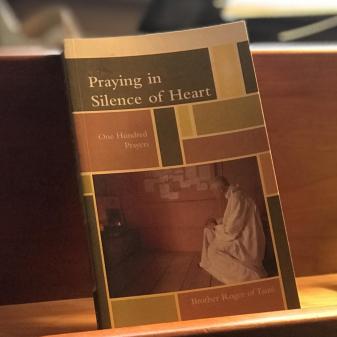
 

Let us Ramble: Trees

Today’s reading in the Revised Common Lectionary contain a powerful teaching of Jesus. Jesus teaches about the fruit of each tree revealing the nature of the tree. Jesus teaches that a good tree does not produce bad fruit and a bad tree does not produce good fruit. I’m fairly certain Jesus isn’t talking a tree having a bad year due to inclement weather. In general, a person knows the reality of a tree by what it produces. If a tree consistently produces bad things, the chances of it producing something good is pretty poor. If a tree consistently produces good things, the chances are a bad harvest is a fluke rather than the rule.

Our church has a parishioner who owns an apple tree that produces the weirdest apples. The tree predates the parishioner, so when I visited at the home, I found myself confronted by weird apples. Interestingly enough, the parishioner took it to the local Cooperative Extension office and the apples are unidentifiable. They’re apples. They’re tasty. That’s about all we know about those apples besides one basic fact. Those apples are good apples!

IMG_0258.JPG

Think about that reality for a moment. There is no known ancestry of these weird apples. There are no known relatives. For all we know, the tree is unique. We do know the tree produces good fruit, so it is a good tree. Jesus’ teaching reveals something about the tree.

What does the fruit you produce say about you as a person? Are there things in your life that might need Jesus’ healing touch? Have you ever stopped to think about where your path is leading?

If you are in need of change, God hears prayer. God is able to work in us even though some of us are really stubborn. To begin that journey of change, pray to God for help. If you’re out of practice, begin by speaking to God as if you were talking on a phone. If you’re not comfortable with that paradigm, write God a private letter or email. When you’re done, sit with God for a while with an open heart.

When you are ready to go, seek a church community that can support you. If you’re in the area of Maine, NY, I would be happy to journey alongside you for a while. If you’re out in the greater world, ask folks you know if there’s a church or pastor that they’d trust. Get several recommendations or go try one out for yourself. If need be, gather with a few friends who are like-minded and see where the journey goes.

Let us Ramble: Keeping Focus

I have not posted much lately on my blog. One of the reasons is that I have been traveling for denominational Conferences over the last few weeks. One of the things that I did not realize when I took this appointment was that these meetings would often fall back to back. Another reason is that I have been focusing on doing some more intensive sermon prep given the things going on in our culture.

Let’s try to explain this in parable form. The work of a minister is like that of a baker. Every week they are expected to bake food that will feed people. Some people need sweets and others need something hearty. Some folks need something to build conversation around (like a dippable biscotti) while others need something that will last them for a journey (like… hardtack?). Each week people will come in need of food. A wise baker pays attention to what people need and desire.

Recently, there’s been so much dissension and frustration filling the world that I have felt a need to focus on bringing forth something that will fuel people for the journey. Mix in a little bit of a call for justice, a bit of history, a touch of feminine spirituality, with a whole lot of the Good News… You can see what I have been trying to bring forth and you can see that it takes some focus, some knowledge, some study, and a whole lot of prayer.

Meanwhile, people are going about life while I prepare these sermons. Some people are burning the candle at both ends with a call for justice that is both timely and righteous. I want to encourage such fervor, but also remind people that the journey will be difficult. People more than likely will oppose them and their efforts, no matter how noble or heartfelt their intentions.

Ultimately, the people in the trenches decide how they will relate to other people and the opposition they might bring into their lives. The God that I serve has always laid on my heart a strong belief in free will, so I wanted to share a couple of words from a wise scholar in our recent church past.

Rev. Dr. Howard Thurman was a wise professor and leader within the African-American tradition. These days, Rev. Dr. Thurman is considered a respected and wise figure well beyond the bounds of that tradition. His words were often visionary and deep. He wrote the following in his book “Jesus and the Disinherited:” (pg. 28)

“If a man knows precisely what he can do to you or what epithet he can hurl against you in order to make you lose your temper, your equilibrium, then he can always keep you under subjection. It is a man’s reaction to things that determines their ability to exercise power over him.”

Now, Rev. Dr. Thurman wrote these words in 1976, so they’re not entirely in line with modern sensibilities on gender address, but they are still filled with wisdom. I love the simplicity of these words and I love the fact that I came about these words while looking for something completely different.

If someone knows how to throw off your temper or your equilibrium, then you are in a vulnerable place. I don’t know if I would say that you will always be kept under subjection or subjugation, but I do believe that it is almost impossible to act with freedom when you allow yourself to continually be dominated by the actions of others. If your spirit and soul are able to be pushed into a knee-jerk reaction as a result of a simple provocation, then your ability to exercise decision making is highly curtailed.

We live in days where there are folks who continually push buttons both in the world and in the church. I do not believe it is political in the slightest to point out that the sitting president of the nation in which I live (in June of 2018) makes a habit of making strong statements that provoke other people. If anything, he is a great example of someone who attempts regularly to coerce and cajole people to his point of view through throwing people off of their equilibrium.

Friends, many of us have been engaging in ministries that will require time, patience, and perseverance to bring to fruition. We do not have the time or luxury to become puppets to the attempts at subjection and subjugation by others who do not agree. I invite you to ponder Rev. Dr. Thurman’s words and to move forward with care.

Let Us Ramble: On Baptismal Hope

Blessings friends. Sunday was an exciting Sunday at our church and in my own house. We celebrated worship with Rev. Dr. Marsha Williams, Associate Conference Minister of the New Conference of the United Church of Christ. We heard a powerfully thoughtful sermon on Christ’s love, shared communion, and eventually shared in a moment of sacramental beauty as my daughter was baptized. It was a holy and powerful moment as she was baptized in the name of the Father, Son, and Holy Spirit.

Sunday ended with memories of friends gathered, love shared, and God’s baptismal grace entering into the life of a child of God. As a parent, it was one of those moments where everything happens seemingly in a blur. Our church family has a new baptized member! What a joyful day!

Who knows where this newly baptized child of God will go? Reflecting back, I find myself drawn to reflect on “Our Time for Younger Disciples.” I shared with the children a reality. On Friday night I had sat with my friend and colleague Emily. Emily is preparing to welcome her third child into the world. She’s a woman of God who is called into ministry while living life as a mother similar to the way I am a man of God called into ministry while living life as a father. We both look like ministers although we look different, act different, and live different lives. God calls both of us and we are both children of God.

Rev. Dr. Marsha has a really cool title. She’s an Associate Conference Minister in the United Church of Christ and she has earned her doctorate. On an aside, while I do not aspire to Conference leadership in any denomination, I will admit that I want a doctorate someday. Anyway, Marsha is descended from a different part of the human family than my European roots and claims her African heritage with justifiable pride. We look very different. We’re married to two very different (but amazing) women, work out our call in different contexts, and each have our own traditions. We both look my ministers and pull portions of the same yoke for Jesus. We both look like ministers although we look different, act different, and live different lives. God calls both of us and we are both children of God.

I also shared with our younger friends that I have a friend at the Academy for Spiritual Formation named Hyunho. He’s a child of God from another completely different part of the human family who happily lives into his identity as a child with roots from South Korea. Hyunho is an Elder in the United Methodist Church like me! He is thoughtful, kind, intellectual, gracious, and kind. Hyunho has a humble and loving spirit that I long to have in my own life. His community’s practices and beliefs have inspired his approach to ministry within a cross-cultural appointment. In the midst of all of our differences, we are both called. We both look like ministers although we look different, act different, and live different lives. God calls both of us and we are both children of God.

I think back on these differences and similarities because God calls us all. The child we baptized Sunday may be called by God to be a scientist, a minister, a teacher, a nurse, or anything else. Each of the children who came forward for the children’s moment Sunday might be called to something different and strange—they will be called to believe in themselves and who they are called to be in this life! I hope our kids in church remember that God calls each of us. We are all called to be children of God—each and every one of us. I hope they live into the love of God that draws them near.

Let us Preach: “Living into the Mystery”

Date: May 27, 2018
Text: Romans 8:12-17
Preacher: Rev. Robert Dean

Note for those reading this online: Although I am certain that the quotes this morning can be found in the complete works of John Wesley, I relied heavily on “The Methodist Defense of Women in Ministry: A Documentary History” by Paul Chilcote (Cascade Books, 2017). Unlike most of my digital books, my Kindle version did not have easy access to page numbers to reference.

To begin this message, I would like to share a quote from John Wesley, one of the founders of Methodism, and chiefly considered the primary founder of Methodism. He wrote these words on February 25, 1774 in a letter.

“If you speak only faintly and indirectly, none will be offended and none profited. But if you speak out, although some will probably be angry, yet others will soon find the power of God unto salvation.” (John Wesley to Martha Chapman on February 25, 1774)

I would like to teach on our tradition as a people this Sunday morning. We are gathered here on Trinity Sunday. Today is a Sunday where we celebrate that God is our Creator, Redeemer, and Sustainer. We gather to celebrate that God is our divine Parent, our Brother, and our Advocate. We gather in the belief that God is in our midst in a very Trinitarian sense. God exists in a Trinity—three in one. God is the One who brought all things into being. God is incarnated in the person of Christ, our Redeemer. God is also our Advocate and our Counselor. God is present in our lives in the Holy Spirit.

God’s ongoing role in our lives through the Holy Spirit has had a direct impact on the history and nature of Christianity. God’s work in and through the church has taken on surprising and strange forms over the nearly twenty centuries we have been a growing and evolving church. God calls, God invites, and God has prodded us to live in strange ways.

Consider the words of Paul to the Roman church which we have shared this morning. “For all who are led by the Spirit of God are children of God. For you did not receive a spirit of slavery to fall back into fear, but you have received a spirit of adoption.” Again, Paul writes: “It is that very Spirit bearing witness with our spirit that we are children of God, and if children, then heirs, heirs of God and joint heirs with Christ.”

We are a church who claims to be joint heirs with Christ. We claim that God’s Spirit witnesses to our place in God’s family as heirs. As we gather on this Sunday when we claim the Trinitarian nature of God, we are reasserting a big claim—a monumentally large claim. Some would say that it is insane to claim that the God of the universe would draw us in, bring us into the family, and adopt us into an inheritance far beyond what we deserve.

We need to be clear on what Paul is saying before we understand how it affects our tradition. What Paul describes is not our being adopted into the family of God reluctantly. What Paul is saying is that we are given a place in the family that becomes through God’s own work both imperishable and unbreakable. What Paul is saying is that we have a place in the inheritance that will not be removed. What Paul is saying is that we have become inextricably connected with the divine God who is our Creator, our Redeemer, and our Sustainer. When we say that we are the children of God, we are not using empty words. We are the children of God for God has made us a part of the family.

In our history, our legacy, and our tradition, this adoption changes the way that we approach the world. Did you ever stop to think about how this belief affects worship? In a few minutes we will have time for prayer and we will come before God. Some of us will ask for healing. Others of us will give thanks for something good. Some of us will ask God to help us be better spouses or parents. We will all come before God and some of us will make big requests. The boldness to come before God ties into this legacy of adoption.

Think about it for a moment. If you were hungry and without food, you might walk into a restaurant and ask for something to eat even though you could not pay. Would you be surprised if you were turned down? No. The restaurant employee or owner is not “running a charity!” They have a business to run! Some of us might ask anyway, but there’s an understanding that we might be lucky to have a cold sandwich that’s going stale.

Think about the reality of what we do in worship. We come before God and we ask the big things. We ask for God to be present in the lives of the suffering with a certain level of expectation. Will God say yes? Maybe. I do not know if this is the moment God says “Yes,” “No,” or “Not yet.” What I do know is this: A lot of us will make a big ask. Where do we get off asking God for help with employment, health, relationships, or a thousand and one things a lot bigger than a stale cold sandwich? Where do we get the audacity to make these requests? Where do we get the nerve?

I think we understand at a subconscious level that Paul is right. We have been invited into the family. I might not have enough to feed a thousand strangers if they show up at my house on a Sunday afternoon, but I can tell you that I will feed my children. My children are family and I do my best to always provide for my family. Worship is one of those places where our understanding takes on solidity. We ask because we are a part of the family. We pray because we believe God will listen. We speak to God because we believe that God will listen longer than we do when we hear a robo-caller ring us on the phone. We speak because we believe that God intrinsically hears us.

The belief that God has brought us into the family has a deeper impact than simply the way we go about Sunday worship. When Paul writes about having a spirit that is free of slavery and fear, we are invited to consider life in a different way. We are called to look at ourselves as heirs of God. Sometimes that means taking bold and radical steps including ignoring what the world tells us we should say, do, or be in the life. Sometimes listening to that Spirit means standing against what the church says we should say, do, or be in this life. Sometimes, we are called in our adoption to be bold, brave, and beautiful.

In anticipation of the sermon this morning, I collected a series of quotes from the letters of John Wesley, the chief founder of Methodism. I want to share them with you and then, after you have heard them all, I will tell you who received these words. For reference, these quotes were written in 1773, 1774, and 1788. The most recent of these quotes was written 32 years before either the Methodists or Congregationalists began meeting in the hamlet of Maine. The first two predate the Declaration of Independence.

“I fear you are too idle. This will certainly bring condemnation. Up and be doing! Do not loiter. See that your talent rust not: rather let it gain ten more; and it will, if you use it.” (John Wesley to Eliza Bennis in April 1, 1773)

“If you speak only faintly and indirectly, none will be offended and none profited. But if you speak out, although some will probably be angry, yet others will soon find the power of God unto salvation.” (John Wesley to Martha Chapman on February 25, 1774)

“Whoever praises or dispraises, it is your part to go steadily on, speaking the truth in love.” (John Wesley to Sarah Mallet on August 2, 1788)

Who could the stiff, staid, often remarkably traditional John Wesley have been writing to in such a strange time? Could it be to the preachers in the Americas? John Wesley had been a preacher in Georgia and had opinions on the Americas, but that wasn’t the case. Was it to the preachers in another part of the British Isles? Well, some of the letters Wesley wrote were to preachers in Ireland, but that is not what makes these quotes exceptional.

The first quote, on not being idle but using one’s talents, along with the firm belief that God would grow those talents, was to Mrs. Eliza Bennis, a female preacher in Ireland who was sharing the Good News before the United States had declared independence. The second quote written by Wesley encouraging the listener to ignore anger and to speak boldly was to Mrs. Martha Chapman. The final exhortation to keep preaching steadily the truth in love was written to Sarah Mallet in 1788, which was a good thing, especially as the Manchester Conference of the Methodist Connexion freely stated the following a year before in 1787:

“We give the right hand of fellowship to Sarah Mallet and have no objection to her being a preacher in our Connexion so long as she preaches the Methodist doctrines and attends to our discipline.”

Let me be entirely clear. the Methodist Episcopal Church in the new world did not ordain women as equals into the ministry until 1956. The Evangelical United Brethren did not give clergy rights until 1889 when it ordained Ella Niswonger. The Methodist Protestant Church ordained Anna Howard Shaw in 1880. Sarah Mallet was welcomed as a preacher in Great Britain over a century before a woman would be welcomed into any of the branches of what would become the United Methodist Church. (source)

All of this took place before Antoinette Brown was ordained in South Butler, NY, as the first female minister in what would become the UCC in 1853. Now, we need to be clear. The Methodists in Great Britain were not ordaining folks as they existed within the Church of England and folks like Antoinette Brown were exceptional in the fact that she was fully ordained and fully educated as a graduate of Oberlin College. To a certain extent, comparing ordained ministry to the ministry of a circuit rider in Great Britain is like comparing apples and oranges, but in both cases it is absolutely clear. The growth of the call of the Spirit resulted in spiritual fruit-growing in the lives of women who were often dismissed and ignored by their society. These women responded to a higher calling that what their society would claim as their place and role.

Ponder what I am saying to you this morning. When God calls us into adoption, it is not a call to simply believe that we are simply okay with the Divine. We are called with boldness into a relationship with God which changes our relationship with the world. The Methodists were calling women preachers into ministry 133 years before the 19th Amendment gave white women the right to vote in the United States and 173 years before the Civil Rights movement worked to help all women in this nation have the right to freely vote. This bold, brave, and beautiful move was the direct result of God at work not only in the lives of those women preachers, but in the preachers, crowds, and advocates who supported their ministry.

The bravery which called women of the late 1700s out of the place where their society would have shackled them is a part of our legacy, our tradition, and our character. To look at the world around us and say “They do not want us to be who we are called to be” is not in our nature, our character, or our being. To be blown about by the winds of this world is not who we are meant to be in this life. We are called to adoption, to freedom, and to relationship with God.

When we ponder our own lives, our future, our dreams, and our hopes it is important to remember that we are called to be an adopted people. We are called to look beyond the words of our birth world into the world that is still being created and restored both in and around us. We are called to become the children of God and that calling affects who we are and how we live our lives. Let us pray…

Let us Ramble: On Spiritual Memory

It has been around a week since I last posted. I have been struggling a number of challenges (e.g., people in need of visitation, preparation for upcoming meetings, denominational drama, administrative responsibilities, etc.). Nothing excessively out of the ordinary has been going on, but there has been a lot of it going on at once. In truth, every time I look at a blank page, I wonder how I am supposed to fill it with wisdom when it feels like there are not enough hours to complete my daily responsibilities.

Today I was looking at that tab on my Chromebook and thinking about what to do with the half hour I had before my next appointment. I recalled that there has been discussion about bringing in some more contemporary music into worship and thought about my forlorn guitar. I was once a pretty good bass player, but I have always been awful at guitar. I decided to pick the guitar up and to check on my muscle memory.

I can tell you that my calluses are practically gone from my bass playing days, but my ears functioned well enough to tune the guitar. I started to strum songs from my teenage years and was transported back to a time of innocence. I strummed the chords to “Better is One Day” and began to hum along. My heart (figuratively) began to syncopate with old rhythms and everything faded away. For a few moments, I remembered my past. I remembered who I once was, what I had once dreamed, and realized that I have had a pretty good life.

  • I remembered singing to myself while incredibly lonely. I have a family now. God provided.
  • I remembered wondering if I would be any good at anything in life. I now have a few areas in my life where I can say “I can do that!”
  • I remembered wondering if God really loved me. I have come to know in my bones that God deeply and truly cares for me.

I invite you to remember who you spiritually are as you go through your day today. Do something that reminds you of the very best part of the person God made you to be in this life. Remember and believe!

My dusty old guitar…

Let Us Ramble: On Hymnody

This past Sunday in church every parishioner was handed two poker chips. Do not fret, my friends—we are not running a gambling ring in the Fellowship Hall. Each parishioner was given a white chip and a red or blue chip for a straw poll. Six jars were set out in the Fellowship Hall and people were invited to place their chips in six jars. The jars were labeled: Tradition, Social Justice, Daily Practices, Historical Context, Personal Practices, and Theology.

The white chips were statements that they were really interested in a subject and would like to hear more about the subject in the months to come. The red and blue chips meant that a person would like to hear more, but not as much as the jar in which they put their white chips.

The poll ended up as follows:

pubchart

What was fascinating about the poll was that there were a ton of “white chip” requests for information on tradition. In the case of this poll tradition was described as: “Where do the things we do as a Christian people come from? What stories rest behind things like hymns, traditional prayers, or even what in other traditions we might call the ‘smells and bells’ of worship?”

So, I am starting to look deeper into things like the nature of the music we sing. A few years back I picked up a book by Richard Mouw and Mark Noll entitled “Wonderful Words of Life: Hymns in American Protestant History & Theology” (Wm B. Eerdmans Publishing Co, 2004). Sadly, I have not taken the time to read it through. I picked up the book, found it fascinating, started to read it, and became distracted by work matters. I lost track of my progress in the book during the reappointment which was the distracting event, but as there is sincere interest in how our hymns came to influence our worship, I have finally begun to take the necessary time required to properly digest the book.

In the first chapter, which is entitled “The Defining Role of Hymns in Early Evangelicalism,” Mark Noll begins by sharing the contents of a letter from 1731 which was written by Philip Doddridge to Isaac Watts. Writing on the events of a midweek service, Doddridge shared how tears were shed over a hymn written by Watts entitled “Give Me the Wings of Faith to Rise.” According to “Wonderful Words of Life,” Doddridge wrote “I had the satisfaction to observe tears in the eyes of several of the auditory, and after the service was over, some of them told me that they were not able to sing, so deeply were their minds affected with it.”

According to Noll, the key to the power of hymns was that “Ordinary believers had begun to find their voice, and that voice was expressed in song” (p. 4). I find this interesting because of a number of characteristics and generalizations that I have heard and sometimes agreed with about hymns.

First, hymns are theology heavy. Theology, if you go deep enough into the etymology, is “an account or discussion of the divine.” Coming forward through time, theology ties itself into concepts like a philosophical study of the divine or the scientific study of how the divine interacts with humanity, but all ties back to a basic concept. Theology is essentially an account (or a collection of differing accounts) of how the divine relates to humanity.

When I say that hymns are theologically heavy, they speak a lot about concepts of the relationship between humanity and the divine. Let’s look at the hymn by Isaac Watts which we have already mentioned. One verse of “Give me the Wings of Faith to Rise” states: “We ask them whence their victory came: they, with united breath, ascribe their conquest to the Lamb, their triumph to his death.”

In this verse we see references to the conquest of the Lamb of God, imagery used heavily in the Book of Revelation. Revelation 5 reveals the Lamb of God and is filled with praise for God. Revelation 5:9-10 states: “You are worthy to take the scroll and to open its seals, for you were slaughtered nad by your blood you ransomed for God saints from every tribe and language and people and nation; you have made them to be a kingdom and priests serving our God, and they will reign on earth.” Watts’ verse ties heavily into the concepts of Revelation and especially into concepts like those in these verses of scripture.

These concepts are deep concepts tied into a deep reading of scripture. The lamb of God is referenced many times in scripture and by tying in the conception of Jesus as the lamb of God, the hymn ties into that legacy and modality of scripture. The richness of theology in just a few lines shows in many way exactly how deep hymns can be in their expression of conceptions of how God relates to humanity.

Second, hymns move quickly over concepts which are very rich. Let me connect this idea with a concept in enjoying food, which I know will be a huge surprise to people who know me or this blog. I recently had the pleasure of sharing my first piece of Limburger cheese with my wife. Limburger has a bad reputation. I found the cheese to be aromatic, if not outright pungent. The taste was complex and required a slow enjoyment to get all of the flavors and notes out of the cheese. Enjoying the Limburger took time, slowness, and the desire to enjoy something I have heard disparaged most of my life.

In my opinion, it would be nearly criminal to take a big piece of Limburger, shove it in your mouth, and swallow it down with a big gulp of something to mask the flavor. If you were to do that, I would hope that the food police would come and give you a citation for doing something in poor taste… Why, yes, that was a dry and terrible pun.

IMG_2119.JPG

I will happily accept free samples of other Limburger brands… I’m shameless when it comes to tasty cheese!

Hymns are full of flavor like a fine cheese. They have richness and depth which cannot be rushed. It is hard to miss the depth of a praise chorus where a single line might be repeated forty times in a single worship service, but if you blink you might miss some of the depth found in one of the hymns.

This depth makes sense when you consider the context of a lot of these hymns. Families might own a Bible if they were fortunate, but the hymns they might sing came out of a hymnal which was often printed and shared with folks on a regular basis. In an age before radio and television, they might sing hymns after dinner, sing hymns at the midweek prayer service, and sing hymns on Sunday. While our hymnals live in the church and are often opened only on Sunday morning, the hymnals of the time which Mark Noll writes about were hymnals that were used often. Even if folks did not own a hymnal or could not read it, through regular repetition the deep theology would be shared and taught in deep rooted ways. Even the least literate church members would learn their faith through slow enjoyment of something which was sung regularly and deeply.

Third, hymns were methods of education. We’ve already touched on the how these hymns taught deep concepts. What I am trying to express here is that these hymns were intentionally designed as tools to educate folks about more than just theological ideas. Hymns were sung and tied into the Christian year in ways that mutually assisted teaching about the Christian year. Every spring the church would sing songs of Lenten concepts and then resurrection. Every winter the church would sing songs of Advent and Christmas. The concepts taught in the church tied into the concepts sung by church members. Together they would educate folks about the Christian year in a mutually beneficial way until it became second nature.

This is still true in a lot of traditional churches. Is it Christmas Eve if we don’t sing Silent Night? What does Silent Night tells us about God? What does “Silent Night” teach us about our relationship with God? Does singing Silent Night change the way we live around family members who may make us want to be less than silent and less than filled with heavenly peace? Is it Easter if we don’t sing “Christ the Lord is Risen Today”? Can it be Palm Sunday without “Hosanna, Loud Hosanna”?

What’s interesting in all of this is Mark Noll’s conception. Hymns took off in popularity because they gave voice to ordinary believers and helped them to express their beliefs through song. Strangely enough, one of the criticisms I hear most about hymns is that they are not accessible to ordinary people. Their language is often filled with strange terms, their pace is too fast, and they are sung to sheet music, which is often something only accessible to people who have had access to an education with music as an emphasis. In many ways, the original strength of hymns is now the challenge.

When the most popular praise songs can be heard on Christian radio twice an hour and we might sing the same hymns two or three times a year, hymns lose their ability to be the songs of the people. So, why do we stick with hymns? Perhaps it is stubbornness, but I tend to believe it is because there are those who still enjoy the depth, the legacy, and the history of hymns. Perhaps, with time, we will find ways to instill hymns back into the regular life of the church. Until then, perhaps they should be appreciated as what they remain—a connection to a vibrant and deep past.

The Parable of the Baker

Yesterday, was a rough day for me in terms of ministry. The day began with watching colleagues, laity, and friends within my denomination begin to process through the previous week’s events with wildly different points of view. The sight of people I care about debating each other was not always pleasant. Shortly after responding to the situation and inviting people to breathe, I was made aware of the constitutional amendment results. I was rendered speechless by the result and told my wife “This is a day my denomination deserves to be ashamed of itself.” Yesterday was rough.

I was speaking to someone yesterday afternoon when I was asked what I do when I am faced with things I cannot change. I told a story that I would like to share with you in the format of a parable.

Living in the Kingdom of Heaven is like this: Once there was a baker who was easily distracted. The baker went to make a loaf of bread one day, but became distracted. The yeast was mixed in with the flour, but the baker rushed the process and forgot the salt. The dough was given time to rise, but the baker forgot to put the bread in a warm place. The bread was baked in the oven, but the baker ignored the step where the temperature was lowered. The bread came out of the oven blackened, hard, and inedible. No children could make sandwiches, no butter could be spread on toast for a snack, and there was a lot of disappointment.

The next day, the baker rose again. The baker considered what had happened the day before and set about making bread with a singular focus. The baker mixed yeast with flour and with the previous day’s forgotten salt. The dough was given time to rise in a war,=m environment. The bread was baked at the correct temperatures for the right amount of time. The bread which sat on the cooling rack was golden and delicious. The baker’s family had what it needed.

Friends, we cannot go back to change the past. All we can work with it the dough we have today. May God grant us grace to live into the day that we have today. May God give us the grace to pick up the pieces and try again.

IMG_1756

An Honest Opinion

In honesty, I have spent a bit of time looking around the internet this morning. My normally scheduled blog post has been posted and I spent the morning looking at debates on the Facebook feeds of my colleagues. I have read carefully statements from groups like the Confessing Movement. I have prayed through debates around the video clip circulating around social media by Bishop Ough.

Honestly, watching the back and forth about the Council of Bishops recommendation is a bit heartbreaking. I hate watching colleagues, laity, and friends debate, argue, and occasionally attack one another. In some cases (but not all), we stand in direct opposition to the recommendation of Paul in Galatians 5:13-15—less concerned with serving one another in love and more concerned with biting with sharp teeth before we are consumed. My soul is a bit bruised from trying to find a space of peace in the midst of the debates.

My own discernment (for today) revolves around Acts 5:27-39. In Acts 5, we find the Apostles brought before the High Priest and the council in Jerusalem for sharing the Good News. There are folks who want to kill the Apostles, but a wise leader named Gamaliel advises them to be careful. Leaders had come, gathered followers, died, and the followers dispersed. If the Apostles were like those leaders then their movement would fizzle out in time. Human plans lead to failure. If the Apostles were acting with God’s blessing, they might find themselves fighting against God.

The council saw the wisdom of Gamaliel’s words and let the Apostles live. Obviously, their movement lasted beyond the lives of those Apostles. There was wisdom in Gamaliel’s counsel. Nobody wants to stand in the way of God when God is preparing to act. Still, here we are with sharpened arguments and deadly counterpoints while the world watches.

I admit that I have a more progressive outlook than some of my conservative colleagues, but I honestly wonder how long this battle can go on legislatively. More than that, I am wondering what is served by any of this battling? Is this constant argument truly of God?

Some context on why I wonder. We were debating the questions around human sexuality when I was teenager. My first time visiting Annual Conference with a friend and mentor included watching people debate questions relating back to Central Conferences with people stating on the floor of Annual Conference that this was a ploy to push what was then known as the “gay agenda.” We had debates around human sexuality as I went through seminary, became a pastor, went through the ordination process, was ordained, and as I have continued in my service. This debate has been going on longer than I have been alive. This debate has been the context of my entire faith journey.

So, why are we continuing to push a legislative solution? Clearly, saying “You have to believe this to be a part of the church” has been neither effective nor conclusive. Now there are people calling for a schism in the church. What good will that do? We have been down that road before on issues like pew rentals and slavery. Nothing concrete was solved through schism. The same debates came back time and time again until we ceased legislating and let the Holy Spirit work within us as a body.

So, why are we here again? Why are we assuming that this is something new? Why don’t we listen to Gamaliel? Do we really need to make human laws? If you believe scripture says “This is the way,” what good will a church law do? Do you hold the church law above scripture? If you believe that God is leading the church in a way contrary to one reading of scripture, do you believe that a human rule should overcome your obedience to the Spirit of God? In either case, when you look at the motivations on both sides, who truly believes that a church law made by humans would ever trump the conviction of another person?

Beloved friends, this is madness. I do not mean to be so very blunt about this, but go and take a deep breath and relax. If this is of God, then God will prevail. If this is from humans alone, it will not succeed.

I find wisdom in an offhand comment made by Father John Mefrige at the last session of the Academy for Spiritual Formation. His church, the Antiochian Orthodox Church, believes that the Orthodox Church is the one true church that follows in Christ’s path. How does he understand the rest of us Christians if God has led to one right way while we continue in our own faith? He said he sees a paradox in us! We are not Orthodox, yet there is evidence of the Spirit in us. We are Heterodox, but God lives and breathes in us. We do not make sense, yet here we are giving glory to God as best we can! How very peculiar and marvelous it is that God is praised through people like us!

Maybe we are also called to live in paradox. Apparently, that’s a thing that happens sometimes. If members of the Orthodox clergy can have a sense of humor about the very powerful and deep differences we share with their church, can we have a sense of grace with and for each other?

Go, take a deep breath, and remember that faith, hope, and love are what remain will after all of this has long since passed away. When you have done that, do everyone a favor and remember to continue to breathe!

Let us Ramble: Lessons from Yogurt

I recently returned home from the Academy for Spiritual Formation. This last session we discussed the effects of things like stress and anxiety on the body. We practiced breathing techniques, experienced some meditative practices, and looked at various ways that we live our lives.

At one point during the week, I found myself pondering the concept of challenge and the spiritual life. I have always believed that a healthy spiritual life is one that does not shirk from challenge or adversity. There are lessons in the struggles.

The scripture teaches of this reality in Hebrews 12. Comparing our relationship with God to our parents on earth, the writer of Hebrews invites us to consider difficulties in light of the fruit it produces. The author of Hebrews wrote: (Hebrews 12:7-11, NRSV)

“Endure trials for the sake of discipline. God is treating you as children; for what child is there whom a parent does not discipline? If you do not have that discipline in which all children share, then you are illegitimate and not his children. Moreover, we had human parents to discipline us, and we respected them. Should we not be even more willing to be subject to the Father of spirits and live? For they disciplined us for a short time as seemed best to them, but he disciplines us for our good, in order that we may share his holiness. Now, discipline always seems painful rather than pleasant at the time, but later it yields the peaceful fruit of righteousness to those who have been trained by it.”

I will admit that it can be hard to face the challenges of life. Sometimes the disciplining of God can be painful, even if it does correct broken or misaligned parts of us. Occasionally, challenges are legitimately less about correction and more about building up strength, but in general, I think the same response is necessary. If God is working for good in us, then we are called to either work alongside God or to willingly let God work in us.

Now, of all places the where I could find inspiration to understand this relationship with God, I found myself inspired in my reflection by a book that I am reading in my spare time. Unsurprisingly, it is a book about cooking. The book is “On Food and Cooking: The Science and Lore of the Kitchen” by Harold McGee. I was reading through the section on dairy that morning and working through the science of yogurt making, which my wife and I have done off and on over the years.

Effectively there are two parts to the making of yogurt. First, the milk being used is heated to a certain level for a certain period of time. McGee describes this process on page 48 of “On Food and Cooking.” Traditionally, this heating process helped to concentrate the number of proteins and to remove some of the liquid, which created.a firmer texture. This process also has the effect of pasteurizing the milk which become yogurt as milk is pasteurized when it crosses 145℉ for 30 minutes during the heating process. (On Food and Cooking, 22)

Even with the advent of the modern technique of adding dried milk powder to increase protein content, yogurt makers still raise the temperature of milk to 185℉ in order to denature the “whey protein lactoglobulin” in order to help the milk keep from coagulating. How? Well, “In boiling milk, unfolded lactoglobulin binds not to itself but to the capping-casein on the casein micelles, which remain separate; so denatured lactoglobulin doesn’t coagulate.” (On Food and Cooking, 20) Caseins, by the way, are the protein molecules that coagulate together to make cheese curd. (Under the right conditions, cheese can still be made from denatured milk. Indeed, almost all cheese is made from pasteurized milk)

Almost there…

What’s needed to move the milk from a pasteurized milk with denatured lactoglobulin is time and fermentation. Bacteria increases the acid content of the yogurt, which allows the casein to coagulate in particular patterns (as the lactoglobulin is blocking some of the connection points). Over time, the yogurt forms together, setting into a gelled mass with pockets for the moisture of the milk.

There’s a challenge in the process here. You may have noticed the milk’s lactoglobulin is denatured nearly 40℉ above the temperature required to kill off bacteria. In fact, yogurt bacteria can only survive temperatures up to between 104-113℉. There needs to be a cooling of the milk before yogurt can begin to be created.

So, here’s where I came to a realization the other day. I am often a lot like the milk I work to turn into yogurt. There are parts in my life that are filled with all kinds of nasty things. Sometimes the only way God can help me to break free of my own stubbornness is to turn up the heat. God knows what I can handle and like a careful cook, I believe there are times when my life is intentionally and carefully brought to a place where I can both begin to be free of the nasty stuff and begin to be prepared for new good things. In challenge I am both freed and given a chance for transformation.

When I am ready, the heat turns down, I am brought into a place where God’s goodness can begin to transform the parts of me that have been prepared. In those moments, there are a couple of things I can do to help the process.

First, I can be careful about my surroundings. Just as a dirty spoon could spoil the pasteurized and prepared milk, I can cause a world of trouble by diving back into the places where I no longer belong. There are behaviors in this life which are not helpful. It is good to move away from them and to stay away from them.

Second, I can practice humility. A lot of things in life can go in ways I do not prefer. Does that mean all of those challenging situations are bad for me? Sometimes humility requires me to be willing to accept circumstances I would not prefer or choose on my own. It can be very difficult to admit that I do not always know what is best for me, but in reality, most of us have blind spots and areas where we do not see things clearly. If I practice humility, there is a stronger chance I can work my way through situations that normally would be inescapable.

None of this means that I would necessarily prefer to face such challenges, but there is something to be said for realizing that there are moments when challenge becomes both inevitable and beneficial. May we all have the wisdom to know when such situations are before us.

Let us Ramble: On Stillness at the Breakfast Table

I am back! Last week I spent time at the Academy for Spiritual Formation, and I do not post while at the Academy. Spending time at the Retreat House in Malvern is always a blessing for me spiritually, but I really connected with a lot of the presentations this week. In particular, I connected with several of the Eastern Orthodox practices we experimented with in combination with some breathing techniques taught by Dr. Deborah Bell from the Minnesota Institute for Contemplation and Healing.

Truthfully, I struggle mightily with anxiety at times. Coming back into the world over the weekend was especially challenging to me as returning home is a movement from contemplation and silence towards action and engagement. Today, the first school morning I was home, was really filled with anxious moments as children needed to get ready, lunches needed to be put in bags, and the baby was being particularly insistent on having her wants met in addition to her needs. What’s worst, my experiment in making goat’s milk yogurt turned out absolutely dreadful.

At first this morning I was stressed and my anxiety went up through the roof, but I stopped the cycle this morning before it ramped up. I noticed the prayer rope on my wrist and thought back to last week. Father John Mefrige gave each participant a prayer rope with fifty knots. The purpose of the prayer rope is to pray around the rope with the Jesus Prayer (“Lord Jesus Christ, Son of God, have mercy on me”).

I stopped what I was doing, ceased acting in ways that were making getting anxious, and took a few minutes to be still. I breathed in for three seconds, held my breath for seven seconds, and breathed out for eight as we were taught by Dr. Bell. I sat up straight, breathed in (“Lord Jesus Christ”), held my breath (“Son of God”), and breathed out slowly (“Have mercy on me…”). I slowed my body, focused my mind, and slowly felt my anxiousness begin to pass out of me.

Combining the gifted teaching of both Fr. Mefrige and Dr. Bell, I found a path away from children screaming out at random, a baby who wanted to be held, and away from tense moments where I might snap out at one of the four other people in my house. In the stillness within, I found a peace to help me get through the rest of my morning, even as copiers malfunctioned, phone calls were returned, and professional mail was sent out from a very busy post office with one window.

taize-silence

A phrase Fr. Mefrige used last week keeps getting stuck in my head. Some things are essential, even if they are not mandatory. For me, this morning, it was essential that I seek to slow down, to be still, to be silent, and to come before God while making sure there was enough air to keep my body running smoothly. Nobody forced that moment of stillness into my life, but upon finding it, I was moved into a place that was far more sane and far more peaceful.

Let Us Preach: “Shepherds Act”

For two weeks in a row, people have asked me to put the text of my message online. This week I did a little extemporaneous preaching in the midst of this manuscript, but these are the bones upon which the sermon was based.

Date: April 22, 2018
Title: Shepherds Act
Scripture: 1 John 3:16-24, John 10:11-18
Preacher: Rev. Robert Dean

We’re gathered in the season of resurrection. We’re gathered not in the shadow of the cross but in the light of Easter morning. The good Shepherd has come, has laid down his life for God’s flock, and has risen from the grave.

We are called to follow Christ not only through the season of struggle leading up to the cross but past the cross into resurrected life. We are called to lives of more than just speech. We are called to lives of action. Indeed, what does John write to us this morning from across nearly 2,000 years? In his gospel, John records Christ as stating:

“I am the good shepherd. I know my own and my own know me, just as the Father knows me and I know the Father. And I lay down my life for the sheep. I have other sheep that do not belong to this fold. I must bring them also, and they will listen to my voice. So there will be one flock, one shepherd. For this reason the Father loves me, because I lay down my life in order to take it up again. No one takes it from me, but I lay it down of my own accord. I have power to lay it down, and I have power to take it up again.”

John records the words of Jesus as Christ lays out a vital part of who he is and what he will do. Jesus is the good shepherd who lays down his life for the sheep, but take note. Jesus is talking to a collection of the chosen people, the children of Abraham and Isaac. Jesus is talking to a group of people who have belonged to the flock of God for generations. Before the 23rd Psalm was the world’s psalm, it had been their song for generation after generation.

The people of God gathered with Jesus that day were told that the flock must grow. The people of God were told that Jesus was going to reach out to people who were in other folds of sheep. They didn’t know it then, but some of those people would speak Greek and not a smattering of Hebrew. Some of those folks would speak the roots of what would become English, French, Gaelic, and German. Others would one day speak Russian, Korean, Mandarin, and Japanese. Some would one day speak Spanish, Portuguese, and the language of countless Indigenous tribes throughout Africa and the Americas.

I somehow doubt that the children of Abraham understood what Jesus was saying that day, but in hindsight it is incredibly powerful. The good shepherd will lay down his life and will take it up again. Jesus is claiming mastery over his own life, his own death, and proclaiming that he will take up that life again. He has been sent to care for the sheep who will respond from across the world.

This is a proclamation that should have rattled people. This is a proclamation that did rattle people. This is a proclamation that was bolder than bold. So, why doesn’t it shake us today?

Yesterday, the United Methodist Church throughout the majority of NYS and in two Pennsylvania towns gathered as the Upper New York Annual Conference to begin a journey. To be honest, I was dreading the meeting. I had no idea what was going to happen, what was expected of us, and I frankly assumed the worst. Call me a pessimist or call me a realist, but I have been to too many meetings where we talk being politically correct without choosing to do anything concrete. I believed in the intention of the meeting, but I was really nervous about how a church could change things.

Once upon a time the Methodist Episcopal Church fought against alcoholism and helped to power the temperance movement. Once upon a time the Methodist Episcopal Church preached the gospel out on plantations and caused riots and lynchings for teaching the “property” of slave-owners to read. Once upon a time we empowered Sunday Schools to teach children to read when they were forced to help on a farm or in a factory on every other day of the week. We have had a legacy of power and change, but honestly it has been a while.

I walked into a room believing that nothing good could come out of that meeting, especially on a subject as broad and powerful as racism. I have to confess to you that I may have jumped to the wrong conclusions. I saw something as powerful and overarching as bigotry and wondered how we could ever even begin to face it. I lost hope for a moment yesterday. I admit that and confess my own sin.

So, I confess I was more than a bit skeptical as the leaders led and told us about heartfelt conversations that they had participated in while wondering how we could begin to face such challenges. The leaders told us about how there was no way a mandate could ever force churches to be different and that there was an understanding this had to come from the people. So, the leaders began to talk about their own journey of discovery, even admitting that at times they would assume this was everyone’s problem but their own. I saw reflected in their faces a struggle with something that was bigger than any one of them.

My heart broke a little bit as I realized that this was the church being sincere. I heard echoes of the passages I had studied all week and was convicted. If we are a people of many folds, if we are a flock of many ethnicities, if God has called to all of us, then should we not seek to live at peace with other people in the fold. When they hurt, don’t we hurt? When they struggle, shouldn’t we struggle? When they cry out, shouldn’t we hear?

John wrote in his letter “Little children, let us love, not in word or speech, but in truth and action.” I heard leaders speak about how we have done wonderful work at saying the right words, but rarely have followed them up with concrete action. It remained to be seen how we could do something concrete, but I heard John’s words echoed. Let us love, not in word or speech, but in truth and action.

So, we’re gathering to begin to talk about racism, privilege, and what we face. Soon, Pastor Dave from Union Center UMC, Pastor Taylor from Nanticoke and Killawog will gather with pastors and laity from Apalachin, Newark Valley, and other surrounding areas to start to look at how we can work together to begin to see beyond ourselves. Soon, I’ll be headed up to Syracuse to help lead the sessions in our group, partially because I was the one in our group willing to go and partially because it gives me tools to later have those conversations in churches. This will give me tools to bring here.

Soon, we’ll begin a journey which is intended to not just inform the clergy and active laity on how to see what’s going around us, but to bring that knowledge home to our churches. Soon, there’ll be opportunities for you to join in our work, and this is a work I believe can change the world because it starts at the right level. This is a work which begins with the journey for people to open their hearts, to learn tools for their daily lives, and to begin to work together.

These are the kind of movements that have changed the world in generations past and we are capable of doing right. We are the people of God, called in the image of the one who lays down his life for the sheep, and we, with Christ, can pick up our life and enter into the ministry with Jesus.

In his book “Strength to Love,” Rev. Dr. Martin Luther King, Jr. wrote a chapter named “A Tough Mind and a Tender Heart.” He wrote in that chapter on Matthew 10:16, which read in the King James Version he preferred “Be ye therefore wise as serpents, and harmless as doves.” Rev. Dr. King wrote that good Christian people need to work to have a heart that is tender enough to love others and treat them like people and a mind that is tough enough to realize the difference between what is right and righteous from what is undeniably wrong.

Speaking on the need for us to have strength of will and solidity of mind, Rev. Dr. Martin Luther King, Jr. wrote the following: (pg. 5)

“There is little hope for us until we become tough minded enough to break loose from the shackles of prejudice, half truths, and downright ignorance. The shape of the world today does not permit us the luxury of soft mindedness. A nation or a civilization that continues to produce soft-minded men purchases its own spiritual death on an installment plan.”

Friends, we are a resurrection people. We believe that God is in the process of remaking our hearts and minds. Can we have the courage to be like the good shepherd and live with both conviction and love? Can we have the will to look in the mirror and ask difficult questions of ourselves, our society, and what we receive without realizing it? Can we be brave, bold, and love with more than words? Can we become tough-minded enough to break our shackles even as we remain tender-hearted enough to love?

I invite you to be in prayer with and for me over the coming months because I know this will not be easy personally. I invite you to be in prayer for what God might be calling you to do in the coming months. I invite you to hear the call of God and to respond.