Sermon: “Wildness”

Message: Wildness
Date: March 17th, 2019
Scripture: Luke 13:31-35
Preacher: Rev. Robert Dean

Today we’re headed further into Lent. This season we’re looking at the season like a trip into the wilderness. We established last week that the wilderness is not always a place of deprivation. There is wisdom to be learned out there in the wilds.

Today we are looking at one of the harder realities of wandering into the wild. In the real world, the wild can be a dangerous place. In our own hearts we can come across some frightening things sometimes. What does Jesus’ journey teach us about those moments? Hopefully, we will glean some wisdom this morning, but first let us pray a prayer that is most appropriate for today. This particular version is from a book called “Irish Blessings” which I purchased in Belfast, Northern Ireland. It is one of the many versions of St. Patrick’s Breast Plate. I invite you to pray it with me:

Christ be with me,
Christ be within me,
Christ behind me, Christ before me,
Christ beside me, Christ to win me,
Christ to comfort me, Christ above me,
Christ in quiet, Christ in danger,
Christ in hearts of all that love me,
Christ in mouth of friend and stranger.

St. Patrick’s Breast Plate from “Irish Blessings

We are looking today at the concept of wildness. I live here in the town of Maine and I have been walking around a lot praying recently. I am not walking as a part of my Lenten devotions. I have simply had a lot to pray over with the events of the world and in my denomination.

At least several times a week, I don my trusty hat, head lamp, grab a couple of plastic bags to attend to my dogs’ needs, and head out around the block. Normally we go around three times: once for each dog and once by myself.

I sometimes wonder if the dogs get bored with smelling the same places, marking the exact same spots, and being forced to sit on the cold ground each time a car comes by in the dark. I wonder if they tire of the same dogs barking desperately from the same yards, but we keep on walking the same path.

Why? I would love to head up into the hills, but I have been warned. When I first got here, there were stories of wild cats up in the woods above town. I do not know about that, but there are hungry creatures out in those woods, and my sheltie would be an easy snack for most of them. He isn’t the most vicious of creatures. Let’s be frank: the dog is a pushover.

Not exactly the toughest dog…

We stay in the valley because it is fairly safe. Besides the occasional loose dog, car driving a bit fast, and that one rabbit that keeps driving my dogs crazy, the valley is a fairly tame place. I sometimes wonder what would happen if we were to go off into those hills.

I pondered this as I read this week’s text. We’re looking at the season of Lent as a journey into the wilderness. We are not talking about the wilderness outside ourselves. Lent is a journey into the wilderness of the soul. Just as Jesus wandered into the wilderness for forty days, we set aside these forty days to wander into our wilderness.

Here’s a simple truth: a journey into the wilderness will lead to personal challenge and difficult things. There are places in our souls that are often well worn, safe, and generally familiar if not routine paths. When we intentionally step out of our comfort zone, there are wild parts in all of us.

Let me give an easy example from my own story. Friday night I lay awake in bed. I am following John Wesley’s example and fasting on Wednesdays and Fridays this Lent, although I am doing a partial fast. I do not eat chicken, beef, lamb, rabbit, or pork on those days. I also try to eat a little less than usual on those days.

Friday was a long day, and I found myself laying in bed dreaming of hamburgers. I lay in my bed with my phone and found myself googling recipes for potted anchovies to put on crackers. I was that hungry! I had eaten a few slices of cucumber as a snack only a few hours before bedtime. Surely that should have been enough, but my stomach growled. I wanted meat, and I wanted it right then. Enough of fasting, I wanted protein and I wanted it now. I was ravenous. I was hungry.

When we wander off of our normal paths by doing simple things even as small as cutting back, we find ourselves to be far wilder than we expected. If that’s what cutting back on a little extra food does to me, can you imagine how hard it can be when we come across the parts of ourselves that growl in our wilderness.

What happens when we come across a place in ourselves that needs to forgive? If a little of hunger can come across as an angry little sheltie barking at me for sacrificing something so small for Christ, what do you think the wolf of anger looks like as it slobbers in our wilderness? It takes a little more than saying “I need you to let it go” when those sharp teeth start slobbering.

The journey into ourselves will bring us across parts of ourselves that are not easy to deal with on our own. I am reminded of the poetry of Pulitzer Prize-winning poet Carl Sandburg. Carl Sandburg wrote the following poem called “Wilderness:”

“There is a wolf in me … fangs pointed for tearing gashes … a red tongue for raw meat … and the hot lapping of blood—I keep this wolf because the wilderness gave it to me and the wilderness will not let it go.

There is a fox in me … a silver-gray fox … I sniff and guess … I pick things out of the wind and air … I nose in the dark night and take sleepers and eat them and hide the feathers … I circle and loop and double-cross.

There is a hog in me … a snout and a belly … a machinery for eating and grunting … a machinery for sleeping satisfied in the sun—I got this too from the wilderness and the wilderness will not let it go.

There is a fish in me … I know I came from saltblue water-gates … I scurried with shoals of herring … I blew waterspouts with porpoises … before land was … before the water went down … before Noah … before the first chapter of Genesis.

There is a baboon in me … clambering-clawed … dog-faced … yawping a galoot’s hunger … hairy under the armpits … here are the hawk-eyed hankering men … here are the blond and blue-eyed women … here they hide curled asleep waiting … ready to snarl and kill … ready to sing and give milk … waiting—I keep the baboon because the wilderness says so.

There is an eagle in me and a mockingbird … and the eagle flies among the Rocky Mountains of my dreams and fights among the Sierra crags of what I want … and the mockingbird warbles in the early forenoon before the dew is gone, warbles in the underbrush of my Chattanoogas of hope, gushes over the blue Ozark foothills of my wishes—And I got the eagle and the mockingbird from the wilderness.

O, I got a zoo, I got a menagerie, inside my ribs, under my bony head, under my red-valve heart—and I got something else: it is a man-child heart, a woman-child heart: it is a father and mother and lover: it came from God-Knows-Where: it is going to God-Knows-Where—For I am the keeper of the zoo: I say yes and no: I sing and kill and work: I am a pal of the world: I came from the wilderness.”

Wilderness” by Carl Sandburg

There is a wilderness inside all of us and the Lenten journey can bring it out. In the terms of Carl Sandburg, we run the zoo inside ourselves. To be honest, one of the reasons I believe that Lent is an important season is that it brings us into contact with that wildness inside us all. Lent teaches us about ourselves which is important because of a simple truth.

Everyone in the scriptures from Eve and Adam, to Sarah and Abraham, to Job, to Ezra, to Nehemiah, to King David, to Elijah, to Deborah, to Esther, to Paul of Tarsus, to Simon Peter, to Timothy, and even Jesus all faced moments where they had things go terribly wrong. We do not have records of all of those moments, but they all faced their challenges.

Deborah the Judge had to lead a nation unaccustomed to women in leadership. Esther was faced with decisions that could cost her life in order to save her people. Peter had to deal with shame after running after the cock crowed. Paul had to deal with the fact that he came to faith in Christ and was nearly shunned by his newly beloved family which he had harmed deeply. Each had moments where everything went wrong and it was by faith that each found their way through. Let’s be clear, sometimes they did not make it through without failure. King David clearly didn’t do well with women or the husband of one whom he sent to his death.

If the people of the Bible struggled with their own wolves, bears, and tigers, shouldn’t we expect the same? Lent is a season when we begin to explore the wilderness of our souls because sooner or later we will come across events that will shove us out of our valleys. When we come across the hungry wolves in our hearts, it can literally be life saving to have taken time to practice and learn our own strengths and weaknesses.
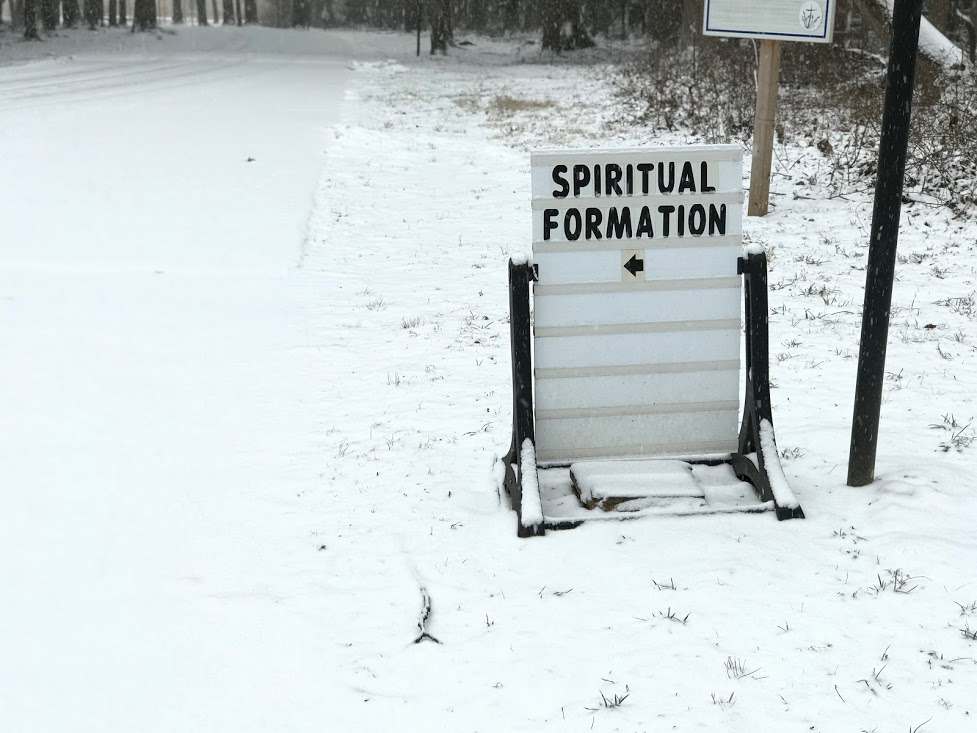
Spiritual formation may be over there… In the snowy woods…

So, how do we go about facing those challenges? I believe the first thing we must do is to stick to the course. Paul wrote in 1 Corinthians 10:13 (NRSV) that: “No testing has overtaken you that is not common to everyone. God is faithful, and he will not let you be tested beyond your strength, but with the testing he will also provide the way out so that you may be able to endure it.”

Our challenges, whether they be yappy shelties that want something to eat or wolves of anger–there is nothing so wild that it is unique to our lives. Some of the things we face may seem beyond our capability, but ask yourself this: What if Paul is right? What if you can overcome? What if we all could overcome?

Look at what Jesus is facing in today’s scripture reading. The Pharisees come to Jesus and tell him that Herod, the local king, wants him dead. They tell him to flee. First off, let’s be clear. This is coming from the Gospel of Luke and in Luke 23:8 we are told that Herod had long wanted to see Jesus so he could perform a sign. He and his soldiers mock Jesus along with the scribes and Pharisees, but Herod does not seem to want to kill Jesus at all. The Pharisees are lying to Jesus.

Jesus says he cannot die outside Jerusalem, mourns for Jerusalem, but still continues on his way. In the gospel of Luke it will be a long time until he reaches Jerusalem. He has a journey ahead of him, is already facing opposition, and will need to walk right into it.

One of the key truths passed down by the church is that Jesus is both fully human and fully divine. What that means in this case is that Christ is experiencing a human life. Do you believe that Jesus would not have faced his own worries in these moments? Do you wonder if he wouldn’t like all that power offered as a temptation in the wilderness when the very people he loves are trying to deceive and threaten him? As a human, I know I’d want that power in that moment. The wilderness temptation would ring in my ears like a gong.

So, here’s the thing. Jesus doesn’t give in to desire or fear. He continues on his way. If Lent is the season of following the footsteps of Jesus, then we should note a few things about where Jesus’ journey goes from here:

First, Jesus remains committed to love. Even as he knows Jerusalem will be his end, Jesus is depicted as loving that city. She will be his end and yet Jesus longs to cradle her like a mothering hen cradles her chicks. Jesus does not react to those who will harm him with anger. Jesus responds with love.

Responding with love to a broken world is hard. When we go on our Lenten journey there are places where we will come across parts of the world, our neighbors, and even ourselves which seem dead set to foil us. Jesus responds with love. Should we seek to do anything less?

Second, Jesus goes forward despite the challenge: he doesn’t give up. There is a good deal of his journey ahead of him. He will face more trials and more tribulations. Despite the fact the pharisees threaten him, Jesus doesn’t give up on them. In chapter fourteen, the very next chapter, we find Jesus going to share a Sabbath meal with one of the leaders of the Pharisees. Jesus does not surrender to his fear but stays the course.

Third, Jesus remembers his journey isn’t a journey that he takes alone. Jesus walks the path with his disciples, who are not a perfect bunch of people. Jesus makes the journey with a community of faith and that is important for us to remember. The journey of Lent can often seem a lonely journey, but that is a misconception. It is easy to give in to the temptation to feel alone, but we are called to remember that we were called into community.

It seems strange to say, but one of the most important things we can do as a community during the season of Lent is to be together as a church. I am not simply talking about being together Sunday morning. Sharing a cup of tea with the person from another pew, praying for that neighbor who is struggling with cancer, or even stopping by the church office for a cup of tea with your pastor. All of these things can be important things we experience on this journey of faith through Lent.

I advise us all to remember that one of the worst things we can do on this journey is to cut ourselves off from others. I have seen many beloved family members in Christ either disconnect from community, become apathetic about remaining with their spiritual family, or “pick up their toys and go home” when life or community becomes difficult. Those approaches have almost never led to anything good for either the community or the individuals. The spiritual life is far better in community. As Ecclesiastes 4:9-12 (NRSV) reminds us:

“Two are better than one, because they have a good reward for their toil. For if they fall, one will lift up the other; but woe to one who is alone and falls and does not have another to help. Again, if two lie together, they keep warm; but how can one keep warm alone? And though one might prevail against another, two will withstand one. A threefold cord is not quickly broken.”

Ecclesiastes 4:9-12, NRSV

Now let’s be clear, this is a season where we find the wild parts of ourselves, but the wild will come into our lives even outside of this season. These simple ways of following Christ’s example can be lifesaving ways of being even outside of these moments. So, even after this season, when the challenges of life snarl in your direction:

  1. Don’t react with panic–as much as possible respond with love.
  2. Stay the course despite the challenges
  3. Don’t isolate yourself: remain connected to God and church.

We all must face our own challenges. To go back to the source of our opening prayer and reference a likely apocryphal story, we may find ourselves in a land full of snakes. Like St. Patrick we are sometimes asked a question: Will the snakes drive you out of your island or will you drive the snakes out? As beloved children of our Creator, as followers of Christ’s example, and with the good counsel of our Advocate, the choice is before us.

Let us pray…

“Chosen” Photo-A-Day Haiga

The word for the day for the #RethinkChurch Photo-A-Day challenge is “chosen.” Being myself, I can’t leave well enough alone, so here’s a haiga! When I was a child my dad asked what I wanted to play in the band. I said drums. I was told to choose again. I said trumpet or bugle. I joined the choir. When my eldest asked if she could do percussion, my heart smiled. She has chosen well and I am blessed to be chosen by God to be her dad.

The instrument choice:
Neither quiet nor subtle.
She loves it. I’m glad.

“Good” Photo-A-Day Haiga

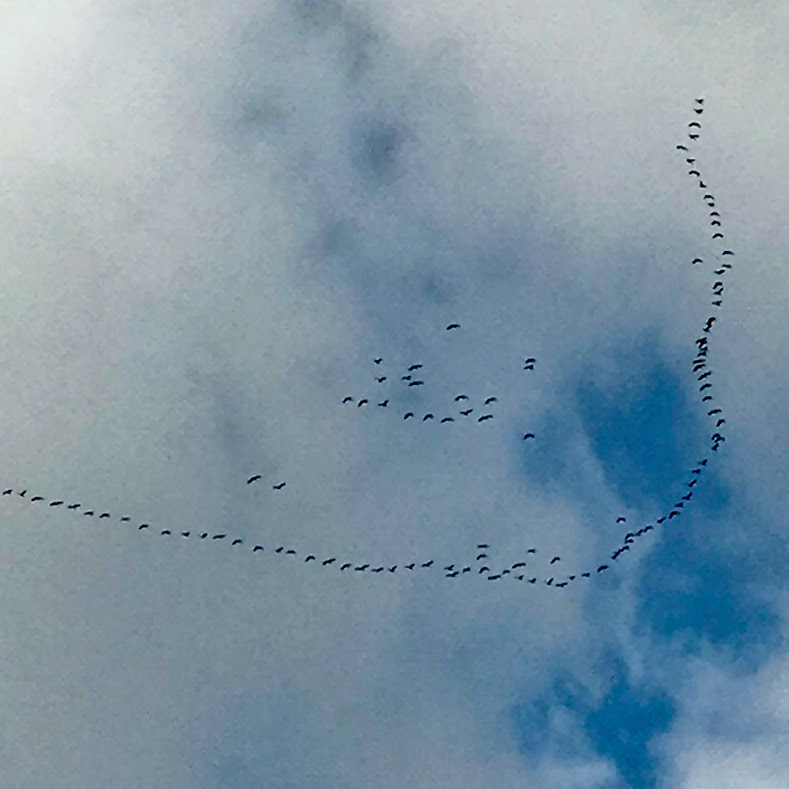
The word for the day for the #RethinkChurch Photo-A-Day challenge is “good.” Being myself, I can’t leave well enough alone, so here’s a haiga! I caught this huge flock of geese flying north! Spring is coming and that’s a really good thing!

A voice calls my name.
My neighbor points to the sky.
We watch spring’s heralds.

“Weighed” Photo-A-Day Haiga

The word for the day for the #RethinkChurch Photo-A-Day challenge is “weighed.” Being myself, I can’t leave well enough alone, so here’s a haiga! I saw this beautiful bald eagle on a walk the other day. The question I’m pondering is whether the weight of the bird is greater on the tree than the need for food is on the bird. This must not be an easy season for this noble bird.

High above the marsh
Branches creak under the strain
As eyes search for life.

Kitchen Experiment: Tofu Sandwich

One of the classical challenges of Lent is the idea of going without meat and chicken on Fridays. Traditionally, this meant eating fish, but with the advent of more readily available alternatives, tofu is an interesting option.

Today I needed to feed my daughter and I lunch as she was home from the sitter’s house throughout the workday. She hung out on my back during office hours as I worked at my walking desk, but still needed to eat. I decided today would be as good a day as any to experiment with a tofu sandwich. I thought about my favorite flavors, looked through our appliances, and tried out a maple and cheese tofu panini!

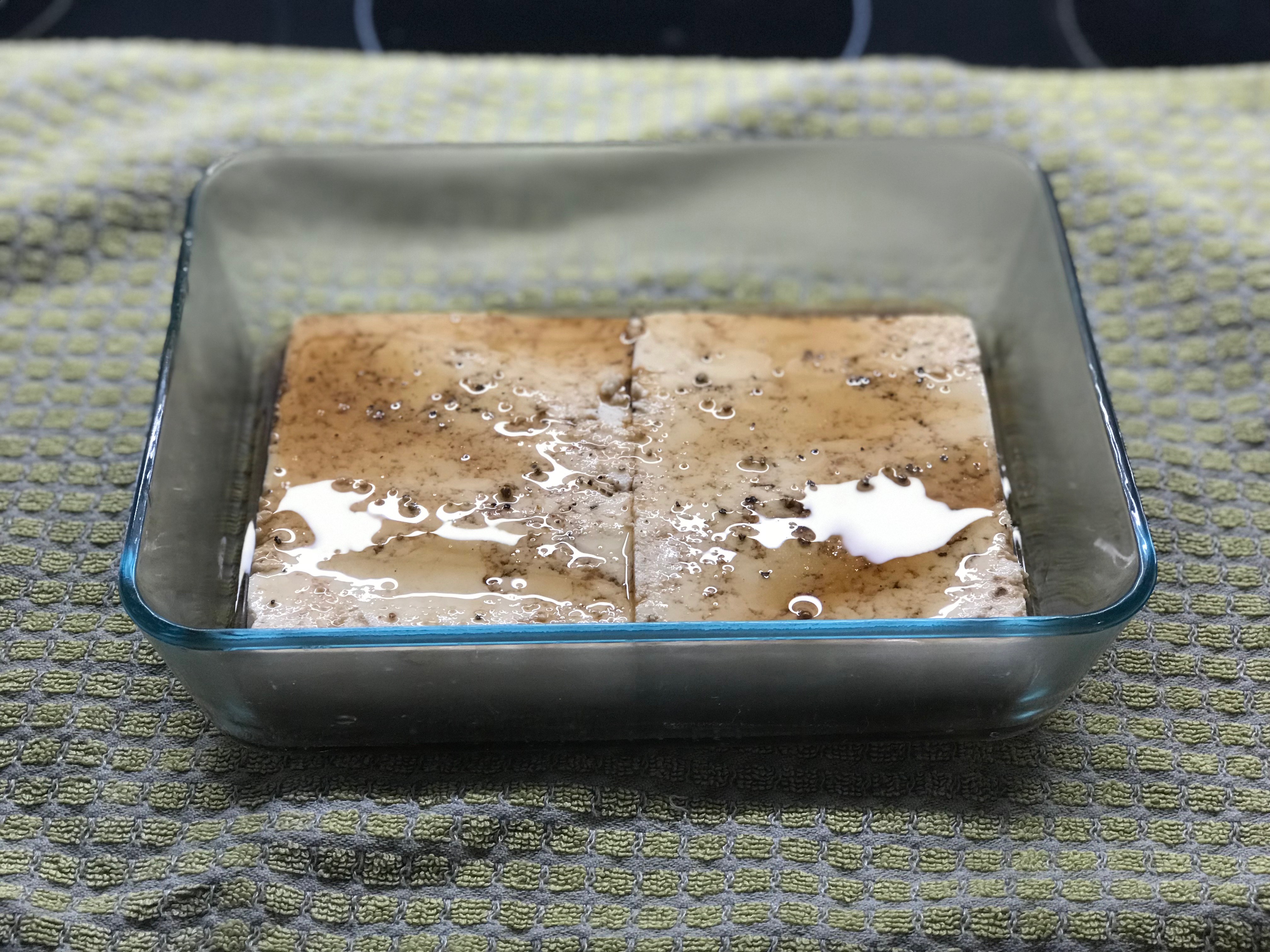
The first thing I did was to slice the tofu in half lengthwise after pressing the excess water out of the tofu. I spread some maple syrup, smoked black pepper, and salt into a glass container. I then placed the tofu into the container and repeated the process overtop the tofu. Spoiler alert: I should have cut the tofu in fourths as the sandwich ended up being very squishy.

After the tofu marinated for about half an hour, I preheated my panini grill until it was ready to cook a sandwich. I placed the tofu into the press and left it in the press for about six minutes. I like the edges a bit crispy, so I stopped the press here. As my panini maker tends to be warmer on the top, I should have left the bottom to cook a bit longer.

After the tofu was prepared, I placed some multigrain bread with cheese onto the grill, placed the tofu onto the bread, and topped the tofu with bread before cooking it around three minutes. As you can see, the tofu should have been quartered instead of halved.

Verdict? The kiddo gobbled down all of her lunch quickly. I enjoyed mine, but struggled with the thickness of the tofu. Next time I will likely quarter the tofu and add a few drops of tabasco to the marinade to make the taste a bit more complex. I also think cheddar may have been the wrong flavor cheese. Something a bit more neutral or even in the opposite directions with herbs would have been interesting.

How are all of you fasting folks doing this Lent? Any good recipes you want to share? Any constructive or positive comments on my methodology?

“Accomplish” Photo-A-Day Haiga

The word for the day for the #RethinkChurch Photo-A-Day challenge is “accomplish.” Being myself, I can’t leave well enough alone, so below is a haiga!

A word of explanation: I have spent nearly five years living in the Binghamton area and I have driven down 26 to Vestal Parkway probably hundreds of times over the years. Almost every time I either drive over this bridge and exit to drive underneath it or take a back road which leads me to drive down the parkway under this bridge. In nearly five years, I never knew what was over the dirt embankment. It turns out it is the Vestal Rail Trail which I walked and prayed over on Sunday. This is several kilometers from where I started to walk. I saw something new while doing something healthy with my stress. That’s a great accomplishment for a pastor who usually spends Sunday afternoon napping!

Sunday afternoon
I walk, pray, and search for peace.
I find a new sight.

“Dazzling” Photo-A-Day Haiga

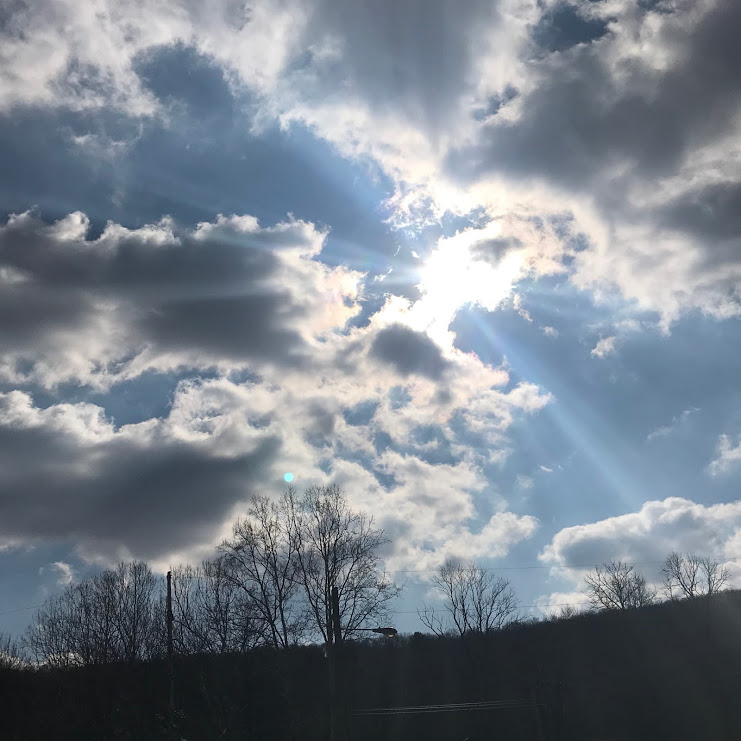
The word for the day for the #RethinkChurch Photo-A-Day challenge is “dazzling.” Being myself, I can’t leave well enough alone, so here’s a haiga! I was walking with my toddler while praying through life yesterday when suddenly the sun burst out of the clouds. It has felt like forever since the sun struck my skin. It was glorious and reminded me of those first few verses of Genesis…

Bursting through the clouds.
Bring color to gray chaos:
Dazzle and create!

“Into the Wilderness”

Message: “Into the Wilderness”
Date: March 10, 2019 (First Sunday of Lent)
Text: Luke 4:1-13
Preacher: Rev. Robert Dean

Before we begin, there will be two quotes in today’s sermon from the book “Thou Dear God: Prayers that Open Hearts and Spirits” by Rev. Dr. Martin Luther King, Jr. I want to say two things.

First, he was an incredible author and I recommend that everyone spend time reading his words. As a European white guy, I found reading “Letter from A Birmingham Jail” to be both moving and poignant.

Second, it is important to me as a minister that I do my best to bring voices into these sermons which do not reflect the way many of us look or act in the pews. I hope that you ask yourself why that is important to me and what I might be trying to teach through that example.

Let us pray: Holy God, may the words of our mouths and the meditations of our hearts be acceptable in your sight, our Rock and our Redeemer. Amen.

Today we are entering the season of Lent. Lent is the forty non-Sabbath days we celebrate between Ash Wednesday and Easter. It is a season of fasting and contrition. It is a season of learning about one’s own heart and soul through experience. It is a season in the heart.

Growing up, reading passages like this morning’s passage always reminded me of Lent. Lent was a season of loss and deprivation. Yes, the celebration of Lent is tied to the forty days Jesus spends in the wilderness, but I am not certain I understood wilderness in those days. I imagined endless deserts in the Sahara. I wondered what Jesus could have done for forty days sitting on a sand dune.

As an adult one of the most amazing experiences I had was going on two United Methodist Volunteer in Mission trips to learn with and serve with the Diné who were named the Navajo by the European Spaniards who first had regular contact with them in terms of Europeans coming across the oceans.

The Diné are a proud people, but the places we were serving were in and outside of Sawmill, Arizona. There were beautiful vistas, beautiful people, but I took a while to understand what I saw in that wilderness. Why would a land with so few trees be called Sawmill?

I learned the trees had been clear-cut and sold. I wondered why there were many older women but so few older men around until I learned about the uranium mines. I saw people working hard to make it through.

One of the people I met was a man named Pastor Curly. Pastor Curly was a person who knew everyone in his community but had a task well beyond his means. I mean no disrespect to Pastor Curly. The amount of poverty in the areas where he served where incredible and Pastor Curly was neither rich nor powerful. He still stood up, taught, preached, prayed, and loved richly.

As a young man, I thought wilderness was just dunes of desert. Now I see wilderness differently. Wilderness is where the wilds of the world continue to exist and thrive. Wilderness is not always a place of deprivation.

Jesus spends forty days in his wilderness. At the end of those forty days he is tempted with food to sate his hunger, power to change the world, and even the respect of the people who would one day help crucify him. Each time he is offered one of these things, he is firm that he won’t take them.

At some level, even with all that hunger, what would one loaf of bread do? At some level, even if Jesus impressed all the people in the temple, would that change the way things would go? The question that gets to me though is my own temptation: “What good would having all that power over the world do?”

When I went into the wilderness of Sawmill, Arizona I was full of ideas about how we could help. We could fix windows, replace rotten floors, and do good for folks who could not do it for themselves. That goal was a noble goal.

What I didn’t realize was how I would learn that despite all the power, influence, and strength I have as an educated, influential, European, male who was on his way to being told by a bishop to “Take thou authority,” I was not the richer person when I met some Diné. Pastor Curly was developing a depth working in the wilderness that wasn’t born out of having power or authority, but born out of being present with people who needed a voice and presence of hope. Pastor Curly helped me to understand what it means to learn from the wilderness.

Here’s our first quote from Rev. Dr. Martin Luther King, Jr.:

“Lord help me to accept my tools. However dull they are, help me to accept them. And then Lord, after I have accepted my tools, then help me to set out and do what I can with my tools.”

I learned in the wilderness that my tools were not as sharp as I once thought they were. I was an idealist and wanted to change the world, but when I looked in my toolshed, I found axes which needed sharpening and oiling, screwdrivers with broken edges, and sledgehammers with loose handles.

In the wilderness, I found myself longing and sorrowful. My own people helped cause some problems faced by the Diné and I was powerless to reverse them. I didn’t have the tools I needed, but I had tools. In the wilderness, I found my path further unfold.

Why am I passionate about the church be open to everyone? I am passionate because I have a voice and how that voice is used matters. I can stay silent and let others insist nothing changes or I can take my dull axe, sharpen as best as I can, and swing at the logs of injustice. I can take my busted screwdriver and re-purpose it as an ice-pick and try to break through the ice of loneliness and fear that freezes people’s hearts. I can take these dull tools of mine, accept them, and then set out to do something good with them.

Since I went on those trips to see the Diné, I understand the wilderness differently. The wilderness is not simply a place of deprivation. Yes, much like the season of Lent, being in the wilds can be challenging. It can be very difficult to walk into places that are beyond our comfort-zones, but that doesn’t mean there is nothing of worth in those wilds. Out in the wilderness Jesus found something that enabled him to go forward on this journey.

The second prayer from Rev. Dr. Martin Luther King, Jr. will lead us towards our conclusion. He once prayed: “God grant that you will choose your good self thereby mastering your evil self.”

In the wilderness of Arizona, standing outside the window rock, an ancient meeting place of the Diné I was faced with a choice that brought me to tears. I could stay the person I was at home, return to the life I lived, and forget about everything I learned in the wilds. Alternatively, I could choose my “good self.”

I did my best to choose my good self, but like most things worthwhile, it is hard. Nobody looks at what Jesus does in the wilderness and says “That looks easy.” Our own journey through Lent may not be easy. You may find that there are beasts out there in the wilds and there will certainly be temptations.

Friends, this season I invite you to step out into the wilderness. I invite you to do the risky thing and choose your good self. I invite you to leave what is comfortable behind and find what tools may await you in the desert.

May God help us all to choose our good selves and to master our evil selves. May God bless the people gathering at the Sawmill United Methodist Church this morning. May God bless Pastor Curly as he ministers through his life today. Amen.

“Rest” Photo-A-Day Haiga

The word for the day for the #RethinkChurch Photo-A-Day challenge is “rest.” Being myself, I can’t leave well enough alone, so here’s a haiga! Today’s Sabbath reflection comes from last Friday. I kept whispering sweet words to my youngest daughter as she napped. She kept smiling.

I call you sweet heart.
I mean each word. As we rest
Your heart beats with mine

“Test” Photo-A-Day Haiga

The word for the day for the #RethinkChurch Photo-A-Day challenge is “test.” Being myself, I can’t leave well enough alone, so here’s a haiga! This photo describes life with a furnace you don’t own, can’t replace, and just want to go all “A Christmas Story” on but can’t because the kids are home and you’re a pastor.

I call you to fast.
You give up Facebook to me.
I want your anger.

“Her forehead” Poem

A few weeks ago I sat with a sick infant in the depths of night. Wet cloth cooling a fever from the now rare chicken pox. I rocked and contemplated what we would do if the fever spiked again. It was dark in that room in more ways that one.

A few weeks ago I sat with a parent in grief over an upcoming surgery. A sweet child in need of care. I contemplated her struggle and prayed for more than just the child. I prayed for my own forgiveness because I was grateful my child was not the one in need of that care.

A few weeks ago I sat and ate elementary school spaghetti. It was exactly how I remembered it. We sat, laughed, talked, and even danced as we tried to support some friends’ family in their hour of need. I could stomach school spaghetti far easier than letting my friends feel they were alone after caring for a baby who spent a lot of time in the NICU.

Yesterday I saw the ash on her forehead and I realized that she was mortal too. Today she is well but one day she will be in God’s hands. My heart broke as I realized a truth that had been walking through the edges of my soul.

On the day of ash
We contemplate our own path
Down through our life’s end.
Easier to see your own
Than on your daughter’s sweet face.

“Her Forehead” by The Distracted Pastor, 2019

“Full” Photo-A-Day Haiga

The word for the day for the #RethinkChurch Photo-A-Day challenge is “full.” Being myself, I can’t leave well enough alone, so here’s a haiga! This photo was taken at a spaghetti fundraiser for a family friend’s child (who happens to be probably as close to a best friend as my one year old has at this point).

Pasta on her face–
Hope filling up the belly.
We love our buddy.

Anticipation of Advent Worship

Last night I was sitting at the kitchen table working through one of the first sessions of “Simply Wait: Cultivating Stillness in the Season of Advent” by Pamela Hawkins. I stared into the light of the Advent flames (as my own celebration of Advent began after Christ the King Sunday) and asked myself a question: “What do I anticipate experiencing [in God’s house during Advent]?”

The flames flickered as the coffee wafted through my nostrils. I pondered the season ahead. What do I anticipate? Do I expect to find a living and loving God bringing hope?

As a pastor, I can testify that Advent and Lent are two seasons of the year that can easily run out of control. I can testify that I have had more staff and volunteers quit the church (and often faith itself) during these two seasons of the year. In truth, with the possible exception of my first year of ministry, I cannot remember one of these seasons passing without a challenge in one form or another. These two holy times can be difficult seasons between special programs, natural disasters, and traditions which sometimes grow out of control.

The question remains: What do I anticipate this holy season? Do I anticipate things rushing out of control? There is a part of my soul that expects the worst to happen and for me to be required to rush around like a chicken with my head cut off. There is also a part of me that longs for something better, something quieter, and something holier.

I stared into the burning advent candles and pondered what it would look like as a pastor to anticipate holy stillness in the house of the Lord. What would it look like to worship in a way where I could sing songs with my heart? What would it look like to have time for silence and prayer? What would it look like to worship in a way where we could focus more on the proclamation of scripture and less on the sermon?

As time shifted, I began to ponder what it would look like as a parent. What would I anticipate this holy season when I came into God’s house? After listening to children tell me their desires for weeks, what would it mean to anticipate moments of waiting? What would it mean for worship to be a place where I do not have to be the only person saying: “Patience, my child.” What if God were to speak those words into my heart as a parent? What if God were to speak those words into my heart as a person?

What do you anticipate this holy season? Is there space for silence? Is there space for peace? I hope we all find that quietness.

The first rays of Advent

Today I began one of two Advent devotionals I am undertaking this holy Advent season. I pulled out my copy of “Mandalas, Candles, and Prayer” by Rev. Sharon Seyfarth Garner. I grabbed my colored pencils, arranged my “wreath,” and tried to enter a place of stillness. There will be more on stillness and having children on another day.

Tonight, as my wife was on a conference call, I sat in front of my Advent wreath and colored a mandala while undergoing the spiritual practice of the examen. Gregorian chants played in the background as I prayed and colored.

This week’s mandala is beautiful in construction. Rev. Garner must be very well connected. As the work is under copyright, I will try to explain the design. There are four steps to the examen proposed in the book by Rev. Garner. We begin with contemplation of Emmanuel, journey into gratitude, explore areas for growth, and conclude with seeking seeds of hope for the next day.

The mandala centers on a star which stretches center to edges. I colored as I prayed about how God is with us in this season. I tried to shade the colors of my imaginary sun. I believe I attempted this because I wanted to look back tomorrow and shake my head at myself. Rev. Garner may believe everyone can color, but there is a part of me that wonders if she knew I was coming.

As I colored and prayed about my day, I examined places where I found gratitude today. I thought of relationships with friends, family members, parishioners, myself, and my calling. I went deep with the prayer. I went deeper than expected.

Take my section in what we’ll pretend was stainless steel gray. As I colored, I thought about the dinner I prepared for my family. What did it mean that Emmanuel was there as I cooked a meal? My mother died in December when I was a child. Sometimes holiday meals were “golden brown!” Was God with us as people came alongside me to show me how to use the pans in my kitchen? What did it mean that on the other side of one ray of Emmanuel there was a section where I prayed for my wife who helped me learn? What did it mean that it bordered the color of my clergy shirt over the other ray of Emmanuel? Prayer for my cooking led into prayer for one of my favorite cooking instructors on one side and for the church where I lead a study on the spirituality of baking bread on the other side. Prayer went deep.

As I prayed through the areas of growth around those blessings, I borrowed colors as areas of blessing sometimes came into conflict with other parts of myself. I prayed about how my desire for personal growth occasionally conflicted with my parenting. I grieved how my calling as a minister occasionally led to pain in my marriage as I prayed about missed dates, anniversaries postponed, and vacations shortened. I grieved how being a loving husband occasionally meant I would try to listen to a parishioner while wrestling down reactions coming from my own relationship. Prayer grew really complicated.

Suddenly, there were other colors. There were colors for places of grief where my anger caused me to make mistakes. There were places where the authority of my ordination aided in some places and damaged others. There were places where colors blended and battled. My prayers became complicated. I did not expect this to be so hard!

Suddenly, the flickers of red appeared. I’d put dots of red amid the places where I was grateful to represent the Holy Spirit. Suddenly there were red the stained glass of connectedness were brought into relationship through the Holy Spirit. Suddenly gold appeared as I noticed places where Christ the King stood in my midst and brought healing.

Suddenly I understood that some of my troubles come from not just letting one bit of me stay where it belongs instead of jamming it into another place. To be clear, I never invited my wife on a date to Church Council, but sometimes my work with church members has swallowed the dinner conversation on a date with my wife. Something healthy in one part of my life needed to stay in that one part.

Strangest of all, there were spaces that were left blank. I prayed about what it meant. Suddenly, I realized there are parts of me that I cannot see without help from others and help from God. My soul really is a kaleidoscope of strangeness and beauty.

In the coloring there was realization, contemplation, and even places of healing as I prayed. In the midst of all of this, the rays of Emmanuel poured out from Christ from the center of the season into the rest of my heart.

Around all of this were seeds of hope for tomorrow. I had expected them to all be red for the Holy Spirit, but there was gold! Christ the King claiming my tomorrow as I prayed. If I had socks on my feet at the table, they might have been blown off.

I recommended this book to church members and bought a few friends copies because it looked like it would be interesting. I may not have expected it to be so deep. It is funny how that sometimes happens. We slow down for one moment and we are suddenly caught off guard by grace. I have no idea what my mandalas will look like for the rest of the week, but I can say that my eyes are opened. This practice might be far more intense than I expected.

Let us Seek: Ascension Day!

Happy Ascension Day! Luke 24:44-53 reads: (NRSV)

“Then he said to them, ‘These are my words that I spoke to you while I was still with you—that everything written about me in the law of Moses, the prophets, and the psalms must be fulfilled.’ Then he opened their minds to understand the scriptures, and he said to them, ‘Thus it is written, that the Messiah is to suffer and to rise from the dead on the third day, and that repentance and forgiveness of sins is to be proclaimed in his name to all nations, beginning from Jerusalem. You are witnesses of these things. And see, I am sending upon you what my Father promised; so stay here in the city until you have been clothed with power from on high.’

Then he led them out as far as Bethany, and, lifting up his hands, he blessed them. While he was blessing them, he withdrew from them and was carried up into heaven. And they worshiped him, and returned to Jerusalem with great joy; and they were continually in the temple blessing God.”

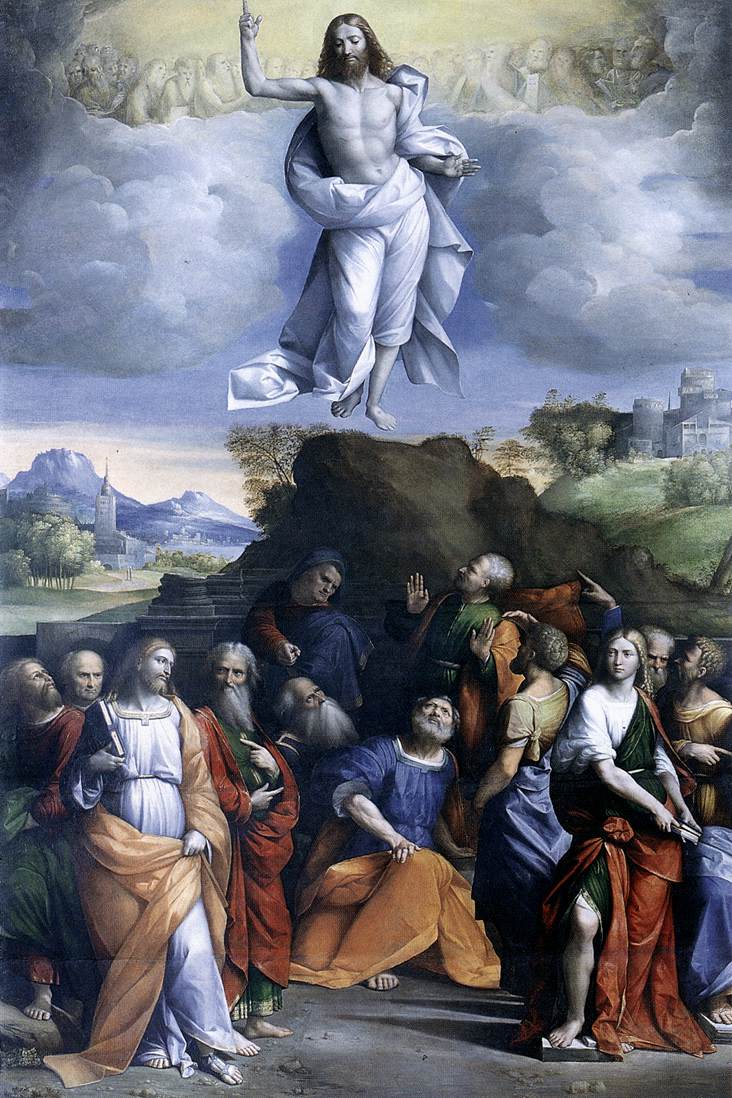
English: "Ascension of Christ" by Benvenuto Tisi

English title: “Ascension of Christ” by Benvenuto Tisi

Today is the day when the Western church has traditionally celebrated the Ascension of Christ up to heaven. By coincidence, today is also the day that the Eastern church celebrates the Ascension of Christ! No, those dates do not always align! Here’s an article why the dates of Easter differ from an Eastern Orthodox perspective!

As we celebrate this Holy Day, here are a couple of things you might wish to think about as we celebrate:

  • Not many modern churches celebrate the Ascension of Christ with large worship services. In particular, Protestant churches have tended to shy away from this celebration. As a result, do not expect to find Ascension Day cards at the grocery store. As a result, a good family activity might be drawing a picture of what it might have looked like and mailing it to a loved one.
  • Despite not being regularly celebrated in Protestant churches, churches which follow the traditional liturgy of communion silently reference this event every time they celebrate communion. The liturgy refers to the resurrection in the eyes of many when it says “Christ has died. Christ has risen. Christ will come again.” In reality, Christ cannot come again without having ascended. Sidenote: All three parts of this great mystery have an unspoken component in my eyes. Christ was born before he died. Christ is risen and remains alive. Christ has ascended and Christ will come again.
  • Ascension is an important part of the two major historical creeds of the church. The Apostles’ Creed and the Nicene Creed both reference the Ascension. The poorly named Athanasian Creed also refers to the Ascension. Something about this event caused the early church to tie it into the most basic form of catechism within the church.

We hope you have a most blessed day and that you spend some time thinking about the Ascension of Jesus Christ! May God bless you on the journey through life today!

Let us Ramble: An Easter Examen

It was Easter afternoon and the ham was cooling in the oven when it happened. I was offered a ride from one room to the next in a wheelchair. I could barely walk after falling down the stairs during church (while carrying and then wearing communion juice) and suffering (what was later discovered to only be) a severe contusion on my left foot. I was invited to ride as I could barely stand. The nurse said “You don’t get offered a free ride often. You should take it pastor.”

It was Easter evening and my wife was sitting on the couch after a very long day. She looked exhausted. She said to herself “I wish he had emptied the trash or changed the litter box before hurting himself.” It was Easter evening when I slid down the stairs on my bottom cradling a garbage bag full of kitty litter before limping it to the garbage. My wife chided me but I kept listening to the rock and roll in my ear buds as I fought my way through the task.

In hindsight, I am glad that both things occurred. A big portion of that relief comes from the fact that it is two days later and I’m doing significantly better after resting and icing my bruise. A bigger portion of the relief comes from what I see when I look at these actions.

The Examen is a spiritual discipline connected to many different sources but especially to the practices of the Roman Catholic leader St. Ignatius Loyola. I know, I’m United Methodist. Why am I pointing towards the practices of a Roman Catholic? Well, to over simplify, God is bigger than the denominational divides and wisdom sees wisdom wherever it lies… Anyway…

The Examen is a prayer practice that helps me to personally see what is good in my life by revealing the presence of God in ordinary moments through reflection. IgnatianSpirituality.com (a ministry of Loyola Press) identifies the following as a simplified approach to the Examen:

1. Become aware of God’s presence.
2. Review the day with gratitude.
3. Pay attention to your emotions.
4. Choose one feature of the day and pray from it.
5. Look toward tomorrow.

Let me be honest, I obviously ignored the fourth point when I picked two moments out of my day in my reflections on Easter Sunday for prayer. The two moments I focused upon were the moment of accepting the ride and the moment of carrying the kitty litter to the trash to help my wife.

I saw God’s presence in the moment when I was proffered a ride in several ways. First, the nurse was a relative of a church member and I saw the compassion that her parent shows in her life at the church. I saw God’s love expressed through her kindness. I also felt God’s presence in an invitation to practice humility by accepting a ride instead of fighting my way down the hall with my considerable and obvious stubbornness. As I prayed through that moment I found a connection between these actions and God. It did lead to gratitude and to a sense of blessing.

I saw God’s presence in the moment when I was carrying to kitty litter in several ways. First and foremost, I recognized that there was compassion in my heart towards my wife’s plight and exhaustion. The same considerable and obvious stubbornness which had been a hindrance earlier was properly applied to assist someone else in need. In the right context, that stubbornness was a blessing which came out of God’s own arsenal. Was it a bit silly? Probably. Was it unnecessary? Yes. Was it an act of compassion and gratitude for all my wife had done for me that afternoon? Absolutely. I could see God at work in my motivation. I did not do it because I was simply stubborn. I was not upset with my wife for her forlorn statement either. It came out of my own sense of God’s call.

I write all of this down for the internet at large in order to express how taking time to go through the act of the Examen did help me to grow deeper in my faith through a very painful moment. In honesty, I was a bit annoyed with myself and with that staircase before I stopped to engage in this old practice. My prayer changed my day. When It was over I had found my center, found my hope for the next day, and was prepared to move past the pain into healing.

There have been many times in my life when I have been deeply blessed by engaging in the Examen or even in the daily act of journaling the best moments of my day along with my hopes for the next day. I would invite you to take a look at this spiritual discipline if you are struggling to find ways to go deeper or even struggling to find ways to look at your own life with different eyes.

Here are my three suggestions on how to engage in this practice:

  1. Set aside time in the same place each night. Maybe you travel and it cannot be the exact same place, but even engaging in that old (yet useful) tradition of kneeling at the side of your bed might be a place to start. Starting off with the intention of creating a consistent pattern helps. If you’re married or have a roommate, you may wish to warn them before starting this practice. It is strange to stumble upon someone kneeling in silence–they may think something is wrong. Yes, I speak from experience…
  2. Set aside a set number of days when you’ll intentionally engage in this practice. I suggest you do this even if you decide to begin with just two weeks of attempting the Examen. Make a plan to attempt this practice and then follow through to the end. I do not recommend just saying “I’ll do this the rest of my life starting tonight.” If you can make it through a week, make it through a week before going for two weeks. Celebrate your successes and a pattern will establish itself in your life in a more natural fashion.
  3. Ask a religious friend to journey in this practice with you. Get together after a week or two in order to talk about your experience. If you do not have a friend, look into finding a spiritual director who can assist you in this practice. You may even be able to find a spiritual director who can meet with you mainly over the phone and only a couple of times face to face throughout the year. I recommend a group like Spiritual Directors, International to help find a reliable and vetted director.

So, that’s my introduction on this Blog to the Examen. By the way, I grabbed the kitchen trash on the way to the garbage can with the litter. If you’re going to be stubborn, you have to be tough.

Let us Seek: Holy Saturday Reflection

When I was a younger pastor I served in a town with a Wesleyan Church. One year on Good Friday they hosted the ecumenical service for the town. As we gathered they showed a video clip of a preacher speaking over the image of the cross, the tomb, and finally a light glowing behind the rock. The words the preacher was saying (to an epic rock background) were “It’s Friday, but Sunday is coming!”

It was powerful imagery, but it kind of threw me off a little bit. What about Saturday? What about Holy Saturday? As a child I thought about it as a day of waiting and silence. As i learned more about my Polish heritage I learned there were places (especially in Poland) where special baskets of food for the celebration were brought to the church for a blessing. I’ve learned there are a lot of traditions that surround this most holy day.

For me, the fact of the matter remains that it is a day of rest in my heart. Partially this is a part of my celebration from my reading of the texts. The story places this day as the Sabbath during that most holy of stories and I don’t mind entering into the silence.

The other side of my experiencing this day as a day of silence comes out of an understanding of music. There are so many notes throughout the week and there are many events. This day is a good day for a bit of silence before the music resumes. Music rhythmically that does not have rests ends up being rote and repetitive (in my mind). This is a beautiful day for that moment of rest before the crescendo.

However you celebrate Holy Saturday, I hope that you’re blessed today. Remember, the sun rises on Easter!

Let us Seek: Holy Thursday Reflection

As we progress through Holy Week, we reach Maundy Thursday. In some Christian traditions, today marks the begin of a remembrance that begins after the Maundy Thursday and lasts until Easter. The three-day remembrance is seen as a special season of the year known as the Holy, Easter, or Paschal Triduum.

For me the Paschal Triduum has always had a strange place in my own devotional life. At various points in my ministry I have celebrated Good Friday with a Cross Walk (think stations of the cross marked by readings and often shared by various churches in an ecumenical fashion), celebrated a special service on Good Friday, and have opened the church for prayer and reflection. Holy Saturday has often been a time when I’ve spent the day in silence or doing acts of kindness for others.

Even in the midst of the celebration of the Triduum, Maundy Thursday has always had a special place in my heart. John Wesley taught that the act of communion is a gift of grace that extends a real and powerful benefit to the people of Christ. I have always found the act of communion to be a deep and meaningful expression of God’s love and grace. As such, I find the celebration of the remembrance of that first communion to be incredibly meaningful.

Today’s lectionary reading covers a great deal of that celebration, but beautifully it tells the story through the eyes of the Gospel of John. I usually default to Luke’s Gospel in a lot of my own theology, but the beauty of John’s remembrance of that night is powerful and life altering.

In John’s lectionary reading (13:1-17, 31-35) the story told does not revolve around communion but instead around the washing of feet. Jesus knows that the end of His journey towards Calvary is near, so John tells us that Jesus takes on the role of a servant. Removing his outer garment, Jesus wraps himself in a towel and washes the feet of His disciples.

The Lord of the Universe, the One we crown with many crowns, the Lamb upon the throne spends some of the last moments of His time alone with His disciples washing their feet like a servant. The King who was, and is, and is to come wraps Himself in a towel and washes feet with humility before inviting His disciples to remember what He has done and to do likewise in their own lives.

I truly believe this passage is one of the most challenging passages of Jesus’ ministry because it reminds us of the true order of things. No servant is greater than their master. Our Master humbled Himself. Our Master did not assume the place He deserved, but He took the place that He knew that He must. This is the revealed Image of the Invisible God.

Verily, the place of a disciple is to follow in the footsteps of Jesus. The next day will be challenging. Let us continue this journey and understand that we go further on the journey towards resurrection having first had a lesson in humility. Easter may be triumphant but triumph comes through first submitting to God’s will and doing so with humility mixed with grace. May God’s grace guide us down the challenging paths as the Triduum begins…

Let us Seek: Holy Wednesday Reflection

Today is Holy Wednesday and for me Holy Wednesday has always been the last deep breath before the plunge. This afternoon I’ll be headed out to do the last (planned) visits before we begin the craziness of Maundy Thursday (at least it is a bit crazy around here), the solemnity of Good Friday, the silence of Holy Saturday, and the riotous celebration of Easter. Today is that moment where it seems all clergy take that last deep breath.

With that being said, today’s lectionary reading does not leave a ton of room for that deep breath. It is emotional, deep, and troubling. To be entirely honest, I feel strange writing a blog post about it in my bright clergy shirt. It feels very dark. In choosing an image to match this feeling, I chose a painting of Jesus’ giving His Farewell Discourse to the 11 remaining disciples as painted by Duccio di Buoninsegna in the 14th century because of the person who is missing from the painting.

The lectionary reading is found in John 13:21-32 and technically took place on Thursday of Holy Week. In the reading, Jesus reveals that someone at the table will betray Him. There is a moment of confusion and John is approached by Peter to ask who will betray Christ. A piece of bread is dipped in wine and given to Judas. The scripture says that after Judas receives this bread that Satan enters into Judas. Judas is sent to do what he must do and the actions of the evening are set into motion.

I must be honest, I do not like this reading. One reason I am not a huge fan of this passage is that I know this reading has been used to disparage the act of sharing communion by intinction along with Mark 14. I honestly do not like people who use scripture to disparage a meaningful act of communion with God, especially when it is not really an airtight argument.

Another reason that I struggle with this passage is simply the wording. Judas has been traveling with Jesus. Judas has the very best teacher, the very best friend, the very best guide, and the very best leader. Judas has the ideal situation to learn about the heart of God and Judas still just falls away. Judas is taken by the tempter and that is very discouraging to me, especially as his journey ends in suicide.

I have to be entirely honest. I wish that Judas’ story ended differently. Don’t you? Judas does betray Jesus, but the scriptures seem to imply that this is simply what must be. Judas has journeyed with Christ, shared a few loaves and fish with thousands, been sent out to preach with other disciples, and been a leader. In Acts, Judas’ place is filled by another disciple because Judas’ role had been very important in their life together. I wish Judas’ story ended differently. I wish it with all of my heart.

This reading hurts me down to my soul. Perhaps it is a good thing that we remember that Judas was a person on the day before his betrayal of Jesus. Judas’ story is a tragedy that leads to one of the greatest gifts of history. Even so, it is still a tragedy.

May God bless all those folks who are tempted to head in the way of Judas. May God help lead them into the path of folks who can invite and guide them back onto the path of life.

Let us Seek: Holy Tuesday Reflection

Today is Holy Tuesday. The gospel reading today reflects on conversations Jesus had around His purposes and around God’s glory. It also goes deeply into life issues. The Revised Common Lectionary reading for today is John 12:20-35. This is what verses 23-26 say in the New Revised Standard Version:

“Jesus answered them, ‘The hour has come for the Son of Man to be glorified. Very truly, I tell you, unless a grain of wheat falls into the earth and dies, it remains just a single grain; but if it dies, it bears much fruit. Those who love their life lose it, and those who hate their life in this world will keep it for eternal life. Whoever serves me must follow me, and where I am, there will my servant be also. Whoever serves me, the Father will honor.’”

We’ve followed Jesus through all of Lent. We came down that mountain into the valley where there were sick folks, hurting folks, and upset folks. We followed Jesus as He continually reminded people to turn away from their understanding of how a Messiah was meant to be and to act. We followed Jesus as He kept reaching out to the poor, kept reaching out to folks in need, and kept upsetting the religious leaders.

Now we’re invited to follow Jesus as He approaches Gethsemane. We’re invited to follow as Judas betrays with a kiss. We’re invited to follow as the world stands by as Jesus is tried and convicted. We’re invited to follow Jesus up Calvary. We’re invited to watch the sky darken.

Sometimes I don’t want to follow Jesus on this path. Let’s be honest–Holy Week grows gruesome. Holy Week would be the nastiest and worst of events if it weren’t for Easter. Some years I’d like to just say “Look at the time!” before running off to make a cup of coffee until Sunday. It is beautiful, it is deep, and sometimes I would rather have a simple broth than dig into the theological beauty of Holy Week.

Still, we must follow. We must because this is Jesus we’re following. Whenever we gather around the table to share in the Lord’s Supper it is this story that we speak to each other. Whenever we see suffering in the world around us, it is this story that reminds us that God entered into human suffering. Whenever we see people claim earthly power, authority, and greatness, it is this story that enters and can inoculate us from the disease that can easily carry us away into realms where we connect earthly power with divine right. This story is foundational–we must follow.

What’s more, we must walk the same path. This story effectively changes the way that we look at the world around us and how we relate to the world around us.

Let’s say we’re rich and we’re powerful. Perhaps we’re as powerful as the President of the United States. We have wealth, riches, and an army sworn to do what we decide. How do we act? Well, let’s be honest. If we’re going to walk like Jesus, it is going to change the way we look at the world around us and change the way we act. Jesus was arrested, tried, and convicted. Jesus was executed and his words weren’t threats or screams of anger. There was painful moans, I’m certain, but the words shared were words of forgiveness and words of grace. Jesus didn’t cajole or argue. He invited criminals to paradise despite what they did. If one is to follow Jesus it changes the way you live your life, perhaps especially if you had power, riches, and followers. To follow Jesus might mean you lose your privilege only to gain eternal life.

Let’s say we’re a public school teacher. Perhaps we’re the best teacher in the world and not one parent comes to your classroom to explain your job to you. Perhaps the parents who try leave your classroom apologizing and planning to write a nice letter. Perhaps you have offers to go and lead in the most prestigious private school in nation whenever you’d like. If you’re going to walk like Jesus, it very might well change your way of life. How? Jesus willingly cared for the very people who came to “take care” of Him in the Garden. Even in the midst of being taken to suffering, Jesus stopped to heal one of the very people who came to persecute Him. The kid screaming at you in your class might be a royal pain, but what would Jesus do with this child? Would Jesus show love and kindness? Would Jesus have grace in the midst of the suffering this kid will likely inflict upon you? To follow Jesus might mean healing that kid’s ear and that act might change your life.

I think we honestly each need to follow Jesus on this journey. It isn’t a pleasant journey, but let’s be clear. Few of us live perfectly pleasant lives. If we want to learn to live out our lives well, we might need to learn to lose in order to follow Jesus. If we want to learn to live out our lives well, we might need to learn from someone who can change us. In the way of Paul, we may need to live out our own ministries in life resolving to know nothing but Christ and Him crucified (1 Corinthians 2:2).

In the meantime, it is my prayer that this journey would be a blessing to you. May we all learn to follow and to let the Grain that died multiply within us.

Let us Seek: Holy Monday Reflection

Throughout Holy Week I have the goal of reflecting on one of the lectionary scriptures from the Revised Common Lectionary each day. For today’s gospel reading we see Jesus at the house of Lazarus in Bethany. It is revealed in the text that Lazarus is being plotted against by the chief priests in Jerusalem as Lazarus’ resurrection was causing a stir in conjunction with the ministry of Jesus, but that isn’t what immediately catches my eye when I consider this story. Consider verses 1-8 of chapter 12 of John’s gospel.

“Six days before the Passover Jesus came to Bethany, the home of Lazarus, whom he had raised from the dead. There they gave a dinner for him. Martha served and Lazarus was one of those at the table with him. Mary took a pound of costly perfume made of pure nard, anointed Jesus’ feet, and wiped them with her hair. The house was filled with the fragrance of the perfume. But Judea Iscariot, one of his disciples (the one who was about to betray him), said, ’Why was this perfume not sold for three hundred denarii and the money given to the poor?’ (He said this not because he cared about the poor, but because he was a thief; he kept the common purse and used to steal what was put into it.) Jesus said, ‘Leave her alone. She bought it so that she might keep it for the day of my burial. You always have the poor with you, but you do not always have me.’”

I find this story to be interesting for several reasons. As a person who studies the nature of the scriptures and how they were transmitted through time, I often wonder if the comments for the reader were written by the author or by one of the helpful folks copying the words throughout the centuries. Judas is at least acknowledged as a disciple by this account although his discipleship is clearly cast into question by not only his betrayal but his apparent greed in the eyes of the author.

I also find it interesting because this is the story of a family that still seems to be coming to grips with a majorly traumatic event. The previous chapter (11) recounts not only the story of Lazarus’ resurrection but tells us that Jesus was forced to go to Ephraim as a result of plots to take his life. As far as we know, this is the first real opportunity after some time had passed for Mary, Martha, and Lazarus to see Jesus. One of the reasons the chief priests seem frustrated with Lazarus is that Lazarus’ proximity to Jesus raises issues that now require his removal from the equation. This could be a sign that Lazarus hadn’t been near Jesus and raised these issues until this moment.

If this is the case and this is one of the first opportunities for response after the events of Lazarus’ resurrection, then this story becomes powerful. Martha is serving, Lazarus is sitting, and then Mary enters with the perfume. She anoints and uses something as precious and personal as her hair to wipe Jesus’ feet. This kind of act is not something that one does for just anybody. It is deeply intimate, deeply personal, and deeply emotional.

Into this moment we find Judas Iscariot stepping in and scolding. He is concerned about the waste of money. He sees the price of the perfume as the issue, but he’s missed the point. We all know that Judas has missed the point. How? Mary and Martha had lost their brother Lazarus. He was gone and he was restored. History is filled with people who would give anything for a few more moments with the person they have loved and lost. I am a pastor who believes in the resurrection and even I have people in my life I would give almost anything to see again for just a few more minutes. Mary and Martha are given the opportunity to do something incredible.

In the face of such a blessing, who wouldn’t care about money to say thank you? Perfume can cost a lot, but think about the gift that they have just received. Who cares about the money? Who cares about the cost?

I think we can all take a couple of things away from this story.

  • Some things are important most of the time, but are utterly worthless when seen in the big picture. An old phrase states “You can’t take it with you.” In the long run, would you rather have more money in your bank account or more time with people you love? If you knew tomorrow was your last moment, what would you do with your time?
  • There’s a time and place for stewardship and there is also a time and place for gratitude. I cannot say enough that sometimes we place stewardship on such a high pedestal that we forget to be grateful for the non-monetary blessings we have in life. I’m not advocating for wastefulness, but Judas clearly missed the point about what was most important. Sometimes we do the same thing (but hopefully without betraying people to their deaths).
  • We don’t need to be aloof with our emotions. Mary is clearly someone who was in touch with how she felt about Jesus. There is nothing wrong with Mary for feeling deeply about Jesus’ place in her life. Sometimes we need permission to feel and Mary gives us an example of how we can fee deeply, passionately, and still clearly have the love of God in and around our lives.

As Holy Week continues, I hope you find a place of blessing in these scriptures. May you feel deeply and thoroughly connected to Jesus.