“Hey Candy. Crush me!” I laugh. The gummy bear flew. Twenty six pounds hurts.
“Gummy Bear Senryu” by the Distracted Pastor, 2019
I wrote this senryu to play a little bit with the “Games Night” theme at the dVerse Poets’ Pub. I have played enough video games to realize that it is sometimes fun to pretend not to know anything about them.
This poem is inspired by a twenty six pound Gummy Bear that you can actually buy. Who needs chocolates for Valentine’s Day? Seriously though, you could kill someone with that thing. I imagine it’ll make an appearance in a Dead Rising game at some point if it hasn’t already.
By the way, this is my 200th blog post! I have others scheduled for the next few days, but I wanted to say thank you to everyone who keeps encouraging me by reading and enjoying my posts, even when they’re silly. Blessings to you.
Poems Contemplation Seeing with open eyes Expressing reasons for wonder Poems
“Poems” by The Distracted Pastor, 2019
I have recently been contemplating the idea of teaching. I am three quarters through the Academy for Spiritual Formation. I have been asking an interesting question. How do I share what I have been learning with others?
The very first session of the Academy we were invited to consider how God was being revealed around us by Wilkie Au. Since that lesson I have spent a lot of time walking through the various outdoor “Stations of the Cross” walking paths at the Malvern Retreat House.
It has been incredible noticing how I saw different things in different seasons. In the midst of winter, I took a picture of Christ crushed under the weight of the cross under a layer of newly fallen snow. I contemplated how cold the world must have been for Jesus in those moments. Blood loss was likely only one source of his suffering.
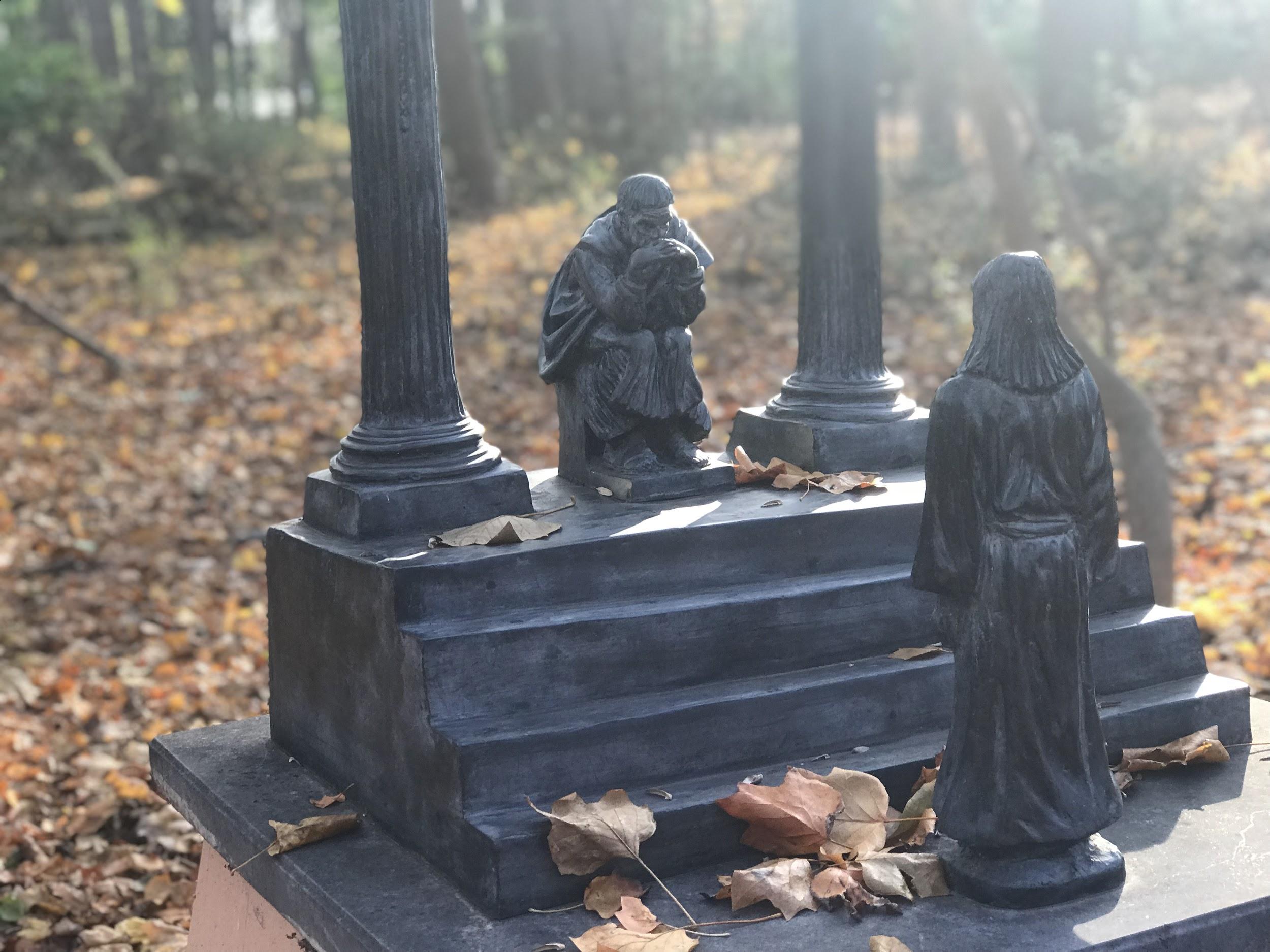
In the height of autumn, I saw Pilate standing in judgment as leaves fell from the sky. I contemplated how the world itself was growing colder and the days shorter as Pilate held his perpetual place of judgment over the solitary Christ. Leaves fell as judgment waited further down the path.
I have found those moments of contemplation to be life giving to my prayers. The very nature of the surrounding changed my contemplation, my prayer, and my focus in holy moments.
Walking through a path in the woods while praying is a valuable and wonderful experience. In this cold season, walking outside can be treacherous on frozen, freezing, and dangerously windy days. How can we enrich our prayers in a season which is dismally gray without continually focusing on the bleak, the dark, and the promise of spring that seems so very distant?
What if poetry is a window we can use for contemplation? Consider the poem “In a Vale.” The poem was written and published by Robert Frost in 1915. Let’s take a look as the poem is now in public domain.
When I was young, we dwelt in a vale By a misty fen that rang all night, And thus it was the maidens pale I knew so well, whose garments trail Across the reeds to a window light.
The fen had every kind of bloom, And for every kind there was face, And a voice that has sounded in my room Across the sill from the outer gloom. Each came singly unto her place,
But all came every night with the mist, And often they brought so much to say Of things of moment to which, they wist, One so lonely was fain to list, That the stars were almost faded away
Before the last went, heavy with dew, Back to the place from which she came – Where the bird was before it flew, Where the flower was before it grew, Where bird and flower were one and the same.
And thus it is I know so well Why the flower has odor, the bird has song. You have only to ask me, and I can tell. No, not vainly there did I dwell, Nor vainly listen all night long.
“In the Vale” by Robert Frost, 1915
First, Robert Frost was an incredible poet. When I was younger, I would have said that “He’s the kind of poet I want to be if I grow up.” Now it would be more accurate to say that he’s the kind of poet I would like to be if I ever grow up.
Second, consider the words Frost uses in his poem. If you have an overactive imagination like me, you might be blessed to leave the poem with the smell of earth in your nostrils, or the feeling of dew soaking into your sneakers as you see yourself walking out to greet the day.
Consider that a poem can be a window into a new place. What a gift this is to those who live underneath gloomy and gray skies! A poem can do more than inspire thoughts. Literature and stories were the original way people communicated visions of worlds beyond sight. Prose and poetry inspired religious belief, transported people to places of romance and ecstasy (e.g., consider the Song of Solomon in Judaism or the poems of Rumi in Sufi tradition), and opened the scope of people’s understanding of the world (e.g., Plato in Greece, Prince Shōtoku in Japan).
Like stories, poems can transport us to new places. What use is poetry? Poetry can be a way to see a world that can affect your prayer, change your viewpoint, and allow you to see a different existence than you might otherwise imagine. Poetry can be a way into memories from your own past, even when you did not write the poem. Poetry can be a blessing beyond belief.
I would like to encourage you to look into some poetry today. Consider that our world is an amazing place with amazing people. Explore their view through the power of their poems and see if you do not see the world a little differently. Perhaps the experience will change the way you pray today.
Be still. As scents fill you, As odd sights confound you, And as you want to run away: Be still…
“Be Still” by The Distracted Pastor, 2019
I recently spent time with someone who was ill in a care facility. I wrote this post a while back to help preserve the person’s identity, but this post is not about their story. This post is about my story and my experience.
The situation on my end was that I was waiting in a care facility which is filled with people facing challenges. The staff was present and diligent, but it is a facility full of people with differing needs. I found myself waiting impatiently as the sounds, scents, and distractions which come in such a place filled my senses.
I ordinarily do not spend time waiting in such facilities. I enter, I head straight where I need to go, focus on the individual, visit with family, pray, and head out the door. I generally do not have time to sit, to think, or to read in such places. I do not have time for my mind to wander. This day was different, so I opened my Kindle to read as I waited.
This blessed book has the advantage of taking up no extra space in my bag and the capacity to be read in dark rooms!
The chapter is not a long chapter. Abbess Paintner referred to three quotations in that section. As much as I respect the Abbess’ selection of ancient sources, her wisdom shines forth in her annotations. She writes:
“Sitting in our cell requires patience to not run from ourselves or flee back into the world of distraction and numbness. It means being fully present to our inner life without anxiety. Interior peace comes through sitting in silence, through attentiveness and watchfulness.”
Abbess Paintner in the second footnote for chapter ten
I found myself reflecting on the concepts of patience and stillness as my senses picked up on less than pleasant smells. In that moment, the place I was called to spend my time was that room with everything in the air. My cell was a chair in the midst of this person’s life. I found myself trying to be attentive, watchful, and present even as some part of me tried not to breathe too deeply. The scents, the sights, and the sounds made me more than a little anxious.
I found myself struggling in those moments after reading the Abbess’ thoughts. Was I letting those scents keeping me from being present with the individual sleeping in the bed? Was I letting my dislike of the scents keep me from being present with someone whose every breath contains the aromas that were filling my nostrils? There was some part of me that struggled with shame for focusing on the distractions and another part that wondered if the distractions might not be the blessing in disguise.
I was filled with questions, but the one that stuck with me was the loudest question that filled my mind. Was I open to knowing this was someone’s experience? Was I open to walking with someone as their body struggled? Was I open to being God’s hands and feet in such a place? Was I willing to see God in that place?
It would be easy to numb myself to the situation. I could run to my car and refill my diffuser with peppermint. I could rush home, put on the aromatic earl gray tea to settle my senses, and I could rush home to hug my toddler who seems to always smell of lavender when you smell her hair. It would be easy to flee back to distraction and numbness, but would I find true peace in distraction?
I find myself casting my mind to Matthew 25. In Matthew 25, the Son of Man comes in glory to bring judgment to an imperfect world. The Son of Man separates folks and says to one group that they are blessed because they gave food to the hungry, drink to the thirst, welcome to the stranger, clothes to the naked, care to the sick, and visited the imprisoned. The people did not understand when they had done these things. The Son of Man replies (in the NRSV) “Truly, I tell you, just as you did it to one of the least of these who are members of my family, you did it to me.”
We who are engaged in helping care for others often look on this passage and find comfort. We have given a dollar at the Red Kettle at Christmas, have donated a can of food to the food pantry, and gave a little extra when we could. We have helped the least of these. I could rush home and say “I visited one of the least of these! I’m good!”
Would Christ ask “Did you really visit the least of these or did you do the least you could for these?” Are we open to realize we may be called to radical love that sits through the dirt of life? Are we open to realize that loving God’s children may mean sitting in smelly places? Are we open to realize that God may call us to a deeper fellowship with those in need than the bare minimum?
I do not write such challenging words from a place of judgment. If anything, I feel convicted by my own words. What does this look like in our lives? If we are to live into God’s kingdom, do we all need to live radically transformed lives? Perhaps we are not all called to a care facility, but perhaps we are all called somewhere beyond what is comfortable for us. It is worth contemplating.
On the cold days when all warmth seems to fall asunder I seek out the deep depths of my wardrobe to plunder One of the best blessings from Christmas past: warm sweater To keep the frost from my bones during winter’s wonder.
For some a warm blanket might seem a choice far better Or a towel from the dryer when things are wetter; still, I do feel there is nothing else that I could know To be as warm and cozy as once gift wrapped sweater.
So on a frosty morn with coffee in hand I show This ugly sweater that they once gave me years ago. Yes, I will join them under a blanket warmed with love But that warmth fills my heart. I can take both kinds to go.
If you see me with February reindeer don’t shove Me out of your mind with coarse fashionista’s glove. I do not wear this as a fashion faux-pas blunder. I wear it because it warms me with both wool and love.
“February Sweater” by The Distracted Pastor, 2019
Don’t go judging me! For the record, this picture was taken in December. I don’t wear the reindeer clergy shirt in February. I do wear the hat though. It was made by a local knitter, was a gift from my wife, and it keeps my shaved head warm…
I wrote this poem for the dVerse poetry form rubaiyat challenge. We were invited to reflect on our writing process. I was thinking about the prompt offered by Frank Hubeny in the comment of “vortex.” I did not want to go straight into the vortex as I somewhat covered my feelings on the polar vortex with my blogs on “Ice” and the angry poem about that groundhog.
I started to think about the polar vortex and the cold that filled our home despite our best efforts last week. I thought about how nice it was to be warm, but that most forms of being warm were transient. Despite the subzero temperatures, the sweaters I wore did keep me warm wherever I went. I didn’t look very fashionable, but I was warm.
So, in many ways this was an ode to both those awful Christmas sweaters and to the kids who made sure I had warm clothes to wear. I enjoyed writing it even as it wandered around from one quatrain to the next. I guess, in a sense I am grateful for the kids, the sweaters, and for the prompt for happy contemplation.
If you were wondering, I do own an actual wardrobe. No, I haven’t found Narnia… yet…
You are in spotlights… How did you not see shadow??? You lying rodent…
The Distracted Pastor, 2019
This senryu was written while waiting for a chance to grab lunch. Hunger has an effect on my sense of humor. It was written in response to Frank Tasson’s Haikai Challenge. The challenge responded to being cold and was presented on the day when the famous shadow forecasting of a particularly coddled groundhog on February 2nd said it would be warm soon. I obviously went with the senryu form, which is obviously not to be taken as a personal insult to the people of Punxsutawney.
There is a time for every matter under heaven. There is a time for challenge and a time for winter. There is a time for difficulty and a time for tears. There is a time for brokenness and a time for loneliness. There is a time for solitude and a time for silence. There is a time for every matter under heaven, so why be jealous of those whose tears are yet to come? Why be envious of those who will know broken days? Why wish to be those who have had perfect days? There is a time for every matter under heaven…
Tomorrow will come And all will be different, So breathe through the pain.
“Perspective” by The Distracted Pastor, 2019
This poem is written in response to the challenge from the dVerse Poets’ Pub challenge for a Haibun on Solitude. This poem is dedicated to a good friend who knows why I wrote it. Thank you for listening, my friend.
Ice.
Accumulating floe.
Choking, Seizing, Stilling.
Grinding to a halt...
Frozen...
The Distracted Pastor, 2019
The polar vortex froze the water in the pipes running through the lawn between our home and the church from Thursday through Sunday. We left town to go to a training, but returned before the thaw. It was very stressful, so this poem has been writing itself in my head for a few days. I thought I would get it out of my system and share it for fun.
A picture my wife took of the just brutally gray weather last weekend. This was taken around noon at the brightest point of that day…
My daughter’s eyes. She was too young to understand my words Sunday… Hopefully a seed will take root!
“Can you see deep down?” The Distracted Pastor, 2019
Holy One, do You know me?
Deep down can You see?
All of the places in me?
They just look at me
And they simply laugh away.
Sometimes it breaks me
To wake up and see just me.
I walk lonely ways.
There are many simple ways
That You might help me.
My wounded, lonely spirit
Cries sadly, Spirit.

Can you see my heart Spirit?
You knit all of me
knowing my bones and spirit?
My sad cracked spirit?
What could you possibly see
You love me Spirit?
The world needed me Spirit?
Not hiding away?
Not shunned or thrown far away
From this life Spirit?
I am confused by Your ways.
Help me see Your ways.

I can see some of the ways
With happy Spirit.
When I walk down pleasant ways
I trace Your ways–
Fingerprints of You in Me.
Marks of Your deep ways
Show in the subtlest of ways
When I slow to see
The goodness that You must see
In Your ancient ways.
You draw me from far away.
I can't stay away.

Things that I would toss away
You bless through Your ways.
You toss ideal away.
Discard it away
As You stitch up my Spirit.
Weave, subtle Spirit.
Bless my imperfect spirit
As You work in me,
As You work to renew me.
Do not stay away.
Open my eyes–help me see
The perfect You see.

I can't always clearly see
How You work away
To form what You hope to see.
Pain distracts, You see?
Work in me Your calming ways.
Bless my eyes to see
The vision that You did see
When You put spirit
In my flesh by Your Spirit.
Bless my soul to see
The loveliness within me,
the best part of me.

Holy One, you do know me.
Though it's hard to see
You are never far away.
Teach me Your deep ways
Until spirit knows Spirit.
Sunday mornings I lead worship at the Maine Federated Church. This past Sunday I spoke with our younger disciples about Psalm 139. Psalm 139 is a tricky psalm in places, so we focused on the first 18 verses. There are words about God surrounding someone on every side, words about God crafting someone with care, and words about God’s deep love.
As I shared with the kids, I saw reflections in their eyes. My eyesight isn’t the best, but there was hope and pain in those young eyes. Perhaps one or two had already been told they were not the wonderful kids I believe that they happen to be. I wrote this canzone to work into the struggle I have shared with them over the years. Can these words really apply to us? Can we move from doubt to belief?
For the record, this is the first truly complicated form of poetry I have attempted. I am not adept with the canzone or sestina, so I would adore kind feedback or recommendations of other poems in these forms I should check out.
Today I wrote a poem in response to quadrille challenge #72 on the Poets’ Pub at dVerse. I wrote the poem while having a cup of green tea, despite the words of the poem. Given the fact that I am baking stuffed potatoes in the other room, it is surprising that they didn’t make their way into the quadrille.
Steep your tea and think your thoughts for our days are brief!
The challenge is to write a forty four word poem. I based my poem on a 44 letter poem I wrote based on the unitoum form, although it is not officially a unitoum as it is only three stanzas long. As a result, the related quadrille is not a proper pantoum, but does have the neat feature of having the letters in the last word adding up to 44 letters in a 44 word poem. I like the symmetry of that construction. In honesty, I personally enjoy the 44 letter poem more than I like the resulting quadrille.
Steep and Steep
Black leaves steep.
Pour out Your
Pot of fragrant tea.
Fill your mug now.

As you sip your
Tea think about life.
Go slowly now.
Ponder things and drink

Think about your life
While there is
Still time to drink
And switch life up.
This somonka is meant to be read as conversation between two lovers (alternating between bold and regular type) until the third voice enters in (in italics). What treasure awaits when these lovers are united?
I rest here alone
I wait where few find the way
I wait in the cold
Nobody finds the still path
no one turns my rusty key

I come my lovely!
I seek you across the miles.
You alone I seek.
No one will still my sore feet
Until you rest in my arms!

Come find me quickly!
I grow weary of this place
Where no one sees me.
I keep something just for you–
Deep inside with my desires.

No one can stop me!
Here I am after so long.
Did you wait for me?
Let me draw you close and sigh
As I smile and end my quest

Turn my key my love!
Open the way to my heart!
Twist and turn and pull!
Pull open that which binds me!
Come and find your heart's desire!

I will, my sweet one!
Here I come to seek inside
Places I long sought...
Oh bliss, can it be? My love...
My chest of old comic books!

Honey, are you there?
Your mom says dinner is soon.
What is that you have?
Seriously? More comics?
No, they're not graphic novels

Hold me close, my love.
Touch me with your gentle hands.
Carry me back home!
She will never understand!
She's just like your mom once was...
Treasure Somonka, The Distracted Pastor. 2019
Written in response to the Creativity Contest “We’re Going Treasure Hunting” by Peregrin Arc! This poem is dedicated to Art, Russ, Tim, Michael, Ben, and all of the other comic book lovers I have known over the years. Keep being yourselves and call your graphic novels whatever you’d like!
The church is founded
on One who cares deeply
for people outside.
The Distracted Pastor, 2019
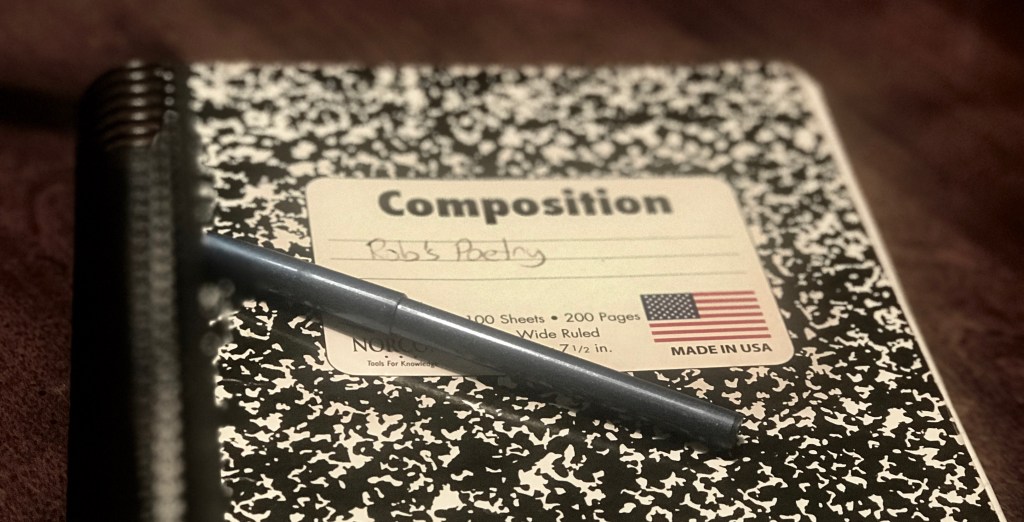
Recently, I have been expressing myself a lot more publicly through poetry. Poetry is a hobby of mine. I enjoy writing poetry, was published in an anthology in high school, and wrote a collection of poems for my family the Christmas before last. I do not aspire to being a professional poet, do not claim the title poet, and certainly do not believe that I am creating anything worthy of being etched in stone. I know that poems like my villanelle for my youngest daughter will probably be considered overly sentimental and sappy to most people. It probably won’t make it into an anthology of the best poems of 2019.
Still, I have enjoyed bringing this part of my heart out and into the open. Interestingly, I find that certain people respond to my poetry on my blog from vastly different places in life. There are classically beautiful women writing about life, people who enjoy writing poetry behind profile pictures of cats, people writing poems about living in cities I’ll never see, and a thousand and one different people writing poetry that come out of life experiences far different from mine.
There are moments when I wonder how someone from such a different place in life could like my poems. Often, I look at their poetry and occasionally find myself blown away by beauty, truth, and wisdom that is far outside of my sphere of understanding. My poems often aren’t even a spark compared to their flames. Reading some of these poems are humbling, intriguing, and often shatter preconceptions. I feel drawn into a world different from my own.
Some poetry is shared in low-tech ways too!
Sometimes, I find that drawing out of the “safe bubble” of the church scary. What would the woman down the road think if she finds out her pastor read that poem about longing? What would the Bishop think if he knew I enjoyed and found beauty in that poem about staring over the edge of a bridge in despair?
Sometimes I become anxious about what people in the church would think. I then remember that the God I love is the God I see in Jesus. The Jesus I know was accused often of being a miscreant for eating with tax collectors and sinners. The Jesus I know would probably enjoy a night at a poetry bar with people who were honest about their flaws far more than a night debating whether you round up or down when tithing your spices. The Jesus I know invited people to come near even when following him from that place of proximity often meant they had to make sacrifices. The Jesus I know would probably find beauty, sadness, grief, and loveliness in some poems I have enjoyed reading.
I honestly believe the church needs to relax sometimes and remember that God loves all of those people “out there.” One of my favorite churches was the church in the country which had a screen door leading into the sanctuary to let the sound, the smells, and the life of the world around it into worship. What’s even better, it bordered a farm which spread cow manure every spring. Worship with the scent of cow manure. If that’s not a unique incense for worship in the country, then I don’t know what else would qualify.
So, for those of you who read my blog for interesting theological commentary, I invite you to check out one of the people who like the poems I write. Most of them write some interesting stuff. For those of you who write poetry and often encourage mine, thank you for letting me be a part of your community. I love both sides of this blog’s community and thanks for letting me be a part of your online life.
The snow falls on a church holding one soul. Drifting snow causes roads to be treacherous or closed, but the space is full. The baptismal font is empty; yet echoes memories of families blessed. The carpet where chancel meets nave shows evidence of drips of communion juice. Tears shed by coffins never seem to stain. The stilled piano rings with neither spirituals nor hymns. The organ holds its breath. This place is quiet; yet it is not empty. Memories fill this place from altar to narthex.
The pews are all full.
Deep snow is no barrier
where memories dwell...
The sanctuary on Sunday during worship time during a “No Unnecessary Travel” Advisory
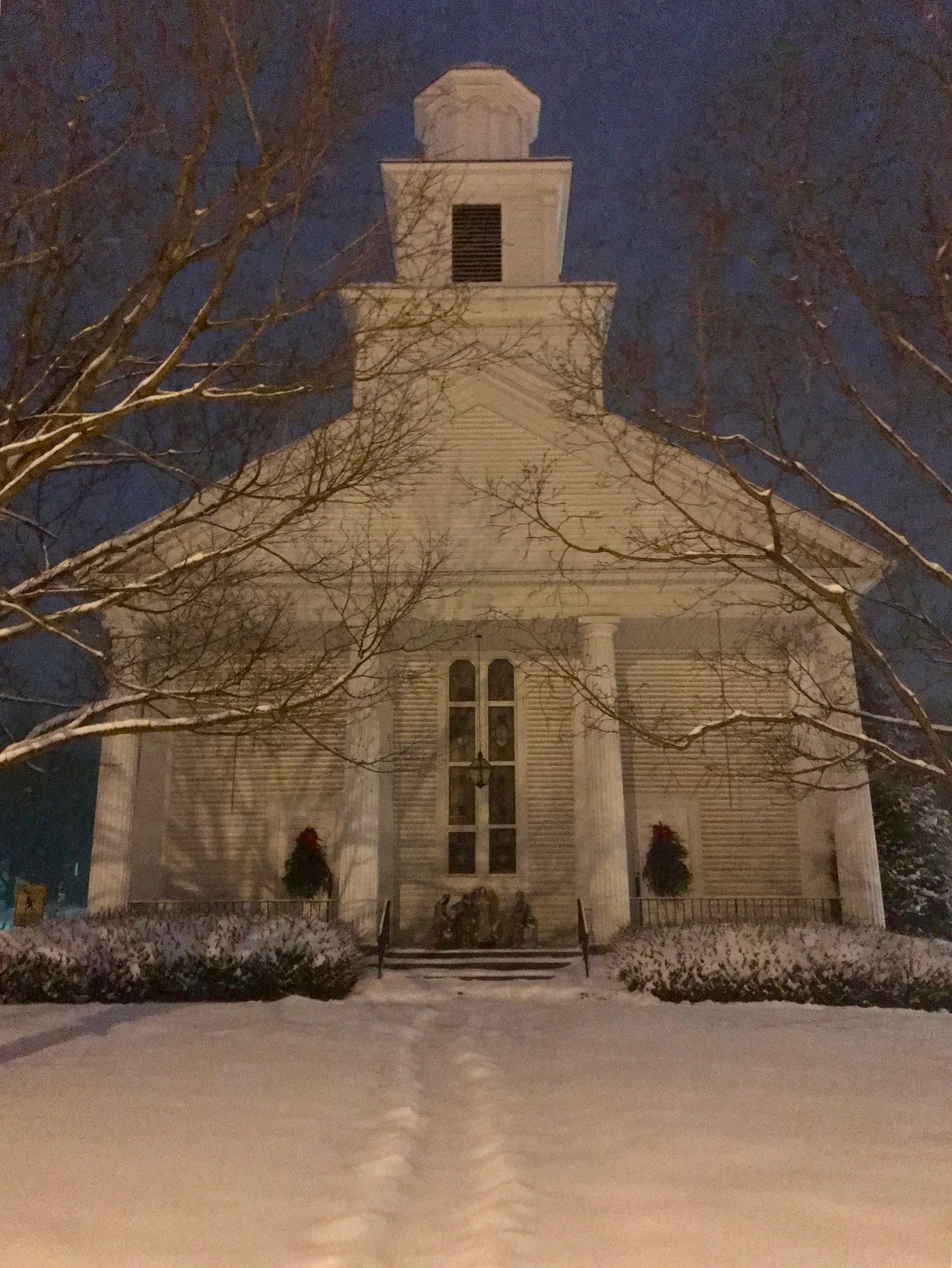
Maine Federated Church, Saturday night with over a foot of snow forecast before Sunday worship… The bulletins are printed, music prepared, but will the roads be clear?
Frosted sacred ground;
Plans prepared wait quietly
Like the falling snow...
Saturday Night Snowy Haiga, Distracted Pastor 2019
It is dark now, my little one.
We rock beneath a long dark sky.
We should sleep now, for day is done.

You've had milk. You've had your fun.
Still house rings with your piercing cry.
It is dark now, my little one.

Mom would rest like the long set sun.
My voice cracks as my throat grows dry.
We should sleep now, for day is done.

Soft song and pout seek battle won...
I have sung many years gone by.
It is dark now, my little one.

I'll hold you close–blanket-wrapped bun.
My voice so soft–so close your eye.
We should sleep now, for day is done.
It is dark now, my little one.
Today’s post is a poem inspired by the events of last Monday night. I woke in the middle of the night to the sound of an exasperated spouse and an inconsolable baby. Our baby was loud and she thanked me for holding her close by screaming right in my ear. Still, we rocked and I sang until peace fell at last on her troubled soul.
Was it the teething medicine? Was it that she was gassy? Was it that she just needed to wear herself out? I do not know, but she is the third child. I have rocked and sung through far worse.
“Hold the course both straight and true!”
Winds buffet. We pitch and roll.
“Everything will be fine!”
The tiller snaps off…
“A Seaborne Dodoitsu” The Distracted Pastor, 2019
Paperwork for our Annual Meeting is completed. It is now time to focus on the next session of the Academy for Spiritual Formation, which takes place towards the middle of next month. One of the greatest challenges I have found in the Academy is taking a lot of superb material and authentically engaging. I have read too many books and have great things go in my eyes, bounce in my brain, and eject themselves at the first distraction. Long time readers of the blog have noticed that this blog is one place I try to engage the material.
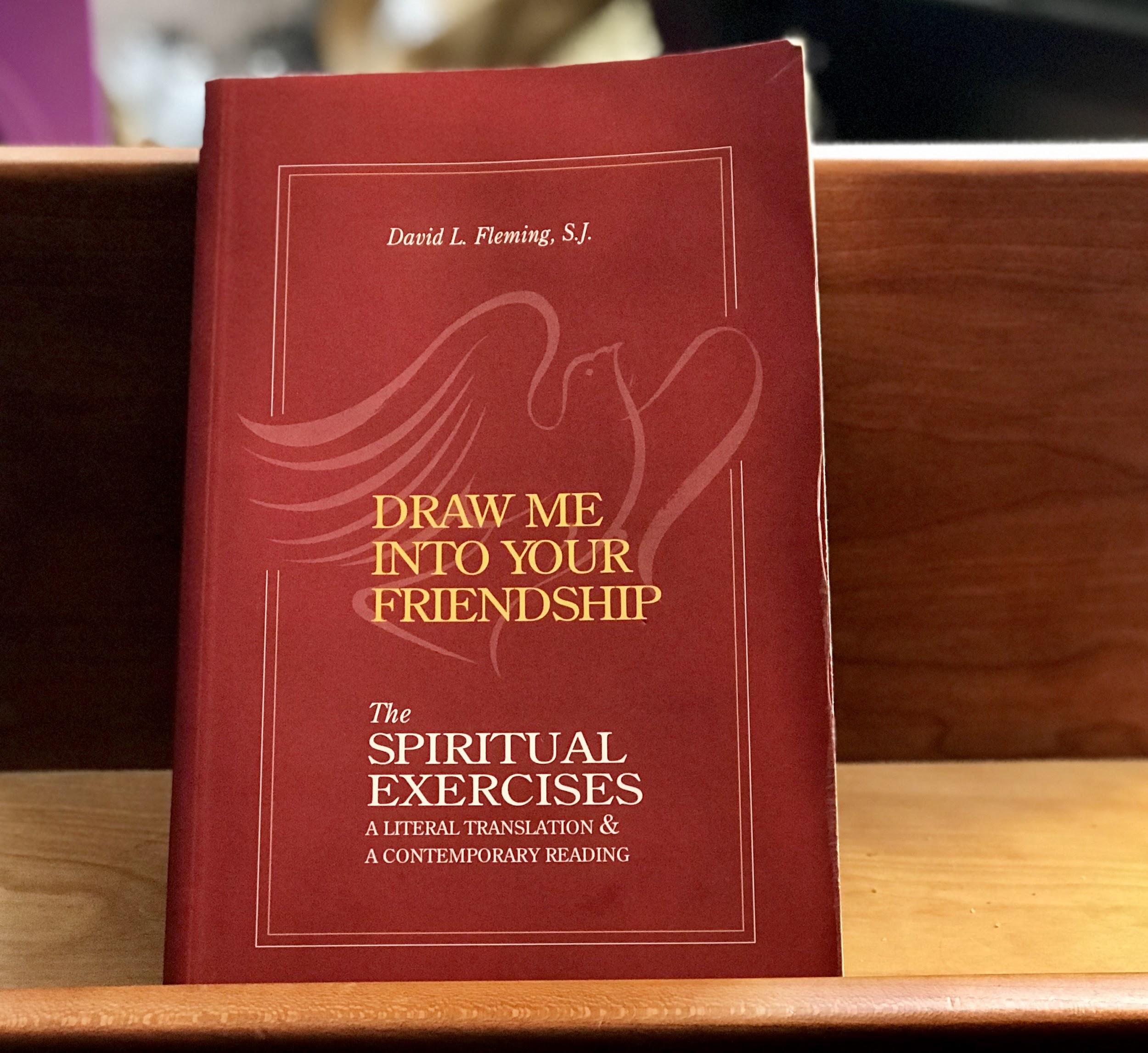
Today I was reading several of the “Rules” from the Spiritual Exercises of Ignatius of Loyola. In particular, we were asked to focus on sections 314-336. These rules deal with moments of consolation and desolation. We were assigned to read the version translated by Jules J. Toner, but as I have my own copies of the exercises, I thought I’d interact online with versions and resources I own. I generally interact with “Draw Me Into Your Friendship: The Spiritual Exercises: A Literal Translation & A Contemporary Reading” by David Fleming, S.J and “The Spiritual Exercises Reclaimed: Uncovering Liberating Possibilities for Women” by Katherine Dyckman, et. al. To be honest, “The Spiritual Exercises Reclaimed” is better commentary than translation. Translation is primary for this conversation, but you should still check out that very interesting book.
In Fleming’s work, the section is entitled “Rules for perceiving and knowing in some manner the different movements which are caused in the soul” in the literal translation and “Guidelines for Discerning Different Movements, Suitable Especially for the First Week” in the contemporary translation. In all three translations, the conversation revolves around consolation and desolation.
Consolation, in my words, is when one’s spirit is aflame with the love of God in joy, drawn to the love of God is sorrow, or in any way grown in the faith, hope, and love that comes from God (and referenced in 1 Corinthians 13). Desolation is the opposite of consolation. Hence, it is when the soul’s love of God is smothered, the soul feels stripped away from the presence of God in sorrow, or circumstances arise in which faith, hope, and love are diminished in experience or (hopefully not) reality.
What drew my eye was the section referred to as Rule 5 and Rule 6, which can be found in sections 318 and 319 respectively. I think when we look at these rules, we find something that is a bit challenging. I will draw on Fleming’s contemporary translation for our discussion.
“5. When we find ourselves weighed down by a certain desolation, we should not try to change a previous decision or to come to a new decision. The reason is that in desolation the evil spirit is making an attempt to obstruct the good direction of our life or to change it, and so we would be thwarted from the gentle lead of God and what is more conducive to our own salvation. As a result, at a time of desolation, we hold fast to the decision which guided us during the time before the desolation came on us.
6. Although we should not try to make new decisions at a time of desolation, we should not just sit back and do nothing. We are meant to fight off whatever is making us less than we should be. And so we might try to intensify our prayer, we might take on some penance, or we might make a closer examination of ourselves and our faith.”
In many ways, I understand what Loyola is driving at in these rules. I also acknowledge that these rules have done a great deal for the church over the centuries. I also believe they have value going into the future. In many ways, I am an outsider commenting on something which does not come from my own denominational tradition and mean no offense to those who hold these rules and experiences dear.
I also see a challenge in these rules for the modern church. For many churches, the American attendance pattern of worship has led people to enter deep periods of doubt and desolation. We are faithful to what we once found fruitful. Certain hymns, certain ways of acting, and certain patterns of life consoled and blessed us.
Life has changed. We who are still in the pews can end up facing the desolation of the spirit that comes with lower attendance numbers, people skipping once integral Bible study, or even quitting the church altogether. It can be a heavy blanket on the soul to find empty seats that were once brimming. We can find these words in our desolation to be wise words of advice. We choose to keep at the decisions made during seasons of consolation! What is more, we double down on commitment! We may not have formal penance in the Protestant church, but we could order twice as many tracts, invite that neighbor twice as often, and intensify our prayer.
The dodoitsu I put at the beginning of this blog summarizes the situation quite nicely. The waves are crashing, the wind is howling, the tiller is snapping, and the response can be to stand there saying “Everything will be fine!” In moments of doubt, we might call out to Jesus like the disciples! “We will drown! Don’t you care?”
I raise these concerns because I believe one concept of the sixth rule is integral. Sometimes we need to make a closer examination of ourselves and our faith. We may need to ask questions like:
Was my faith grown by the hymns or the fact I was singing about my faith with others?
Did that memorial item in the sanctuary grow my faith or was it the person who inspired it? What would the original person have wanted? Would that line up with our purpose?
If relationships helped grow my faith, are there places I can help others grow in their relationships? What if those places look different today than five years ago?
Would changing something small make a big difference? Would that small change affect everything or just cause discomfort for a while?
Occasionally, when we take time to examine ourselves and faith, we find that the things that consoled us were something different than we remember. It can be helpful to remember that things are not always how they once seemed.
There are times when the call is to stick to what you planned in a time of consolation. If you struggle with alcohol, a bad day is not the time for the drink you swore off in better days. If you struggle with anger, perhaps this is the moment when you should go walk off your frustration instead of face the person who is aggravating you. Struggles do not mean you should change your plan.
Still Loyola pointed out that some difficulties exist not as desolations but as consolations. When things go wrong it can be a reminder of how blessed we are to have God in our corner despite our struggles. When the boat is pitching back and forth, it can be a good reminder of how grateful we are for flotation devices.
In my 22 years as a committed Christian after my “heart-warming” experience, I have learned that few experiences are black and white. Some situations seem dire but end up being blessings. Some blessings seem wonderful but lead to challenging situations. Discernment is never easy, but there is wisdom in these words from Loyola. I have learned the value of holding the tiller with a loose hand. I have also learned the value of steering through the storm.
Gusts pierce old windows
As I enter cold kitchen.
The new year still creaks.
Calendars change as snow falls.
Aromatic tea wakes bones.

Silent draft reminds:
You are blessed to be so warm!
Howling wind reminds:
Halloween is not scary
Compared to homeless winter!
Poem crafted in response to Quadrille Challenge #71 by dVerse. I am currently decompressing from preparing for Sunday’s Annual Meeting at the church I serve by using the creative side of my brain. Too much analysis and planning leaves my creative side in need of expression. There are worse things to do at your desk while enjoying a sandwich and cup of tea!
If death my friend and me divide, thou dost not, Lord, my sorrow chide, or frown my tears to see; restrained from passionate excess, thou bidst me mourn in calm distress for them that rest in thee.
I feel a strong immortal hope, which bears my mournful spirit up beneath its mountain load; redeemed from death, and grief, and pain, I soon shall find my friend again within the arms of God.
Pass a few fleeting moments more and death the blessing shall restore which death has snatched away; for me thou wilt the summons send, and give me back my parted friend in that eternal day.
Charles Wesley, “If death my friend and me divide,” 1762
I have been working on both the final reports for next week’s Annual Meeting at Maine Federated Church and last minute arrangements for the funeral of a beloved church member. Blogging has not been a priority for the last few days.
I wanted to share this poem by Charles Wesley for two reasons. First, I am using it during the service tomorrow. Second, I find it an inspiring statement of faith. You can learn more about Charles Wesley here!
I stood in the rain
Searching sky for a rainbow.
A symbol of hope
Was all that I sought above
A wet hospital crosswalk.
This poem was inspired when I exited a hospital today after a lengthy visit with a family. It was dark, rainy, and the sun poured in despite my mood. If you have a pastor who regularly cares for you or your loved ones, I encourage you to offer them a bit of love.
There are probably moments where they too stand in the rain, looking for the hope that others need them to express. Indeed, I found my rainbow, but I will admit that I threw a temper tantrum and stood on the sidewalk until it showed up.
Well back in 1900, Mr. Alexander Carmichael published the Carmina Gadelica. Well into the public domain, I wanted to take some time to look at an old poem this week. The poem appears under the title “The Blessing of the New Year” and according to Mr. Carmichael it was “repeated the first thing on the first day of the year.” Here is how the poem goes:
God, bless to me the new day, Never vouchsafed to me before; It is to bless Thine own presence Thou hast given me this time, O God.
Bless Thou to me mine eye, May mine eye bless all it sees; I will bless my neighbour, May my neighbour bless me.
God, give me a clean heart, Let me not from sight of Thine eye; Bless to me my children and my wife, And bless to me my means and my cattle.
“The Blessing of the New Year” in the Carmina Gadelica, 1900 CE
Looking closely at this poem and prayer, there are several things which show in the form and content of this work. There are directions to this prayer both in scope and focus.
The first thing I see is a shift of focus from the unknowable, to the seen, to the loved. In the first section there is a focus on God’s blessing for the new day, which makes sense as this is a prayer for a new year. Unstated is the reality that the year ahead is a mystery.
The poet marks that the day (or time) ahead has never been vouchsafed. Vouchsafe is a word that can have several connotations. Whether the meaning in this case is that the knowledge of what the day ahead might hold would be gracious, condescending, or a special favor, the poet asks for a blessing even without that knowledge. The poet desires a blessing understanding that their time ahead should bless God.
In truth, this prayer contains a leap of faith. Who knows what the year ahead will hold? The prayer begins with a request that has no real context. A blessing of plenty of drinking water is a different blessing in the midst of a desert than it is on the shores of a clean freshwater lake. The petitioner does not know what is to come but seeks blessing.
The prayer shifts in the second movement of the prayer. The request is made that everything which falls under the gaze of the eye be blessed. Beyond the unknown of where one’s path will lead, for most the world will be somewhat reliable. Neighbors will remain neighbors.
There’s an old phrase that says “Familiarity breeds contempt.” Often, after several years of living in the vicinity of a neighbor, what once was innocent can often become a source of great frustration. Music can be played too loud, barbecue scents fill a house if you are downwind, and occasionally neighbors have children who can cause a ruckus. I imagine this was an even greater challenge when one’s neighbors were more constant in the times leading up to 1900.
The prayer leans into this reality by proposing that the year ahead will include a blessing of one’s neighbor. Even before receiving a blessing, the petitioner sets off to be a blessing. While the petitioner asks that the neighbor bless them as well, there’s a mutuality there. In a time before cars and modern conveniences, the neighbor might be a blessing which could make the difference between life and death.
Finally, the prayer moves into the heart. It lifts family and means of provision up in this last section of prayer. We may find cattle to beodd, but consider that for some a healthy cow might mean the difference between living through a winter and starving through the end of the cold months. Prayers for wife and children are definitely patriarchal in composition, but this is a prayer from 1900. Leading into all of these relationships is a call towards God for a clean heart and to remain in the sight of God who sees all folks.
Consider that bit for a moment. There is no prayer here for God to turn away while there is abuse in the home or a lapse of judgment. There is a call for God to be near and to watch. The heart out of which all things flow is kept in the eye of God. That’s actually a pretty bold request.
So, what can we sum up from this prayer from 1900? Sometimes the best prayer begins with admitting you do not know what will happen, but seek to live with trust first and foremost. Similarly, even when we have had a rough past which included mistakes (which most of us will admit), there’s still a greatness to praying that God would keep an eye on us and grant us a better future. There’s also just something beautiful about a prayer that intentionally does not close one’s eyes to one’s neighbor.
If I were to rewrite this prayer for today, I wouldn’t focus on cattle, but I would remember how God has helped me find ways to bring food to my table. If I were to rewrite this prayer for my circumstances, I might not see my neighbor in exactly the same light as someone from 1900 who might see only this person on days of miserable weather, but I would consider that our neighbors are often the people we look beyond when we consider the problems of the world. If I were to rewrite this prayer, it would be different, but I hope that it would maintain the same movement of trust in God from the unknown future, to the parts of my life I see, and finally to the beloved parts of my life.
Breakfast scent reaches far— Wafting through all warm safe homes… A shared moonstruck myth.
Rev. Robert Dean
Today marks the beginning of a new year. 2019 is here. I have many hopes for this new year, but I found myself unwilling to answer a question my wife asked our family at breakfast this morning. My wife asked “What are your hopes for 2019?”
My problem with her question was not that I had no answer. I have many answers for her question. I would love a great many things to happen over the next year. I would enjoy a happy year for my children and for the healing of some wounds that came to the surface in 2018. I would feel blessed if my ministry thrived and if I could see tangible results of God’s work in my life. I would enjoy many of these things a great deal.
My challenge with her question comes from the fact that 2018 helped to inject my theology and my thoughts with the wisdom of different centuries of Christianity. Would I be happy if my ministry thrived at the expense of another group of sisters and brothers in the faith? Would I find meaning in my children being blessed while other children nearby continue to suffer through the belief that nobody cares for them?
It clarified my thoughts on these matters as I entered my devotion this morning. I am working through Upper Room’s resource “The Upper Room Disciplines 2019” and found myself working through the reflections of Dr. Marshall Jenkins. The book describes Dr. Jenkins as an “author, spiritual director, and licensed psychologist.”
Today’s reflections were on finding the light in the darkness’s midst and revolved around Matthew 25:31-46, which is the story of the division of the sheep and goats at the end of things. While reflecting on this passage, Dr. Jenkins wrote intriguingly about the light and the darkness.
The first thing that caught my eye was that we must find light by first finding darkness. This idea caught my eye as someone who has struggled in the past and is continuing to struggle with eye issues. In particular, it reminded me of the time they removed my eye patch after my corneal transplant.
When the eye patch was removed, everything was bright. I had spent days with my eye covered and everything was bright. My eye had become so accustomed to the darkness that everything I saw, from the smallest led light to the intensely bright light shining through the clouds sent pain through my head. I do not believe I realized how bright headlights truly were until we went for a ride that evening.
I did not understand how powerful light was until that period of darkness. In the same way, it can be very difficult to find light in this world if we do not first see the darkness. Dr. Jenkins points out in the passage in the Disciplines that we instinctively avert our eyes from the darkness.
In my experience as a minister, that reality is true. When I was minister of a church that hosted an Alcoholics Anonymous group, I often heard more in conversation around the state of the fellowship hall after meetings than I did about how brave the women and men were facing their struggles. Ironically, I think the AA group left the hall cleaner than we did on Sunday mornings!
To be clear, at the church I once served, the complaints were few and far between, the church never talked about removing their access to the space, and they did their best to make sure AA could continue meeting in the church’s space. The point I am attempting to make is that it was far easier to discuss a trashcan accidentally left full than it was to talk about how amazingly brave the folks were who came to face their struggles. Like Dr. Jenkins said, it is human nature to avert our eyes from the darkness and churches are filled with humans.
Dr. Jenkins also does a wonderful job at pointing out that the places of darkness are where this passage states we will find Jesus. He states:
“Jesus himself told us where to look: among the hungry, thirsty, alien, vulnerable, sick, and imprisoned. From their dark predicament, their faces will reveal the light… the light of Christ appears to those who step into the night with the lowly.”
Dr. Jenkins in “The Upper Room Disciplines 2019”
What Dr. Jenkins states tracks with the passage. Jesus says in Matthew 25:40: “Truly I tell you, just as you did it to one of the least of these who are members of my family, you did it to me.”
All of it begs a question for me. If you’re wondering where Jesus is in this topsy turvy world, have you looked among the least? If you’re wondering how you can make the world a brighter place amid a world filled with darkness, have you brought your light into the life of people like those listed in Matthew 25?
Let’s be clear, I’m not recommending giving money for others to do the work, although I am certain that is a blessing. I am not even recommending that you send money to the church to support our ministries because that is not my goal. I am asking if you personally have walked alongside the kind of folks where you might find the light of Jesus? Have you faced the darkness enough to recognize the light?
“Christians of the first three centuries certainly understood themselves to be aliens, pilgrims in this world with citizenship in another. Given their political location in the Roman Empire, it is not surprising that stranger status would be a primary way Christians understood themselves and their place in the world. These Christians frequently remind one another that their true allegiance is not with the powers of this world and they must hold a sort of double consciousness, seeking to be good citizens in their communities yet never fully at home in the world.”
Dr. Amen Oden in “And You Welcomed Me: A Sourcebook on Hospitality in Early Christianity”
Perhaps it would be easier to see the darkness if we were to more fully grasp this understanding of our reality. In my experience, church folks tend to look at those who struggle in darkness and say “How can I help them out of their struggle?” We might do well to ask how their journey is similar to our journey. We may be blessed to ask how our journey might intertwine with their journey. Perhaps we should see ourselves less as those who have everything together and instead as people who are on our own journey as pilgrims and aliens through this world.
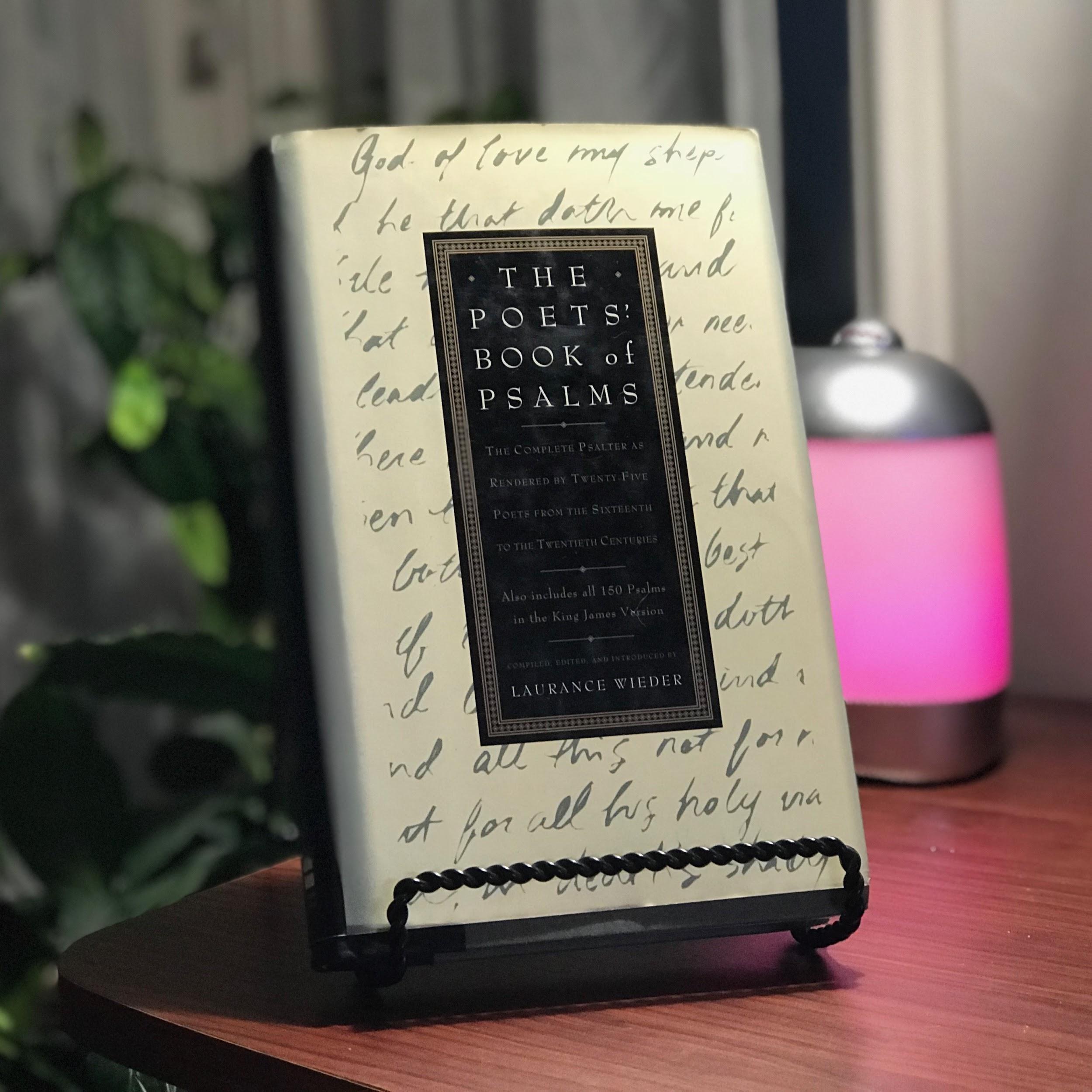
In the newest part of my collection of alternative translations to my tried and true New Revised Standard Version (the Wieder collection) there is a poetic translation of Psalm 150. Psalm 150 is part of the Revised Common Lectionary reading for today. John Davies, who lived from 1569 – 1626 CE translated this particular version of the Psalm. Here, from across the centuries, is John Davies poetic translation of Psalm 150:
“To him with trumpets and with flutes,
With cornets, clarions, and with lutes,
With harps, with organs, and with shawms,
With holy anthems and with psalms,
With voice of angels and of men,
Sing Alleluia: amen, amen.”
Some basic background on Sir. John Davies can be found here. To summarize, Sir. Davies was more than an Irish poet. Sir Davies was an attorney with a somewhat motley career which included being one of the most respected attorneys of the Emerald Isle and also being disbarred at different points. He has a very interesting political career both in Ireland and in England.
Regardless, in my corner of creation, Sir Davies’ poems are what most catch my attention a few centuries after their original publication. His work, while understandable, draws attention to various areas which a modern translation might miss.
My copy of “The Poets’ Book of Psalms.” Also pictured, the citrus tree my family gave me for Christmas two years ago and the Peace Lily which was a gift given to my family by a nearby church when my family moved to Maine, NY from Boonville, NY. Also, an essential oil diffuser which is a very calming addition to my home desk.
I enjoy this poetic understanding of Psalm 150 as a result of the way it draws attention to a timeless truth which I have come to understand in my own path through life. Let me point out the instruments used in the praise of God in this poem. God is praised with cornets, clarions, lutes, harps, organs, and shawms. I must say that I hear organs in worship on a regular basis due to where I serve and I do enjoy the harp when it is played well, but I do not hear much music on the radio played on cornets, clarions, or lutes. Upon first reading the translation, I did not even know what shawms might be, but after a quick google search, I did learn that it was a flute-like instrument. Shawms are not very popular on the radio these days.
The timeless truth these strange things point out is that the praise of God is greater than any instrument. There are no guitars, drum kits, d’jembes, or any of the instruments you might find in most modern praise bands. Still, in Sir Davies’ day, people praised the Lord with their own happy music. Holy anthems and psalms of Sir Davies’ day might be different from from any radio singles or YouTube praise chorus that might be produced today, but it seems that both types, although separated by centuries and cultures, praised the Lord.
Praise of God is greater than the instruments we use. When praise comes from the heart, it can be shared through a piano, a snare drum, an organ, some shawms, a bass guitar, a lute, a lyre, a harpsichord, a shofar, a bodhran, or a cowbell. I am thankful that this timeless truth is pointed out through paying attention to a very old poem from an Irish attorney.










 Distracted Pastor Ramblings