Fourteen Years of Chinese

After a week of indecision, I have decided to have Chinese today. Fourteen years ago, on Valentine’s Day, I burst into a liquor store with what felt like the stupidest question on my lips. “It is Valentine’s Day, my wife just gave birth two days ago, and we are having Chinese. What wine goes with Chinese food?” The clerk did not know what to do, what to say, and quickly suggested sake before we both remembered that was Japanese.

Fourteen years later and the marriage is over. There is nobody to share Chinese with tonight, but I still remember bringing home Chinese while exhausted. I remember both of us passing out from exhaustion on our couch as our baby slept while swaddled nearby. I don’t even think either of us even bothered drinking a glass of the wine. I remember all of these things and walking exhaustedly to try and help my wife have a nice dinner on Valentine’s Day with food we both loved.

She isn’t here. Those moments are gone, but I still remember pushing my legs to go out to the car and get dinner. I remember the adrenaline crash after getting everyone home safely after the first car ride with a used car seat and then heading out to find my wife the closest thing I could find to a romantic dinner. I do not want to lose the memory, do not want to lose the feeling of “bringing home the bacon” to a family for the first time, and I remember being proud of myself for something that was so simple. I do not want to forget how my child changed my life on that Valentine’s Day or how I found something far more wonderful than diamonds to give to my wife. I’ll have Chinese anyway and I will remember the most beautiful Valentine’s Day I ever experienced, even if I remember through tears.

"What goes with egg rolls?"
The stunned clerk was quite flummoxed
but did a good job
At least, I think that she did
I do not remember now

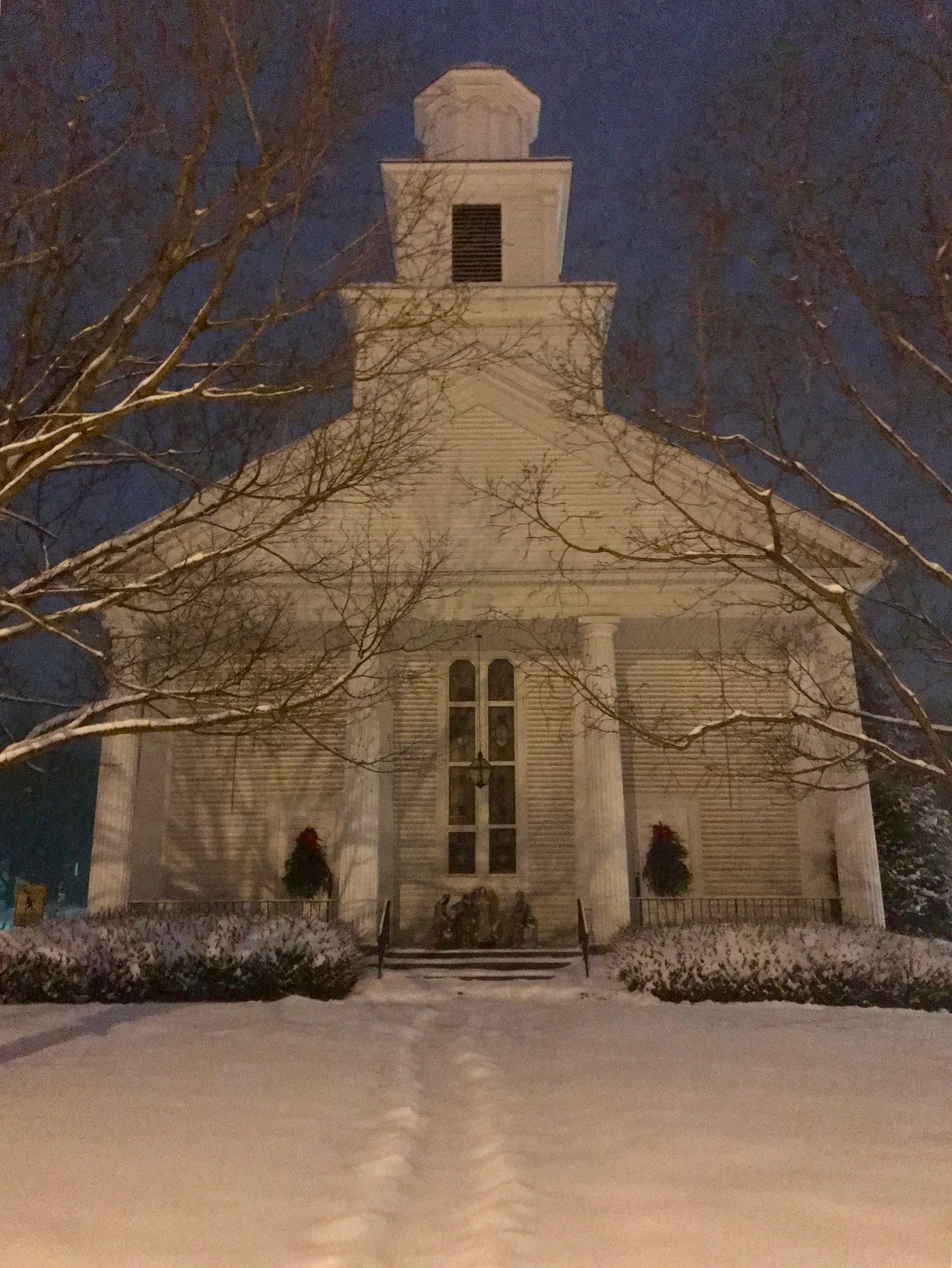
“More than a Building”

If you stop to look
more than a mere glance
It is more than a building.

It hides itself well
with the bricks so fine
but this is not just a church.

Real lives change here
when people listen
and find a kind place with hope.

We may not fix things
when the world breaks stuff
but we listen with our hearts.

We share words of home
We offer safe space
for people who are adrift

Not just a building
we are a free pier
for all who sail on life's waves.

Building, dock, or church
This sanctuary
is offered freely to all

I am so grateful
and laugh here with joy
for this is not just a church

In this place we feed
those with a hunger
both in body and/or soul

It is a garden
for all of the "bees"
who need some nectar or rest

It is a warm inn
on a wintry road
when people need safe shelter

It is a rare place
where death comes quite near
but nobody runs in fear.

It is where goodbye
is shared with a hope
that goodbye is "just for now."

It is where we wash
the soul with water
and ask the Spirit to come.

Full of miracles
stories with wonder
defy explanation here

It is made of brick
but is more solid
than just a sacred building

It is a place to find grace
It is a place to belong
It is more than a building
Video, photography, accompianment, and poetry all composed/captured/performed/written by me

The Calling and a Personal Journey

There’s a long gap in my blog between the events of the past and the events of the present. A lot happened between those last poems from a while back and the poems of today. I have been on a journey of discovery as my wife separated from me as I came to grips with the fact that my marriage was at an end.

There were a lot of missing poems that were shared between shed tears. Like sand mandalas, those poems were here for a moment and then gone. In many ways those poems blurred the lines between prayer and poetry even more than usual. There were moments of grief, anxiety, and loss.

Over those months of quiet self-reflection and work I came to a point where I finally publicly admitted that I am in recovery from alcoholism which did not begin in the last year or during that silence. I have been open about my family’s history with alcoholism, but had never shared the stories with anyone of how I used alcohol to supplement pain medication during a lengthy period of severe pain and physical therapy where I could barely walk or even sit still from the pain. I didn’t have the life wisdom to realize that I should have gone to a doctor instead of self-medicate on top of prescription medication. That decision was dangerous and doubly-dangerous as my family has a history of addiction. It was foolish.

I have had to come to grips with what part of my life had been shredded by alcoholism, realized that there were problems that had had nothing to do with alcoholism in my relationship, and I have realized that I kept medicating pain of a different kind even after my back healed. I have come to understand that this is a season where I need to be faithful to my identity as a single man who still wants to be a good father, wants a respectful relationship with his former partner, and who wants to find a way forward while choosing both life and the high road through some very dark passes in spite of the choices of others.

One of the most difficult conversations I had during that dark period was a long conversation with my District Superintendent where I shared openly and honestly about the journey I have been on. I shared that I still felt called to the ministry, still felt the Holy Spirit at work, and shared about the journey of recovery which has included working with professionals and a particular anonymous organization to connect all the aspects of my journey into one way forward. I have put in a lot of work medically, psychologically, and spiritually over a period of years to come to this place where I am beginning to see the light of freedom in recovery. I have put in hundreds if not thousands of hours into seeking freedom from the consequences of my biology, choices, and a disease that is not infectious certainly seems communicable.

I share this now as I was just blown away by a passage I read while preparing for my sermon this Sunday. I was working through the commentary of Ronald Clements in the Jeremiah entry to the “Interpretation: A Bible Commentary for Teaching and Preaching” Series published by John Knox Press. On page 16, Clements writes of Jeremiah:

“The sense of call, with all that this meant by way of reliance upon God and the stripping away of all other social and personal supports, was something that was taking shape over a long and difficult period of time. It had begun for Jeremiah at a specific moment in his personal life and had continued. The experience of inner self-discovery had not ceased since that first day. The sense of call belong too to his private inner world as a part of his personal understanding of God. Yet it had to be a public and openly declared part of his self-understanding, since it alone could explain his declarations and his personal authority to declare them. No one could confirm or deny that he possessed this calling; it was between himself and God.”

Clements, Ronald E. Jeremiah. John Knox Press, 2012.

I was blown away by this passage. While reading this commentary, I connected deeply and intimately with Jeremiah in a way that I have never connected before this moment. Certainly, I am not the first pastor to sigh over the direction of American Christianity. I can connect the dots between the political and social forces of Judah in Jeremiah’s day and the the political and social forces in modern American religion. I am not the first pastor to wonder if the rhetoric and posturing of many modern church leaders on television is not the gasp of a system that is about to go into exile. This is not where I felt a connection.

I felt a connection as I remember my past. I remember being a teenager who felt called away from a suicidal grief into the love of God. I remember talking with a youth leader about how I wanted to go into ministry because it was tugging at a deep part of me. I remember being a youth leader and a church intern who just kept feeling the compulsion to go deeper. I remember studying and taking the first steps into ministry. I remember the interviews, the affirmations, and the ordination. I remember all of those moments.

I also remember praying with trusted friends in Malvern, PA, at the Academy of Spiritual Formation as I admitted that I was occasionally mixing drugs and alcohol to get through the pain. I remember talking with close friends about how it felt less and less like a choice. I remember asking them to pray for me as I started trying to get free of that compulsion to drink. I remember being dry and miserable on my own without a single supportive voice. I remember the first time I said: “Hi, my name is Rob and I’m an alcoholic.” I also remember that it took a few attempts to find the courage to say those words. I remember meeting with a sponsor for the first time and sharing stories. I remember the anxiety and fear. I remember the first time I worked through my fear and clearly stated aloud why I always note that we serve non-alcoholic juice when serving communion: I say it because of people in recovery like me.

I remember talking with Pastor Parish Relations Members at my church about the fact that my wife and I were separating and how it partially related back to my own journey of recovery. I remember sharing that I had a relapse and that I had climbed back on the wagon quickly because I was afraid. I remember crying with fear about being honest. I remember how freeing it was to tell people that I attend meetings daily via Zoom to continue to seek freedom. I also know that I have both amends and living amends to make with people I have harmed along the way. I remember almost every conversation with someone I have known for a long time where I have said something along the lines of: “I’ve had to come to grips with something.”

Through all of these things I have never felt my call to leadership ebb. In fact, I have had many people open up about their own struggles and the struggles of others. I have talked with wandering folks who come to my church each time they are in the area because the pastor not only understands the journey towards sobriety but is walking down that same road. I share a cup of coffee with them after church not out of sympathy but out of true camraderie as a sojourner down a similar road. I have even performed funerals for people who have and have not found a way to freedom on that same road. I feel like I am a better minister since I have found the courage to be honest about my alcoholism. Honestly, I feel more hampered by the pain of marital and parental separation than the daily journey of recovery.

At some point I hope I will get to the point where I share with others in those meetings that I’m not only an alcoholic but a pastor. Honestly, that’s almost more scary than sharing with the church that I have a struggle with addiction. According to one study published last year, the national average of drinks consumed in the United States was 17 per week (Survey: Americans consumed 17 alcoholic drinks per week in 2020). It seems less strange to admit that I am just another person struggling with the disease of alcoholism that has been on the rise over the course of the pandemic than to admit to other people that I have a very very close relationship with “the God of my understanding,” especially if that means they might share less freely about their own journey and struggles.

In the meantime, I do feel called to continue in ministry quite strongly. Clements indicates of Jeremiah, the calling that Jeremiah experiences was one that nobody could confirm or deny from the outside. I identify with that description of the calling deeply. The calling is first and foremost internal.

Surely, I could be reappointed or even stripped of a title, but that’s different from having the authority to confirm or deny a calling. As the Bishop said at my ordination, ordination was a recognition of what God has done and what God is doing in my life. Ordination was an affirmation of what God was doing and recognition that God was at work in a special way. That journey has not changed and that calling has never ceased. It still burns deeply within me.

I wish I could put into words how strange it is to be called to leadership and authority while daily admitting that I am powerless to straighten things out on my own. The power was never mine, but it often feels easy to assume I am more powerful than I am, which many of my colleagues likely understand. I personally have come to believe it makes me a better leader as I am quite clear on the fact that the power I hold and wield as a minister does comes from God and not from my own strength.

So that’s the story of the long absence between posts. Yes, I am in recovery. No, I’m not ashamed of admitting my need for God to work in my life every day through the process. Yes, I am allergic to alcohol and I have a disease. No, having a disease is not the end of the world. This disease is a disease and not some moral failing or mark of worthlessness. Good people that I have come to trust tell me that there is a solution and I believe that I can do all things through Christ who strengthens me.

Truly, I live each day with hope and courage that comes from being on my knees and asking for help each time I wake up in the morning to the snuffling sounds of a dog and each night that I go to sleep alone. God is with me on this journey and that journey will continue 24 hours at a time for the rest of my life. I am okay with that journey and I will keep walking.

Whoops

Yesterday I knew,
I knew, I was thirty nine.
Body, heart, and soul.
I was sure I had one more.
How could time flow so quickly?

A friendly voice spoke
Had I done the math? Did I?
Of course I was sure
I was so sure that I knew,
I knew, I was thirty nine.

As the shower rained,
curiosity nagging,
I checked on fingers.
The fingers say I'm forty.
I knew I was thirty nine.

It seems so stupid
that I forgot my own age,
but who really cares
If I add a syllable
or see who I am inside?

I am who I am
and I don't dwell on my age.
The tree was happy
as the colorful lights shone
and celebrated with me.

Living up to my blog title

I have to admit that this transition from one church to another has been a bit overwhelming lately! Switching from a primarily written leadership at my previous church, to an in-person leadership in a parking lot at my previous church, to a digital leadership in my current appointment has been quite an existential workout over the past two months.

It is hard to imagine that one month ago today we were frantically putting boxes into our cars as my wife and I officially moved to Trumansburg. We still have boxes to unpack and my church office has never appeared so organized. Just yesterday I finally started sanding down the pieces of furniture my wife wanted painted before we put them into their final resting places. There’s still so much to do before we are fully settled!

Catching up with the running train of a church has been an experience, especially as I keep trying new things. As always, it is the odd stuff that sticks out in memory. In my church life, I found myself prone in a creek bed in a gorge earlier this week capturing a picture for tomorrow’s slideshow background. It was a cool picture and definitely worth the silt and creek dust on my clothes..

In my personal life, I took the scooter that I purchased (in a thus fruitless attempt to help me zoom around Syracuse at Annual Conference) to the local skate park to ride around the ramps and pipes with my kids as they each roller bladed, skateboarded, and toddled with a walking bike. I only tripped over my feet and hit the ground once—I was impressed, but still ultimately lost our game of tag.

In my spiritual life, I have found great comfort in using one of the eLearning resources through the Upper Room. I have been reading through Flora Slosson Wuellner’s “Prayer, Stress and Our Inner Wounds” and doing the corresponding eCourse. It has been uplifting to take the time to slow myself down for personal growth.

Wherever you are, I pray that your summer is going well. Rest assured that blogging will become more regular as routine slowly asserts itself in this new place and new space. Blessings today!

An Essay on My Bread

“To eat bread without hope is still slowly to starve to death.”

Pearl S. Buck

I tore my bread in half this morning before I dipped it into a mug of hot coffee. Although you may not understand it, my bread was the best bread in the world this morning. The bread was a superior loaf of bread for several reasons. Allow me to explain my position instead of rushing over to my office to finish sorting files and packing boxes.

First, the bread was the work of my own hands. There are plenty of loaves down the road at the grocery store. Some of the loaves are quite lovely, but none of them are the work of my hands. The bread I sliced into perfect thick slices was shaped with my fingers. The pan in which it baked rests a few feet away. Even in the middle of packing and chaos, my bread is still a reminder of calmer moments.

Second, the bread comes with a memory of a yeasty aromatherapy. A few days ago, I soaked flour in water with a bit of yeast before letting it spend the night fermenting in a bowl. The house filled with a rich smell the following morning after I combined this fragrant mix with a little more flour, water, and yeast. Between the smell of the rising dough and fragrance of the browning loaves, our house was filled with sensations that were immediately recaptured through the toasting of the bread. Although my office smells like furniture polish and a hot paper shredder, for this moment I can be transported to quiet hours where more than my dough rested.

Third, my bread just tears well. As a minister, I break loaves of bread in half a lot more than most people. I have broken rolls, crackers, wafers, baguettes, french bread, challah, and a host of homemade loaves. My bread tore in half today with a little bit of resiliency, bounced back with a bit of spring, and was ready to suck up hot coffee. My bread tears in a lovely way.

Fourth, my bread tastes heavenly. There’s a tiny bit of salt for the tongue, a depth of earthiness from the wheat, and a yeasty aftertaste. The bread is complex from the darkness of the crust to the tasty depths of the crags. My bread is not from some uniformly mass produced taste factory. My bread is unique.

In conclusion, you may have heard that something or another is the best thing since sliced bread. Sliced bread is great, but my sliced bread is wonderful to me. There are only two types of bread that are better than this loaf of bread: the bread I will bake in the future and the bread that you make for your enjoyment.

Untitled poem from a dream

Dreams like fog drift out from the depths of night.
Troubled thoughts steal all the warmth from our bed.
Hazy glimpses of events filled with fright:
I dream of habits I would bury dead.

Cold winds blow down the dreamy lane
Where dreaming guilt weighs down my soul.
Eyes open to a world more sane
As thoughts bend to the night's dark hole.

A staccato heartbeat
Slowly calms itself down.
I live where fingers meet
As soul seeks Heaven's Crown.

I would forget
Dark dreams untrue:
Part ways and yet,
Guilt clings like dew.

O God...
Bless me...
Break rod...
Free me...

Below the sun
I kneel and pray.
I seek the Son
By light of day.

Sunlight burns away fog
Revealing ways to see
Not all is miring bog.
There is much good in me.

Drifts lift to reveal a good heart
That seeks to be a good parent.
Terror unveiled to have a start
In desire to straighten parts bent.

I cannot change past nor keep dreams away
But sunlight reveals that the day has come.
Fog burns away over a cold clear way
Where any future has yet to become.

“Still Morning”

Still morning with blooming lilies outside my window…
Steel cut oats linger in salty water
As coffee scents waft in the humid air.
Gray light trickles in through old still windows
As lazy flies begin to greet the day.

All is now quiet as mother and child
Bask in dream filled worlds beyond human reach.
The dogs sleep without a care in their heads.
Only the black cat watches with my soul.

If I could keep this moment in a jar
I would save it for darker days to come;
Yet, each day comes once and fades far away.
So, I sip and enjoy while I still can.

“Still Morning” by the Distracted Pastor, 2019

Reflecting on “This is my song” and John Chrysostom

This morning we sang a hymn in place of the offertory. The hymn is a well-meaning hymn known as “This is my song” by Lloyd Stone and Georgia Harkness. The hymn has an interesting history: first as a poem and then as a hymn. The song is a stirring song set to the tune Finlandia.

Poet Lloyd Stone (1912-1993)

I also struggle with that particular song. I struggle for two reasons. First, I struggle with the song because I love the song. I think it is beautifully written, wonderfully lyricised, and matched perfectly with the stirring tune of Finlandia. If I were to choose a patriotic song as one I could adopt as my own, this would be the song I would choose first. I appreciate the balance between pride in one’s land and an appreciation for the viewpoint of others. I also appreciate that Dr. Harkness was a pioneering theologian whose work I love to support.

Dr. Georgia Harkness (1891-1974) was a leading Methodist theologian in an age when female theologians were definitely not the standard.

The second reason I struggle is that I am increasingly immersed in the early church. I enjoy reading through ancient sermons, ancient theologies, and reading about the lives of the leaders of the early church. Recently I was reading an excerpt from John Chrysostom (ca. 347-407 CE) in Amy Oden’s “And You Welcomed Me: A Sourcebook on Hospitality in the Early Church.” The excerpt was from Homily 16 on 2nd Corinthians from the Nicene and Post-Nicene Fathers series, v. 12, which was published in 1889, and the version I share below is sourced from the public domain. I will say Dr. Oden’s version reads far easier. Chrysostom wrote:

“Knowest thou not that we live in a foreign land, as though strangers and sojourners? Knowest thou not that it is the lot of sojourners to be ejected when they think not, expect not? which is also our lot. For this reason then, whatsoever things we have prepared, we leave here. For the Lord does not allow us to receive them and depart, if we have built houses, if we have bought fields, if slaves, if gear, if any other such thing. But not only does He not allow us to take them and depart hence, but doth not even account to thee the price of them. For He forewarned thee that thou shouldest not build, nor spend what is other men’s but thine own. Why therefore, leaving what is thine own, dost thou work and be at cost in what is another’s, so as to lose both thy toil and thy wages and to suffer the extremest punishment? Do not so, I beseech thee; but seeing we are by nature sojourners, let us also be so by choice; that we be not there sojourners and dishonored and cast out. For if we are set upon being citizens here, we shall be so neither here nor there; but if we continue to be sojourners, and live in such wise as sojourners ought to live in, we shall enjoy the freedom of citizens both here and there. For the just, although having nothing, will both dwell here amidst all men’s possessions as though they were his own; and also, when he hath departed to heaven, shall see those his eternal habitations. And he shall both here suffer no discomfort, (for none will ever be able to make him a stranger that hath every land for his city;) and when he hath been restored to his own country, shall receive the true riches. In order that we may gain both the things of this life and of that, let us use aright the things we have.”

John Chrysostom, Homily 16 on 2nd Corinthians from the Nicene and Post-Nicene Fathers series, v. 12

Effectively, Chrysostom is referencing the teachings of Jesus about treasurers on earth. Jesus tells us in Matthew 6:19-21 to avoid storing up treasures on earth. Chrysostom points out that one cannot take houses, fields, slaves (different time in history: not justifying the unjustifiable, but pointing out Chrysostom’s context), gear, or anything else out of this world. Chrysostom points out that we have been forewarned against building up our riches on earth or claiming the things of this world as treasure. We cannot take the things of this world with us. Indeed, it is only in the next life that we find ourselves growing into our true inheritance and riches.

What catches my eye in regards to the hymn and what causes me to ask deep questions is the line “For if we are set upon being citizens here, we shall be so neither here nor there; but if we continue to be sojourners, and live in such wise as sojourners ought to live in, we shall enjoy the freedom of citizens both here and there.” Chrysostom sees Christians as people on a journey through this life with a goal of reaching the next. If one stops to claim this place as one’s land, one will only have it for a moment. If one claims one citizenship to be in Heaven, then one has the freedom to both enjoy this world and move into the next without great loss. Indeed, a strict reading would say that one cannot move into the kin-dom of God by grasping tightly to a land, a nation, or one’s own goods.

Strictly speaking, the hymn we sang stands in opposition to one of the earliest Christian leaders because it claims that this is our land, our nation, and our space while Christian tradition teaches that we belong elsewhere. This world is a world in which we live in a fog. As Paul wrote in 1 Corinthians 13:11-12 to a community in conflict about the things of this world: “When I was a child, I spoke like a child, I thought like a child, I reasoned like a child; when I became an adult, I put an end to childish ways. For now we see in a mirror, dimly, but then we will see face to face. Now I know only in part; then I will know fully, even as I have been fully known.”

Writing to the church in Corinth, Paul tells them to stop acting childishly and to quit dividing themselves over earthly matters. This is a place where we see the world, each other, and God dimly (like in a mirror from an age when a modern mirror would be a miracle). The world to which we belong and where we are headed is where we will see clearly and be seen clearly. The world to which we belong is one in which we shall come into our full being.

Thus, I am torn by the hymn. I love the hymn, the words of peace, and the seeking of understanding of other people. I also realize that Chrysostom might look at the differences between nations and see people whose eyes might rest better on the world to come than the goods and lands of this world. Neither we in this land nor those folks in other lands can carry the goods of this world to the next life.

This hymn may be one of those places where we must live in the tension between ideals. The older I grow, the more I come to see that life requires a bit more flexibility than I once carried in my idealistic youth. As a friend likes to say at church: “Blessed are the flexible for they will not be bent out of shape!”

Grief as an Octopus

This Saturday morning I am thinking about grief. My wife has started a wonderful new professional position, but we live in an imperfect world. I fell asleep in bed with my head next to hers as she talked about her professional challenges last night. I listened for a good long time before my exhaustion took me away. Thankfully, she does not read my blog regularly: my “secret” is safe for now. Let’s be honest: she may already know.

Professionally, in my own ministry I often face grief in homes, at funerals, on Sunday mornings, in hospital rooms, in meetings, in conferences, in the checkout line at the grocery store, and many other places. Personally, I have been grieving the act of registering for Annual Meetings this year because of the grief incurred globally. Now that the United Methodist Church’s Judicial Council ruling has effectively guaranteed a divisive United Methodist Annual Conference and a United Church of Christ Annual Meeting filled with well-meant sympathy and questions, I suppose my grief needs to be accepted.

Grief is in my thoughts this morning. I spent my quiet time this morning praying while doing the less than pleasant task of doing dishes. I might not have raisins to sort, but I try to learn from folks like Henri Nouwen and Brother Lawrence. Grief was in my thoughts as I scrubbed oily residue and emptied the sink trap.

My conclusion at the end of my time of contemplation is that grief reminds me of an octopus. Grief can be Krakenesque or found 20,000 leagues below the surface. Grief can be in the shallows of a reef teeming with life or plucking what little it can from the open currents.

Grief is a master of camouflage. The beast hides in plain sight until it reaches out. Grief grabs you only once before you see it in every eddy of sand. Grief can make you paranoid to swim out into the seas of life.

Grief also does not hide behind every rock in the sea of life. If we spend our whole lives afraid to swim, we may eventually regret our choices. As strange as it sounds, fish that do not move water through their gills will drown. Most fish can only hold still for a certain amount of time before they get air from the surface or the sea.

Tomorrow in church at Maine Federated, we will sing songs and read the story of Easter again. We will proclaim resurrection in a world of grief. We will swim, we will breathe, and face whatever octopi wait in the depths.

“Name” Photo-A-Day Haiga

The word for the day for the #RethinkChurch Photo-A-Day challenge is “name.” Being myself, I can’t leave well enough alone, so here’s a haiga! Today’s haiga is inspired partially by Ash Wednesday and the reality of mortality exposed by Lent.

One day I will sleep
Perhaps under a stone name
While I walk elsewhere

“Her forehead” Poem

A few weeks ago I sat with a sick infant in the depths of night. Wet cloth cooling a fever from the now rare chicken pox. I rocked and contemplated what we would do if the fever spiked again. It was dark in that room in more ways that one.

A few weeks ago I sat with a parent in grief over an upcoming surgery. A sweet child in need of care. I contemplated her struggle and prayed for more than just the child. I prayed for my own forgiveness because I was grateful my child was not the one in need of that care.

A few weeks ago I sat and ate elementary school spaghetti. It was exactly how I remembered it. We sat, laughed, talked, and even danced as we tried to support some friends’ family in their hour of need. I could stomach school spaghetti far easier than letting my friends feel they were alone after caring for a baby who spent a lot of time in the NICU.

Yesterday I saw the ash on her forehead and I realized that she was mortal too. Today she is well but one day she will be in God’s hands. My heart broke as I realized a truth that had been walking through the edges of my soul.

On the day of ash
We contemplate our own path
Down through our life’s end.
Easier to see your own
Than on your daughter’s sweet face.

“Her Forehead” by The Distracted Pastor, 2019

“Perspective” Haibun

There is a time for every matter under heaven. There is a time for challenge and a time for winter. There is a time for difficulty and a time for tears. There is a time for brokenness and a time for loneliness. There is a time for solitude and a time for silence. There is a time for every matter under heaven, so why be jealous of those whose tears are yet to come? Why be envious of those who will know broken days? Why wish to be those who have had perfect days? There is a time for every matter under heaven…

Tomorrow will come
And all will be different,
So breathe through the pain.

“Perspective” by The Distracted Pastor, 2019

This poem is written in response to the challenge from the dVerse Poets’ Pub challenge for a Haibun on Solitude. This poem is dedicated to a good friend who knows why I wrote it. Thank you for listening, my friend.

A Canzone for those eyes

My daughter’s eyes. She was too young to understand my words Sunday…
Hopefully a seed will take root!

“Can you see deep down?”
The Distracted Pastor, 2019


Holy One, do You know me?
Deep down can You see?
All of the places in me?
They just look at me
And they simply laugh away.
Sometimes it breaks me
To wake up and see just me.
I walk lonely ways.
There are many simple ways
That You might help me.
My wounded, lonely spirit
Cries sadly, Spirit.

Can you see my heart Spirit?
You knit all of me
knowing my bones and spirit?
My sad cracked spirit?
What could you possibly see
You love me Spirit?
The world needed me Spirit?
Not hiding away?
Not shunned or thrown far away
From this life Spirit?
I am confused by Your ways.
Help me see Your ways.

I can see some of the ways
With happy Spirit.
When I walk down pleasant ways
I trace Your ways–
Fingerprints of You in Me.
Marks of Your deep ways
Show in the subtlest of ways
When I slow to see
The goodness that You must see
In Your ancient ways.
You draw me from far away.
I can't stay away.

Things that I would toss away
You bless through Your ways.
You toss ideal away.
Discard it away
As You stitch up my Spirit.
Weave, subtle Spirit.
Bless my imperfect spirit
As You work in me,
As You work to renew me.
Do not stay away.
Open my eyes–help me see
The perfect You see.

I can't always clearly see
How You work away
To form what You hope to see.
Pain distracts, You see?
Work in me Your calming ways.
Bless my eyes to see
The vision that You did see
When You put spirit
In my flesh by Your Spirit.
Bless my soul to see
The loveliness within me,
the best part of me.

Holy One, you do know me.
Though it's hard to see
You are never far away.
Teach me Your deep ways
Until spirit knows Spirit.

Sunday mornings I lead worship at the Maine Federated Church. This past Sunday I spoke with our younger disciples about Psalm 139. Psalm 139 is a tricky psalm in places, so we focused on the first 18 verses. There are words about God surrounding someone on every side, words about God crafting someone with care, and words about God’s deep love.

As I shared with the kids, I saw reflections in their eyes. My eyesight isn’t the best, but there was hope and pain in those young eyes. Perhaps one or two had already been told they were not the wonderful kids I believe that they happen to be. I wrote this canzone to work into the struggle I have shared with them over the years. Can these words really apply to us? Can we move from doubt to belief?

For the record, this is the first truly complicated form of poetry I have attempted. I am not adept with the canzone or sestina, so I would adore kind feedback or recommendations of other poems in these forms I should check out.

Reflections on Sabbath

Today’s post is out of sync for most folks. I serve as a minister and thus operate on a different schedule than most of my community. My community consists of a majority of people (but not all) who either work weekdays or live in a cycle where weekends are normal. We have a few individuals who work shifts on weekends, but most either work those weekday jobs or have other purposes in their life (e.g. stay at home parents, retirees, etc.)

As a minister, Monday morning is a time when I prepare for the week ahead. Often that means taking time for reflection. My “Spiritual Renewal Day” is Friday, which is unfortunate as it means my only regular companions for my Sabbath are pets and my toddler. Saturday is a day fraught with community events, denominational events, children’s events, and complications with worship preparations. This past Saturday I had to choose between a historical society coffeehouse, a district training day in the United Methodist Church, the upcoming week’s grocery shopping, worship prep, and my daughter’s birthday party. I chose my daughter’s birthday party, worship prep, and grocery shopping.

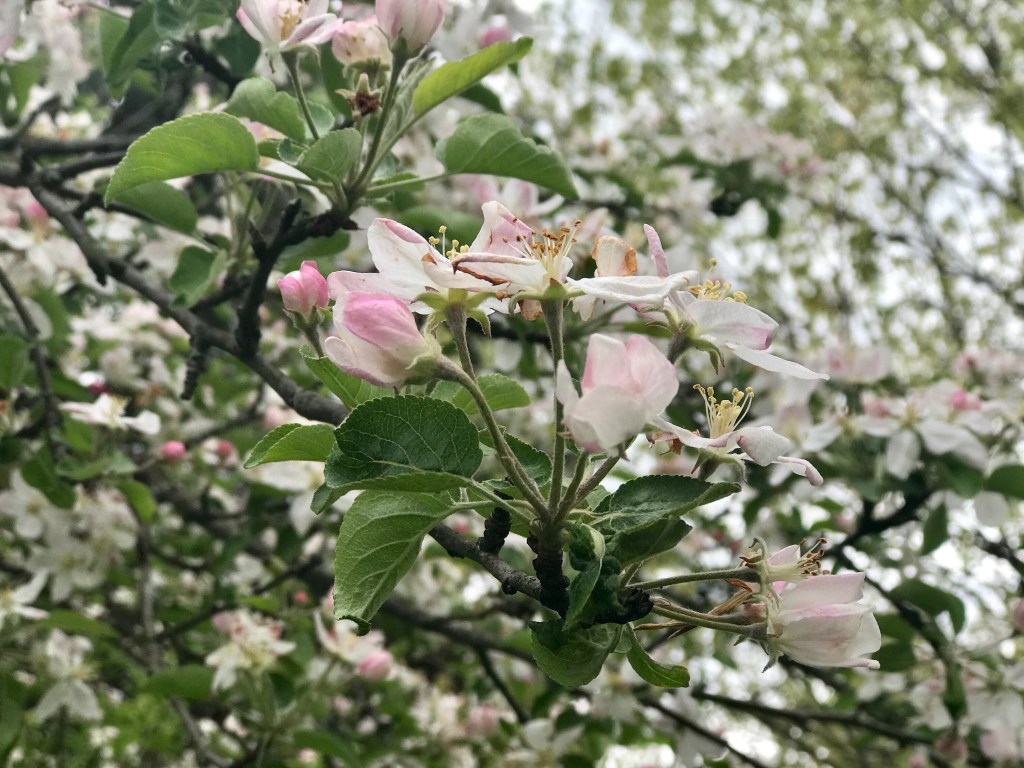
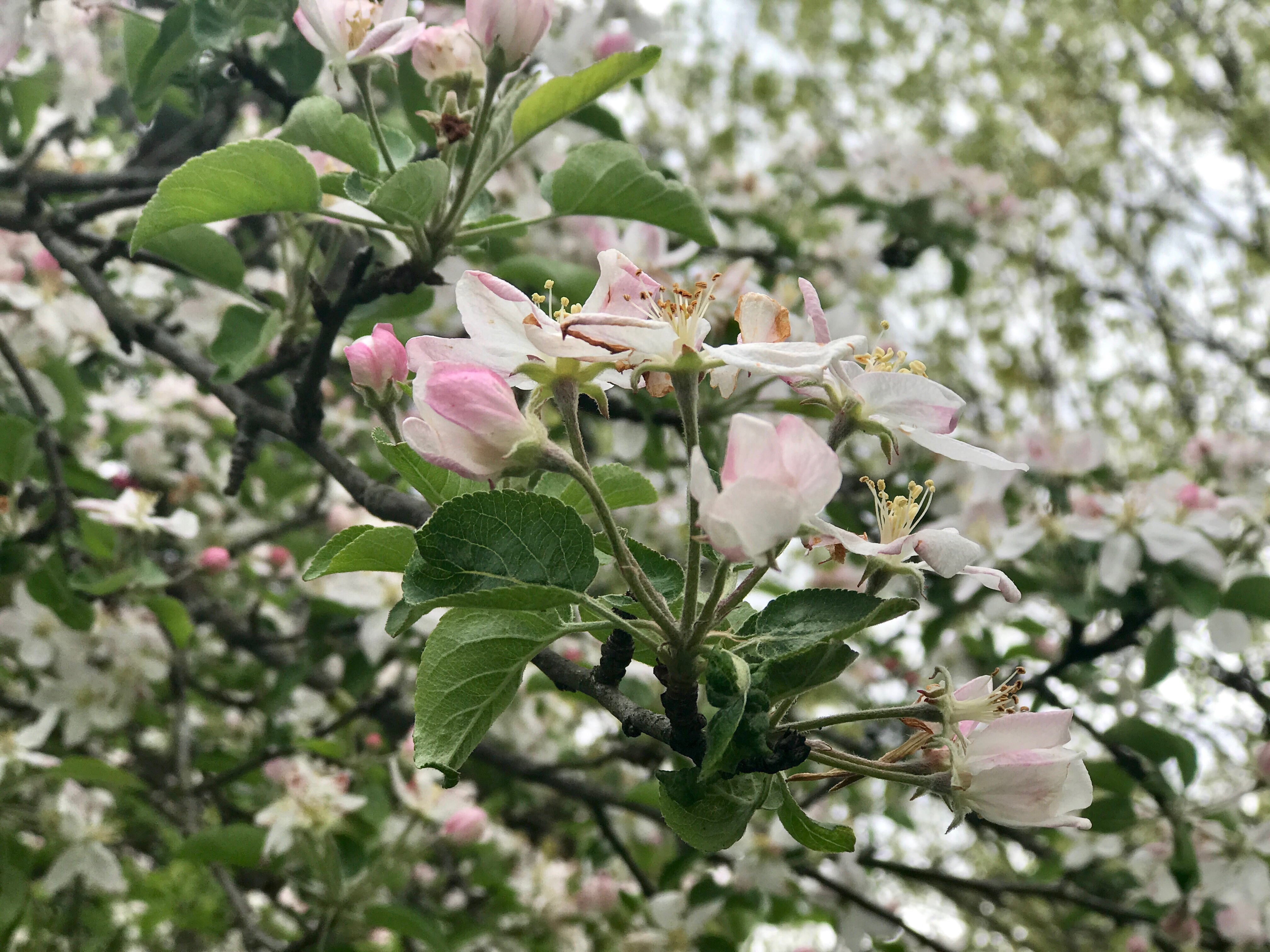
Apple blossoms only bloom after the rest of winter…

Monday is not my spiritual renewal day, but Monday morning is a time my spirit requires me to slow down. Part of that slowing down is reading for personal growth, for the Academy for Spiritual Formation, for an upcoming book or Bible studies, or for upcoming sermons (although on principle, I rarely read anything on the subject I am preaching on the upcoming Sunday).

Today I began by reading further into Rev. Wayne Muller’s book “Sabbath: Finding Rest, Renewal, and Delight in our Busy Lives.” I find Mr. Muller’s writings to be interesting. From my reading, I have the feeling that we share a common attribute in introversion. I may be wrong, but I found his love of rest to speak to my introverted soul.

There are days when it seems as if Mr. Muller knows my heart. It feels like continual overcommitment leads to a violence against my soul (pg. 3). As a minister, I am often asked to be a voice or presence on nearly every committee, am expected (on my Methodist side) to hold each committee accountable to our common identity and purpose, to be present in the lives of the homebound and sick, to be available 24/7 for hospital calls, and am expected to lead in most forms of outreach.

The sense of needing to be everywhere for everyone is a common struggle among clergy. Many clergy struggle from burnout and many are accused of not being present enough when their families are falling apart, their relationships are crumbling, and facing loneliness. I have struggled with the constant pull of ministry on my life for years. I believe this common struggle is one reason Mr. Muller’s words struck so deeply with me today. In his chapter on “The Joy of Rest” Mr. Muller writes:

“The practice of Shabbat, or Sabbath, is designed specifically to restore us, a gift of time in which we allow the cares and concerns of the marketplace fall away. We set aside time to delight in being alive, to savor the gifts of creation, and to give thanks for the blessings we have missed in our necessary preoccupation with our work. Ancient texts suggest we light candles, sing songs, pray, tell stories, worship, eat, nap, and make love. It is a day of delight, a sanctuary in time. Within this sanctuary, we make ourselves available to the insights and blessings that arise only in the stillness of time.”

“Sabbath: Finding Rest, Renewal, and Delight in our Busy Lives,” by Wayne Muller (pg. 26)

When was the last time you woke up with the goal of delighting in being alive? I have had days where I have woken up with the goal of worshipping, the plan to sing songs or tell stories, but it is rare that I have woken up with the goal of delight. As someone who has publicly faced the challenges of mental health over the years, waking up with the goal of delighting in my life seems particularly foreign to my mindset.

Wouldn’t it be wonderful to set aside time to delight in being alive? Many Christians struggle to fight for conceptual ideas like sexual propriety, the lives of unborn children, and other idealistic strivings. Laying aside those questions, what would life be like if we were to put a tenth of the energy we see poured into those causes poured into delighting in life? What would life be like if we gathered for worship Sunday mornings and said we are here to delight in each other’s company? What if we delighted in each other’s company?

Candles that burn openly in the wind often don’t burn for long.

In my mind, I see a church filled with people going past “Hey. Good to see you!” or “Hi. How are you?… I’m good.” What would it look like if we delighted in each other? How would that change the way we see church? How would that change the way we see our mission?

A church that focused on treating the Sabbath how Mr. Muller describes Sabbath is the kind of church I would love to be a part of as an individual. A community focused on songs, worship, delight, prayer, stories, and even in bringing love into our homes… there is a wonderful vision!

Room for the Weird

The other night something caught my eye when I was reading the introduction written by S. T. Joshi in “American Supernatural Tales.” Mr. Joshi was discussing a statement made by William Hazlitt in 1829 in the Edinburgh Review. Mr. Hazlitt believed the ages of ghosts had passed (along with ignorance and superstition) before the United states came into existence.

Mr. Hazlitt’s assertion itself did not catch my eye. What caught my eye was the way Mr. Joshi reframed the issue. Mr. Hazlitt asked:

“Since so much of supernatural fiction appears to find the source of its terrors in the depths of the remote past, how can a nation that does not have much of a past express the supernatural in literature?”

J. T. Hazlitt in the Introduction to “American Supernatural Tales”
Who wore it better? The cat on the cover of “American Supernatural Tales” or Pepper the cat?

How can a nation without a past express itself in supernatural literature? Does this question only apply itself to the original context? Can a nation with such a short memory for history express itself in these arenas?

This approach to the question intrigued me. How can one write good fiction that defies reality if one lives in an age where reality is black and white? Werewolves and Dr. Frankenstein’s monsters are entities of a time when such things were plausibly close to real, but just beyond reality. Our age is an age of scientific marvels, which is perhaps why our science fiction is extensive and excellent, but much of horror is jump scares and the monstrosity of humanity. Are there truly unique monsters in our age?

Mr. Hazlitt points out that H. P. Lovecraft wrote of William Faulkner’s tale “A Rose for Emily,” that: “… this is a dark and horrible thing which could happen, whereas the crux of a weird tale is something which could not possibly happen.” For something to be truly weird, it could not possibly happen…

All of these things raise a question in me: Can the weird still happen? Can things exist that could not possibly happen? In an age when the internet, technology, animation, and raw processing power make almost anything imaginable come to the screen, does the weird still exist? Can the weird still draw us into a special place where the natural laws and rules of things no longer apply?

I ask this in all sincerity because I believe that Mr. Lovecraft was correct. A weird tale requires something that could not possibly happen. Also, God is weird.

We live in an age bombarded with information and with possibility. We are living in the middle of the longest government shutdown in American history, which would have been unthinkable a few short years ago. Some of the most unfathomably large comic book stories of a medium that is blessed to present stories from one frame at a time have been brought off of the paper onto the screen. The modern equivalent of gods and goddesses walk on the silver screen when stories of far-off worlds are not being portrayed. We live in a world of possibility.

Is there still room in the midst of all of that information for the world to find the weirdness of God? Can God be weird if we keep swallowing all of that stuff without pausing to chew? What’s more, does all of this make life better?

I love superhero movies and science fiction, but they are like everything else: they are good in moderation. I enjoy watching humorous videos and listening to Weird Al, but they are like everything else: they are good in moderation. When the mind is filled with too much stuff, there is less room for imagination, creativity, and weirdness.

I like the universe to be a little weird. I like there to be a space where the weird God can be set apart from reality. We used to call that set apart weirdness holiness. As much as I love science fiction and superheroes, can a nation with neither an attention span for the past nor space for palpable weirdness really engage with the weird? Can we engage with God? If the space is too crowded, is there room in ourselves to step back and take space?

Fleeting but precious

Today I spent my time in prayer focusing on Psalm 39. In my personal journey, today is not only the day of my birth, it is also the day when I gave my heart to God at fifteen years old. As such, spending my prayer time focusing on Psalm 39 might seem odd to many people.

I said, “I will guard my ways
that I may not sin with my tongue;
I will keep a muzzle on my mouth
as long as the wicked are in my presence.”
I was silent and still;
I held my peace to no avail;
my distress grew worse,
my heart became hot within me.
While I mused, the fire burned;
then I spoke with my tongue:


“Lord, let me know my end,
and what is the measure of my days;
let me know how fleeting my life is.
You have made my days a few handbreadths,
and my lifetime is as nothing in your sight.
Surely everyone stands as a mere breath. Selah
Surely everyone goes about like a shadow.
Surely for nothing they are in turmoil;
they heap up, and do not know who will gather.


“And now, O Lord, what do I wait for?
My hope is in you.
Deliver me from all my transgressions.
Do not make me the scorn of the fool.
I am silent; I do not open my mouth,
for it is you who have done it.
Remove your stroke from me;
I am worn down by the blows of your hand.


“You chastise mortals
in punishment for sin,
consuming like a moth what is dear to them;
surely everyone is a mere breath. Selah


“Hear my prayer, O Lord,
and give ear to my cry;
do not hold your peace at my tears.
For I am your passing guest,
an alien, like all my forebears.
Turn your gaze away from me, that I may smile again,
before I depart and am no more.”

Psalm 39, NRSV

Consider the words of the Psalm and there are passages which you will probably not find within a card on a rack in your local store. Well, some of them might end up in a “dark humor” section:

  1. “Surely everyone goes about like a shadow. Surely for nothing they are in turmoil; they heap up, and do not know who will gather.” (vs. 6)
  2. “You have made my days a few handbreadths, and my lifetime is as nothing in your sight. Surely everyone stands as a mere breath.” (vs. 5)
  3. “You chastise mortals in punishment for sin, consuming like a moth what is dear to them; surely everyone is a mere breath.” (vs.11)
  4. “Turn your gaze away from me, that I may smile again, before I depart and am no more.” (vs. 13)
  5. “Hear my prayer, O Lord, and give ear to my cry; do not hold your peace at my tears. For I am a passing guest, an alien, like all my forebears.” (vs. 12)
  6. “Lord, let my know my end, and what is the measure of my days; let me know how fleeting my life is.” (vs. 4)

So, why would I spend my time contemplating this passage of all passages on my birthday? Why would I make the choice to pray about these words on the day I felt my heart strangely warmed and felt an assurance of my place in God’s love?

My heart was captured by the fourth verse of the Psalm. “Let me know my end, and what is the measure of my days; let me know how fleeting my life is.” As I spent time with these words, I thought about the tea in the wooden bin on my counter. I switched back to primarily being a tea drinker as part of my plan for 2019, and I checked our stash of tea to find it empty. A new bag of fair trade tea will arrive in a few weeks, so I am left with what is in the bin.

When the bin is full, there are many pots of tea ready to be made. A cup of tea is just a cup of tea. The tea may be enjoyable, warming, wonderful, and flavorful; however, it is still just one cup of much once brewed. When the bin is nearing emptiness, each cup is to be savored. When the bin is almost an empty box, every sip is a gift. There is something wonderfully deep about the paradox that scarcity makes something all the more precious.

The tea runneth low…

Yes, my life is fleeting. Yes, even though today is a day of celebration in my house, it is healthy to remember that there will be only so many of these celebrations before I celebrate on another shore. Yes, these days are like a shadow, but the shadow shows me that there is life. Yes, what is dear to me on earth will eventually break down, rust, be eaten by dogs, fall prey to overactive kids, or just wear out; however, those things are just stuff.

I may not agree with the expressed sentiment that “God is punishing you by taking away everything you love.” I believe the 11th and 13th verses were likely born out of a dark place although there are moments when chastisement may be the only way forward. Many folks recovering from addiction have pointed to low points in life as moments when they were given a chance to recover and rise from “rock bottom.” It is not beyond the realm of possibility that some assistance is occasionally required to find that place of possibility. I would say sometimes things break and that may not be God punishing. Sometimes we have a bad day and it is not always the case that our days is terrible because God is glaring at us—I often find the opposite is usually true.

Despite my grief for the struggles endured by the Psalmist when composing Psalm 39, I am grateful for the reminder that this day is precious despite being one of many days. I am grateful for this life as fleeting as it may pass. One day, my time will come, and I hope people will realize I was grateful for what I had even as I sometimes struggled with the challenges. Today, I choose to read Psalm 39 with gratitude. I pray you find reasons to enjoy the precious nature of life.

Thank you to some generous drivers approximately 80 years ago

Today was my wife’s grandmother’s memorial service in Olean. She’s being interred out west, so this was my family’s chance to formally pay our respects. The affair was meaningful, deep, and faithful. Grandma Betty was a really wonderful woman and I learned a lot about the woman whom I sat next to for many a holiday meal. Apparently her stories were not done catching me off guard even after she crossed to that other shore.

This evening I sat at our kitchen table and contemplated Ephesians 3:1-4. In particular, I was drawn to the concepts of mystery and grace. The contemplation was deep as I spent my time with these words. As I contemplated the growth of this one moment in time, I found myself caught in a million questions as I lifted questions to God in my heart.

“…for surely you have already heard of the commission of God’s grace that was given me for you, and how the mystery was made known to me by revelation…”

Parts of Ephesians 3:2-3, NRSV

Contemplation roamed for quite a while on questions of whether this commission of God’s grace would be received well in today’s church. Would we welcome one of the villains of our stories into the doors of our church if he were to come in repentance? Would we welcome a former persecutor into our midst? Would we welcome someone who was passionately into another culture that many would consider counter-Christian into our midst? Would we have the grace to walk with them through transitions which are usually less dramatic than that of Paul?

I contemplated these questions for a while, but I kept being drawn back to the concept of mysterious grace. The early church was blessed by the unexpected life story of Saul of Tarsus. I have been blessed by unexpected stories too. I learned of a new unexpected story today at the memorial service in Olean.

My contemplation candle holder… It burns often on my table.

I heard the story of a hitchhiker in the west who went to play at a tent revival with some friends. A local girl found God at that tent revival and hitchhiked to the Bible College where that hitchhiker attended. This young lady was a graduate of a class of 12. This girl from a very small area was married and had kids. Those hitchhikers were my wife’s grandparents.

Hope was not falling asleep easily tonight, so I was holding her as she settled while I prayed and contemplated. I realized in the middle of my contemplation that if it were not for some random person picking up a hitchhiker on the other side of the country nearly 80 years ago, my daughter would not have been in my arms. It was a powerful moment of realization. My blessings in this world would be very different if it weren’t for a hitchhiking evangelist getting a ride to a small town with a graduating class of twelve to lead a tent revival. My blessings would be different if those evangelists decided the small town was not worth their time.

Earlier today on the ride back from Olean, my daughter and I were listening to the audio book for “The Good Doctor” by Juno Dawson. In that audio book, the eponymous Doctor of Doctor Who made the statement: “There’s only two things I don’t believe in, and one’s coincidence…” Apparently, being a time-traveler makes you skeptical of randomness.

Now, I am definitely not a predestination proponent, but there’s something powerfully moving when you realize that your daughter possibly wouldn’t be in your arms if someone had not decided to give one of her great-grandparents a lift, but I would rather contemplate something besides an argument that has raged for centuries like predestination versus free will.

What I contemplated was the fact that there a lot of people out there who often look in the mirror and do not know where their life is headed. They see coincidence and fear stepping out of even partial safety to see what might lay outside their door. There are scary things out there in the world which are far more frightening than hitch hiking. People can become paralyzed by fears both of what might happen and what is happening. Here a few off the top of my head:

  • A person lives with someone who is physically abusive. Zie wishes to walk away, but what if zie loses his chance to see hir kids?
  • An alcoholic wants to stop drinking, but all of hir friends drink every weekend. What if zie ends up all alone?
  • A person wants to stop working at a job that is literally physically, mentally, or spiritually killing them. What if zie quits and ends up losing everything?
  • A person has a loved one (friend/child) who is doing something awful that might end up disastrously bad. Maybe it already has gone bad. Zie wants to say something or do something, but what happens if hir loved one walks away from zie forever?

These examples are but a few examples of how life can throw challenges that cause us to stop dead in our tracks in fear. What if our inability to move causes things to go awry? What if someone we do not know in 80 years will be a completely different person if we do nothing?

I don’t know who the person was who gave my wife’s grandparents rides across what sounded like a good portion of the western half of this country, but I am so grateful that they did. If you’re living in fear of doing something that might seem just as crazy, I invite you to have a conversation with a local religious leader, a counselor, or even a good friend. If necessary, speak to the police for an intervention or go to a support group to find help. Your bravery just might change the future.

Under God’s Wings

“Be merciful to me, O God, be merciful to me,
for in you my soul takes refuge;
in the shadow of your wings I will take refuge,
until the destroying storms pass by.”

—Psalm 57:1 (NRSV)

Tomorrow is election day in the United States. In our town of Maine, there are many choices to make between incumbents and challengers. With the political climate being as it has been lately, there is a lot of tension in many hearts and minds. What will happen if one candidate wins an election? What will happen if another candidate wins? Tension and anxiety are high.

I was pondering the reality of this election before entering morning prayer. The Psalm of the day in my prayers was Psalm 57. The first verse of the Psalm stuck with me. The imagery of the Psalm begins with the image of a petitioner asking God to be merciful as their soul takes refuge. This soul turns to God and seeks safety underneath the wings of God.

The imagery that stuck in my mind was one of a Parent providing safety for a child during a chaotic storm. Images floated through my brain of a robin spreading wings over nestlings during a rainstorm, a father penguin standing over his chick throughout a winter storm while his partner walks to the sea, or a mother goose protecting her goslings.

This imagery stuck in my mind when I finally reached my computer. I felt the urge to click on Facebook, to read the news, and do many of the things I told myself I would not do before Tuesday evening. I thought about what I might absorb from such an anxious world, thought of the imagery of the Psalm, and went about my day.

Tomorrow will be what tomorrow will be regardless of my anxiety. I will vote, I will pray, but I will not be afraid. God is greater than any storm and nothing can separate me from the love of God in Christ Jesus. Tomorrow will come, tomorrow may end with me calling out, but tonight I shall trust that God’s wings are enough to shelter me.

IMG_3222


Courage and Voting

Today’s blog post is two days in the making. I have been pondering what it means to be a Christian in an age where political differences in the United States are resulting in violence. Bombs are being mailed to opponents of the president and Republicans have been threatened at one particular early voting site in North Carolina. The world seems to be more and more violent the closer we get to November’s election.

I am wondering how we should reply to these situations. Scripture tells us to pray for the lands where we find ourselves. Even if some Christians do not appreciate the idea of Christians being a people living in exile, the thrust of Jeremiah 29 still points us to ponder how we relate to the “city where we are sent.”

Of course, none of this is easy. To be honest, in some circles, asking people to take Romans 13 seriously is a dangerous proposition. Calls by Paul to the Romans to be subject to governmental authorities are seen as less than applicable in some contexts, especially when we disagree with those authorities. A person who might quote Paul as sharing the gospel truth in one letter might chafe at considering his words in another. It is natural that we rejoice when governmental powers agree with us. Unfortunately, it seems increasingly common to call for their damnation when they disagree. Calls to respect people of different opinions in Romans 14 and 15 are seen as equally ludicrous at times.

It is difficult to live in such times. Whether you are a democrat, republican, or neither, these days are difficult days. As election day draws closer, there is a real sense of dread building in some circles. Will there be violence if one party loses favor or if another gains favor? Will there be violence if something changes or will there be violence if nothing changes? Heaven knows how many families are dreading Thanksgiving and those often turbulent conversations around the dinner table.

To be honest, I half expect to hear more stories about threats and potential bombings to increase as election day draws nearer. I am not seeking to be a pessimist. I find myself watching a pattern and pondering the outcome. In truth, my own days of believing in the myth of American exceptionalism in terms of believing in a political process that might be free of intimidation and gerrymandering are pretty much at an end. Perhaps I am simply choosing to save my idealism for my life of faith or perhaps I am simply worn thin by the matters of this world.

You may be asking what any of this has to do with being a pastor or spirituality. My simple answer is to say that it relates because these are the days where we need to have courage. Yes, the news is full of stories of challenges and those stories will increase. Yes, the President has warned there will be violence if his party loses the election next month, although it is strange he warns that the violence he seems to fear would be from the party that might gain political power. An honest appraisal might say that violence might occur regardless of who wins. Yes, the world might become a dark place after this election. Yes, these are days that require courage regardless of political party.

Then again, maybe these days are not as dire as it seems. Things might go poorly, but they also might go well. In a sense, these days are like every single day of our lives. Even in the best of times, all of us live with only one day. We all live in today. Yesterday has gone by. Tomorrow is a dream. Today is the only day that any of us has to live within. Since you cannot control the future and cannot change the past, today is like every day of your life. To borrow from the ancient philosopher Heraclitus, you can only step in the same river once.

The world is always changing and the natural uncertainty requires courage. It takes courage to live in a world which might change in a moment due to a blood clot, a missed stop sign, or an unexpected illness. It takes courage to live in a world where someone might leave tomorrow, where you might lose your job at the end of your shift, and where a loose dog might catch you while you wait for the school bus. It takes courage to live in this life and while the future might seem stressful, today is really the only day that any of us have ever had to live within.

I hate to bring in ancient monastics again, but I do enjoy them. There is an applicable gem in my often quoted copy of Benedicta Ward’s “The Sayings of the Desert Fathers: The Alphabetical Collection.” That gem is a quote from Abba Serinus. The quote goes: “Abba Serinus said, ‘I have spent my time in harvesting, sewing, and weaving, and in all these employments if the hand of God has not sustained me, I should not have been fed.’”

If you would prefer a biblical approach to the concept that life is a bit more transitory than some of us expect, Luke 12:13-21 contains a parable where Jesus warns people about the folly of building up riches on earth. A rich man has a bumper crop, plans to tear down his barns, and intends to build bigger barns to hold his massive crop. He plans to live out his days with wealth! Jesus shares that his folly is to plan to live out long days with his massive wealth. The rich man will die that very night. All of the crops from his wonderful harvest will not keep him from his own mortality.

Whether you approach the subject from the Abba’s viewpoint that all of life has led to this moment because God has provided or whether you hear Jesus’ warning about the uncertainty of tomorrow, in my opinion one thing is clear. We all have this one moment. We can respond with gratitude, make assumptions about the future, or even follow the advice of Ecclesiastes 5:18 (“This is what I have seen to be good: it is fitting to eat and drink and find enjoyment in all the toil with which one toils under the sun the few days of the life God gives us; for this is our lot.”). Regardless of how we spend our days, these days are the days we have.

So, how will we spend them? If today is the day you have to live, what will you do? Will you live in fear? Will you decide to ponder what comes in every package, worry about every group of people near every polling place, or will you step forward to take your place in history? If God has brought you to this time and place, is it not your responsibility to live in this moment?


IMG_3222

I invite you to participate…

Let us Ramble: Music, Veggie Pulp, and Rice

It is Monday morning at the Maine Federated Church. My normally quiet office is filled with the distant beeping of an alert as we have a low battery somewhere in the dark halls of the church. Earlier I was listening to classical music from my favorite philharmonic orchestra (London Philharmonic Orchestra). I was hoping it would be just loud enough to drown out the methodical beeping.

In time the note started to bother me despite the music. I found a chromatic tuner, sat patiently, and learned that the alarm was only slightly off from being a B♭, although it was annoyingly a little sharp and thus out of tune with the music scales. I went on a hunt, loaded up Boccherini’s Streichquartett no. 2 in G minor, opus 27 so that the note would be only slightly out of tune instead of wildly discordant.

Such things may seem strange, but they are part of a fairly normal Monday morning when my energy is low and I need simplicity for my soul’s sake. Sunday is exhausting for me as a minister. I pour my heart and soul into preparing for worship. After I spend my time talking with folks who are loved by God. I try to remember all of the names of people who matter to them, all of the history I know of their lives, and do my very best to be a loving and encouraging person. As someone who increasingly enjoys spending time in secluded peaceful spaces, that effort exhausts me in deep ways.

Monday is about sermon and worship prep for me. I read, I study, I pray, and I seek to get a head start on the week ahead, because you never know when something will happen which will require a few days of concentrated effort. Emergency room visits, deaths, and other life concerns cannot be scheduled. Monday is a time to make certain most of my ducks are in a row, even if that row usually requires a few days to straighten out.

In a lot of ways, as a pastor, Monday for me is about resetting the rhythm from one week to the next, which is something close to what other folks hopefully experience on Sunday mornings. I give thanks for what has happened, pray for guidance for the week ahead, and prepare for meetings, sermons, and even for the prayers I will share in the week ahead. For me, these rhythms of gratitude, prayer, and study are acts of worship.

Let me give a concrete simile. Life on Monday for me is like what is currently cooking in my rice cooker. For breakfast this morning I made smoothies for my family. I juiced carrots, a tomato, and a lot of spinach leaves. I took the juice and mixed in some homemade yogurt. We had a cup and a half of goodness each to start our day.

After my wife went to work, I started to clean things up. I grabbed the juicer pulp of carrot, spinach, and tomato. I scraped it into our smart rice cooker. I added some dried peppers, water, and dehydrated beef broth. I left the pulp cooking away for a few hours. When lunchtime approached, I added a bit more water, some homemade curry powder, and some wild rice.

Now, after a morning of working on worship preparation, lunchtime is approaching, and I will set the table with what is effectively vegetable porridge with rice. Nothing special was added to the pot. I worked with some dried spices, dried broth, dried rice, and leftover vegetable pulp. I simply used what was on hand, but in a short while I will enjoy something life-giving which will hopefully allow me to be a blessing to others.

On Mondays, I scrape out the bits of me that are filled with worry and doubt. I remove the parts and pieces which are covered with gunk and I clean them out. I wash away my irritation with playing the wrong notes on guitar, pick out the bits of me that went to bed wondering if I did well, and I prepare my heart and soul for another week of service. This week I may need to be ready to bring life into conversations around death, bring hope into places where people feel hopeless, and proclaim the gospel with and without words. I cannot do that if I am living in doubt or frustration about things that nobody will remember and nobody will care about in a week, a month, or a year.

On Mondays, I start to look around for what will be needed. I have an appointment this week on Tuesday that will require my heart to be open to listen, to advise, and to care. I have to search the cupboards of my being for my compassion and make certain it is ready to be used. I have (another!) sermon coming up this week and it takes more than time with a commentary to really engage the text with God’s beloved. Today is the day when I get my head into the scriptures, into the plans, and see if all will still be well with what I planned weeks ago. This is the day when I pull together what lifegiving bits of my heart and soul are still healthy and begin to simmer them with the spices of the week. In particular, today I am thinking with joy about sending kids to camp yesterday and mixing that in with a hope for people I will be in ministry with this next week. It should be a great week.

In truth, this is the day upon which a lot of my ministry rests. How does one survive in pastoral ministry for more than a decade with ups and downs? Monday morning is part of how I live into the rhythm of pastoral ministry. As the string quartet hums along with the slowly repeating beeping noise, I find space and energy in the silence to prepare for what is coming and where I will need to go. As such, today is not about making appointments. Today my appointment is with my God and my heart so that I can go about living out ministry throughout the rest of week.

I hope that you find a place of peace today as you go about your life. If you cannot find peace today, I invite you to consider that Sabbath is not entirely about one day a week. Sabbath is also about finding moments to focus on what is truly important. May you find life and love in your silences, your companionships, or whatever feeds your soul this day.

Rob’s Veggie Rice Bowl
(makes enough for several lunches for 3-4 hungry folks)

Okay, so it could be more photogenic, but you don’t know what you are missing until you taste the creaminess of the veggie pulp alongside the nuttiness of wild rice. Also, I really do recommend a dollop of butter!

3 cups Veggie Pulp
1 quart & 1 cup water, divided
1.5 TBSP Dehydrated Beef Broth
⅛ cup Dried peppers
1 cup Wild Rice
2 teaspoons curry powder (I smoked mine with a cold smoker to add flavor)

Combine pulp, one quart of water, dehydrated beef broth, and peppers in a slow cooker, fuzzy logic rice cooker, or an oven proof bowl. Cook for three hours on a low setting (or in an oven at 190℉). Place into rice cooker and cook with the brown rice setting along with water and curry powder. Stir and cook on brown rice setting. Serve warm with a dollop of butter!


Let us Ramble: Prejudice and Wisdom

When I was a young boy I visited with my relatives down south in Georgia. My grandfather’s sisters lived in a small town where they spent their days in a house that was quite large and quite ornate. I wondered at the house, the railroad tracks that ran past the front yard, and the massive properties on the side of the tracks on which they lived. As a kid I was more interested and terrified of fire ants than I was of the social situation, but even I noticed that the people who helped my grandfather’s sisters maintain the property came from the smaller homes on the other side of the railroad tracks. As an adult, it took me forever to realize that they looked different too.

I do remember hearing negative things. When things went missing it was never because they were misplaced. The “help” had taken them. Even when those things were found, it was still the fault of the people who came to help the two elderly women in their home. I realize now that there was a world of things going on behind the scenes. There were likely issues of race, prejudice, class, and economics at play. There were also questions of grief as two women lost the ability to control first their bodies and then their minds. I don’t excuse the behavior, but I did have the seeds of my first nightmares about Alzheimer’s disease in those days.

As an adult who is now removed nearly three decades from those events, I do not blame myself for having neither the wisdom nor the education to ask questions. What small child really knows enough to ask those questions? Furthermore, would my proper southern relatives have even taken me seriously? I do my best to act with the wisdom gained in my day to day life now, which is where this post originates.

I identify as a millennial but I am not a young adult. I have three children who I am raising to the best of my ability. I pay my taxes, dutifully pay off massive student loans, and understand that I cannot be bailed out of every challenge by my father. I do my best to be a constructive part of society. I also listen to a lot of complaints about millennials.

Perhaps it is my sensitivity to hearing people complain about my generation that caused me to notice something I found disrespectful the other day. Several folks that I know shared a couple of memes suggesting that eighteen year old students are spoiled. One or two of the folks pointed out that eighteen year old kids used to charge the beaches of Normandy and other folks pointed out that eighteen year olds used to serve in Vietnam. They proceeded to mock eighteen year old kids as being spoiled.

It begged a question in my mind. Who do they think serves in the Armed Forces today? Who do they believe are recovering from wounds from IEDs in hospitals and clinics or leaving children without parents after ambushes? What’s more, when they come to an age where they need care to live out the end of their lives, who do they believe will be the doctors or nurses? Who do they believe will care for the needs of their property? Who will teach their children? Who will serve in the fire departments, police forces, and even on road crews when they are no longer capable?

To me it was mind boggling. I remember my relatives saying that my grandfather’s sisters did not understand what they were saying about other people. I also remember a few choice moments when the generation who raised me made a few choice comments that were not so gracious. For all of the criticism of the people who came before, my own family has struggled to leave behind the bad habit of criticizing others for being different, whether that be in terms of race, age, ability, or education.

The memes gave me pause because it seemed as if another generation had been raised up to sit on their lawn and insult other people for having the audacity to live life differently than they once lived. What’s worse, I am almost certain that somewhere in my life I do the same thing. I might even be doing it now.

So, let me apologize for those moments when I forget the lessons I learned from the mistakes and missteps of my ancestors. Let me apologize for people who do not see what they are doing in their attempt to be funny, opinionated, or simply a part of a disastrous movement who wants to disenfranchise as many people as necessary to maintain the way things have always been. Let me apologize for the things that I will miss in my own heart and my own actions. Please forgive me.

Eighteen year old soldiers, students, and human beings… You have my respect. Please, live a life that is incredible and help me to live a great one as well.