On the cold days when all warmth seems to fall asunder I seek out the deep depths of my wardrobe to plunder One of the best blessings from Christmas past: warm sweater To keep the frost from my bones during winter’s wonder.
For some a warm blanket might seem a choice far better Or a towel from the dryer when things are wetter; still, I do feel there is nothing else that I could know To be as warm and cozy as once gift wrapped sweater.
So on a frosty morn with coffee in hand I show This ugly sweater that they once gave me years ago. Yes, I will join them under a blanket warmed with love But that warmth fills my heart. I can take both kinds to go.
If you see me with February reindeer don’t shove Me out of your mind with coarse fashionista’s glove. I do not wear this as a fashion faux-pas blunder. I wear it because it warms me with both wool and love.
“February Sweater” by The Distracted Pastor, 2019
Don’t go judging me! For the record, this picture was taken in December. I don’t wear the reindeer clergy shirt in February. I do wear the hat though. It was made by a local knitter, was a gift from my wife, and it keeps my shaved head warm…
I wrote this poem for the dVerse poetry form rubaiyat challenge. We were invited to reflect on our writing process. I was thinking about the prompt offered by Frank Hubeny in the comment of “vortex.” I did not want to go straight into the vortex as I somewhat covered my feelings on the polar vortex with my blogs on “Ice” and the angry poem about that groundhog.
I started to think about the polar vortex and the cold that filled our home despite our best efforts last week. I thought about how nice it was to be warm, but that most forms of being warm were transient. Despite the subzero temperatures, the sweaters I wore did keep me warm wherever I went. I didn’t look very fashionable, but I was warm.
So, in many ways this was an ode to both those awful Christmas sweaters and to the kids who made sure I had warm clothes to wear. I enjoyed writing it even as it wandered around from one quatrain to the next. I guess, in a sense I am grateful for the kids, the sweaters, and for the prompt for happy contemplation.
If you were wondering, I do own an actual wardrobe. No, I haven’t found Narnia… yet…
My daughter’s eyes. She was too young to understand my words Sunday… Hopefully a seed will take root!
“Can you see deep down?” The Distracted Pastor, 2019
Holy One, do You know me?
Deep down can You see?
All of the places in me?
They just look at me
And they simply laugh away.
Sometimes it breaks me
To wake up and see just me.
I walk lonely ways.
There are many simple ways
That You might help me.
My wounded, lonely spirit
Cries sadly, Spirit.

Can you see my heart Spirit?
You knit all of me
knowing my bones and spirit?
My sad cracked spirit?
What could you possibly see
You love me Spirit?
The world needed me Spirit?
Not hiding away?
Not shunned or thrown far away
From this life Spirit?
I am confused by Your ways.
Help me see Your ways.

I can see some of the ways
With happy Spirit.
When I walk down pleasant ways
I trace Your ways–
Fingerprints of You in Me.
Marks of Your deep ways
Show in the subtlest of ways
When I slow to see
The goodness that You must see
In Your ancient ways.
You draw me from far away.
I can't stay away.

Things that I would toss away
You bless through Your ways.
You toss ideal away.
Discard it away
As You stitch up my Spirit.
Weave, subtle Spirit.
Bless my imperfect spirit
As You work in me,
As You work to renew me.
Do not stay away.
Open my eyes–help me see
The perfect You see.

I can't always clearly see
How You work away
To form what You hope to see.
Pain distracts, You see?
Work in me Your calming ways.
Bless my eyes to see
The vision that You did see
When You put spirit
In my flesh by Your Spirit.
Bless my soul to see
The loveliness within me,
the best part of me.

Holy One, you do know me.
Though it's hard to see
You are never far away.
Teach me Your deep ways
Until spirit knows Spirit.
Sunday mornings I lead worship at the Maine Federated Church. This past Sunday I spoke with our younger disciples about Psalm 139. Psalm 139 is a tricky psalm in places, so we focused on the first 18 verses. There are words about God surrounding someone on every side, words about God crafting someone with care, and words about God’s deep love.
As I shared with the kids, I saw reflections in their eyes. My eyesight isn’t the best, but there was hope and pain in those young eyes. Perhaps one or two had already been told they were not the wonderful kids I believe that they happen to be. I wrote this canzone to work into the struggle I have shared with them over the years. Can these words really apply to us? Can we move from doubt to belief?
For the record, this is the first truly complicated form of poetry I have attempted. I am not adept with the canzone or sestina, so I would adore kind feedback or recommendations of other poems in these forms I should check out.
Today’s post is out of sync for most folks. I serve as a minister and thus operate on a different schedule than most of my community. My community consists of a majority of people (but not all) who either work weekdays or live in a cycle where weekends are normal. We have a few individuals who work shifts on weekends, but most either work those weekday jobs or have other purposes in their life (e.g. stay at home parents, retirees, etc.)
As a minister, Monday morning is a time when I prepare for the week ahead. Often that means taking time for reflection. My “Spiritual Renewal Day” is Friday, which is unfortunate as it means my only regular companions for my Sabbath are pets and my toddler. Saturday is a day fraught with community events, denominational events, children’s events, and complications with worship preparations. This past Saturday I had to choose between a historical society coffeehouse, a district training day in the United Methodist Church, the upcoming week’s grocery shopping, worship prep, and my daughter’s birthday party. I chose my daughter’s birthday party, worship prep, and grocery shopping.
Apple blossoms only bloom after the rest of winter…
Monday is not my spiritual renewal day, but Monday morning is a time my spirit requires me to slow down. Part of that slowing down is reading for personal growth, for the Academy for Spiritual Formation, for an upcoming book or Bible studies, or for upcoming sermons (although on principle, I rarely read anything on the subject I am preaching on the upcoming Sunday).
Today I began by reading further into Rev. Wayne Muller’s book “Sabbath: Finding Rest, Renewal, and Delight in our Busy Lives.” I find Mr. Muller’s writings to be interesting. From my reading, I have the feeling that we share a common attribute in introversion. I may be wrong, but I found his love of rest to speak to my introverted soul.
There are days when it seems as if Mr. Muller knows my heart. It feels like continual overcommitment leads to a violence against my soul (pg. 3). As a minister, I am often asked to be a voice or presence on nearly every committee, am expected (on my Methodist side) to hold each committee accountable to our common identity and purpose, to be present in the lives of the homebound and sick, to be available 24/7 for hospital calls, and am expected to lead in most forms of outreach.
The sense of needing to be everywhere for everyone is a common struggle among clergy. Many clergy struggle from burnout and many are accused of not being present enough when their families are falling apart, their relationships are crumbling, and facing loneliness. I have struggled with the constant pull of ministry on my life for years. I believe this common struggle is one reason Mr. Muller’s words struck so deeply with me today. In his chapter on “The Joy of Rest” Mr. Muller writes:
“The practice of Shabbat, or Sabbath, is designed specifically to restore us, a gift of time in which we allow the cares and concerns of the marketplace fall away. We set aside time to delight in being alive, to savor the gifts of creation, and to give thanks for the blessings we have missed in our necessary preoccupation with our work. Ancient texts suggest we light candles, sing songs, pray, tell stories, worship, eat, nap, and make love. It is a day of delight, a sanctuary in time. Within this sanctuary, we make ourselves available to the insights and blessings that arise only in the stillness of time.”
“Sabbath: Finding Rest, Renewal, and Delight in our Busy Lives,” by Wayne Muller (pg. 26)
When was the last time you woke up with the goal of delighting in being alive? I have had days where I have woken up with the goal of worshipping, the plan to sing songs or tell stories, but it is rare that I have woken up with the goal of delight. As someone who has publicly faced the challenges of mental health over the years, waking up with the goal of delighting in my life seems particularly foreign to my mindset.
Wouldn’t it be wonderful to set aside time to delight in being alive? Many Christians struggle to fight for conceptual ideas like sexual propriety, the lives of unborn children, and other idealistic strivings. Laying aside those questions, what would life be like if we were to put a tenth of the energy we see poured into those causes poured into delighting in life? What would life be like if we gathered for worship Sunday mornings and said we are here to delight in each other’s company? What if we delighted in each other’s company?
Candles that burn openly in the wind often don’t burn for long.
In my mind, I see a church filled with people going past “Hey. Good to see you!” or “Hi. How are you?… I’m good.” What would it look like if we delighted in each other? How would that change the way we see church? How would that change the way we see our mission?
A church that focused on treating the Sabbath how Mr. Muller describes Sabbath is the kind of church I would love to be a part of as an individual. A community focused on songs, worship, delight, prayer, stories, and even in bringing love into our homes… there is a wonderful vision!
The other night something caught my eye when I was reading the introduction written by S. T. Joshi in “American Supernatural Tales.” Mr. Joshi was discussing a statement made by William Hazlitt in 1829 in the Edinburgh Review. Mr. Hazlitt believed the ages of ghosts had passed (along with ignorance and superstition) before the United states came into existence.
Mr. Hazlitt’s assertion itself did not catch my eye. What caught my eye was the way Mr. Joshi reframed the issue. Mr. Hazlitt asked:
“Since so much of supernatural fiction appears to find the source of its terrors in the depths of the remote past, how can a nation that does not have much of a past express the supernatural in literature?”
J. T. Hazlitt in the Introduction to “American Supernatural Tales”
Who wore it better? The cat on the cover of “American Supernatural Tales” or Pepper the cat?
How can a nation without a past express itself in supernatural literature? Does this question only apply itself to the original context? Can a nation with such a short memory for history express itself in these arenas?
This approach to the question intrigued me. How can one write good fiction that defies reality if one lives in an age where reality is black and white? Werewolves and Dr. Frankenstein’s monsters are entities of a time when such things were plausibly close to real, but just beyond reality. Our age is an age of scientific marvels, which is perhaps why our science fiction is extensive and excellent, but much of horror is jump scares and the monstrosity of humanity. Are there truly unique monsters in our age?
Mr. Hazlitt points out that H. P. Lovecraft wrote of William Faulkner’s tale “A Rose for Emily,” that: “… this is a dark and horrible thing which could happen, whereas the crux of a weird tale is something which could not possibly happen.” For something to be truly weird, it could not possibly happen…
All of these things raise a question in me: Can the weird still happen? Can things exist that could not possibly happen? In an age when the internet, technology, animation, and raw processing power make almost anything imaginable come to the screen, does the weird still exist? Can the weird still draw us into a special place where the natural laws and rules of things no longer apply?
I ask this in all sincerity because I believe that Mr. Lovecraft was correct. A weird tale requires something that could not possibly happen. Also, God is weird.
We live in an age bombarded with information and with possibility. We are living in the middle of the longest government shutdown in American history, which would have been unthinkable a few short years ago. Some of the most unfathomably large comic book stories of a medium that is blessed to present stories from one frame at a time have been brought off of the paper onto the screen. The modern equivalent of gods and goddesses walk on the silver screen when stories of far-off worlds are not being portrayed. We live in a world of possibility.
Is there still room in the midst of all of that information for the world to find the weirdness of God? Can God be weird if we keep swallowing all of that stuff without pausing to chew? What’s more, does all of this make life better?
I love superhero movies and science fiction, but they are like everything else: they are good in moderation. I enjoy watching humorous videos and listening to Weird Al, but they are like everything else: they are good in moderation. When the mind is filled with too much stuff, there is less room for imagination, creativity, and weirdness.
I like the universe to be a little weird. I like there to be a space where the weird God can be set apart from reality. We used to call that set apart weirdness holiness. As much as I love science fiction and superheroes, can a nation with neither an attention span for the past nor space for palpable weirdness really engage with the weird? Can we engage with God? If the space is too crowded, is there room in ourselves to step back and take space?
The church is founded
on One who cares deeply
for people outside.
The Distracted Pastor, 2019
Recently, I have been expressing myself a lot more publicly through poetry. Poetry is a hobby of mine. I enjoy writing poetry, was published in an anthology in high school, and wrote a collection of poems for my family the Christmas before last. I do not aspire to being a professional poet, do not claim the title poet, and certainly do not believe that I am creating anything worthy of being etched in stone. I know that poems like my villanelle for my youngest daughter will probably be considered overly sentimental and sappy to most people. It probably won’t make it into an anthology of the best poems of 2019.
Still, I have enjoyed bringing this part of my heart out and into the open. Interestingly, I find that certain people respond to my poetry on my blog from vastly different places in life. There are classically beautiful women writing about life, people who enjoy writing poetry behind profile pictures of cats, people writing poems about living in cities I’ll never see, and a thousand and one different people writing poetry that come out of life experiences far different from mine.
There are moments when I wonder how someone from such a different place in life could like my poems. Often, I look at their poetry and occasionally find myself blown away by beauty, truth, and wisdom that is far outside of my sphere of understanding. My poems often aren’t even a spark compared to their flames. Reading some of these poems are humbling, intriguing, and often shatter preconceptions. I feel drawn into a world different from my own.
Some poetry is shared in low-tech ways too!
Sometimes, I find that drawing out of the “safe bubble” of the church scary. What would the woman down the road think if she finds out her pastor read that poem about longing? What would the Bishop think if he knew I enjoyed and found beauty in that poem about staring over the edge of a bridge in despair?
Sometimes I become anxious about what people in the church would think. I then remember that the God I love is the God I see in Jesus. The Jesus I know was accused often of being a miscreant for eating with tax collectors and sinners. The Jesus I know would probably enjoy a night at a poetry bar with people who were honest about their flaws far more than a night debating whether you round up or down when tithing your spices. The Jesus I know invited people to come near even when following him from that place of proximity often meant they had to make sacrifices. The Jesus I know would probably find beauty, sadness, grief, and loveliness in some poems I have enjoyed reading.
I honestly believe the church needs to relax sometimes and remember that God loves all of those people “out there.” One of my favorite churches was the church in the country which had a screen door leading into the sanctuary to let the sound, the smells, and the life of the world around it into worship. What’s even better, it bordered a farm which spread cow manure every spring. Worship with the scent of cow manure. If that’s not a unique incense for worship in the country, then I don’t know what else would qualify.
So, for those of you who read my blog for interesting theological commentary, I invite you to check out one of the people who like the poems I write. Most of them write some interesting stuff. For those of you who write poetry and often encourage mine, thank you for letting me be a part of your community. I love both sides of this blog’s community and thanks for letting me be a part of your online life.
The snow falls on a church holding one soul. Drifting snow causes roads to be treacherous or closed, but the space is full. The baptismal font is empty; yet echoes memories of families blessed. The carpet where chancel meets nave shows evidence of drips of communion juice. Tears shed by coffins never seem to stain. The stilled piano rings with neither spirituals nor hymns. The organ holds its breath. This place is quiet; yet it is not empty. Memories fill this place from altar to narthex.
The pews are all full.
Deep snow is no barrier
where memories dwell...
The sanctuary on Sunday during worship time during a “No Unnecessary Travel” Advisory
“Hold the course both straight and true!”
Winds buffet. We pitch and roll.
“Everything will be fine!”
The tiller snaps off…
“A Seaborne Dodoitsu” The Distracted Pastor, 2019
Paperwork for our Annual Meeting is completed. It is now time to focus on the next session of the Academy for Spiritual Formation, which takes place towards the middle of next month. One of the greatest challenges I have found in the Academy is taking a lot of superb material and authentically engaging. I have read too many books and have great things go in my eyes, bounce in my brain, and eject themselves at the first distraction. Long time readers of the blog have noticed that this blog is one place I try to engage the material.
Today I was reading several of the “Rules” from the Spiritual Exercises of Ignatius of Loyola. In particular, we were asked to focus on sections 314-336. These rules deal with moments of consolation and desolation. We were assigned to read the version translated by Jules J. Toner, but as I have my own copies of the exercises, I thought I’d interact online with versions and resources I own. I generally interact with “Draw Me Into Your Friendship: The Spiritual Exercises: A Literal Translation & A Contemporary Reading” by David Fleming, S.J and “The Spiritual Exercises Reclaimed: Uncovering Liberating Possibilities for Women” by Katherine Dyckman, et. al. To be honest, “The Spiritual Exercises Reclaimed” is better commentary than translation. Translation is primary for this conversation, but you should still check out that very interesting book.
In Fleming’s work, the section is entitled “Rules for perceiving and knowing in some manner the different movements which are caused in the soul” in the literal translation and “Guidelines for Discerning Different Movements, Suitable Especially for the First Week” in the contemporary translation. In all three translations, the conversation revolves around consolation and desolation.
Consolation, in my words, is when one’s spirit is aflame with the love of God in joy, drawn to the love of God is sorrow, or in any way grown in the faith, hope, and love that comes from God (and referenced in 1 Corinthians 13). Desolation is the opposite of consolation. Hence, it is when the soul’s love of God is smothered, the soul feels stripped away from the presence of God in sorrow, or circumstances arise in which faith, hope, and love are diminished in experience or (hopefully not) reality.
What drew my eye was the section referred to as Rule 5 and Rule 6, which can be found in sections 318 and 319 respectively. I think when we look at these rules, we find something that is a bit challenging. I will draw on Fleming’s contemporary translation for our discussion.
“5. When we find ourselves weighed down by a certain desolation, we should not try to change a previous decision or to come to a new decision. The reason is that in desolation the evil spirit is making an attempt to obstruct the good direction of our life or to change it, and so we would be thwarted from the gentle lead of God and what is more conducive to our own salvation. As a result, at a time of desolation, we hold fast to the decision which guided us during the time before the desolation came on us.
6. Although we should not try to make new decisions at a time of desolation, we should not just sit back and do nothing. We are meant to fight off whatever is making us less than we should be. And so we might try to intensify our prayer, we might take on some penance, or we might make a closer examination of ourselves and our faith.”
In many ways, I understand what Loyola is driving at in these rules. I also acknowledge that these rules have done a great deal for the church over the centuries. I also believe they have value going into the future. In many ways, I am an outsider commenting on something which does not come from my own denominational tradition and mean no offense to those who hold these rules and experiences dear.
I also see a challenge in these rules for the modern church. For many churches, the American attendance pattern of worship has led people to enter deep periods of doubt and desolation. We are faithful to what we once found fruitful. Certain hymns, certain ways of acting, and certain patterns of life consoled and blessed us.
Life has changed. We who are still in the pews can end up facing the desolation of the spirit that comes with lower attendance numbers, people skipping once integral Bible study, or even quitting the church altogether. It can be a heavy blanket on the soul to find empty seats that were once brimming. We can find these words in our desolation to be wise words of advice. We choose to keep at the decisions made during seasons of consolation! What is more, we double down on commitment! We may not have formal penance in the Protestant church, but we could order twice as many tracts, invite that neighbor twice as often, and intensify our prayer.
The dodoitsu I put at the beginning of this blog summarizes the situation quite nicely. The waves are crashing, the wind is howling, the tiller is snapping, and the response can be to stand there saying “Everything will be fine!” In moments of doubt, we might call out to Jesus like the disciples! “We will drown! Don’t you care?”
I raise these concerns because I believe one concept of the sixth rule is integral. Sometimes we need to make a closer examination of ourselves and our faith. We may need to ask questions like:
Was my faith grown by the hymns or the fact I was singing about my faith with others?
Did that memorial item in the sanctuary grow my faith or was it the person who inspired it? What would the original person have wanted? Would that line up with our purpose?
If relationships helped grow my faith, are there places I can help others grow in their relationships? What if those places look different today than five years ago?
Would changing something small make a big difference? Would that small change affect everything or just cause discomfort for a while?
Occasionally, when we take time to examine ourselves and faith, we find that the things that consoled us were something different than we remember. It can be helpful to remember that things are not always how they once seemed.
There are times when the call is to stick to what you planned in a time of consolation. If you struggle with alcohol, a bad day is not the time for the drink you swore off in better days. If you struggle with anger, perhaps this is the moment when you should go walk off your frustration instead of face the person who is aggravating you. Struggles do not mean you should change your plan.
Still Loyola pointed out that some difficulties exist not as desolations but as consolations. When things go wrong it can be a reminder of how blessed we are to have God in our corner despite our struggles. When the boat is pitching back and forth, it can be a good reminder of how grateful we are for flotation devices.
In my 22 years as a committed Christian after my “heart-warming” experience, I have learned that few experiences are black and white. Some situations seem dire but end up being blessings. Some blessings seem wonderful but lead to challenging situations. Discernment is never easy, but there is wisdom in these words from Loyola. I have learned the value of holding the tiller with a loose hand. I have also learned the value of steering through the storm.
Gusts pierce old windows
As I enter cold kitchen.
The new year still creaks.
Calendars change as snow falls.
Aromatic tea wakes bones.

Silent draft reminds:
You are blessed to be so warm!
Howling wind reminds:
Halloween is not scary
Compared to homeless winter!
Poem crafted in response to Quadrille Challenge #71 by dVerse. I am currently decompressing from preparing for Sunday’s Annual Meeting at the church I serve by using the creative side of my brain. Too much analysis and planning leaves my creative side in need of expression. There are worse things to do at your desk while enjoying a sandwich and cup of tea!
Joyfully, I have recovered my writing laptop from the place where it was charging. Who would have guessed it was plugged in on my desk? The next thing you know, I’ll find my keys hanging on the key-holder by the door.
For today’s blog, I wanted to bring in an outside source from the kind of stuff I usually quote. I am a sincere believer that everyone needs to put their hair down occasionally. In fact, even the Desert Abbas and Ammas occasionally understood this idea. I adore the story of the hunter who comes across Abba Anthony and questions the good Abba about what he sees. The Abba and several other monks were enjoying themselves in the desert. The Abba challenges the hunters perception by asking him to repeatedly draw his bow and fire an arrow. In time the hunter protests. Overusing the bow will break it. Abba Anthony replies that the same is true of people. If you stretch them too much, they will break.
“A hunter in the desert saw Abba Anthony enjoying himself with the brethren and he was shocked. Wanting to show him that it was necessary sometimes to meet the needs of the brethren, the old man said to him, ‘Put an arrow in your bow and shoot it.’ So he did. The old man then said, ‘Shoot another,’ and he did so. Then the old man said, ‘Shoot yet again,’ and the hunter replied ‘If I bend my bow so much I will break it.’ Then the old man said to him, ‘It is the same with the work of God. If we stretch the brethren beyond measure they will soon break. Sometimes it is necessary to come down to meet their needs.’ When he heard these words the hunter was pierced by compunction and, greatly edified by the old man, he went away. As for the brethren, they went home strengthened.”
In the story, there’s a society where everyone can have what they need. People are offered an allotment and should have enough to live off if they are careful with how they spend their resources. Unfortunately, even in science fiction people are often people. A few particular lines of the story stuck out:
“Money only ever fixes the troubles that money can fix. All the others stay on. Yes, yes, yes, we suffer less. We suffer differently. But we still suffer over smaller things, and it distracts us. We begin to forget how precious butter and bread are. How desperate we once were to have them. Spices that meant something deep to my mother or to me? In a generation they’ll only be tastes. They won’t mean anything more than their moment against the tongue. We should nourish our children not just with food, but with what food means. What it used to mean. We should cherish the moments of our poverty. Ghosts and bones are made to remind us to take joy in not being dead yet.”
Now, I underline my religious books on my Kindle regularly. I am 30% through this collection of short stories and this is the first highlight in the book. Let’s be clear that I enjoyed many of the stories. This quote from James Corey just leapt off the page at me in a special way.
I believe one reason it connected with me is my hobby of cooking. At this moment, I have am working on making a compound beef stock to enjoy throughout the cold months of winter. It has taken a lot of effort to make the beef stock. It would be far easier to just purchase a container of beef boullion from the grocery store, but there’s something deeper at stake for me.
I want my kids to have something true, something real, and something they can identify. I want my kids to recognize the taste of leeks and carrots in a stock. I want my kids to see how long it takes to cool and remove the fat from the top of the stock. I want them to understand why the food they eat at home tastes different from the stuff out of a can in the school cafeteria.
Truthfully, there are no bones left behind for the kids to see at the school. My kids see the bones the broth comes from in our house. When making chicken stock, they see the chicken paws come out from the freezer and into the pot. There was once something living and breathing that went into that soup. The vegetables they see cooked to oblivion to get nutrients and flavors into the stock? Those vegetables came from farms where farmers worked hard. In the summer, the kids often meet those farmers at the farmer’s market or at the coop where my kids see the chickens that produce their eggs.
I have a colleague named Grace Hackney who is big into the ministry of food through the ministry “Life Around the Table.” At the Academy for Spiritual Formation we have had several deep conversations on food and spirituality. We have various differences of opinions on small matters, but I agree with her assertion that the ways we feed our bodies affect how we feed our soul. Living out of a place of gratitude means not only giving thanks for what we have on the table but also being aware of how it came to the table. Proverbs 13:25-14:1 states:
“The righteous have enough to satisfy their appetite, but the belly of the wicked is empty. The wise woman builds her house, but the foolish tears it down with her own hands.”
Proverbs 13:25-14:1, NRSV
Proverbs is a book which is very black and white. There are righteous people who suffer want and there are wicked folks who have never gone hungry. As Jesus states in Matthew 5:45, the sun rises and the rain falls on people of all varieties. Still, there is wisdom to the saying “Don’t throw away the baby with the bath water.”
For me, stewardship means being able to trace back the foods I eat to the earth. If you hand me a chicken and vegetables, I can make broth. I don’t enjoy butchering chickens, but when pressed I can clean and cook a chicken. Grocery store vegetables are pretty, but if you hand me a bunch of malformed carrots, I can use them fine.
I am capable of these tasks, understand the effort they take, and thus do not throw useful things away without reason. In fact, I’m sure I drive my wife crazy with my obsession over leftover bones. I’m also certain she appreciates I can bring good food to the table for two or three days after roasting a chicken without driving up the grocery bill through the roof. I do so in part because there’s nothing more damaging to our budget than a grocery budget blown out of proportion or a trip out to dinner every night of the week. We have enough and some to spare in part because we do not let the foods we eat tear down the house in which we live.
We are trying to live out the wisdom of Proverbs 13:11 as a family: “Wealth hastily gotten will dwindle, but those who gather little by little with increase it.” There are days when the food on the table does not taste as good as the food at the restaurant, but there are moments when practice results in success. There are days when it is easier to just buy a kit from the store, but there are also moments when we turn the tide against the world insistent on telling our kids that any taste can come from a vending machine. Little by little we resist the drive to buy every shiny thing at the store. Bit by bit we regain what was once lost to us.
I have been thinking about the nature of the church. I hold to the belief that the church is not only the house of God, but a place for the wounded to find healing. For me, it is natural to find strange folks in a church.
If I had a broken arm, I would go see a doctor.
If I had a shoe with the sole falling off, I would go see a cobbler.
If I had a broken laundry machine, I would call a technician to come fix it.
If the power line running into my house were to collapse and spark in my yard, I would call the electric company.
Why are people surprised the church has injured people in her midst? Would you be shocked if you found hurting people in a hospital? Would you be thrown if you went to look at cars at a mechanic’s shop and every car there was broken?
Thankfully, Abba Elias has a good word here. “What can sin do when there’s penitence? And of what use is love where there is pride?” There’s wisdom on how we can see the life of the church.
What damage can sin do in the life of the faithful if they are penitent? There could still be damage done. Still, consider the following idea: A person might struggle with anger. If they are filled with that anger, what happens if they turn to God for help, and seek a way forward in a church community? Things might go wrong, but they’re also in a place where the community can support and help them. If they are truly penitent, what better place to be than in a community that understands sin and seeks to be free together? If they are not penitent, that’s another matter, but if they are truly trying to find a way forward, what better place to be?
On the other hand, what happens when we look at others who struggle, see imperfection, and then cut them off? What happens when we slam the door in their face? What happens if we see that person, decide they’re a hypocrite, and walk away? To put it another way, what happens when our pride blinds us to the reality that we all need healing? The church can pour out love all day long, but if you see love as a nasty dredged up swill, will you ever stop to drink that living water?
Luke 18:9-14 shares a parable about a tax collector and a Pharisee. In that parable, two men were praying in the temple. One was a despised tax collector who approached God with humility. He beat his breast with sorrow and asked God for mercy.
He also told this parable to some who trusted in themselves that they were righteous and regarded others with contempt: “Two men went up to the temple to pray, one a Pharisee and the other a tax collector. The Pharisee, standing by himself, was praying thus, ‘God, I thank you that I am not like other people: thieves, rogues, adulterers, or even like this tax collector. I fast twice a week; I give a tenth of all my income.’ But the tax collector, standing far off, would not even look up to heaven, but was beating his breast and saying, ‘God, be merciful to me, a sinner!’ I tell you, this man went down to his home justified rather than the other; for all who exalt themselves will be humbled, but all who humble themselves will be exalted.”
Jesus in Luke 18:9-14, NRSV
The Pharisee was someone who considered himself superior to everyone around him, especially the tax collector. Jesus stood with the tax collector—humility was far more important than the self-decreed righteousness of the Pharisee.
Would it have helped the Pharisee to tell him he was loved? Of course he felt loved—he was the apple of God’s eye. Would it have helped to offer him a place of healing? He is no lowly tax collector! I think Abba Elias hit the nail on the head when he stated that sin can be overcome with penitence, but that pride can at least seem insurmountable by love.
The story of Jesus before Herod always makes me wonder who had the right to judge in this situation? Truly the Judged was the One who had the right to cast judgment even while remaining silent…
Of course, Jesus did state that the Pharisee would one day be humbled. Was that humbling meant to bring the Pharisee to a place where he could find a place where penitence and love could find their way into the Pharisee’s life? I would imagine that Saul might tell us that there was indeed a way forward for the Pharisee. As Luke and Acts are two books connected by common authorship, one could see this parable as almost foreshadowing Saul’s experience. Of course, as my wise wife points out, that assumes the two books were meant to be read together instead of being meant as separate works. A later authorship of Acts might make this a happy coincidence instead of an intentional reference.
One of the first monastics of the desert, Anthony, is recorded as seeing the world through distraught eyes. To the left and right of the faithful there were traps and snares to ensnare. Behind and in front of the struggling there were further ways to entangle. Anthony cried out. What could possibly make a way through the challenges of life? Anthony believed humility alone could find a way.
“Abba Anthony said, ‘I saw the snares that the enemy spreads out over the world and I said groaning, “What can get through from such snares” Then I heard a voice saying to me, “Humility.” ‘ “
I know as a person that I am not perfect. Truthfully, I am grateful that I have enough wisdom to understand that my imperfection does not separate me from the love of God. I believe that love reaches out to everyone who walks through the doors of the church without exception. I pray we all find healing together.
Today I spent my time in prayer focusing on Psalm 39. In my personal journey, today is not only the day of my birth, it is also the day when I gave my heart to God at fifteen years old. As such, spending my prayer time focusing on Psalm 39 might seem odd to many people.
I said, “I will guard my ways that I may not sin with my tongue; I will keep a muzzle on my mouth as long as the wicked are in my presence.” I was silent and still; I held my peace to no avail; my distress grew worse, my heart became hot within me. While I mused, the fire burned; then I spoke with my tongue:
“Lord, let me know my end, and what is the measure of my days; let me know how fleeting my life is. You have made my days a few handbreadths, and my lifetime is as nothing in your sight. Surely everyone stands as a mere breath. Selah Surely everyone goes about like a shadow. Surely for nothing they are in turmoil; they heap up, and do not know who will gather.
“And now, O Lord, what do I wait for? My hope is in you. Deliver me from all my transgressions. Do not make me the scorn of the fool. I am silent; I do not open my mouth, for it is you who have done it. Remove your stroke from me; I am worn down by the blows of your hand.
“You chastise mortals in punishment for sin, consuming like a moth what is dear to them; surely everyone is a mere breath. Selah
“Hear my prayer, O Lord, and give ear to my cry; do not hold your peace at my tears. For I am your passing guest, an alien, like all my forebears. Turn your gaze away from me, that I may smile again, before I depart and am no more.”
Consider the words of the Psalm and there are passages which you will probably not find within a card on a rack in your local store. Well, some of them might end up in a “dark humor” section:
“Surely everyone goes about like a shadow. Surely for nothing they are in turmoil; they heap up, and do not know who will gather.” (vs. 6)
“You have made my days a few handbreadths, and my lifetime is as nothing in your sight. Surely everyone stands as a mere breath.” (vs. 5)
“You chastise mortals in punishment for sin, consuming like a moth what is dear to them; surely everyone is a mere breath.” (vs.11)
“Turn your gaze away from me, that I may smile again, before I depart and am no more.” (vs. 13)
“Hear my prayer, O Lord, and give ear to my cry; do not hold your peace at my tears. For I am a passing guest, an alien, like all my forebears.” (vs. 12)
“Lord, let my know my end, and what is the measure of my days; let me know how fleeting my life is.” (vs. 4)
So, why would I spend my time contemplating this passage of all passages on my birthday? Why would I make the choice to pray about these words on the day I felt my heart strangely warmed and felt an assurance of my place in God’s love?
My heart was captured by the fourth verse of the Psalm. “Let me know my end, and what is the measure of my days; let me know how fleeting my life is.” As I spent time with these words, I thought about the tea in the wooden bin on my counter. I switched back to primarily being a tea drinker as part of my plan for 2019, and I checked our stash of tea to find it empty. A new bag of fair trade tea will arrive in a few weeks, so I am left with what is in the bin.
When the bin is full, there are many pots of tea ready to be made. A cup of tea is just a cup of tea. The tea may be enjoyable, warming, wonderful, and flavorful; however, it is still just one cup of much once brewed. When the bin is nearing emptiness, each cup is to be savored. When the bin is almost an empty box, every sip is a gift. There is something wonderfully deep about the paradox that scarcity makes something all the more precious.
The tea runneth low…
Yes, my life is fleeting. Yes, even though today is a day of celebration in my house, it is healthy to remember that there will be only so many of these celebrations before I celebrate on another shore. Yes, these days are like a shadow, but the shadow shows me that there is life. Yes, what is dear to me on earth will eventually break down, rust, be eaten by dogs, fall prey to overactive kids, or just wear out; however, those things are just stuff.
I may not agree with the expressed sentiment that “God is punishing you by taking away everything you love.” I believe the 11th and 13th verses were likely born out of a dark place although there are moments when chastisement may be the only way forward. Many folks recovering from addiction have pointed to low points in life as moments when they were given a chance to recover and rise from “rock bottom.” It is not beyond the realm of possibility that some assistance is occasionally required to find that place of possibility. I would say sometimes things break and that may not be God punishing. Sometimes we have a bad day and it is not always the case that our days is terrible because God is glaring at us—I often find the opposite is usually true.
Despite my grief for the struggles endured by the Psalmist when composing Psalm 39, I am grateful for the reminder that this day is precious despite being one of many days. I am grateful for this life as fleeting as it may pass. One day, my time will come, and I hope people will realize I was grateful for what I had even as I sometimes struggled with the challenges. Today, I choose to read Psalm 39 with gratitude. I pray you find reasons to enjoy the precious nature of life.
Tomorrow morning we are celebrating Epiphany at the Maine Federated Church. Our liturgy and message partially rely on the later part of the first chapter of Second Peter. I have not preached much from Second Peter over the years, which is really a shame. In my opinion, Second Peter is an interesting book with wisdom that is clearly stated and applicable to life.
As an example, take a portion of the same chapter we are using tomorrow. Second Peter, chapter one, verses three through nine. There is solid advice in these words. There’s assertion about the world, a recommendation for response, and a rationale about why we would act in certain ways. The passage is succinct, clear, and helpful.
“[Jesus’] divine power has given us everything needed for life and godliness, through the knowledge of him who called us by his own glory and goodness. Thus he has given us, through these things, his precious and great promises, so that through them you may escape from the corruption that is in the world because of lust, and may become participants of the divine nature. For this very reason, you must make every effort to support your faith with goodness, and goodness with knowledge, and knowledge with self-control, and self-control with endurance, and endurance with godliness, and godliness with mutual affection, and mutual affection with love. For if these things are yours and are increasing among you, they keep you from being ineffective and unfruitful in the knowledge of our Lord Jesus Christ. For anyone who lacks these things is short-sighted and blind, and is forgetful of the cleansing of past sins.”
2 Peter 1:3-9, NRSV
The world is ascertained to be a world that has been blessed by the presence of Jesus. Think about the words of this letter. We live in a world where Jesus’ divine power has already made available everything needed for a life lived with godliness. By Jesus’ goodness and God’s glory, we who have been called have what we need to escape a world of corruption and lust.
Now, I think it is still close enough to the New Year to state that in this new year, there may be things we want. The things we want often differ from what we need. I might want a Ferrari in my driveway, but I do not need a Ferrari. In fact, no offense to the people who would make that imaginary Ferrari, if I had one, I would likely be selling it as soon as possible as it is unnecessary for the life I seek.
There are many things we may want, but that does not mean those things are needed for a life in a world that is often driven by desires for power, wealth, stuff, and desires for people which often treat those people as things rather than individuals. Second Peter says that we have what we need to escape from the snares of that world. Jesus has already made available what we need. We may live in a sickened world, but the medicine is right there with us!
What does Second Peter recommend? Rather than passivity, the letter calls for action. Rather than being forced into submission, the letter calls for active rebellion from a darkened world. What does that look like?
Faith supported with goodness.
Goodness supported with knowledge.
Knowledge supported with self-control.
Self-control supported with endurance.
Endurance supported with godliness.
Godliness supported with mutual-affection.
Mutual affection with love
What happens when these things enter into the life of a person? Life becomes better. What happens when they keep on increasing? They keep a person from being ineffective and unfruitful. Second Peter calls the people to make every effort to engage on this journey founded in God’s grace.
Second Peter goes further to state that anyone who lacks these things is “short-sighted and blind.” They have forgotten the grace received from God. At first, that seemed a bit harsh to me, but thinking back through my own experience, I think there’s truth in these words.
I am a United Methodist minister and I am very United Methodist in my theology. I appreciate and draw a lot out of other Christian traditions, but in my heart, I am thoroughly United Methodist. Of course, I see United Methodism as one stream in the branching delta known as Christianity that follows God’s grace in Jesus Christ in the sea of God’s love, but I still love swimming in my waters with my beloved family in Christ.
Despite that love, there have been moments when I have come across United Methodist family who do not insist on these things. The church has had friends within her walls who have been quite cruel and forgotten their way. As an Elder I have studied our history and found examples of the church abusing folks when the way was lost. As a person I have experienced folks filled with anger rather than the love and mutual affection described in this letter. I have seen hatred, anger, and even lust for power blind people to what they are doing to others.
I have also met people from those other streams that I absolutely adore even though we are theologically very different. We would probably argue and have argued at times for hours about theological points, but we hold in common these desires. Their faith is connected with goodness, their goodness with knowledge… As such, we can completely disagree while still remaining in relationship with each other. In fact, I often find some of my strongest friendships have come about from such weird relationships with those who share in that common love that comes from Jesus.
I do not know about you, but I want to remain fruitful. The banner that sits at the top of my blog is a banner I often do not point out in blogs, but it is a picture I took on a mission trip. The flowers are growing on the barbed wire between two yards on the interface between Protestant and Catholic neighborhoods in Northern Ireland. If flowers can grow on barbed wire, then we can live lives which bear fruit. We already have all we need even if we sometimes want more. Let us live in that knowledge and keep seeking after goodness and hir friends.
Barbed wire with flowers on the Springfield Road in Belfast, Northern Ireland
Today was my wife’s grandmother’s memorial service in Olean. She’s being interred out west, so this was my family’s chance to formally pay our respects. The affair was meaningful, deep, and faithful. Grandma Betty was a really wonderful woman and I learned a lot about the woman whom I sat next to for many a holiday meal. Apparently her stories were not done catching me off guard even after she crossed to that other shore.
This evening I sat at our kitchen table and contemplated Ephesians 3:1-4. In particular, I was drawn to the concepts of mystery and grace. The contemplation was deep as I spent my time with these words. As I contemplated the growth of this one moment in time, I found myself caught in a million questions as I lifted questions to God in my heart.
“…for surely you have already heard of the commission of God’s grace that was given me for you, and how the mystery was made known to me by revelation…”
Parts of Ephesians 3:2-3, NRSV
Contemplation roamed for quite a while on questions of whether this commission of God’s grace would be received well in today’s church. Would we welcome one of the villains of our stories into the doors of our church if he were to come in repentance? Would we welcome a former persecutor into our midst? Would we welcome someone who was passionately into another culture that many would consider counter-Christian into our midst? Would we have the grace to walk with them through transitions which are usually less dramatic than that of Paul?
I contemplated these questions for a while, but I kept being drawn back to the concept of mysterious grace. The early church was blessed by the unexpected life story of Saul of Tarsus. I have been blessed by unexpected stories too. I learned of a new unexpected story today at the memorial service in Olean.
My contemplation candle holder… It burns often on my table.
I heard the story of a hitchhiker in the west who went to play at a tent revival with some friends. A local girl found God at that tent revival and hitchhiked to the Bible College where that hitchhiker attended. This young lady was a graduate of a class of 12. This girl from a very small area was married and had kids. Those hitchhikers were my wife’s grandparents.
Hope was not falling asleep easily tonight, so I was holding her as she settled while I prayed and contemplated. I realized in the middle of my contemplation that if it were not for some random person picking up a hitchhiker on the other side of the country nearly 80 years ago, my daughter would not have been in my arms. It was a powerful moment of realization. My blessings in this world would be very different if it weren’t for a hitchhiking evangelist getting a ride to a small town with a graduating class of twelve to lead a tent revival. My blessings would be different if those evangelists decided the small town was not worth their time.
Earlier today on the ride back from Olean, my daughter and I were listening to the audio book for “The Good Doctor” by Juno Dawson. In that audio book, the eponymous Doctor of Doctor Who made the statement: “There’s only two things I don’t believe in, and one’s coincidence…” Apparently, being a time-traveler makes you skeptical of randomness.
Now, I am definitely not a predestination proponent, but there’s something powerfully moving when you realize that your daughter possibly wouldn’t be in your arms if someone had not decided to give one of her great-grandparents a lift, but I would rather contemplate something besides an argument that has raged for centuries like predestination versus free will.
What I contemplated was the fact that there a lot of people out there who often look in the mirror and do not know where their life is headed. They see coincidence and fear stepping out of even partial safety to see what might lay outside their door. There are scary things out there in the world which are far more frightening than hitch hiking. People can become paralyzed by fears both of what might happen and what is happening. Here a few off the top of my head:
A person lives with someone who is physically abusive. Zie wishes to walk away, but what if zie loses his chance to see hir kids?
An alcoholic wants to stop drinking, but all of hir friends drink every weekend. What if zie ends up all alone?
A person wants to stop working at a job that is literally physically, mentally, or spiritually killing them. What if zie quits and ends up losing everything?
A person has a loved one (friend/child) who is doing something awful that might end up disastrously bad. Maybe it already has gone bad. Zie wants to say something or do something, but what happens if hir loved one walks away from zie forever?
These examples are but a few examples of how life can throw challenges that cause us to stop dead in our tracks in fear. What if our inability to move causes things to go awry? What if someone we do not know in 80 years will be a completely different person if we do nothing?
I don’t know who the person was who gave my wife’s grandparents rides across what sounded like a good portion of the western half of this country, but I am so grateful that they did. If you’re living in fear of doing something that might seem just as crazy, I invite you to have a conversation with a local religious leader, a counselor, or even a good friend. If necessary, speak to the police for an intervention or go to a support group to find help. Your bravery just might change the future.
Last night I posted a poem called “Pastoral Ghazal.” The poem was inspired both by events in my pastoral ministry and in my reading for yesterday in the “The Upper Room Disciplines 2019” and specifically in the reflections of Dr. Marshall Jenkins. In the reflection for January 2nd, Dr. Jenkins contrasts the common imagery of justice being blindfolded with the conception of God reaching with both open eyes and mercy. The contrast was a powerful contrast. In my copy of this year’s Disciplines I highlighted the phrase “God, who wears no blindfold, insists on mercy in justice.”
Dr. Jenkins focuses greatly on how this conception of a God with open eyes affects our view of the social and moral order of our world. I appreciated his focus, but I was drawn into a different realm of contemplation by the reality of my daily ministry. While Dr. Jenkins view was broad, my focus was tightened by a number of things:
Administration: Our church’s Annual Meeting is fast approaching and there is paperwork that needs to be prepared.
Building and Grounds: The church is continuing to aim towards having greater accessibility while maintaining safety. One office day into 2019 and both of these areas came up in conversation.
Community: Situations arose where both relationships blessed my ministry and caused me to want to hide in a desert. Occasionally, those conversations were simultaneous.
Dreaming: Situations arose where I took the opportunity to “vision cast” different futures and alternative perspectives to people in my circle of influence.
End of Life Conversations: Self-explanatory
Fatherhood: My one year old kept me up until five in the morning when my alarm was set for two hours later…
To be honest, I could probably continue with this acrostic list, but I faced no alien xenomorphs and had no reason to visit the zoo. Ministry is a varied and challenging calling which often leads you up and down an acrostic list of challenges on a regular basis. This grounding in the daily activities of ministry drew me into a different sphere of contemplation. My contemplation led me to ask a very simple question: Does God see?
Theologically, let’s be clear: I do believe that God sees. The challenge is that the knowledge that God sees is a form of head knowledge. Life requires heart knowledge. There is often a great difference between seeing with the head and knowing with the heart. Some of the things I experienced reinforced both my head knowledge and my heart wisdom. Other experiences were unsettling.
I was reminded of the ancient philosopher Plato’s allegory of the cave. In the allegory, there were a bunch of people who spent their lives sitting in chairs unable to turn around. Behind them was a fire and all they ever saw was the shadows cast on the wall. Those shadows became all of reality to the folks in the chairs. Plato’s allegory delved into what would happen if those people ever were released from those bindings or came across someone who knew that there was more than shadow, but for my purposes, the image of folks strapped into chairs facing shadows is enough for my purposes. Honestly, the image of firelight and shadow is what stuck in my mind.
The challenge I recognized yesterday during my devotion is that any life has places where the reality of life impedes that journey from head knowledge to heart wisdom. I believe that God’s light fills the universe and will shine in the midst of the darkness; however, there are places where challenges create shadows. I cannot always see that light shining, sometimes only find the shadows, and occasionally cannot even see the shadows.
This reality of life is where my poem found life yesterday. Dr. Jenkins was focused on the vast, but I kept seeing places where I saw others struggling to see beyond the shadows. In that beautiful picture above, it would be as if I were sitting in the light with those who sat in shadow. Inches might separate us, but one place was a place of brightness while another was a place of darkness. Wisdom told me there are likely places where I sit in darkness surrounded by others who see beyond what my eyes perceive.
All of this is to say that I think we all have places where we sit in the shadows just as we all have places where we see the light. How do we compensate for this challenge? I believe the answer can only lie in community. Whether that community comes through family, neighborhood, or church, we all are made better by our relationships with others.
Are all relationships healthy? No, but I truly believe that there is a wisdom to living in community with those who will lovingly walk with you in your shadows while holding out their hands when they need help with their own dark places. Where do we see this in scripture? Here are a handful of examples…
Proverbs 27:17 tells us that one person can bless another just as iron sharpens iron.
Hebrews 10:25 reminds us of our calling to remain in community in a spirit that encourages our faith community. When we consider the challenges faced by the early church, this encouragement likely held some of the early churches together through persecution and troubles.
John 21 shares the story of how the community stood with Peter as he faced the challenge of his own past and the events of Good Friday.
I share these things to encourage you to remember the value of community today. There are days when it seems as if the universe is a cruel and awful place. Those days are exactly the days when it is helpful to remain with those who can walk with you through your shadows into the light.
Well back in 1900, Mr. Alexander Carmichael published the Carmina Gadelica. Well into the public domain, I wanted to take some time to look at an old poem this week. The poem appears under the title “The Blessing of the New Year” and according to Mr. Carmichael it was “repeated the first thing on the first day of the year.” Here is how the poem goes:
God, bless to me the new day, Never vouchsafed to me before; It is to bless Thine own presence Thou hast given me this time, O God.
Bless Thou to me mine eye, May mine eye bless all it sees; I will bless my neighbour, May my neighbour bless me.
God, give me a clean heart, Let me not from sight of Thine eye; Bless to me my children and my wife, And bless to me my means and my cattle.
“The Blessing of the New Year” in the Carmina Gadelica, 1900 CE
Looking closely at this poem and prayer, there are several things which show in the form and content of this work. There are directions to this prayer both in scope and focus.
The first thing I see is a shift of focus from the unknowable, to the seen, to the loved. In the first section there is a focus on God’s blessing for the new day, which makes sense as this is a prayer for a new year. Unstated is the reality that the year ahead is a mystery.
The poet marks that the day (or time) ahead has never been vouchsafed. Vouchsafe is a word that can have several connotations. Whether the meaning in this case is that the knowledge of what the day ahead might hold would be gracious, condescending, or a special favor, the poet asks for a blessing even without that knowledge. The poet desires a blessing understanding that their time ahead should bless God.
In truth, this prayer contains a leap of faith. Who knows what the year ahead will hold? The prayer begins with a request that has no real context. A blessing of plenty of drinking water is a different blessing in the midst of a desert than it is on the shores of a clean freshwater lake. The petitioner does not know what is to come but seeks blessing.
The prayer shifts in the second movement of the prayer. The request is made that everything which falls under the gaze of the eye be blessed. Beyond the unknown of where one’s path will lead, for most the world will be somewhat reliable. Neighbors will remain neighbors.
There’s an old phrase that says “Familiarity breeds contempt.” Often, after several years of living in the vicinity of a neighbor, what once was innocent can often become a source of great frustration. Music can be played too loud, barbecue scents fill a house if you are downwind, and occasionally neighbors have children who can cause a ruckus. I imagine this was an even greater challenge when one’s neighbors were more constant in the times leading up to 1900.
The prayer leans into this reality by proposing that the year ahead will include a blessing of one’s neighbor. Even before receiving a blessing, the petitioner sets off to be a blessing. While the petitioner asks that the neighbor bless them as well, there’s a mutuality there. In a time before cars and modern conveniences, the neighbor might be a blessing which could make the difference between life and death.
Finally, the prayer moves into the heart. It lifts family and means of provision up in this last section of prayer. We may find cattle to beodd, but consider that for some a healthy cow might mean the difference between living through a winter and starving through the end of the cold months. Prayers for wife and children are definitely patriarchal in composition, but this is a prayer from 1900. Leading into all of these relationships is a call towards God for a clean heart and to remain in the sight of God who sees all folks.
Consider that bit for a moment. There is no prayer here for God to turn away while there is abuse in the home or a lapse of judgment. There is a call for God to be near and to watch. The heart out of which all things flow is kept in the eye of God. That’s actually a pretty bold request.
So, what can we sum up from this prayer from 1900? Sometimes the best prayer begins with admitting you do not know what will happen, but seek to live with trust first and foremost. Similarly, even when we have had a rough past which included mistakes (which most of us will admit), there’s still a greatness to praying that God would keep an eye on us and grant us a better future. There’s also just something beautiful about a prayer that intentionally does not close one’s eyes to one’s neighbor.
If I were to rewrite this prayer for today, I wouldn’t focus on cattle, but I would remember how God has helped me find ways to bring food to my table. If I were to rewrite this prayer for my circumstances, I might not see my neighbor in exactly the same light as someone from 1900 who might see only this person on days of miserable weather, but I would consider that our neighbors are often the people we look beyond when we consider the problems of the world. If I were to rewrite this prayer, it would be different, but I hope that it would maintain the same movement of trust in God from the unknown future, to the parts of my life I see, and finally to the beloved parts of my life.
Breakfast scent reaches far— Wafting through all warm safe homes… A shared moonstruck myth.
Rev. Robert Dean
Today marks the beginning of a new year. 2019 is here. I have many hopes for this new year, but I found myself unwilling to answer a question my wife asked our family at breakfast this morning. My wife asked “What are your hopes for 2019?”
My problem with her question was not that I had no answer. I have many answers for her question. I would love a great many things to happen over the next year. I would enjoy a happy year for my children and for the healing of some wounds that came to the surface in 2018. I would feel blessed if my ministry thrived and if I could see tangible results of God’s work in my life. I would enjoy many of these things a great deal.
My challenge with her question comes from the fact that 2018 helped to inject my theology and my thoughts with the wisdom of different centuries of Christianity. Would I be happy if my ministry thrived at the expense of another group of sisters and brothers in the faith? Would I find meaning in my children being blessed while other children nearby continue to suffer through the belief that nobody cares for them?
It clarified my thoughts on these matters as I entered my devotion this morning. I am working through Upper Room’s resource “The Upper Room Disciplines 2019” and found myself working through the reflections of Dr. Marshall Jenkins. The book describes Dr. Jenkins as an “author, spiritual director, and licensed psychologist.”
Today’s reflections were on finding the light in the darkness’s midst and revolved around Matthew 25:31-46, which is the story of the division of the sheep and goats at the end of things. While reflecting on this passage, Dr. Jenkins wrote intriguingly about the light and the darkness.
The first thing that caught my eye was that we must find light by first finding darkness. This idea caught my eye as someone who has struggled in the past and is continuing to struggle with eye issues. In particular, it reminded me of the time they removed my eye patch after my corneal transplant.
When the eye patch was removed, everything was bright. I had spent days with my eye covered and everything was bright. My eye had become so accustomed to the darkness that everything I saw, from the smallest led light to the intensely bright light shining through the clouds sent pain through my head. I do not believe I realized how bright headlights truly were until we went for a ride that evening.
I did not understand how powerful light was until that period of darkness. In the same way, it can be very difficult to find light in this world if we do not first see the darkness. Dr. Jenkins points out in the passage in the Disciplines that we instinctively avert our eyes from the darkness.
In my experience as a minister, that reality is true. When I was minister of a church that hosted an Alcoholics Anonymous group, I often heard more in conversation around the state of the fellowship hall after meetings than I did about how brave the women and men were facing their struggles. Ironically, I think the AA group left the hall cleaner than we did on Sunday mornings!
To be clear, at the church I once served, the complaints were few and far between, the church never talked about removing their access to the space, and they did their best to make sure AA could continue meeting in the church’s space. The point I am attempting to make is that it was far easier to discuss a trashcan accidentally left full than it was to talk about how amazingly brave the folks were who came to face their struggles. Like Dr. Jenkins said, it is human nature to avert our eyes from the darkness and churches are filled with humans.
Dr. Jenkins also does a wonderful job at pointing out that the places of darkness are where this passage states we will find Jesus. He states:
“Jesus himself told us where to look: among the hungry, thirsty, alien, vulnerable, sick, and imprisoned. From their dark predicament, their faces will reveal the light… the light of Christ appears to those who step into the night with the lowly.”
Dr. Jenkins in “The Upper Room Disciplines 2019”
What Dr. Jenkins states tracks with the passage. Jesus says in Matthew 25:40: “Truly I tell you, just as you did it to one of the least of these who are members of my family, you did it to me.”
All of it begs a question for me. If you’re wondering where Jesus is in this topsy turvy world, have you looked among the least? If you’re wondering how you can make the world a brighter place amid a world filled with darkness, have you brought your light into the life of people like those listed in Matthew 25?
Let’s be clear, I’m not recommending giving money for others to do the work, although I am certain that is a blessing. I am not even recommending that you send money to the church to support our ministries because that is not my goal. I am asking if you personally have walked alongside the kind of folks where you might find the light of Jesus? Have you faced the darkness enough to recognize the light?
“Christians of the first three centuries certainly understood themselves to be aliens, pilgrims in this world with citizenship in another. Given their political location in the Roman Empire, it is not surprising that stranger status would be a primary way Christians understood themselves and their place in the world. These Christians frequently remind one another that their true allegiance is not with the powers of this world and they must hold a sort of double consciousness, seeking to be good citizens in their communities yet never fully at home in the world.”
Dr. Amen Oden in “And You Welcomed Me: A Sourcebook on Hospitality in Early Christianity”
Perhaps it would be easier to see the darkness if we were to more fully grasp this understanding of our reality. In my experience, church folks tend to look at those who struggle in darkness and say “How can I help them out of their struggle?” We might do well to ask how their journey is similar to our journey. We may be blessed to ask how our journey might intertwine with their journey. Perhaps we should see ourselves less as those who have everything together and instead as people who are on our own journey as pilgrims and aliens through this world.
Last night I was sitting at the kitchen table working through one of the first sessions of “Simply Wait: Cultivating Stillness in the Season of Advent” by Pamela Hawkins. I stared into the light of the Advent flames (as my own celebration of Advent began after Christ the King Sunday) and asked myself a question: “What do I anticipate experiencing [in God’s house during Advent]?”
The flames flickered as the coffee wafted through my nostrils. I pondered the season ahead. What do I anticipate? Do I expect to find a living and loving God bringing hope?
As a pastor, I can testify that Advent and Lent are two seasons of the year that can easily run out of control. I can testify that I have had more staff and volunteers quit the church (and often faith itself) during these two seasons of the year. In truth, with the possible exception of my first year of ministry, I cannot remember one of these seasons passing without a challenge in one form or another. These two holy times can be difficult seasons between special programs, natural disasters, and traditions which sometimes grow out of control.
The question remains: What do I anticipate this holy season? Do I anticipate things rushing out of control? There is a part of my soul that expects the worst to happen and for me to be required to rush around like a chicken with my head cut off. There is also a part of me that longs for something better, something quieter, and something holier.
I stared into the burning advent candles and pondered what it would look like as a pastor to anticipate holy stillness in the house of the Lord. What would it look like to worship in a way where I could sing songs with my heart? What would it look like to have time for silence and prayer? What would it look like to worship in a way where we could focus more on the proclamation of scripture and less on the sermon?
As time shifted, I began to ponder what it would look like as a parent. What would I anticipate this holy season when I came into God’s house? After listening to children tell me their desires for weeks, what would it mean to anticipate moments of waiting? What would it mean for worship to be a place where I do not have to be the only person saying: “Patience, my child.” What if God were to speak those words into my heart as a parent? What if God were to speak those words into my heart as a person?
What do you anticipate this holy season? Is there space for silence? Is there space for peace? I hope we all find that quietness.
Today I spent my afternoon with colored pencils and my copy of “Mandalas, Candles, and Prayers” by Sharon Seyfarth Garner. I am in the second week of working my way through Rev. Garner’s book. The second week of the study centers on the concept of intercessory prayer.
Today I focused on “praying for the shepherds in my life.” The timing was exceptional as I know from chatting with my District Superintendent last week that the Cabinet is meeting for their first appointive meeting this week before the gathering of the Order of Elders in Syracuse on Thursday.
As an Elder in the United Methodist Church my appointment in ministry is set by the Bishop of my Annual Conference. As I type this, my colleagues and I are being prayed over by the cabinet, so it is fitting that I would pray over them at the same moment.
My prayer was deep and centered for a good long while. I used liturgical colors of purple and red for the center of the work. In the United Methodist tradition I follow red is the color of the Holy Spirit, and it was encircled by the purple color reserved by tradition for our bishops. Planters in the shapes of hearts edged the encircling red border, again representing the Holy Spirit. Perhaps in a poor choice of colors, brown heart planters sat surrounded by golden ground with a drop of blue to water what rested within each planter.
I prayed the Cabinet would be filled with wisdom, grace, and love. I prayed the Cabinet would be practical, brave, faithful, life-giving, and protect both churches and pastors in need. It was a deep prayer experience, but I wanted to blog about it for one reason.
I was in the middle of coloring the first of my planters when my daughter came over. She was playing on the floor and was acting weird. I picked her up and suddenly the floodgates opened. She went from dry and cuddly to an utter disaster in seconds.
I was praying for wisdom. It was the first thing I hoped would fill the Cabinet with as they worked. The next thing I prayed for was that the Cabinet would be practical. It’s wise to pray. It’s wise to change a messy baby. Practicality says one needs to take priority over the other.
A quick bath for the baby delayed my prayer time. My prayer was still heartfelt. Sometimes a person needs practicality as much as they need wisdom. I pray the church has moments where it remembers the world needs more than one gifting of the Spirit. I pray that those reminders will be a bit less messy.
Today I began one of two Advent devotionals I am undertaking this holy Advent season. I pulled out my copy of “Mandalas, Candles, and Prayer” by Rev. Sharon Seyfarth Garner. I grabbed my colored pencils, arranged my “wreath,” and tried to enter a place of stillness. There will be more on stillness and having children on another day.
Tonight, as my wife was on a conference call, I sat in front of my Advent wreath and colored a mandala while undergoing the spiritual practice of the examen. Gregorian chants played in the background as I prayed and colored.
This week’s mandala is beautiful in construction. Rev. Garner must be very well connected. As the work is under copyright, I will try to explain the design. There are four steps to the examen proposed in the book by Rev. Garner. We begin with contemplation of Emmanuel, journey into gratitude, explore areas for growth, and conclude with seeking seeds of hope for the next day.
The mandala centers on a star which stretches center to edges. I colored as I prayed about how God is with us in this season. I tried to shade the colors of my imaginary sun. I believe I attempted this because I wanted to look back tomorrow and shake my head at myself. Rev. Garner may believe everyone can color, but there is a part of me that wonders if she knew I was coming.
As I colored and prayed about my day, I examined places where I found gratitude today. I thought of relationships with friends, family members, parishioners, myself, and my calling. I went deep with the prayer. I went deeper than expected.
Take my section in what we’ll pretend was stainless steel gray. As I colored, I thought about the dinner I prepared for my family. What did it mean that Emmanuel was there as I cooked a meal? My mother died in December when I was a child. Sometimes holiday meals were “golden brown!” Was God with us as people came alongside me to show me how to use the pans in my kitchen? What did it mean that on the other side of one ray of Emmanuel there was a section where I prayed for my wife who helped me learn? What did it mean that it bordered the color of my clergy shirt over the other ray of Emmanuel? Prayer for my cooking led into prayer for one of my favorite cooking instructors on one side and for the church where I lead a study on the spirituality of baking bread on the other side. Prayer went deep.
As I prayed through the areas of growth around those blessings, I borrowed colors as areas of blessing sometimes came into conflict with other parts of myself. I prayed about how my desire for personal growth occasionally conflicted with my parenting. I grieved how my calling as a minister occasionally led to pain in my marriage as I prayed about missed dates, anniversaries postponed, and vacations shortened. I grieved how being a loving husband occasionally meant I would try to listen to a parishioner while wrestling down reactions coming from my own relationship. Prayer grew really complicated.
Suddenly, there were other colors. There were colors for places of grief where my anger caused me to make mistakes. There were places where the authority of my ordination aided in some places and damaged others. There were places where colors blended and battled. My prayers became complicated. I did not expect this to be so hard!
Suddenly, the flickers of red appeared. I’d put dots of red amid the places where I was grateful to represent the Holy Spirit. Suddenly there were red the stained glass of connectedness were brought into relationship through the Holy Spirit. Suddenly gold appeared as I noticed places where Christ the King stood in my midst and brought healing.
Suddenly I understood that some of my troubles come from not just letting one bit of me stay where it belongs instead of jamming it into another place. To be clear, I never invited my wife on a date to Church Council, but sometimes my work with church members has swallowed the dinner conversation on a date with my wife. Something healthy in one part of my life needed to stay in that one part.
Strangest of all, there were spaces that were left blank. I prayed about what it meant. Suddenly, I realized there are parts of me that I cannot see without help from others and help from God. My soul really is a kaleidoscope of strangeness and beauty.
In the coloring there was realization, contemplation, and even places of healing as I prayed. In the midst of all of this, the rays of Emmanuel poured out from Christ from the center of the season into the rest of my heart.
Around all of this were seeds of hope for tomorrow. I had expected them to all be red for the Holy Spirit, but there was gold! Christ the King claiming my tomorrow as I prayed. If I had socks on my feet at the table, they might have been blown off.
I recommended this book to church members and bought a few friends copies because it looked like it would be interesting. I may not have expected it to be so deep. It is funny how that sometimes happens. We slow down for one moment and we are suddenly caught off guard by grace. I have no idea what my mandalas will look like for the rest of the week, but I can say that my eyes are opened. This practice might be far more intense than I expected.
So, it is almost Thanksgiving Day in the United States of America. Many forks are preparing to gather with loved ones for a day of feasting, conversation, and merriment. Thanksgiving is a blessed day for many people.
Not everyone likes Thanksgiving. Some people are dreading Thanksgiving this year. There are challenging conversations which may take place over pie. United Methodists risk conversations about the Special Session of General Conference and other church dramatics. Citizens risk discussions of politics, voting choices, and future outlooks. Many folks know there are traditional arguments over family matters, cooking styles, or other matters. Conversations can be difficult on Thanksgiving.
On a personal level, some folks dread Thanksgiving because of what it will tempt them to eat. Will power is a necessity for many on Thanksgiving. Exercised muscles and hard earned toning will face the hordes. They cry out things like “It is a holiday!” Invitations to live a little often correspond with an expectation to consume a lot.
Let us begin with the Desert Abba, although it is likely that the epistle predates the sayings of the Abbas and Ammas. Here’s the quote for you today: (pg. 104)
“A brother questioned Abba Hierax saying,’Give me a word. How can I be saved? The old man said to him, ‘Sit in your cell, if you are hungry, eat, if you are thirsty, drink; only do not speak evil of anyone, and you will be saved.’ “
I want to stretch our understanding of what Abba Hierax says by breaking the passage down into three concepts. The brother sought a word about salvation. We are not seeking salvation in the eternal sense this Thanksgiving. Still, there is wisdom in seeking God’s salvific power to fill every day of our lives.
So, the first idea! Beloved, stay in your cell! For the Abbas and Ammas, the cell was the place they rested and prayed. The cell was a challenge to some and a a blessing for others. One could find out a lot about their being by remaining in their place. The cells had space for introspection. These places had space for rest. These rooms space for blessing.
Beloved, stay in your cell! When invited to a seat, enjoy that seat! You may not enjoy everyone around you in that place, but there may be room for blessing in your seat. Is your neighbor getting your goat? How is that neighbor getting your goat? What does that tell you about yourself? Why does that neighbor get your goat? What does that relationship tell you? Is your neighbor a challenge or a mirror for reflection? Is your neighbor an irritation or someone trying to connect? What if they only have certain tools and just need encouragement? Maybe something like sarcasm is almost their native language? Is this trouble is an opportunity to show love, to show grace, and to open a doorway to a better relationship?
Now, I strongly recommend that you do not stay if you are being abused. Be aware there may be possibility for personal growth growth if you figure out how it simply irritates you, annoys you, or frustrates you. You may leave your seat blessed beyond your imagination. Thank you Abba Hierax!
So, the second idea. Beloved, if you are hungry, eat. Beloved, if you are thirsty, drink. Sitting at the table is an opportunity to find sustenance for your body and soul. You may not like everything, but that is okay. There may be something at the table that will do more than sustain you. You may leave the table inspired to eat more of something strange. What if you do like that weird looking Brussel sprout dish? What if that one taste opens a door to a lifetime of new experiences? If you are hungry, eat.
Now, let’s be clear. Few of the Abbas would say to eat or drink to excess. Many of the Abbas and Ammas were clear that a person should engage in intentional moderation. So, if you are hungry, eat. When you have had enough, you may no longer be hungry. When thirsty, a glass of water may quench that thirst. If you eat when you are hungry and drink when you are thirst, you may leave your seat blessed beyond your imagination. Thank you Abba Hierax!
Finally, beloved, let us take this final word from Abba Hierax seriously. Beloved, do not speak evil of anyone. I saved the quote from the Epistle of Barnabas for this point in the post. The epistle says: (pg. 159)
“The principles of the Lord are three in number. Faith begins and ends with Hope, hope of life; judgement begins and ends with Holiness; and the works of holiness are evidenced by Love, and the joy and gladness it brings.”
If we are a people of faith, this epistle would recommend that our faith requires us to be a people of hope. We hope for life. When we speak evil of others, that never brings life into the equation.
If we must speak out of a place of judgment, the epistle would also ask questions of us. Do our actions begin in a place of holiness? Do our actions lead to a place of holiness? Remember, in this model holiness are evidenced by love, joy, and gladness. If love, joy, and gladness are not present when there is a temptation to be judgmental, then we should stop ourselves. If love, joy, and gladness are not the ultimate result of our actions, then we should stop ourselves.
Speaking out of a place of evil never does us well. Matthew 12 records an exchange between Jesus and the Pharisees where he was accused of acting out of an evil place. Jesus was charged with casting out demons by the power of Beelzebul. Jesus pointed out that this is madness. Jesus could not have acted out of an evil place to conquer evil—such actions would not stand the test of time.
If we are to be like Jesus, we should never meet evil with evil. We should never speak evil of anyone. As it says in 1 John 2:6, “Whoever says, ‘I abide in him,’ ought to walk just as he walked.” If speaking an evil word about another person is something you think would be unimaginable for Jesus, then you should seek to never speak such words. Thank you for the reminder and invitation back into truth and faithfulness to both Abba Hierax and to the author(s) of the Epistle to Barnabas.
In conclusion, I hope this little journey into obscurity encourages you this Thanksgiving. It is doubtful any of these authors would have understood at first glance our celebration of Thanksgiving. Still, one last aside. Abba Anthony once entered conversation with a hunter where the hunter became afraid that drawing his bow too many times would damage it. I’m sure the same thing is true of basting your turkey. Keep that oven door closed!
I made a diagram! Little victories are still victories!
Today I began reading a new book I have been anticipating. I picked up a kindle version of “Womanist Midrash: A Reintroduction to the Women of the Torah and the Throne” by Dr. Wilda Gafney. I have to admit that I am excited by the voice Dr. Gafney uses in her writing. It will be no surprise to most that I immediately caught on to her conversation around the kitchen table in her home. I love this quote: (Gafney, p. 2)
“All are welcome at this table, and as a sign of that welcome I offer not only dishes I like; I try to meet the dietary needs of my guests—which is not the same as cooking exactly what they want exactly the way they want. I am no short-order cook…”
Dr. Gafney proposes to use the narrative of the supper table as a structure for her book. Even reading through the introduction, it makes sense. Her conversation intends to: (Gafney, p. 7)
“[affirm] the interpretive practices of black women as normative and as holding didactic value for other readers, womanist interpretation makes room at the table of discourse for the perspectives of the least privileged among the community and the honored guest of any background: the child who is invited into ‘adult’ conversation around the table with ‘Baby, what do you think?’ and the extra place at the table for whoever may come by.”
The concept of the extra place at the table excites me. As an introverted person, one of my favorite things to do is sit down with people I respect and listen to their conversations. I probably spoke too much in seminary. A few years out with a few years of pastoral experience, I wish I had spent more time listening, especially to the strange voices I did not understand.
I am enjoying this book. I feel as if there is plenty at the table. Let me give an example of how Dr. Gafney asks some amazing questions. I plan to chew the ideas over for a while and will hopefully encourage you to pull up a chair at the table.
Here‘s my personal example of how this book inspires questions. It is a few weeks before Advent. We are facing the same story that is retold time and time again. I could easily polish an old sermon, but who likes reheated leftovers in a season of feasting.
Instead, what if I were to look at some principles Dr. Gafney presents (p. 8) and ask myself hard questions? Have I given voice to Elizabeth in the past? Have I ever deeply pondered her place in the story? Is there room for a woman’s story in this season focused around the coming of Christ? Have I made room for that story? Have I checked to see if that story honors the African roots of the text?
These questions are powerful. I admit these questions are convicting. If I look at Dr. Gafney’s four womanist principles, the well draws deeper (p. 8). Do my words as a European male legitimize other voices including the biblical interpretation of black women? Does my ministry allow for the inherent value of each person in the text and in the community interpreting the text? Do I allow conversation with the text so that there is room for conversation outside of my personal cultural sphere? If we don’t make that room, can we rightfully expect diversity in our churches? Dr. Gafney does not ask this outright, but If we do not make that healthy room, should we hold ourselves accountable for that failure?
I believe these questions are especially important for me as a European male minister in a very homogeneous ministry setting. I am appointed to serve in a town surrounded with roads where someone from outside the hamlet will likely pass Confederate flags or road signs tagged with swastikas to reach the church. I serve in a town where you must travel by car to find any significant diversity in population. Who will ask these questions if I abstain?
Truthfully, I am a bit intimidated by Dr. Gafney’s book. I do not want to engage in cultural misappropriation. I respect her research and words. I want to honor her work and enjoy her scholarship as someone who at least tries to share the table. To paraphrase Dr. Gafney, I could go back and keep doing things the way I always have. I do not want to keep doing the same thing! I want to learn and experience new things!
There are moments already in my reading where I feel like I might belong at the kids’ table. Although, I will honestly say I do not sense there is a kids’ table in Dr. Gafney’s home. Maybe that is an American custom of European descendants? I do not know. I know I am looking forward to spending time with this book and recommend it to other folks who are interested in broadening their horizons.
Side note: Dr. Gafney (noted in the acknowledgment which doesn’t have a page number on my kindle edition) notes that Dr. Mark Brummitt helped to coin the phrase “womanist midrash.” If it is the same Dr. Brummitt, he was one of my favorite seminary professors and at one point offered to be an emergency midwife if my wife went into labor the semester she was in his course while pregnant. If it is the same Mark Brummitt then it is a small world.
Today’s “Snowy Day” blogging vista! Those neon tetras really like the cover of Dr. Gafney’s book! If they keep this up, they’ll take my job…
Today I woke up to a white lawn. The sidewalks were slushy, the streets were salted, and my older kids wanted to build a snow fort. The residual heat of the world would reveal the lawn in a few hours. The sidewalks barely needed salting. It was beautiful this morning.
Snow comes suddenly!
I pondered the snow as I prayed my morning prayers. The gospel passage this morning included Matthew 24:36-42. Matthew 24 is a section of that gospel which is very eschatological. In simpler terms, Matthew 24 speaks of the events many Christians believe will come at the end of this age. Matthew 24:36-42 stuck in my mind and I contemplated it throughout my day. In the New Revised Standard version, Matthew 24:36-42 reads:
“But about that day and hour no one knows, neither the angels of heaven, nor the Son, but only the Father. For as the days of Noah were, so will be the coming of the Son of Man. For as in those days before the flood they were eating and drinking, marrying and giving in marriage, until the day Noah entered the ark, and they knew nothing until the flood came and swept them all away, so too will be the coming of the Son of Man. Then two will be in the field; one will be taken and one will be left. Two women will be grinding meal together; one will be taken and one will be left. Keep awake therefore, for you do not know on what day your Lord is coming.”
As I contemplated the passage, I found reasons why this passage might have stuck in my mind. I am preparing for Advent, the beginning of the Christian year which follows the end of the Christian year in the cycle of the Christian calendar. As a result, every time I have approached questions of the end of days as part of the Christian year the weather has been cool. I have repeatedly read these passages while watching snow fall. The falling of snow marks the return to the theme of Christ’s return.
I also believe my mind stuck on this passage because of my anticipation of the first snowfall. Winter will become miserably cold and mucky. The first snowfall is still beautiful and wondrous. You never know when it will come until it is practically upon you. Sure, you can check the meteorologist’s predictions, but those predictions are not always reliable.
Regardless, my thoughts remained with this passage. I pondered how people continue to live their lives in an often misguided world. People still get married, still feast over normal things, and still live ordinary lives. Let me be forthright. I still enjoy a good meal, still live life as a married man, and continue to work through ordinary things. Life has continued on from one day to the next every day of my life.
Still, Christ’s words ring out. Stay awake! Stay alert! Shortly after this passage there are several more eschatological parables. There is a story of bridesmaids waiting for a groom with lamps. There is a tale of two servants entrusted with the running of a household. There is a parable of three servants entrusted with three different sets of funds. These parables ring out! Stay awake! Stay alert!
It can be incredibly easy to slip from the narrow path. It can be as easy as drifting out of a lane when driving while tired. We are called to stay awake. The lines on the road of life keep passing us by, the steering wheel sits easily in our hands, and the seat can be comfortable. Still, we must stay awake! No matter how many miles, no matter how many days, no matter how long the journey, we are called to stay awake!
A passage earlier in Matthew 25 marks this lesson’s importance. Jesus says in Matthew 25:6-8:
“And you will hear of wars and rumors of wars; see that you are not alarmed; for this must take place, but the end is not yet. For nation will rise against nation, and kingdom against kingdom, and there will be famines and earthquakes in various place: all this is but the beginning of the birth pangs.”
I see these foretold rumors and wars as a part of everyday life. I hear of potential schisms in my church, confrontations within my country’s government, and conspiracy theories regularly. In stressful times it is easy to forget our principles. We must stay awake and live in faith. We must stay alert and live in hope. We must stay alert and live in love. We must stay awake.
The snow of our lives may fall at any moment, so stay awake! Nobody knows the number of their days. Nobody knows the number of our days. Stay alert! Stay awake!
Last night I went to an event hosted by my bishop at the Chenango Bridge United Methodist Church. Bishop Webb came to our district to discuss the proposals headed to the Special Session of General Conference scheduled for this February. As I entered the space, I was frazzled. I had believed the event started at 6:00 PM. I arrived on time because my wife is far more focused and capable of remembering times than me. I was tired and suffering exhaustion from a budget meeting after a morning of study and worship.
Let me admit that I was anxious about the meeting. I had hoped to sit with a friend who was unable to attend. I had hoped the meeting was later so I could relax over dinner before entering a space of shared anxiety. I came into the space tired on several levels.
Before I sat down to listen to the presentation, I said hello to Bishop Webb. He asked about my children. Bishop Webb has an excellent memory about such things. I may not agree with everything my bishop says or does, but I appreciate the way he expresses care to his clergy by knowing details about their family. We exchanged pleasantries. I took a seat where I could read the screen easily for the presentation.
I recently have spent a lot of time going back to one of the more definitive translations upon which a lot of my Kindle collections of the Desert Ammas and Abbas rely. Benedicta Ward’s translation is normally a wonderful resource, but it is unfortunately not available on Kindle. I opened Paintner’s collection and went forward to the furthest place read. I read the next saying. I was surprised by the applicability of the saying. The next saying was:
“[Abba Nilus] said, ‘Do not be always wanting everything to turn out as you think it should, but rather as God pleases, then you will be undisturbed and thankful in your prayers.’”
This ensnared me given the circumstances. I was in a room full of people who had gathered to listen to their bishop speak about a challenge before the church. There were people who did not know how they intend to perceive events in the years to come. There were people who knew their opinions and hold their convictions firmly. The saying of Abba Nilus was strong in a room filled with people who often want everything to turn out as they desire.
I know this was true of at least one person in the room. I am definitely from a place of personal experience. There have been many times I have sought to have things turn out in the way I desire. There are places I seek to have things turn out the way I desire. There are places I will probably seek to have things turn out the way I desire. I see this is a sign of my humanity. I do not pretend it does not exist.
Living in this self-knowledge, I found myself challenged by Abba Nilus from across the centuries. Do I need to seek that everything turn out as it should? When in a room with dozens of individuals, should I expect things to turn out the way I desire? Is it reasonable to expect that outcome?
More to the point, what is my purpose? Why do I seek to have my way? What if Abba Nilus is correct? What if surrendering my desire to God’s pleasure leads to thankfulness and peace in my prayers? Are those benefits worth more than having my way? Frankly, I believe these blessings are worth more than having my way.
The epistle known as Philippians has something to say about this reality. In the New Revised Standard Version, Philippians 4:6-7 says:
“Do not worry about anything, but in everything by prayer and supplication with thanksgiving let your requests be made known to God. And the peace of God, which surpasses all understanding, will guard your hearts and your minds in Christ Jesus.”
I entered the sanctuary of Chenango Bridge UMC with a sense of anxiety. Abba Nilus called me out on my attitude from across the centuries. As I reflected on the experience that call was confirmed by scripture and Spirit. I have already said I am not perfect in this blog post. Imperfections and all, I will seek to find that peace in these conversations.
I may not always find the peace perfectly. I will still seek that peace through prayer. When necessary, I hope that God will setup reminders to draw me back. Thank you God for Abba Nilus. May words from the past continue to draw me to You and to the scriptures.
Today the blog was written on my Chromebook in front of the family aquarium, These Neon Tetras were very interested in reading about Abba Nilus. Maybe they’re kindred spirits?


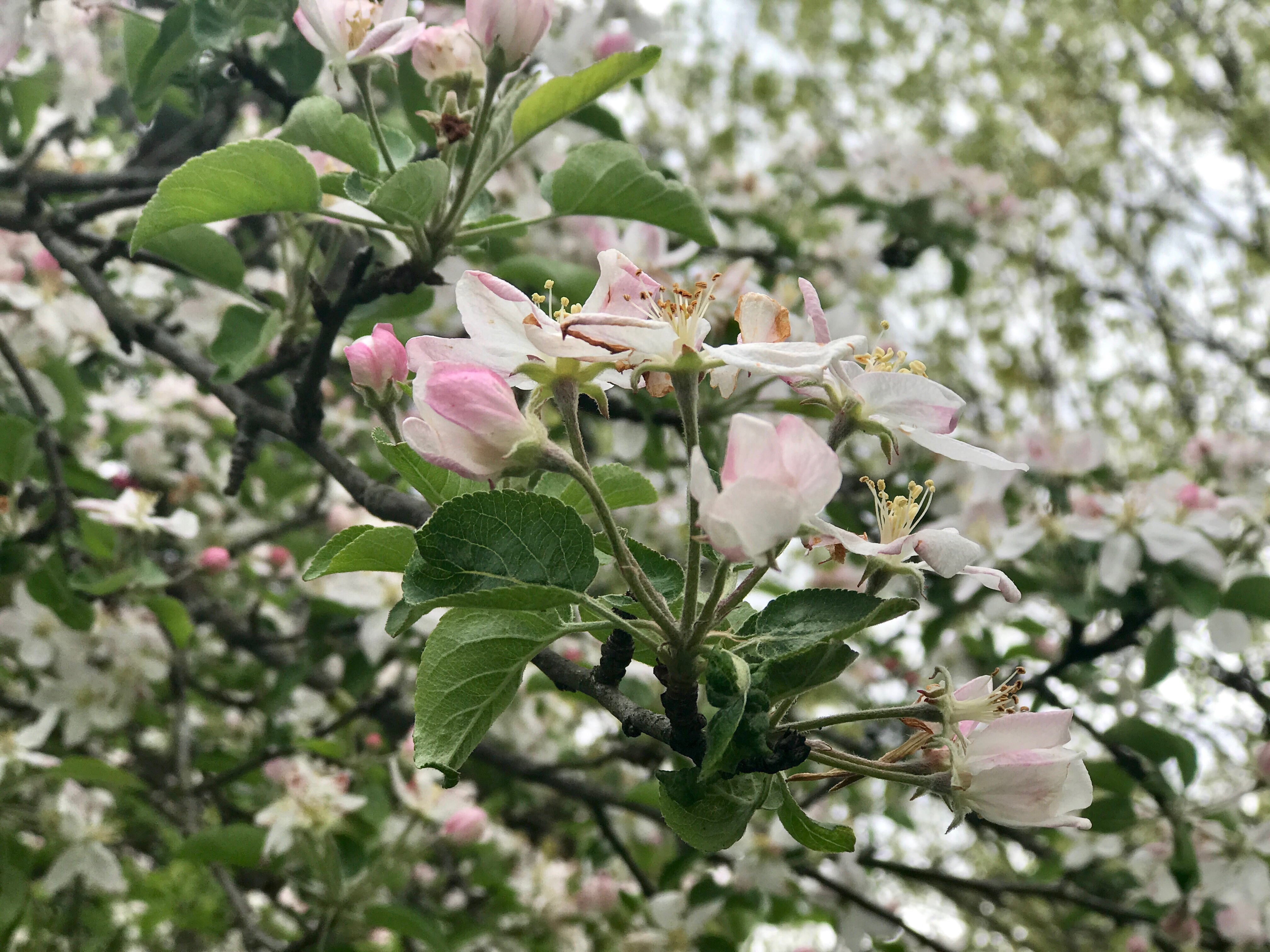


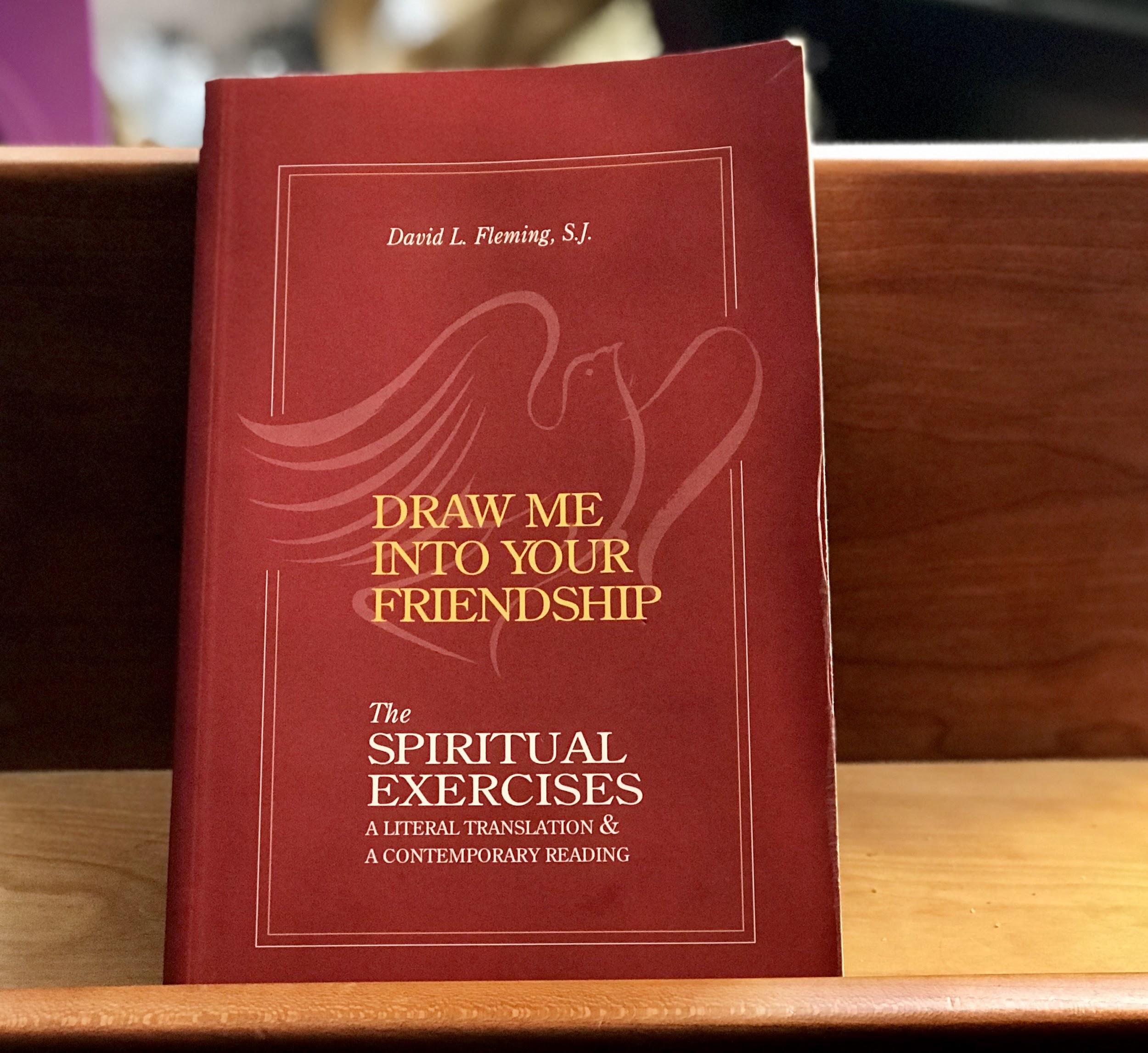





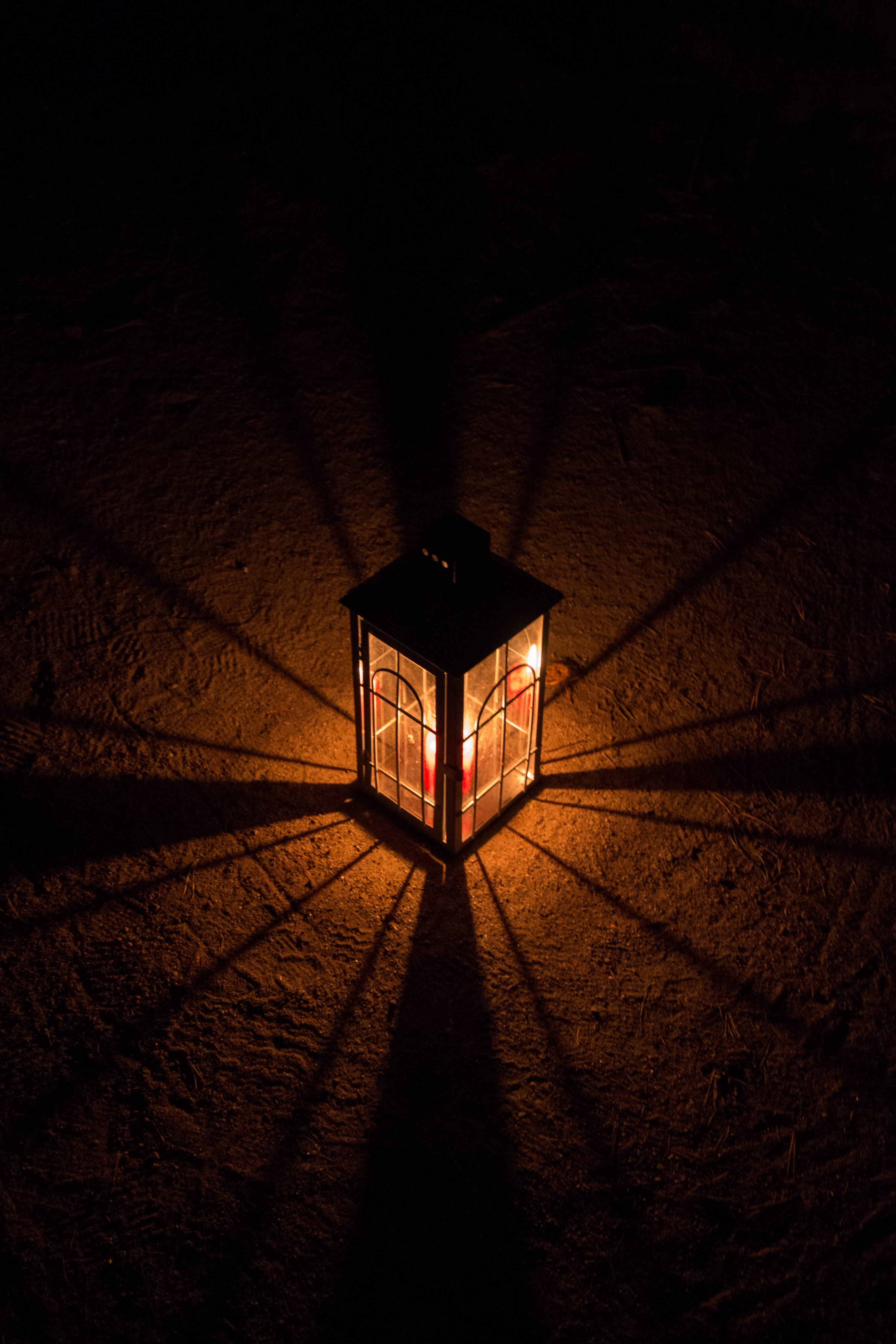





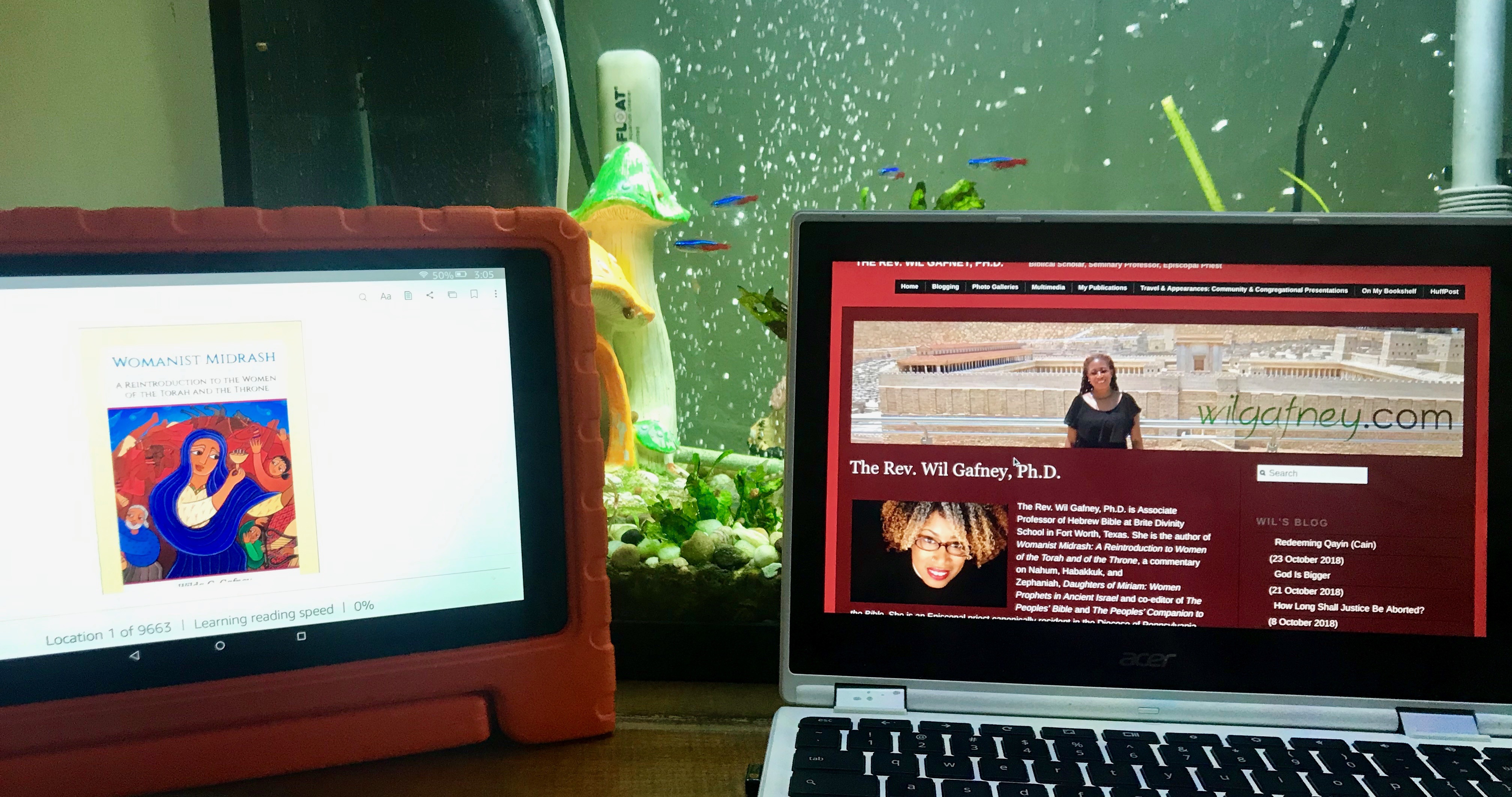


 Distracted Pastor Ramblings