Una Canción Nueva: Psalm 126

126When the LORD changed Zion’s circumstances for the better, it was like we had been dreaming. 2Our mouths were suddenly filled with laughter; our tongues were filled with joyful shouts. It was even said, at that time, among the nations, “The LORD has done great things for them!” 3Yes, the LORD has done great things for us, and we are overjoyed. 4LORD, change our circumstances for the better, like dry streams in the desert waste! 5Let those who plant with tears reap the harvest with joyful shouts. 6Let those who go out, crying and carrying their seed, come home with joyful shouts, carrying bales of grain!

Psalm 126, Common English Bible

In October we remember Domestic Violence Awareness Month. I am reading and reflecting on both my experiences and the thoughts of others about domestic violence during this month. This action is important to me as a survivor of domestic violence.

The above scripture is from the Revised Common Lectionary for next Sunday. I love this psalm so much. I like how the people have laughter and joyful songs. I love how the people are full of good things and I love how this psalm brings me hope for the future. I think we need to find more hope for living in this world.

Sometimes we feel like the pain never ends. When I decided to write every day for Domestic Violence Awareness Month, I realized that the project was not easy. This project was written in Spanish and English is my first language. I needed to focus on all the words to write well.

This psalm reminds me of 1 Corinthians 13:8, which says, “Love will never fail, but prophecy will cease, tongues will fail, and knowledge will come to an end.” One day we won’t need those words, but today I love the words of this psalm. One day we will have justice, laughter, and joyful songs. Until then, we have hope.


1Cuando el SEÑOR hizo volver a *Sión a los cautivos, nos parecía estar soñando. 2Nuestra boca se llenó de risas; nuestra lengua, de canciones jubilosas. Hasta los otros pueblos decían: «El SEÑOR ha hecho grandes cosas por ellos.» 3Sí, el SEÑOR ha hecho grandes cosas por nosotros, y eso nos llena de alegría. 4Ahora, SEÑOR, haz volver a nuestros cautivos como haces volver los arroyos del desierto. 5El que con lágrimas siembra, con regocijo cosecha. 6El que llorando esparce la semilla, cantando recoge sus gavillas.

Salmo 126, Nueva Versión Internacional

En Octubre recordamos el mes de concientización sobre la violencia doméstica. Estoy leyendo y reflexionando sobre ambas mis experiencias y los pensamientos de otra sobre violencia doméstica durante este mes. Esta acción es importante para mi como un sobreviviente de violencia doméstica.

La escritura de arriba es del Leccionario Común Revisado para el próximo domingo. Me encanta mucho este salmo. Me gusta cómo las personas tienen risas y canciones jubilosas. Me gusta mucho cómo las personas estan lleno de cosas buensimas y me encantan cómo este salmo trajeme esperanza para el futuro. Penso que necesitamos encontrar mas esperanza de vivir en este mundo.

A veces sentimos que el dolor nunca termina. Cuando decidí escribir todos los días para el Mes de Concientización sobre la Violencia Doméstica, me di cuenta de que el proyecto no era fácil. Este proyecto fue escrito en español y el inglés es mi primera lengua. Necesitaba concentrarme en todas las palabras para escribir bien.

Este salmo me recuerda a 1 Corintios 13:8, donde dice: “El amor nunca dejará de existir, pero cesarán las profecías, se acabarán las lenguas y se acabará el conocimiento”. Un día no necesitaremos esas palabras, pero hoy me encantan las palabras de este salmo. Un día tendremos justicia, risas y canciones alegres. Hasta entonces, tenemos esperanza.

Una Canción Nueva: Psalm 90:13-14

“Come back to us, Lord! Please, quick! Have some compassion for your servants! Fill us full every morning with your faithful love so we can rejoice and celebrate our whole life long”

Psalm 90:13-14, Common English Bible

In October we remember Domestic Violence Awareness Month. I am reading and reflecting on both my experiences and the thoughts of others about domestic violence during this month. This action is important to me as a survivor of domestic violence.

The above scripture is from the Revised Common Lectionary for next Sunday. Sometimes I disagree with the thoughts of this psalm. The psalmist had hope that bad things would be answered with the Lord’s compassion in this life. It is possible and I have hope in the Lord, but often the torments of the survivors are being met with silence.

I don’t agree with the words of the psalm but I think I’m wrong. We need hope and great love from the Lord because we have a world that doesn’t always hold wrongdoers accountable.

I don’t like it but I need to have flexibility. If I don’t have flexibility, I’ll probably die miserable and sad. I want to live and not allow my fears and anger to choose my path. I need to let go and let God fill me with better things.

¿Cuándo, SEÑOR te volverás hacia nosotros? ¡Compadécete ya de tus siervos! Sácianos de tu gran amor por la mañana, y toda nuestra vida cantaremos de alegria.”

Salmo 90:13014, Nueva Versión Internacional

En Octubre recordamos el mes de concientización sobre la violencia doméstica. Estoy leyendo y reflexionando sobre ambas mis experiencias y los pensamientos de otra sobre violencia doméstica durante este mes. Esta acción es importante para mi como un sobreviviente de violencia doméstica.

La escritura de arriba es del Leccionario Común Revisado para el próximo domingo. A veces no estoy de acuerdo con los pensamientos de este salmo. La salmista tuvo esperanza de que las malas cosas serían respondidas con la compasión del Señor en esta vida. Es posible y tengo esperanza en el Señor, pero a menudo los tormentos de los sobrevivientes se están encontrando con silencio.

No estoy de acuerdo con las palabras del salmo pero pienso que estoy equivocado. Necesitamos esperanza y gran amor del Señor porque tenemos un mundo que no siempre responsbiliza a los malhechores. No me gusta pero necesito tener flexibilidada. Si no tengo flexibilidad, probablemente moriré miserable y triste. Quiero vivir y no permitir mis miedos y furiosos a elegir mi camino. Debo soltar y dejar que Dios me llene de cosas mejores.

Una Canción Nueva: Psalm 26:1-8

“Establish justice for me, LORD, because I have walked with integrity. I’ve trusted the LORD without wavering. Examine me, LORD; put me to the test! Purify my mind and my heart. Because your faithful love is right in front of me– I walk in your truth! I don’t spend time with people up to no good; I don’t keep company with liars. I detest the company of evildoers, and I don’t sit with wicked people. I wash my hands–they are innocent! I walk all around your altar, LORD, proclaiming out loud my thanks, declaring all your wonderful deeds! I love the beauty of your house, LORD; I love the place where your glory resides.” Psalm 26:1-8, Common English Bible

In October we remember Domestic Violence Awareness Month. I am reading and reflecting on both my experiences and the thoughts of others about domestic violence during this month. This action is important to me as a survivor of domestic violence.

One problem with situations where people are engaged in domestic violence is the silence about people who are survivors of domestic violence. We see the people who commit violence and work to bring justice, but we forget about the survivors who die every day in their thoughts.

I like the psalms because they say that the Lord saw, sees, and will see that the world needs justice. The Lord does not forget the survivors who heard cruel lies, were beaten, and will need years for healing.


Hazme justicia, SEÑOR, pues he llevado una vida intachable; ¡en el SEÑOR confío sin titubear! Examíname, SEÑOR; ¡ponme a prueba! purifica mis entrañas y mi corazón. Tu gran amor lo tengo presente, y siempre ando en tu verdad. Yo no convivo con los mentirosos, ni me junto con los hipócritas; aborrezco la compañía de los malvados; no cultivo la amistad de los perversos. Con manos limpias e inocentes camino, SEÑOR, en torno a tu altar, proclamando en voz alta tu alabanza y contando todas tus maravillas. SEÑOR, yo amo la casa donde vives, el lugar donde reside tu gloria.» Salmo 26:1-8, Nueva Versión Internacional

En Octubre recordamos el mes de concientización sobre la violencia doméstica. Estoy leyendo y reflexionando sobre ambas mis experiencias y los pensamientos de otra sobre violencia doméstica durante este mes. Esta acción es importante para mi como un sobreviviente de violencia doméstica.

Un problema con situaciones cuando personas haciendo con violencia doméstica es el silencio sobre las personas que son sobrevivientes de violencia doméstica. Vemos a las personas que hacen violencia y trabajamos para traer justicia, pero olvidamos a los sobrevivientes que mueren todos los días en sus pensamientos.

Me gustan los salmos porque dicen que el Señor vio, ve, y verá que el mundo necesita justicia. El Señor no olvida las sobrevivientes que escucharon mentiras crueles, fueron golpeadas, y necesitarán anos por curación. 

Una Canción Nueva: Psalm 23

“The LORD is my shepherd. I lack nothing. He lets me rest in grassy meadows; he leads me to restful waters; he keeps me alive. He guides me in proper paths for the sake of his good name. Even when I walk through the darkest valley, I fear no danger because you are with me. Your rod and your staff– they protect me. You set a table for me right in front of my enemies. You bathe my head in oil; my cup is so full it spills over! Yes, goodness and faithful love will pursue me all the days of my life, and I will live in the LORD’s house as long as I live.” Psalm 23, Common English Bible

In October we remember Domestic Violence Awareness Month. I am reading and reflecting on both my experiences and the thoughts of others about domestic violence during this month. This action is important to me as a survivor of domestic violence.

In truth, all the grass in my life is not peaceful or green. Sometimes the grass in many parts is green and healthy, but other parts are brown and scorched by the sun.

My soul aches when I think about the past and when I think about my children. I understand that we live in this country where women are hurt and were hurt because they were women. The situation for women is very bad and I wish it were different.

It is true, but men don’t need to be subjected to the same evils we don’t wish on women. To choose between those two options is a false dichotomy. When we choose to live with domestic violence for females, males, or non-binary people, we choose to ignore people from places with torrential waters and torment.

The psalm was written to be a word of hope for people walking in dark valleys. The psalm was written to be a strong word for people who are afraid when they are around enemies. We love Psalm 23. Can we bring the wonderful gifts of the psalm to all people who are hurt by domestic violence?


“El SEÑOR es mi pastor, nada me falta; en verdes pastos me hace descansar. Junto a tranquilas aguas me conduce; me infunde nuevas fuerzas. Me guía por sendas de justicia por amor a su nombre. Aun si voy por valles tenebrosos, no temo peligro alguno porque tú estás a mi lado; tu vara de pastor me reconforta. Dispones ante mí un banquete en presencia de mis enemigos. Has ungido con perfume mi cabeza; has llenado mi copa a rebosar. La bondad y el amor me seguirán todos los días de mi vida; y en la casa del SEÑOR habitaré para siempre.” Salmo 23, Nueva Versión Internacional

En Octubre recordamos el mes de concientización sobre la violencia doméstica. Estoy leyendo y reflexionando sobre ambas mis experiencias y los pensamientos de otra sobre violencia doméstica durante este mes. Esta acción es importante para mi como un sobreviviente de violencia doméstica.

En verdad todo el pasto en mi vida no es tranquilo o verde. A veces el césped en muchas partes es verde y sano, pero otras partes son marrones y chamuscar del sol.

Mi alma me duele cuando pienso sobre el pasado y cuando pienso sobre mis hijos. Yo entiendo que vivimos en este país donde las mujeres reciben danos y recibieron danos porque eran mujeres. La situación de las mujeres es malísima y yo deseo que sea diferente.

Es verdad, pero los hombres tambien no necesitan recibir los mismos mal que no deseamos para mujeres. Para elegir entre esas dos opciones hay una falsa dicotomía. Cuando elegimos vivir con violencia doméstica para femeninos, masculino, o no binarios, elegimos ignorar personas de sitios con aguas torrentes y tormentos.

El salmo fue escrito para ser una palabra de esperanza para las personas que caminan en valles tenebrosos. El salmo fue escrito para ser una palabra fuerte para personas que tienen miedos cuando están cerca de enemigos. Nos encanta el salmo 23.  ¿Podemos traer los buenísimos regalos del salmo a todas las personas que tienen el dano de violencia doméstica?

Querido Jesús: Salmo 24

«Quien es así recibe bendiciones del Señor; el Dios de su salvación le hará justicia. Tal es la generación de los que a ti acuden, de los que buscan tu rostro, oh Dios de Jacob» Salmo 24:5-6, Nuevo Versión Internacional (NVI)

Querido Jesús, deseo que mis manos siempre limpiaron y mi corazón siempre pero. Ayer hablábamos de mi vida, mis niños, y mi ex esposa. Anoche miré por el amanecer de la mañana y por la esperanza de tu misericordia. Hoy no sé cual es mi camino. Cuando las personas egocéntricas están luchando conmigo, deseo obtener tu paz con todo mi corazón.

Quería verte en los días pasados. Quería  verte, me Redemptor, cuando estuve sufriendo de patadas a mis tripas ¿Dónde estuiviste cuando necesituve ayudarme?

Quiero confiar en tus palabras en Salmo 24. Quiero estar confiando. A veces, no te comprendo. A veces, mi esperanza y mi duda luchamos dentro de mi. Quiero verte porque «soy un hombre de labios impuros y vivo en medio de un pueblo de labios impuros». (Isaías 6:6) Quiero tú ayudame porque mis pensamientos susurran que la charla es barata y me dices nunca tus palabras son baratas.

Esta es una plegaria longa en Español para mi. Estoy complicado y está plegaria es muy complicada. Quiero hablar claramente contigo de estas cosas, pero mis pensamientos se están confundiendo y son difíciles. No logro quedarme en silencio porque tengo responsabilidades pastoral al hablar de estas cosas para romper en silencio. Cuando otras ven mis palabras deseo dar valentía a ellos. Dividas mis palabras en esta plegaraia y ayudame a tener la misma valentía de que les ofrezco otras. Amén


“Whoever is like this receives blessings from the Lord; the God of their salvation will give them justice. Such is the generation of those who come to you, of those who seek your face, O God of Jacob.” Psalm 24:5-6, translated from NVI

Dear Jesus, I wish that my hands were always clean and my heart always clean. Yesterday we were talking about my life, my children, and my ex-wife. Last night I looked for the morning dawn and for the hope of your mercy. Today I don’t know what my path is. When self-centered people are fighting with me, I wish to obtain your peace with all my heart.

I wanted to see you in the past days. I wanted to see you, my Redeemer, when I was suffering from kicks to my guts. Where were you when I needed help?

I want to trust in your words in Psalm 24. I want to be trusting. Sometimes, I don’t understand you. Sometimes my hope and my doubt fight inside me. I want to see you because “I am a man of impure lips and I live in the middle of a town of impure lips.” (Isaiah 6:5) I want you to help me because my thoughts whisper that talk is cheap and you tell me your words are never cheap.

This is a long prayer in Spanish for me. I am complicated and this prayer is very complicated. I want to talk clearly to you about these things, but my thoughts are getting confused and difficult. I can’t stay silent because I have pastoral responsibilities to talk about these things to break the silence. When others see my words I want to give them courage. Divide my words in this prayer and help me to have the same courage that I offer others. Amen.

Querido Jesús: Salmo 130

«Escucha, Señor, mi voz. Estén atentos tus oídos a mi voz suplicante  Si tú, Señor, tomaras en cuenta los pecados, ¿quién, Señor, se mantendría en pie? Pero en ti se hallas perdón y por eso debes ser temido.» Salmo 130:2-4, Nueva Versión Internacional (NVI)

Querido Señor, tú me deimiste a mis pecados y me ayudaste cuando no era posible para me ayudí. Tu dio a tu Hijo Unico para que me salvo de mis pecados y mis faltas. Tú me dio a mí tu Espíritu Santo para que me no caminí solo. Tú me dio y me doy muchas cosas buenas porque tú me amas.

En este momento cuando estoy enfermo con la enfermedad de la pandemia de años pasados, escuchame cuando te lo pregunto a ayudame con mi cuerpo. Libres mis canales de orjeas cuando tengo demasiados mocos. Aflojame mis músculos cuando mi cuerpo tiene dolor. Ayudame, mi Héroe. Amén.


“You hear my voice, Lord. Let your ears be attentive to my pleading voice. Lord, if you would take sins into account, who would stand Lord? In you is found forgiveness and you should be feared.” Psalm 130: 2-4, translated from NVI

Dear Lord, you redeemed me from my sins and helped me when it was not possible to help myself. You gave your Only Son to save me from my sins and my faults. You gave me your Holy Spirit, so that I would not walk alone. You gave me and you give me many good things because you love me.

At this moment, when I am sick with the pandemic illness of past years, listen to me when I ask you to help me with my body. Free my ear canals when I have too much snot. Loosen my muscles when my body is in pain. Help me, my Hero. Amen.

Querido Jesús: Salmos 51 y Romanos 6:1-14

«Crea en mí, oh Dios, un corazón limpio y renueva un espíritu firme dentro de mi. No me alejas de tu presencia ni me quites tu Santo Espíritu» Salmos 51:10-11, NVI

Querido Jesús, no estoy bajo la Ley. No estamos bajo la Ley porque tú Espíritu  Santo nos lleva bajo la gracia. En  cuanto a nos vida, vivimos para Dios con humilidad. Tenemos que vivir con la fe, la esperanza, y el amor, pero no tenemos que vivir con miedos de muerte

Podemos a vivir con miedos de muerte. Es fácil a vivir con miedos de muchas cosas que no controlamos. No necesitamos a vivir con los pecados fáciles y normalment de esta vida por qué tenemos tu Espíritu Santo.`

Gracias por tu amor, nuestro Creador y Vida. Regalanos tu bendiciones y purificanos. Amén


“Create in me, O God, a clean heart and renew a stable spirit inside of me. Do not alienate me from your presence nor remove your Holy Spirit.” Psalm 51:10-11, translated from NVI

Dear Jesus, I’m not under the Law. We are not under the Law because your Holy Spirit brings us under grace. As for our lives, we live for God with humility. We have to live with faith, hope, and love, but we don’t have to live in fear of death.

We can live in fear of death. It is easy to live with fears of the many things that we do not control. We do not need to live with the easy and normal sins of this life because we have your Holy Spirit.

Thank you for your love, our Creator and Life. Give us your blessings and purify us. Amen.

In the Woods…

We are getting ready to move soon. There’s a lot of stuff in boxes in my life. Everything seems to have a place and most of those places are currently found inside boxes. Living with most of your daily stuff in boxes can be extremely frustrating.

This morning I went into the woods on a nearby trail with one of my daughters and my wife’s “lapdog” Lily. Lily is a boxer labrador mix that we adopted after our friends’ dog became overly friendly with a neighborhood dog. She’s a kind hearted dog but hates being cooped up.

The woods are a magical place. The woods are one of the few places where my middle child is occasionally struck speechless. The majesty of wilderness tends to calm her restless mind as there is plenty to look at, plenty of things to notice, and the ongoing task of watching where you are stepping.

This morning the ground was a bit moist from recent rain and Lily ended up dragging me along some pretty slippery surfaces. Her paws and nails clearly had better traction than my sneakers. We enjoyed the walk tremendously despite being startled by a jogger’s German Shepherd visiting without a leash and without warning. Thankfully Lily is a very easygoing dog. I think that I jumped more at the sudden appearance than Lily.

I stopped to take this picture of Lily because the woods were breathtaking between the light of the sun pouring through the branches and the greens and browns everywhere. Despite being on a strong leash due to her tendency to run after wildlife, she seemed more at home in the woods than she normally seems in our home. I could almost feel Lily sigh with contentment a few times on the hike.

Psalm 55 is an interesting psalm. In that particular psalm, the psalmist is struggling with the grief and sorrow that comes from a friend’s betrayal. The psalmist is clearly having a difficult time with a painful situation, but what’s interesting is the response to the situation.

The psalmist wants to flee to the wilderness. In the wilderness there seems to be a kind of peace that the psalmist desperately desires. In the daily moments of the situation the psalmist finds storms and wind, but in the wilderness shelter can be found.

I can understand the psalmist’s desire for the shelter of the woods. Like my dog, I too enjoy moments where we are not surrounded by boxes. There is something glorious about being in the woods even when German Shepherds occasionally appear out of the nothingness.

Poem for a rough day

All people have rough days. Ministers are no exception. Today has been a difficult morning for me. I have wept, I have prayed, and I have reached out to friends. One friend recommended I read two psalms, so I did the natural thing: I turned to a completely different psalm. I am, if nothing else, predictable.

I spent time in Psalm 127 trying to get my head back on straight. The following poem is inspired by the first two verses. It is a rondelet, which is my favorite syllabic poetry form outside of the various forms of Japanese Haikai.

Find rest with God.
Anxious thoughts do not give life birth.
Find rest with God.
There will come no bread from poor sod:
Unless the Creator brings forth
There will come nothing of true worth.
Find rest with God.

“Find rest with God” Rondelet (inspired by Psalm 127:1-2) by the Distracted Pastor, 2019

Let us Ramble: Strange Praise Music…

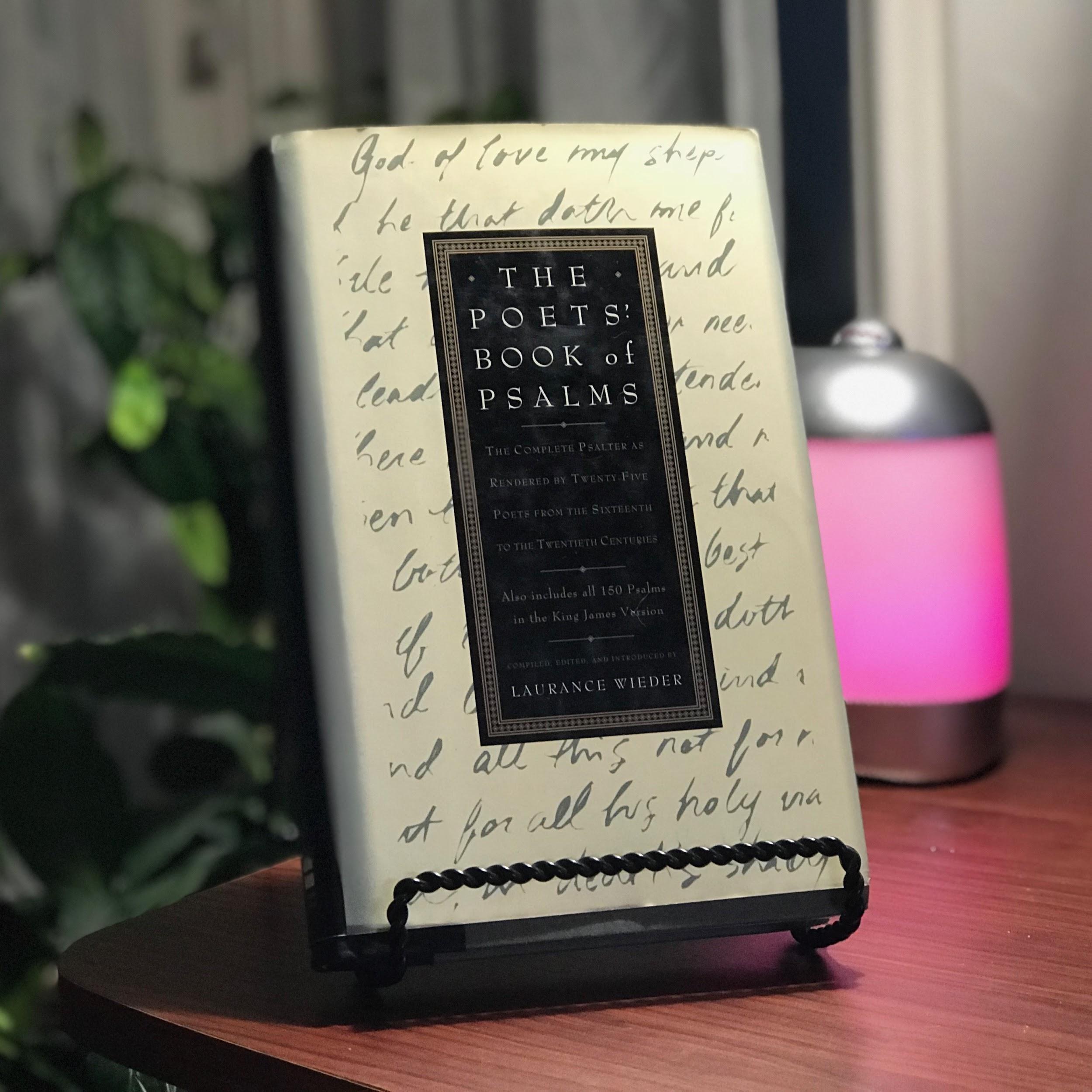
Recently, I picked up an anthology of poetic translations of the Psalms named “The Poets’ Book of Psalms” as compiled, edited, and introduced by Laurance Wieder. I have an affinity for collecting alternative translations of the Psalms. I have enjoyed Robert Alter’s “The Book of Psalms: A Translation with Commentary” for several years now. I was recently introduced by Rabbi Rachel Barenblat to “Psalms in a translation for praying” by Rabbi Zalman Schachter-Shalomi.

In the newest part of my collection of alternative translations to my tried and true New Revised Standard Version (the Wieder collection) there is a poetic translation of Psalm 150. Psalm 150 is part of the Revised Common Lectionary reading for today. John Davies, who lived from 1569 – 1626 CE translated this particular version of the Psalm. Here, from across the centuries, is John Davies poetic translation of Psalm 150:

“To him with trumpets and with flutes,
With cornets, clarions, and with lutes,
With harps, with organs, and with shawms,
With holy anthems and with psalms,
With voice of angels and of men,
Sing Alleluia: amen, amen.”

Some basic background on Sir. John Davies can be found here. To summarize, Sir. Davies was more than an Irish poet. Sir Davies was an attorney with a somewhat motley career which included being one of the most respected attorneys of the Emerald Isle and also being disbarred at different points. He has a very interesting political career both in Ireland and in England.

Regardless, in my corner of creation, Sir Davies’ poems are what most catch my attention a few centuries after their original publication. His work, while understandable, draws attention to various areas which a modern translation might miss.

My copy of “The Poets’ Book of Psalms.” Also pictured, the citrus tree my family gave me for Christmas two years ago and the Peace Lily which was a gift given to my family by a nearby church when my family moved to Maine, NY from Boonville, NY. Also, an essential oil diffuser which is a very calming addition to my home desk.

I enjoy this poetic understanding of Psalm 150 as a result of the way it draws attention to a timeless truth which I have come to understand in my own path through life. Let me point out the instruments used in the praise of God in this poem. God is praised with cornets, clarions, lutes, harps, organs, and shawms. I must say that I hear organs in worship on a regular basis due to where I serve and I do enjoy the harp when it is played well, but I do not hear much music on the radio played on cornets, clarions, or lutes. Upon first reading the translation, I did not even know what shawms might be, but after a quick google search, I did learn that it was a flute-like instrument. Shawms are not very popular on the radio these days.

The timeless truth these strange things point out is that the praise of God is greater than any instrument. There are no guitars, drum kits, d’jembes, or any of the instruments you might find in most modern praise bands. Still, in Sir Davies’ day, people praised the Lord with their own happy music. Holy anthems and psalms of Sir Davies’ day might be different from from any radio singles or YouTube praise chorus that might be produced today, but it seems that both types, although separated by centuries and cultures, praised the Lord.

Praise of God is greater than the instruments we use. When praise comes from the heart, it can be shared through a piano, a snare drum, an organ, some shawms, a bass guitar, a lute, a lyre, a harpsichord, a shofar, a bodhran, or a cowbell. I am thankful that this timeless truth is pointed out through paying attention to a very old poem from an Irish attorney.

Let us Seek: “If it had not been…”

One set of today’s readings from the Revised Common Lectionary includes Psalm 124. Psalm 124 is one of my favorite psalms from a rhetorical perspective. I adore the repetition of the phrase “If it had not been for the Lord who was on our side.” The phrase is used twice in the first two verses of the psalm. They are only separated by the phrase “Let Israel now say” in an attempt to compel the people of God to join in the chorus.

The psalm reminds me of countless worship services, concerts, and festivals where I have heard a singer invite the audience or congregation to join in the music. While this is not a call and response situation, the power of the phrasing brings to mind the same compulsion to join in the song of the faithful. Robert Altar notes that he shares this impression in his translation and commentary “The Book of Psalms: A Translation with Commentary” (New York: W. W. Norton & Company, 2007). Altar writes: (443)

“The second of these two versets is a formal exhortation, probably on the part of a choral leader, to the community of worshippers to chant the words of the liturgical text that begins in the first verset and continues in verse 2 through to the end of the psalm… The Hebrew, with its abundant use of incremental repetition, has a strong rhythmic character that would have lent itself to singing or chanting”

I am glad Altar agrees with my reflections and my tendencies with this psalm. One reason that I am glad is that I always appreciate being verified in my assumptions by a respected scholar like Robert Altar. The second reason that I am glad is that psalms like this psalm always strike me as invitations.

What if this psalm is an invitation to look at our own perspectives and experiences with a similar lens? The Psalmist claims the help of the Lord in the midst of challenges within this psalm. The Psalmist looks at the circumstances of challenge in life and notes God’s presence has made a difference in the life circumstances of the congregation. This invitation is especially powerful when we consider that the community as a whole is invited to join in the proclamation.

If I were a Hebrew man who was joining in this psalm, what might I think about as I talk about the powerful and salvific presence of God? Surely, I would consider the events of the Pentateuch and the salvation of the Jewish people, but I might also consider the times when I was sick and I felt God draw me out of the darkness. Surely, I would consider the events in the lives of the prophets, but I might also remember the times I stood by listening to my wife screaming as a child was brought safely into the world. There might be many thoughts on my mind as I joined in the psalm if I were a Hebrew man in the great congregation of the faithful.

So, what do I think of when I consider this psalm today? If it were not for the Lord, would my kids be healthy and safe? Surely, I am blessed by the world where my children live, but let us be clear. My children bear my genes and often my idiosyncrasies. I am surprised enough to have survived my own silliness and to have lived into the life I now lead. I am even more surprised it appears to be happening again! If it were not for the Lord, would I be here today? If it were not for the Lord, would my kids be safe and happy? I believe God has had a role in the lives of my family. If it were not for the Lord, my own silliness might swallow us up. Thanks be to God!

Where do you feel blessed by the Lord? What places in your life might have turned out differently if it were not for the Lord?

Let us Seek: Sovereign God, part deux

Sometimes, I argue with myself. My habit to write the next day’s blog post and schedule it for 9:00 AM the following morning. On occasion, I find inspiration to continue with a previous line of thought. Occasionally, I find myself arguing with both myself and my blog entry for the day.

This morning I posted about a reflection on the sovereignty of God. My post came about after reflection on scripture as seen through the light of a book I am reading for the Academy for Spiritual Formation. That book is “Psalms of the Jewish LIturgy: A Guide to Their Beauty, Power & Meaning” by Rabbi Miriyam Glazer. In the book, the argument is made that the sovereignty of God is a sacrosanct concept. Adonai reigns so our world is seen in a different light.

I made the “mistake” of spending time in my devotions this morning, which is always a risky affair. I was working through one of my favorite resources, which is Upper Room’s “A Guide to Prayer for Ministers and Other Servants” (henceforth, “Guide”) This resource is the very resource which led me to consider applying for the Academy in the first place. Before finding the Guide I had always seen Upper Room as that tiny little book which I took to individuals when I visited or handed out to folks when they wanted something to read to go deeper. The Guide was deep, methodical, and practical for me as someone who likes structure in their prayer life to balance out my lack of attention span–there is a reason my blog uses the phrase “Distracted Pastor.”

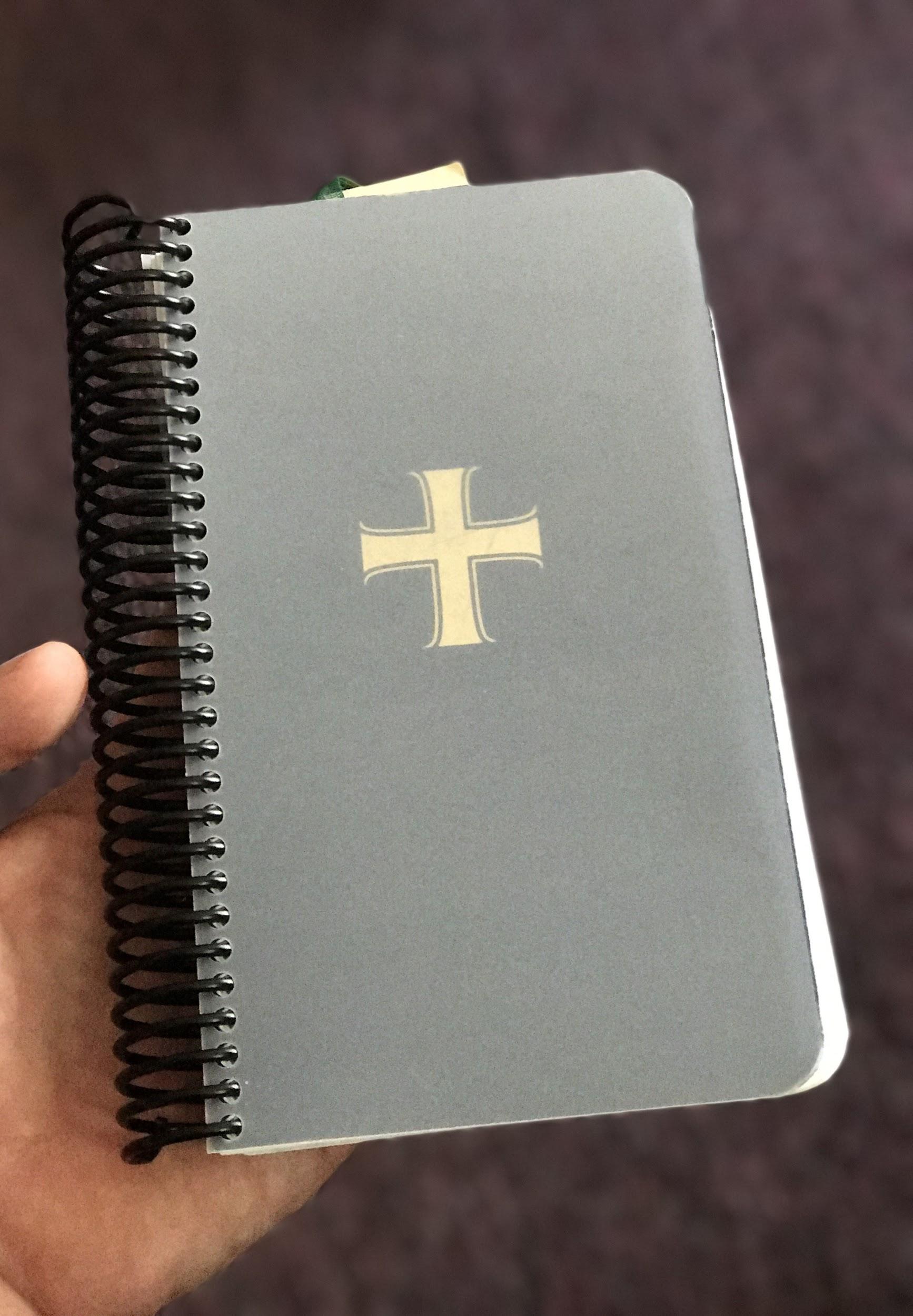
Quick aside, one of my colleagues at the Academy recommended that I take my new Worship Book to the artist formerly known as Kinkos to get it bound with a spiraling ring to make it easier to use. I took my Guide there and for less than nine dollars it is now far easier to use and has nice protective covers to keep it safe. Getting my devotional book bound with a ring was a great idea as I now don’t have to weigh the pages down while taking notes in my journal.

Look how easily it sits flat!

The plastic cover is a nice protective touch…

Anyway, back on subject, I made the mistake of working through the Guide and found myself reflecting on a passage that was the exact opposite of what our good Rabbi Miriyam Glazer stated. Mind you, the author whom the guide quoted is a Christian, so that is somewhat to be expected. Still, the cognitive dissonance has been bothering me as I attempt to stay with both readings.

The following excerpt is stated to be from “Prayer” by Simon Tugwell, a Dominican historian and author. The excerpt is found in the readings for reflection for this week.

“[God in Jesus] does not come in strength but in weakness, and he chooses the foolish and weak and unimportant things of the world, things that are nothing at all, to overthrow the strength and impressiveness of the world. As we saw earlier, he is like the judo expert who uses the strength of his opponent to bring him to the ground; it is the art of self-defense proper to the weak.

This is why, if we keep clamoring for things we want from God, we may often find ourselves disappointed, because we have forgotten the weakness of God and what we may call the poverty of God. We had thought of God as the dispense or all the good things we would possibly desire; but in a very real sense, God has nothing to give at all except himself.”

I imagine most people can see the dissonance between these two sets of conceptions. On the Rabbi’s side we have a God who reigns. Adonai reigns; therefore, we have hope that the future can be a place of blessing. On the Dominican’s side we have a God who has entered the form of Jesus. There is a sense of a self-imposed weakness. God has nothing to give except himself in the form of Jesus. God has nothing to give except himself; therefore, we should not see God as the dispenser of all the good things we would possibly desire.

I have to say that my knee-jerk reaction is to immediately side with Rabbi Glazer. My fear is that my reaction is very human. How could God do something so very foolish? Well, God does what God does. In the most ancient of addresses, God claims the name “I am who I am.”

The challenging part in the midst of all of this chaos is the reality that the Reading for Reflection in the Guide does not stand alone. The psalm of the week is Psalm 105. Psalm 105 is not a psalm of passivity. God acts deeply, thoroughly, and completely in the psalm to assert the placement of the people of God. A few examples:

  • The psalm invokes the actions of God in a time of famine through the servant Joseph. (Ps 105:16-23)
  • The psalm invokes the action of God in establishing a covenant with the immigrants Abraham, Isaac, and Jacob which will never be forgotten. God protects those immigrants with might (Ps 105:7-14, 42-45)
  • The Psalm invokes the powerful and sometimes brutal story of the Exodus (Ps 105:24-45)

The actions claimed in the Psalm are not the actions of a passive God of weakness. The Psalm claims the power of Adonai. Adonai reigns! All of this begs a simple question. Why did Bishop Job and Pastor Shawchuck, the compilers of the Guide, choose to include this passage for reflection? Was it merely to inspire there to be interesting thoughts in the minds of those who sought God this week? Even without Rabbi Glazer’s contribution to this conversation, Psalm 105 and this reflection seem at odds with each other.

I have been pondering these differences for several hours and I am brought to a place where I once again go back to things I learned way back in my philosophy classes at Roberts Wesleyan College. Yes, I was indeed the student who insisted with all of the depths of my heart that I believed that God could do the incredible. I believed that God could make a square circle.

The concepts was simple. Could God do something that was logically impossible? Could God create a rock so heavy that God could not lift it? That concept never stuck within me. I was obsessed with the square circle. Could God make an object that was fully a circle and fully a square? Such a logical fallacy seems impossible.

To say that I received a bit of mockery, ribbing, and even disdain at the time for the strength and consistency of my view is to put it mildly. I have since learned to live into that tension, especially as I lived into theology. Can God truly be fully human and fully divine? Can God really be the One God as expressed in trinitarian theology? Can God really care for humanity to the extent that God would come into the world in the form of weakness to engage in an act of strength that would help Jesus emerge as the victor who would break down the division of sin that had lasted for ages past? There are all sorts of paradoxes in Christianity. There are many koans to be considered.

What is the sound of one hand clapping? I have no idea. How can Jesus be fully human and fully divine? I have no idea. How can God create a square circle? I have no idea. How can God move in weakness and foolishness to save the world? I have no idea, but I believe that Jesus has done this thing quite beautifully.

What are your thoughts in regards to this contradiction? Do you have any ideas or reflections?