Searching for Renewal

“This hope for the ideal king, the coming king, not just an anointed one but the Anointed One, became particularly pronounced when the land of Israel was ruled by foreign powers, when the people were oppressed, or when the national leaders were turning away from God. Faithful Jews would search the Scriptures for any hint or promise concerning the king that was to come, who would usher in God’s kingdom on earth. Christ or Messiah was a title that meant the King the Jewish people had been waiting for.”

Rev. Adam Hamilton, “Simon Peter: Flawed but Faithful Disciple”

For fifteen years I have celebrated Lent as a minister within the church. The very first year or two was a bit strange as I came to experience Lent differently as a minister. I was halfway through seminary, had served in youth ministry, and had been in a number of ministry settings, but was first beginning to serve as the pastor of a congregation.

We had a more fundamentalistic church down the road from our church and I remember experiencing the first “Cross Walk” with them during Lent. It was interesting to see how they discussed the events, interpreted the stories, and even adapted spiritual practices from other denominations in order to celebrate the season. It was the first time I saw the Stations of the Cross as an evangelistic tool with the end goal of leading to the “ABC” prayer instead of being a tool for reflection and growth. It was weird to see one church appropriate the practices of another and change it so radically.

In and among those first few years I began to realize there was a profound disconnect within the church. I had grown up in ecumenical youth ministries designed to harmonize in a more diverse setting and within the United Methodist Church, which tended to be pretty non-political whenever possible. For the first time, I saw the stirrings of what today is fairly common: connecting the fates of one politician or another to the very will of God. I know that it happened frequently throughout our history, but it was the first time I saw it from a position of leadership instead of from a position where I could put my head in the sand when it became uncomfortable.

Questions became awkward: Didn’t God send one particular leader as the one who should rule over us? Don’t we understand that God wants us to do whatever is possible to get a different politician in place because they are meant to rule over us? Isn’t this one vision for the future God’s vision?

To be honest, it continues to be hard for me to understand. I have been American my entire life and I have never had a king who ruled over me on earth. Overthrowing tyrants was how our history was taught to me as a child because nobody has the right to enforce things like taxation without representation or the quartering of soldiers. It was really disconcerting to see people begin to argue for the Divine Right of a political party while living within a republic that had overthrown the system of the previous kings that had ruled over these lands from across the sea. We seemed to go from a past where we demanded the king’s soldiers stay out of our homes to a system where we glued ourselves to televisions that demanded we believe a certain way or behave a certain way to align ourselves with “right thinking.”

At the same time, I get it. The desire for a King to overcome the frailties of the world is pretty ubiquitous with being a part of the human race. Many of us want someone to set things right when life isn’t fair. God takes time and it can be pretty normal to look out on the world and ask for something more concrete. The Israelites in the scriptures called for a king at the end of the age of the Judges. The Maccabean revolution happened between the Protestant testaments. Rev. Hamilton points out the way that even the early disciples lived among and as a part of people looking for THE king in Jesus’ day. As Rev. Hamilton cheekily puts it:

“They awaited a warrior-priest-king who would raise an army to cast out the Romans, call the Jewish people to repentance, purify themselves before God, and then serve as a light to the nations. To borrow a phrase from our own day, most Jews of the time of Jesus anticipated a Messiah who would ‘“’make Israel great again.’ ”

Rev. Adam Hamilton, “Simon Peter: Flawed but Faithful Disciple”

I’m not going to judge people for wanting another king to set things right when they are scared or insecure. A lot of us don’t understand what’s happening in the world and wish someone would make it better. Even without the politics of economics and power, a lot of us are frightened when we think about how the world can change with the call of a doctor or with a knock on the door by a police officer. It is easy to be frightened and it can seem better to have a big strong authoritarian figure or policy to protect us when the heavens can seem so silent.

All of that being said, as a minister, I can firmly state that in my understanding that Jesus didn’t come to be that kind of King. Jesus took the hard road of faithfulness and asked us to follow. One of the things about God promising to be with us in the Valley of the Shadow of Death is understanding that most of us will likely pass through that valley. No authoritarian power or king can change the fact that the world is frightening. Those powerful people on television and at the rallies cannot protect you and they shouldn’t. There is one King of Righteousness and that King invites us to walk with humility down difficult roads.

The thing is that God promises restoration, but the restoration promised is primarily focused on the future instead of the past. If you’re looking for the restoration of an ideal that has been lost, you won’t find it in your scriptures. The story goes from living in a Garden to living in a Holy City come down from heaven: allow me to cheekily call it divine urbanization. Even the nicest stories from Acts still have hard moments. Even the Garden of Eden had peril and failure. If you’re aiming for a Messiah to set the world right, you need to look forward, not backward.


Our church is offering a short-term Bible study for the season of Lent. While many studies for the season traditionally focus on spiritual practices or on the stories of holy week, this year we are reading “Simon Peter: Flawed but Faithful Disciple” by Rev. Adam Hamilton. The idea of the study is that we might consider how we follow Christ in our lives while considering the life of this flawed follower. These blog posts are designed with a principle I have learned from recovery work: “We identify with the stories of others and try not to contrast.” We grow more and live with greater serenity when we look for what we share in common with someone with whom we might otherwise disagree.
Under God’s Wings

“Be merciful to me, O God, be merciful to me,
for in you my soul takes refuge;
in the shadow of your wings I will take refuge,
until the destroying storms pass by.”

—Psalm 57:1 (NRSV)

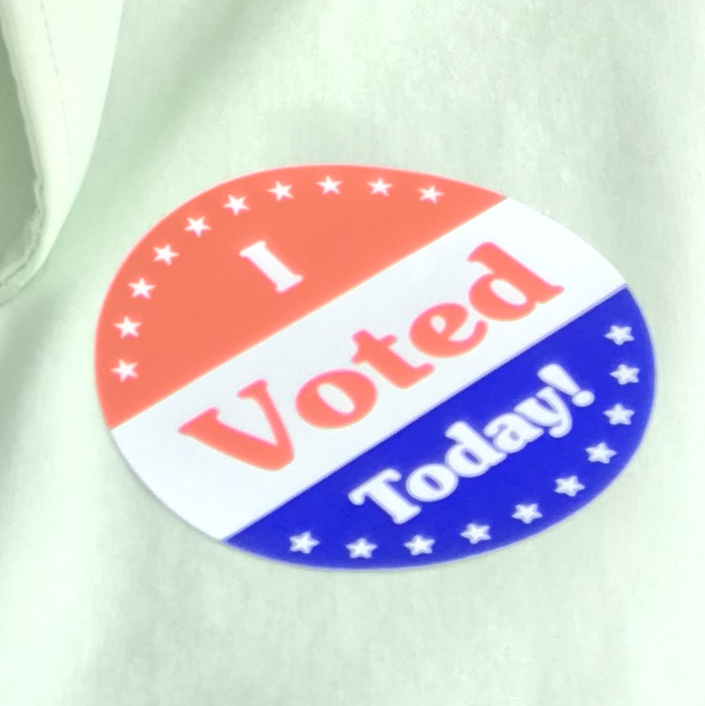
Tomorrow is election day in the United States. In our town of Maine, there are many choices to make between incumbents and challengers. With the political climate being as it has been lately, there is a lot of tension in many hearts and minds. What will happen if one candidate wins an election? What will happen if another candidate wins? Tension and anxiety are high.

I was pondering the reality of this election before entering morning prayer. The Psalm of the day in my prayers was Psalm 57. The first verse of the Psalm stuck with me. The imagery of the Psalm begins with the image of a petitioner asking God to be merciful as their soul takes refuge. This soul turns to God and seeks safety underneath the wings of God.

The imagery that stuck in my mind was one of a Parent providing safety for a child during a chaotic storm. Images floated through my brain of a robin spreading wings over nestlings during a rainstorm, a father penguin standing over his chick throughout a winter storm while his partner walks to the sea, or a mother goose protecting her goslings.

This imagery stuck in my mind when I finally reached my computer. I felt the urge to click on Facebook, to read the news, and do many of the things I told myself I would not do before Tuesday evening. I thought about what I might absorb from such an anxious world, thought of the imagery of the Psalm, and went about my day.

Tomorrow will be what tomorrow will be regardless of my anxiety. I will vote, I will pray, but I will not be afraid. God is greater than any storm and nothing can separate me from the love of God in Christ Jesus. Tomorrow will come, tomorrow may end with me calling out, but tonight I shall trust that God’s wings are enough to shelter me.

IMG_3222


Courage and Voting

Today’s blog post is two days in the making. I have been pondering what it means to be a Christian in an age where political differences in the United States are resulting in violence. Bombs are being mailed to opponents of the president and Republicans have been threatened at one particular early voting site in North Carolina. The world seems to be more and more violent the closer we get to November’s election.

I am wondering how we should reply to these situations. Scripture tells us to pray for the lands where we find ourselves. Even if some Christians do not appreciate the idea of Christians being a people living in exile, the thrust of Jeremiah 29 still points us to ponder how we relate to the “city where we are sent.”

Of course, none of this is easy. To be honest, in some circles, asking people to take Romans 13 seriously is a dangerous proposition. Calls by Paul to the Romans to be subject to governmental authorities are seen as less than applicable in some contexts, especially when we disagree with those authorities. A person who might quote Paul as sharing the gospel truth in one letter might chafe at considering his words in another. It is natural that we rejoice when governmental powers agree with us. Unfortunately, it seems increasingly common to call for their damnation when they disagree. Calls to respect people of different opinions in Romans 14 and 15 are seen as equally ludicrous at times.

It is difficult to live in such times. Whether you are a democrat, republican, or neither, these days are difficult days. As election day draws closer, there is a real sense of dread building in some circles. Will there be violence if one party loses favor or if another gains favor? Will there be violence if something changes or will there be violence if nothing changes? Heaven knows how many families are dreading Thanksgiving and those often turbulent conversations around the dinner table.

To be honest, I half expect to hear more stories about threats and potential bombings to increase as election day draws nearer. I am not seeking to be a pessimist. I find myself watching a pattern and pondering the outcome. In truth, my own days of believing in the myth of American exceptionalism in terms of believing in a political process that might be free of intimidation and gerrymandering are pretty much at an end. Perhaps I am simply choosing to save my idealism for my life of faith or perhaps I am simply worn thin by the matters of this world.

You may be asking what any of this has to do with being a pastor or spirituality. My simple answer is to say that it relates because these are the days where we need to have courage. Yes, the news is full of stories of challenges and those stories will increase. Yes, the President has warned there will be violence if his party loses the election next month, although it is strange he warns that the violence he seems to fear would be from the party that might gain political power. An honest appraisal might say that violence might occur regardless of who wins. Yes, the world might become a dark place after this election. Yes, these are days that require courage regardless of political party.

Then again, maybe these days are not as dire as it seems. Things might go poorly, but they also might go well. In a sense, these days are like every single day of our lives. Even in the best of times, all of us live with only one day. We all live in today. Yesterday has gone by. Tomorrow is a dream. Today is the only day that any of us has to live within. Since you cannot control the future and cannot change the past, today is like every day of your life. To borrow from the ancient philosopher Heraclitus, you can only step in the same river once.

The world is always changing and the natural uncertainty requires courage. It takes courage to live in a world which might change in a moment due to a blood clot, a missed stop sign, or an unexpected illness. It takes courage to live in a world where someone might leave tomorrow, where you might lose your job at the end of your shift, and where a loose dog might catch you while you wait for the school bus. It takes courage to live in this life and while the future might seem stressful, today is really the only day that any of us have ever had to live within.

I hate to bring in ancient monastics again, but I do enjoy them. There is an applicable gem in my often quoted copy of Benedicta Ward’s “The Sayings of the Desert Fathers: The Alphabetical Collection.” That gem is a quote from Abba Serinus. The quote goes: “Abba Serinus said, ‘I have spent my time in harvesting, sewing, and weaving, and in all these employments if the hand of God has not sustained me, I should not have been fed.’”

If you would prefer a biblical approach to the concept that life is a bit more transitory than some of us expect, Luke 12:13-21 contains a parable where Jesus warns people about the folly of building up riches on earth. A rich man has a bumper crop, plans to tear down his barns, and intends to build bigger barns to hold his massive crop. He plans to live out his days with wealth! Jesus shares that his folly is to plan to live out long days with his massive wealth. The rich man will die that very night. All of the crops from his wonderful harvest will not keep him from his own mortality.

Whether you approach the subject from the Abba’s viewpoint that all of life has led to this moment because God has provided or whether you hear Jesus’ warning about the uncertainty of tomorrow, in my opinion one thing is clear. We all have this one moment. We can respond with gratitude, make assumptions about the future, or even follow the advice of Ecclesiastes 5:18 (“This is what I have seen to be good: it is fitting to eat and drink and find enjoyment in all the toil with which one toils under the sun the few days of the life God gives us; for this is our lot.”). Regardless of how we spend our days, these days are the days we have.

So, how will we spend them? If today is the day you have to live, what will you do? Will you live in fear? Will you decide to ponder what comes in every package, worry about every group of people near every polling place, or will you step forward to take your place in history? If God has brought you to this time and place, is it not your responsibility to live in this moment?


IMG_3222

I invite you to participate…

Let us Ponder: Sovereign God

Yesterday in the blog I was pondering the concept of knowledge. What does it mean for any religious or spiritual knowledge to go beyond being informational in nature to being transformational in nature? What does it mean for us to understand a text, a revelation, or a message from so thoroughly that it changes the ways that we authentically engage with the world and her creator? These were the sort of questions I was considering in my heart and in my soul yesterday.

As I read for the next session of the Academy for Spiritual Formation, I found myself entering into a new book from a new perspective. We were invited to read four books for the upcoming Academy and I decided to begin with “Psalms of the Jewish LIturgy: A Guide to Their Beauty, Power & Meaning” by Rabbi Miriyam Glazer.

I was considering the introduction to the book and Rabbi Glazer’s discussion of barriers that can interdict themselves between us and these works of an ancient faith when something caught my eye on the sixth page. Rabbi Glazer pointed out that “One barrier may be especially present for us Americans, who are unaccustomed to accepting, or even contemplating, images rooted in monarchy.”

The phrasing and content caught my eye as I had been considering the idea of what it might mean to be transformed by an understanding of the text. I was away last week and was disheartened by the news when I had returned. I was disturbed by the national conversations inspired by events on issues such as “How does someone speak appropriately as a leader to youth and children?” and “What does it mean to treat someone as innocent until they are proven guilty?” I read stories of foul-mouthed politicians and was disheartened. I truly regretted the state of affairs that awaited me in my news feed, but could I really see the power and possibility behind a Sovereign? I am not a fan of some of our elected officials, but surely the heart of democracy and the power of the social contract dwell deeply within my worldview. What could it mean to consider a Sovereign as a welcomed authority figure when I struggle to trust the officials we sometimes elect?

In the midst of these struggles I pondered the very Psalms being considered in the book I was beginning to read. The words that I read truly did come from a very foreign worldview. In truth, the foreign nature of the texts are sometimes what gives those text their strength. Consider the first four verses of the second Psalm: (NRSV, alt.)

“Why do the nations conspire, and the peoples plot in vain? The kings of the earth set themselves, and the rulers take counsel together, against the Sovereign and the anointed, saying ‘Let us burst their bonds asunder, and cast their cords from us.’ The Sovereign who sits in the heavens laughs; the Sovereign has them in derision.”

In a nation where it seems like every political party is conspiring and plotting, it can be invigorating to consider a Sovereign above such matters. In a world where there is earthly power and might in the hands of a relatively small number of individuals, it is comforting to think of a God who considers such earthly might and power as being worthy of laughter. The very foreign nature of the texts presents a Sovereign that can be powerful in ways that are unimaginable in the midst of the plots and conspiracies of modern politics. Consider Psalm 19:7-9: (NRSV, alt.)

“The law of the Sovereign is perfect, reviving the soul; the decrees of Adonai are sure, making wise the simple; the precepts of the Sovereign are right, rejoicing the heart; the commandment of the Sovereign is clear, enlightening the eyes; the fear of Adonai is pure, enduring forever; the ordinances of the Sovereign are true and righteous altogether…”

What if the reason the Sovereignty of God is so foreign is because it has become unimaginable to see a decree or a law that is not immediately shot down as insufficient or askew by another political party? What if the very wisdom of God is what makes God so foreign to us as a people? When was the last time any of us saw a politician and had the first word we would use to describe them be “righteous?”

I found myself moved to think about many Psalms as I thought about Rabbi Glazer’s assertion about the barrier between words of sovereignty and American principles. There are many other good examples of the foreign yet beautiful concept of God as sovereign besides those listed above. I found another passage in Rabbi Glazer’s book to be particularly moving: (pgs. 6-7)

“Despite the reality of terrible evil, despite the chaos and bloodshed that all-too-often beset human life, and despite human suffering; in the view of the psalms, it is because Adonai reigns that we can trust that justice and goodness will triumph in the end. To believe that God is ‘sovereign of the universe’ is to have the faith that, if not in our own lives then in the lives of generations to come, the blessings of peace will indeed someday spread over the face of the earth.”

This is a text written from a truly Jewish perspective, but I find comfort in the words. Evil and chaos are rather prevalent in our world. There are times when the news seems to deliver messages of injustice and resultant shock. This world and this nation are not at peace, but if Adonai reigns then there is room for hope. If Adonai reigns, then there is a possibility for a better world for our children. If Adonai reigns, perhaps we can move forward with the faith that justice will return and peace will overcome.

An understanding of God’s sovereignty that is transformational could really change the way a person reads the news, prays for the world, and seeks justice. It is interesting to ponder, but it is my prayer that such an understanding would first transform my heart and then the world.