For today’s blog I thought we could spend some time with one of the readings from the Revised Common Lectionary. Today’s readings include a beautiful passage from the Book of Acts. I believe that this passage has a good word for all of us. The passage I am referring to reads: (Acts 27:7-12, NRSV)
“We sailed slowly for a number of days and arrived with difficulty off Cnidus, and as the wind was against us, we sailed under the lee of Crete off Salmone. Sailing past it with difficulty, we came to a place called Fair Havens, near the city of Lasea.
Since much time had been lost and sailing was now dangerous, because even the Fast had already gone by, Paul advised them, saying, “Sirs, I can see that the voyage will be with danger and much heavy loss, not only of the cargo and the ship, but also of our lives.” But the centurion paid more attention to the pilot and to the owner of the ship than to what Paul said. Since the harbor was not suitable for spending the winter, the majority was in favor of putting to sea from there, on the chance that somehow they could reach Phoenix, where they could spend the winter. It was a harbor of Crete, facing southwest and northwest.”
The Apostle Paul has been a leader in the church for several years. Paul had also been a leader within the religious elite of the Jewish people before converting to Christianity. Paul was a leader who knew how to convince others to his point of view.
Paul still manages to end up on a boat that is headed into a shipwreck. Paul may be spirit-filled, wise, and a leader of others, but Paul is still on a boat that is going on a very perilous journey that will end in disaster.
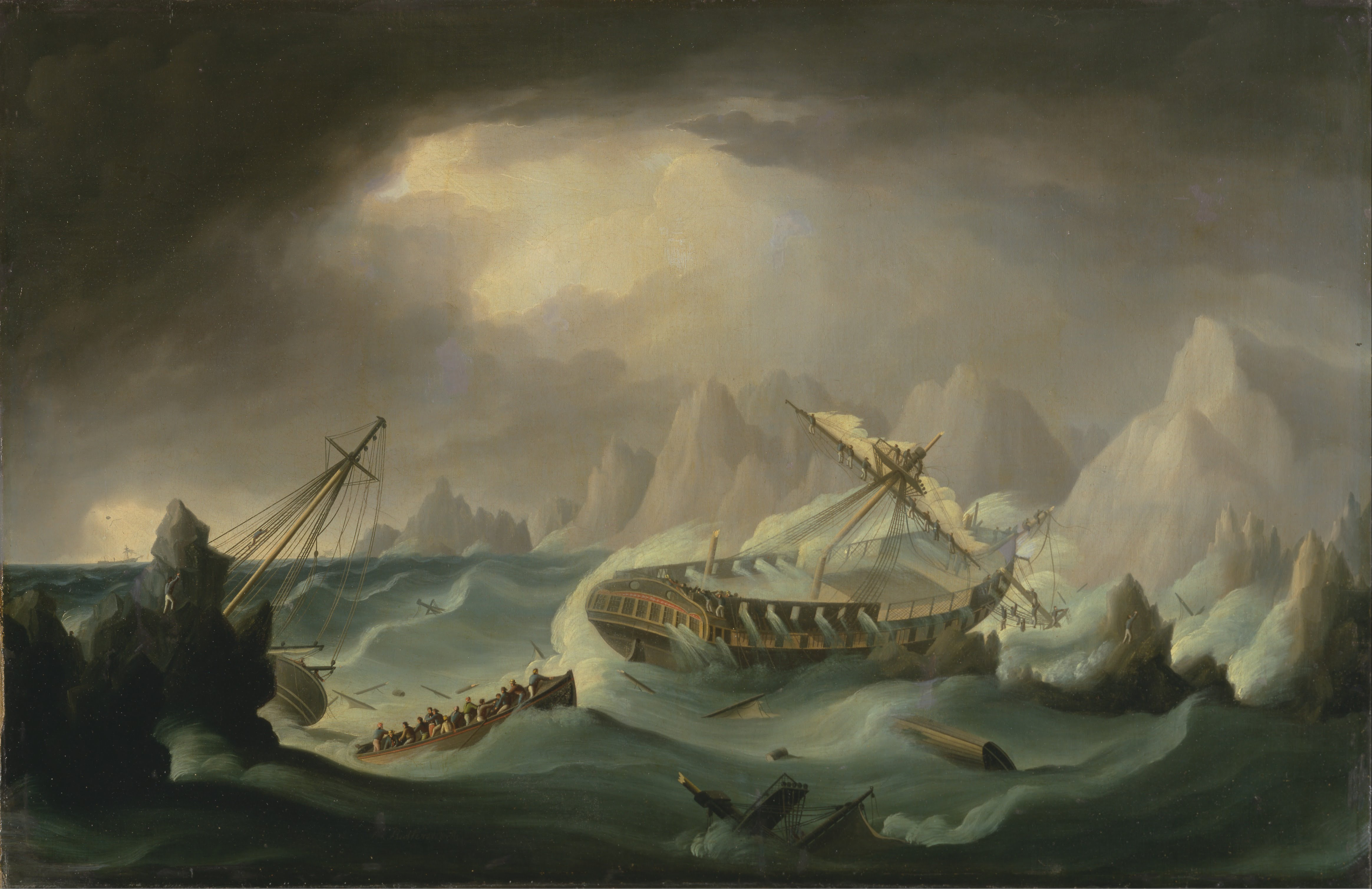
“Shipwreck off a Rocky Coast” by Thomas Butterworth, ~1810 CE. Located in the “Yale Center for British Art”
Have you ever felt as if you are on a boat headed for disaster which you cannot control? We all have moments in our lives where things seem out of control. We all have moments where we could tear out whatever hair we have in frustration. Interestingly enough, most of us know that on occasion everyone faces these moments in our heads but we still refuse to believe it with our hearts.
When you read the Bible it becomes absolutely clear on many things, but let’s focus on one point in particular today. Bad things happen to good people. Whether you are Job, Abraham, Paul, or even Jesus Christ, life involves moments that are neither avoidable nor pleasant. Job was considered a peerless person by Christ (Job 1:8) but still loses almost everything. Abraham is called into a new life and a new covenant multiple times by God, but still needs to rescue his nephew from captivity (Genesis 14). Paul (as previously stated) was shipwrecked despite knowing that the journey ahead of him would lead to disaster. Jesus Christ was crucified–the cup of suffering was not taken away.
Jesus Christ also stated (Matthew 5:44-45) that we should “love your enemies and pray for those who persecute you, so that you may be children of your Father in heaven; for he makes his sun rise on the evil and on the good, and sends rain on the righteous and on the unrighteous.” While he was speaking of love, Jesus taught the same truth that I am trying to express in the midst of his lesson. The sun rises and the rain falls on both the good people of the world and on those with a propensity towards evil.
Being a follower of Jesus Christ does not mean that everything will be perfect. In fact, being a follower of Jesus Christ often means that you will face difficulties. The promise made to believers is not a promise that they will be free from challenge. The promise God makes through Jesus Christ is that we will not be alone in our challenge.
We who follow Christ are given hope through the love of God. We who follow Christ are given presence through not only the Holy Spirit but through the powerful presence of Jesus in our lives. Consider the words of John 17: (NRSV)
“Righteous Father, the world does not know you, but I know you; and these know that you have sent me. I made your name known to them, and I will make it known, so that the love with which you have loved me may be in them, and I in them.”
If Christ is the messenger, then we are the recipients of the love he carried into the world for us. That love is deep, powerful, and meaningful. The thunderstorms of life will strike, crash, and thunder around us, but we have the love Christ has planted in our hearts. Paul the Shipwrecked wrote this in Romans 8: (NRSV)
“I consider that the sufferings of this present time are not worth comparing with the glory about to be revealed to us. For the creation waits with eager longing for the revealing of the children of God; for the creation was subjected to futility, not of its own will but by the will of the one who subjected it, in hope that the creation itself will be set free from its bondage to decay and will obtain the freedom of the glory of the children of God. We know that the whole creation has been groaning in labor pains until now; and not only the creation, but we ourselves, who have the first fruits of the Spirit, groan inwardly while we wait for adoption, the redemption of our bodies. For in hope we were saved. Now hope that is seen is not hope. For who hopes for what is seen? But if we hope for what we do not see, we wait for it with patience.
Likewise the Spirit helps us in our weakness; for we do not know how to pray as we ought, but that very Spirit intercedes with sighs too deep for words. And God, who searches the heart, knows what is the mind of the Spirit, because the Spirit intercedes for the saints according to the will of God.
We know that all things work together for good for those who love God, who are called according to his purpose. For those whom he foreknew he also predestined to be conformed to the image of his Son, in order that he might be the firstborn within a large family. And those whom he predestined he also called; and those whom he called he also justified; and those whom he justified he also glorified.
What then are we to say about these things? If God is for us, who is against us? He who did not withhold his own Son, but gave him up for all of us, will he not with him also give us everything else? Who will bring any charge against God’s elect? It is God who justifies. Who is to condemn? It is Christ Jesus, who died, yes, who was raised, who is at the right hand of God, who indeed intercedes for us. Who will separate us from the love of Christ? Will hardship, or distress, or persecution, or famine, or nakedness, or peril, or sword? As it is written,
‘For your sake we are being killed all day long;
we are accounted as sheep to be slaughtered.’
No, in all these things we are more than conquerors through him who loved us. For I am convinced that neither death, nor life, nor angels, nor rulers, nor things present, nor things to come, nor powers, nor height, nor depth, nor anything else in all creation, will be able to separate us from the love of God in Christ Jesus our Lord.”
My friends, Paul’s words speak for themselves. May you have faith and trust even as the boats of life carry you into the storms. May God help you, comfort you, and give you peace. May the peace of God that surpasses all understanding guard your hearts and minds in Christ Jesus (Philippians 4:7).
 Distracted Pastor Ramblings