In October we remember Domestic Violence Awareness Month. I am reading and reflecting on both my experiences and the thoughts of others about domestic violence during this month. This action is important to me as a survivor of domestic violence.
One book I am reading during Domestic Violence Awareness Month is a book I read all year long. The book is “The Sayings of the Desert Fathers,” which was translated by Benedicta Ward. In the sayings, Abba Poemen said, “Men speak to perfection but they do precious little about it.”
Unfortunately, it is true. In the church, many people talk a lot about the world’s problems, but never act to change the situation. Yes, it is true that I am a pastor. Yes, it is true that I speak about domestic violence this month and at other times of the year. Unfortunately, I am already looking for how to live in the solution, but I do not understand how to live and progress without hypocrisy.
My hope is that this blog will raise awareness about the issue of domestic violence and that people will try to live with truth and action. St. John said in 1 John 3:18, “Dear children, let us not love in word or lip service, but in action and in truth.”
En Octubre recordamos el mes de concientización sobre la violencia doméstica. Estoy leyendo y reflexionando sobre ambas mis experiencias y los pensamientos de otra sobre violencia doméstica durante este mes. Esta acción es importante para mi como un sobreviviente de violencia doméstica.
Un libro que estoy leyendo durante el Mes de Concientización sobre la Violencia Doméstica es un libro que leo todo el año. El libro es “Los dichos de los Padres del Desierto”, que fue traducido por Benedicta Ward. En los dichos, Abba Poemen dijo: “Los hombres hablan a la perfección, pero hacen muy poco al respecto”.
Desgraciadamente, es cierto. En la iglesia, mucha gente habla mucho de los problemas del mundo, pero nunca actúa para cambiar la situación. Sí, es cierto que soy pastor. Sí, es cierto que hablo sobre la violencia doméstica este mes y en otros momentos del año. Desgraciadamente, ya estoy buscando cómo vivir en la solución, pero no entiendo cómo vivir y progresar sin hipocresía.
Mi esperanza es que este blog genere conciencia sobre el problema de la violencia doméstica y que haya personas que intenten vivir con la verdad y la acción. San Juan dijo en 1 Juan 3:18, “queridos hijos, no amemos de palabra ni de labios para afuera, sino con hechos y de verdad”.
23The others who became priests are numerous because death prevented them from continuing to serve. 24In contrast, he holds the office of priest permanently because he continues to serve forever. 25This is why he can completely save those who are approaching God through him, because he always lives to speak with God for them.
26It’s appropriate for us to have this kind of high priest: holy, innocent, incorrupt, separate from sinners, and raised high above the heavens. 27He doesn’t need to offer sacrifices every day like the other high priests, first for their own sins and then for the sins of the people. He did this once for all when he offered himself. 28The Law appoints people who are prone to weakness as high priests, but the content of the solemn pledge, which came after the Law, appointed a Son who has been made perfect forever.
Hrebrews 7:23-28, Common English Bible
In October we remember Domestic Violence Awareness Month. I am reading and reflecting on both my experiences and the thoughts of others about domestic violence during this month. This action is important to me as a survivor of domestic violence.
The above scripture is from the Revised Common Lectionary for next Sunday. The scripture passage is from the eighth chapter of the book of Hebrews. In the Scriptures, the priests of the past oppose Jesus Christ. When I consider the difference between Jesus and the priests of old, I see several reasons why Jesus Christ is not the same as the priests. Jesus Christ is perfect and the priests are not perfect. The priests are mortal and Jesus is immortal. Jesus Christ did not need to offer sacrifices day after day because He offered the sacrifice once and for all. The priests needed to offer sacrifices every day because every day sinners continued to need new sacrifices. The priests were not the same as Jesus Christ.
The author of Hebrews wrote about the work of priests, but I also see wisdom in thinking about living in a world with domestic violence abusers. We need to seek justice for survivors, but it is not possible to stop all abusers from continuing to abuse. Even if it were possible, it is not possible to erase the pain of the past. We do not have the power to change the character of the world entirely because we are mortal and powerless over the decisions of others.
One of the reasons I believe in the Lord is the nature of God, Jesus Christ, and the Holy Spirit. The Trinity is immortal and has power over all things. When I see no hope for my life in this world, I believe there is hope in God. God never forgets what is going on in the world, Jesus lived in this world, and the Holy Spirit helps us. I have hope because the God who was, is, and will be knows that we need help. I may be a fool to believe these things to be true, but I would rather die a fool than live without hope.
23Ahora bien, como a aquellos sacerdotes la muerte les impedía seguir ejerciendo sus funciones, ha habido muchos de ellos; 24pero como Jesús permanece para siempre, su sacerdocio es imperecedero. 25Por eso también puede salvar por completo a los que por medio de él se acercan a Dios, ya que vive siempre para interceder por ellos.
26Nos convenía tener un sumo sacerdote así: santo, irreprochable, puro, apartado de los pecadores y exaltado sobre los cielos. 27A diferencia de los otros sumos sacerdotes, él no tiene que ofrecer sacrificios día tras día, primero por sus propios pecados y luego por los del pueblo; porque él ofreció el sacrificio una sola vez y para siempre cuando se ofreció a sí mismo. 28De hecho, la ley designa como sumos sacerdotes a hombres débiles; pero el juramento, posterior a la ley, designa al Hijo, quien ha sido hecho perfecto para siempre.
Hebreos 7:23-28, Nueva Versión Internacional
En Octubre recordamos el mes de concientización sobre la violencia doméstica. Estoy leyendo y reflexionando sobre ambas mis experiencias y los pensamientos de otra sobre violencia doméstica durante este mes. Esta acción es importante para mi como un sobreviviente de violencia doméstica.
La escritura de arriba es del Leccionario Común Revisado para el próximo domingo. El pasaje de las Escrituras es del capítulo ocho del libro de Hebreos. En las Escrituras, los sacerdotes del pasado se oponen a Jesucristo. Cuando considero la diferencia entre Jesús y los sacerdotes de la antigüedad, veo varias razones por las que Jesucristo no es lo mismo que los sacerdotes. Jesucristo es perfecto y los sacerdotes no son perfectos. Los sacerdotes son mortales y Jesús es inmortal. Jesucristo no necesitaba ofrecer sacrificios día tras día porque Él ofreció el sacrificio de una vez por todas. Los sacerdotes necesitaban ofrecer sacrificios todos los días porque cada día los pecadores continuaban necesitando nuevos sacrificios. Los sacerdotes no eran lo mismo que Jesucristo.
El autor de Hebreos escribió sobre el trabajo de los sacerdotes, pero también veo sabiduría en pensar en vivir en un mundo con abusadores de violencia doméstica. Necesitamos buscar justicia para los sobrevivientes, pero no es posible evitar que todos los abusadores sigan abusando. Incluso si fuera posible, no es posible eliminar el dolor del pasado. No tenemos el poder de cambiar el carácter del mundo por completo porque somos mortales e impotentes ante las decisiones de los demás.
Una de las razones por las que creo en el Señor es la naturaleza de Dios, Jesucristo y el Espíritu Santo. La Trinidad es inmortal y tiene poder sobre todas las cosas. Cuando no veo esperanza para mi vida en este mundo, creo que hay esperanza en Dios. Dios nunca olvida lo que está pasando en el mundo, Jesús vivió en este mundo y el Espíritu Santo nos ayuda. Tengo esperanza porque el Dios que fue, es y será sabe que necesitamos ayuda. Puede que sea un tonto al creer que estas cosas son ciertas, pero prefiero morir como un tonto que vivir sin esperanza.
In October we remember Domestic Violence Awareness Month. I am reading and reflecting on both my experiences and the thoughts of others about domestic violence during this month. This action is important to me as a survivor of domestic violence.
One book I am reading during Domestic Violence Awareness Month is a book I read all year long. The book is “The Sayings of the Desert Fathers,” which was translated by Benedicta Ward. In the sayings, Abba Poemen said that Abba Ammonas said, “A man can stay in his cell for a hundred years without learning to live in his cell.”
It’s true! When I think about how I live my experience, I wonder what I have learned about living with the demons of the past. It’s easy to live with fears and worries. It’s easy to accept my complaints and anger about the past. It’s easy to beat myself up about my past faults and dream of a different life.
Yes, that is clear. If a man can remain in his cell for a hundred years without learning to live in his cell, I may live with my faults for a hundred years without learning to change from my past weaknesses. I may live in pain all my remaining days. I may live in the misery and pain of the past, but I can live with new hope when I learn to change with the Holy Spirit.
The abba said that it is possible to live without changing, but it is possible to live and change. If it were not possible to learn to live differently, the abba would have no need to say what he said. If it were not possible to change with the power of the Holy Spirit, the other abba would have no need to write what he wrote. It is possible to change, although it is difficult.
If you want to change, it is possible. It is possible to change and live with hope if you are a survivor of domestic violence. It is possible to change and repent if you are a perpetrator of domestic violence. It is possible to change or not to change. The abba pointed to a possibility for our lives. We need to choose to change.
En Octubre recordamos el mes de concientización sobre la violencia doméstica. Estoy leyendo y reflexionando sobre ambas mis experiencias y los pensamientos de otra sobre violencia doméstica durante este mes. Esta acción es importante para mi como un sobreviviente de violencia doméstica.
Un libro que estoy leyendo durante el Mes de Concientización sobre la Violencia Doméstica es un libro que leo todo el año. El libro es “Los dichos de los Padres del Desierto”, que fue traducido por Benedicta Ward. En los dichos, Abba Poemen dijo que Abba Ammonas dijo: “Un hombre puede permanecer en su celda durante cien años sin aprender a vivir en su celda.”
¡Es verdad! Cuando pienso en cómo vivo mi experiencia, me pregunto qué aprendo acerca de vivir con los demonios del pasado. Es fácil vivir con miedos y preocupaciones. Es fácil aceptar mis quejas y enojo por el pasado. Es fácil castigarme por mis faltas pasadas y soñar con una vida different.
Sí, eso está claro. Si un hombre puede permanecer en su celda durante cien años sin aprender a vivir en su celda, es posible que yo viva con mis faltas durante cien años sin aprender a cambiar de mis debilidades pasadas. Es posible que yo viva con dolor todos los días que me queden. Puedo vivir en la miseria y el dolor del pasado, pero puedo vivir con una nueva esperanza cuando aprendo a cambiar con el Espíritu Santo.
El abba dijo que es posible vivir sin cambiar, pero es posible vivir y cambiar. Si no fuera posible aprender a vivir de otra manera, el abba no tendría necesidad de decir lo que ha dicho. Si no fuera posible cambiar con el poder del Espíritu Santo, el otro abba no tendría necesidad de escribir lo que ha escrito. Es posible cambiar, aunque es difícil.
Si desea a cambiar, es posible. Es posible a cambiar y vivir con esperanza si un sobreviviente de violencia doméstica. Es posible a cambiar y repentir si un perpretador de violencia doméstica. Es posible a cambiar o no cambiar. El abba puntagaba a una posebilidad para nuestras vidas. Necesitamos a eligir a cambiar.
Durante los dos meses pasados, escribí cartas para la auditoría de la membresía iglesia. No tuve el tiempo para escribí aquellas cartas y este blog.Necesite a escribir las cartas pero acabí con todas cartas jueves.
“No se contenten sólo con escuchar la palabra, pues así se engañan ustedes mismos. Llévenla a la práctica.” Santiago 1:22, NVI
Querido Jesús, a veces en el pasado, yo tuve que eschuchar y responder de tú palabra en tiempos malos que no elegi. Aquellos momentos fueron horribles y malísimos.
Este día es buenísimo y puedo elegir vivir con tu palabra cuando sea fácil. Puedo preparar para dias futuros durante estos momentos. Aunque puedo escucharte y nunca practicar las cosas te dice, a no deseo engañarme con practicos estúpidos. No es bueno cuando escucho sin elegir a practicar.
Me des sabiduría en este día y ayudame a elegir escuchar antes de los días malísimos cuando no podré elegir con sonsideración. Amén.
For the past two months I have been writing letters for the church membership audit. I have not had the time to write those letters and this blog. I needed to write the letters but I finished all the letters Thursday.
“Do not be content with merely hearing the word, for you are deceiving yourselves. Put it into practice” James 1:22, translated from NVI
Dear Jesus, at times in the past, I had to listen to and respond to Your Word in bad times that I did not choose. Those times were horrible and very bad.
This day is a good day and I can choose to live with your word when it is easy. I can prepare for future days during these moments. Even though I can listen to you and never practice the things you say, I don’t want to fool myself with stupid practices. It is not good when I listen without choosing to practice.
Give me wisdom this day and help me choose to listen before the terrible days when I will not be able to choose thoughtfully. Amen.
“All the elements in the Master’s goodness which we have studied, his joy, his fearlessness, his fortitude, his magnanimity, are separate as incandescent arcs are, but they all burn with the same fire. This explains why it is often possible to find bravery or sacrificial devotion in other lives than his, that seem to equal the same virtues in him; but it is never possible to find the same quality which suffuses his courage and makes his sacrificial devotion a symbol of the love of God. No virtue in him was the whole of itself; his spirit was the rest of it.“
Harry Emerson Fosdick as quoted on page 53 of “A Guide to Prayer for Ministers and Other Servants” (their italics)
Today was an interesting day. I have been working alongside someone for the past few months in what the church might call a mentoring role and we have come to a splitting point. There are differences between us in terms of philosophies and at some point there are times when even the best intentions are stymied by practical differences. The situation makes me sad but is also a bit of a relief.
One of the things that relationship has helped me to clarify is my own understanding of God. I’m a big proponent of Christianity: that much is probably obvious. I believe in my heart that Jesus Christ is the Son of God who was incarnated, died, resurrected, and ascended. I believe Christ will come again. I say that I believe these things because I am honest in the fact that these positions are propositions of faith and not sight. I believe them, but I cannot say 100% that they are true because I am a being of limited understanding of life, the universe, and everything within it. This is doubly true when I consider the Divine which is just infinitely more complex and mysterious than the universe I already do not understand.
It seems to me to be a huge assertion to say things like “All religions are manifestations of the same divine light with equal value and truth.” They very well may be one light that is refracted into the various faiths, but it is a big statement for me to say that things absolutely are this one way. I am convinced of Christianity to the extent that I can be convinced, but I don’t have the time, energy, or even intellectual capacity to do the same deep-dive into other faiths to make the same assertion about their belief system. It is intrinsically difficult for me to even pretend that I know all faiths are equal because I don’t have the heart in me to even pretend to have the audacity to make such a broad claim about other systems of belief, practice, and connections. Frankly, when it comes to other religions, there are places where I am just plain ignorant and I don’t want to put the stamp of approval on something I cannot begin to understand.
Instead of being broad in my understanding of world religions, I do have a very curious and interesting relationship with Christianity. I see truth in statements like those written by Fosdick in the pericope quoted above because I see Jesus in the light of being internationally Divine. Are there others who are sacrificial, loving, just, and kind outside of Christianity? Absolutely. Are there people in other faith traditions I deeply admire and even wish to emulate? Yes. Do I see those beautiful people as carriers of what might be called the Imago Dei? Yeah. Do I think they are on par with Jesus in terms of their place within the hierarchy of divinity and godliness in our universe? Not really.
My understanding of Jesus is fundamentally different than the way I see other people because my faith has taught me that Jesus is fully human like the rest of us but Jesus is also fully divine. Comparing Christ to other people is comparing apples and oranges. Both may be fruit, but one is fully manzana in every language, while the other will forever be naranja. No matter what language is spoken or what idiom is chosen, the two are distinctly different at a fundamental level.
Does my position on Jesus’ uniqueness intrinsically mean that I am right and they are wrong? To be honest, I don’t have the data to give an honest and forthright response to that question. A lot of world religions do have places where there is friction between their beliefs and practices and Christian orthodoxy and orthopraxy. I’m not going to say they are right because I am humble enough to say I don’t have all of the information to be definitive, Even so, at this point in my life I have long since cast my lot with Jesus of Nazareth. Is that right or wrong? A great question, but from where I look upon creation, I see the Incandescence of the Divine in Jesus Christ as being fundamentally unique. That viewpoint is my perspective and it does not need to match the perspective of everyone else. One thing I do believe for certain is this: we each have the opportunity to be either right or wrong even if we cannot say with 100% certainty that one is right and one is wrong until the Divine itself is fully revealed and fully known.
Does this position always make me friends? No, not at all. Honestly, this position costs me friends both outside of my faith and within my faith: I’m either judgmental of others or not judgmental enough depending on a person’s perspective. For what it is worth, most people of other religions that I am friends with have the capacity to disagree without animosity, to hold a friendship alongside a disagreement, and honestly accept the fact that my personal viewpoint is about what I see as right and not about telling them that they’re wrong. I do my best to return the favor of offering to disagree without animosity, to be friends despite disagreeing, and to share my perspective without damning theirs. A lot of those faithful heterodox friends think I’m wrong but are kind enough to love me anyway, which is awesome because I love them too.
“It is a primary truth of Christianity that God reaches us directly. No person is insulated. As ocean floods the inlets, as sunlight environs the plant, so God enfolds and enwreathes the finite spirit. There is this difference, however, inlet and plant are penetrated whether they will or not. Sea and sunshine crowd themselves in a tergo. Not so with God. He can be received only through appreciation and conscious appropriation. He comes only through doors that are purposefully opened for him. A person may live as near Goad as the bubble is to the ocean and yet not find him. He may be ‘closer than breathing, nearer than hands or feet,’ and still be missed.”
Rufus Jones, from “The Double Search” as quoted in “A Guide to Prayer for Ministers and Other Servants” by Reuben Job & Normal Shawchuck
In our study of “All the Good: A Wesleyan Way of Christmas,” during the first week of Advent, one of the authors of the study, Laceye Warner, shared a personal story of playing hide and seek with children in the middle of a worship service. She was comparing the game of hide and seek to Christ approaching in Advent. In Advent, ready or not, here Christ comes.
This week I was looking through the readings for reflection from “A Guide to Prayer for Ministers and Others Servants” when Rufus Jones’s words showed up in a quote from “The Double Search.” Recently I have been spending time in Rufus Jones’ 1916 work “The Inner Life,” so I paid attention to what Jones wrote while wondering how Rufus Jones ended up in the readings for the second week of Advent.
What an interesting tension between these two readings. Rev. Warner wrote about how Jesus is coming into the world whether it is ready or not. Rufus Jones wrote about how God is by nature a God who believes in consent. For Jones, God is as close as a bubble may be to the ocean, but consent is required before God will enter into a life. For Warner, God is right there on the verge of entering into the world whether or not it is ready.
Now the interesting thing about these two from my perspective is the potential clash of theology. Rev. Warner is deeply and steeply within the Methodist tradition. As an elder, I can say that I would not question her theology for one moment if I were on a Board of Ordained Ministry. Her position is solidly supported by Wesleyan research, writings, and traditions. Should she one day google this blog article, I hope she sees that I give her and her theology a thumbs up! Nothing personal here, Rev. Warner.
There is grace in the world for us and that grace is prevenient, justifying, and sanctifying. These graces exist in that particular order. God works within us even before we consciously choose to accept God. Unmerited favor pours down and into a life that comes to a point of acceptance and justification. Students of Methodist theology call that type of loving kindness and mercy prevenient grace.
Quaker theologian Rufus Jones states that God is right in the world around us, but that there must be an acceptance of God’s love before God truly enters into a person. I’m not enough of a Quaker scholar to state whether or not Jones would say that the presence of God in that proximity would qualify as a form of prevenient grace, but I wonder. God is there surrounding a person like the sunshine surrounds a tree or like the water fills an inlet, but Jones states there’s a difference: the sun may fill a plant with light that leads to a reaction with chlorophyll, but the plant has no say in the presence of the light. The water may pour into the inlet, but the inlet has no say in the matter. Tides, gravity, and water levels conspire to fill an inlet whether or not it desires to be wet.
For Rufus Jones, there must be consent before God enters into a life. For people like John Wesley, acceptance definitively matters as a prerequisite before prevenient grace leads a person to a salvific experience with the justifying grace offered by Christ. There’s a similar view on consent for both Jones and Wesley when it comes to salvation. The question I have is whether or not prevenient grace is a consensual grace.
As a minister, I have heard many times from a beloved child of God about the life of a loved one who is in their prayers. Sometimes the loved one is not willing to come to church or to accept the presence of God in their life. There have been prayers for the beloved person who may be angry, hurt, frustrated, or just done with the church. Sometimes the prayer is that the beloved person will find faith, accept an invitation to church, or even walk away from a dangerous situation. The hopes and the prayers they inspire are almost always well-intentioned and loving.
The question Jones inspires is what happens when we would like to see a flood of prevenient grace swell up to bear someone into the arms of God while the person in the water may want nothing to do with that grace or the God who is waiting. We would present the humorous simile of hide and seek with Rev. Warner and many other Methodists (including me) who want to explain the presence of God entering the world, but some people have no desire to play that game. They are not interested. The plant may rest in the sunshine regardless of intention, but if Jones is accurate in his portrayal of how God functions, the people we love may shut that door on God. What’s more, God may even honor their decisions to shut the door.
If prevenient grace must be or should be consensual, then there may be a theological hurdle for many of us as we consider how we relate to the world around us. I was sitting in a district clergy meeting this fall when an elderly fellow stated that things would be okay if we could just sit people down and explain to them where they are wrong and where we are right. I paraphrased that a bit, but I will state that’s what I heard. I hold no ill will for the person sharing that sentiment, but I wonder how well it works to force people to sit down and listen to us as the people who proclaim that we are right and they are ignorant.
In my experience, forced conversation about faith where the person is being forced into the conversation rarely leads anywhere good for either the person sharing or the person receiving that forceful sharing. Moving beyond the fact that bullying someone into faith seems the opposite of what we are called to do as Christians, there’s something deeply flawed here, The very idea that bashing someone over the head with a theological or even educational hammer is a form of grace seems a bit arrogant. The choice to act with theological, spiritual, educational, or even positional power should be rejected when we consider that honest conversation and loving actions can lead to similar conversations and results from a more respectful place of kindness, mercy, and graciousness.
Such conversations, poorly done and with carelessness, can lead to traumatic results. We know that religion having a negative impact can happen and has happened depending on how religion is used to cope with challenging situations. Other conversations, done carefully and with love, can lead to people seeing the extension of faith, hope, and love as being means of prevenient grace. When there is consent and all is well, then salvific results can ensue. When there is a lack of consent, our actions can be considered means of sorrow instead of means of grace.
It is perhaps easy to look at our actions in this light and see the value of consent and love in our approaches to evangelism and even to what Warner referred to as “works of mercy” throughout this season of Advent. Works of mercy, consensually and lovingly done, are glorifying to the name of God. Works of mercy that are not done with consent or even perspective can end as poorly as the incredibly outdated concept of the “Indian Boarding Schools” (which United Methodists are encouraged to be actively repenting of as a part of a whole church that hurt itself: racism is an act that hurts all people (Book of Resolutions, ¶3371: A Charter for Racial Justice in an Interdependent Global Community)).
You may think that I have gone far afield from my original conversation by talking about how we engage in evangelism and acts of mercy. Perhaps you wonder why it matters that won-consensual evangelism and “works of mercy” have caused harm. What does this have to do with prevenient grace and consent? Well, do we think our desire for another person to come to know God is greater than their desire to be left alone? Can we truly see a loving God pushing someone around without a sense of love and care simply because we ask for it? If God truly loves that person and loves us, can we see God working to empower us to share with love instead of forcing grace into their life through the school of hard knocks?
We know it is harmful to force other people into a place where they are deeply harmed by our good intentions. There’s a reason why the first of the three general rules is to do no harm and we even recognize those rules are purposefully in the order we have them. We seek to do no harm even before we seek to do good. As such, perhaps we need to deeply consider whether or not prevenient grace should be consensual. If it is to be, perhaps our time should be spent helping others to find that grace with love and kindness.
Consent is a powerful thing. Consent takes something beautiful and makes it extravagantly wonderful. A lack of consent takes something beautiful and turns it into something horrific. We know this is true of something as common as human sexuality. Can you imagine a world where prevenient grace is extravagantly wonderful? Put another way, can you imagine a world where prevenient grace is celebrated without the eventual need for global acts of repentance? What if we worked for a world where people sought God with joy instead of God having to play hide and seek with the unwilling as a result of our behaviors? What if our Christmas gifts to Christ were acts of consensual mercy?
I have spent time lately thinking about the differences in perspective between Pelagius and Augustine. I have been reading a book on Celtic Christianity which is very opinionated on the matter, which has put me in a place to consider the perspectives of both authors.
I have read various works from Augustine several times over the years, but only recently read through some of the letters of Pelagius. I have to admit to having a certain amount of sympathy in my heart towards Pelagius. History is often written by those with power and it is likely that the commonly understood theology of Orthodoxy is written by the “victorious” in a situation where there perhaps should be different categories than winners and losers.
Pelagius does seem to present a world where everything comes from God and I am sympathetic to this worldview. Pelagius wrote:
“We measure the goodness of human nature in relation to its creator, whom we call God. When he created the world, God declared that everything he had made was good. So if every tree and animal, insect and plant is good, how much better is man himself! God made man in his own image; and so he intends each of us to be like him. God has made many animals stronger and faster than human beings. He has given many animals teeth and jaws that are more powerful and sharper than the finest sword. But he has given man intelligence and freedom. We alone are able to recognize God as our maker, and thence to understand the goodness of his creation. Thus we have the capacity to distinguish between good and evil, right and wrong. This capacity means that we do not act out of compulsion; nor need we be swayed by our immediate wants and desires, as animals are. Instead we make choices. Day by day, hour by hour, we have to reach decisions; and in each decision, we can choose good or evil. The freedom to choose makes us like God: if we choose evil, that freedom becomes a curse; if we choose good, it becomes our greatest blessing.”
“The Letters of Pelagius: Celtic Soul Friend” p. 4.
What do we have in this perspective? Free will as a reality when we consider our choices. We have a positive outlook on creation as something created by God with God’s good intent and unassailable power (for who is powerful enough to thwart a God who is omnipotent and desiring to create something good?). There’s a lot of good in there.
At the same time, some people have said the power of Augustine rests, in part, in his view of creation itself and how God relates to that good creation. Depending on your perspective, that’s either a positive or a negative, but views of Augustine are decidedly less clear-cut when you read across a broad spectrum of perspectives. Here’s what he writes about Psalm 145
“Of the things which He hath made, he hath made a step up to Him, not a descent from Him to them. For if thou love these more than Him, thou wilt not have Him. And what profit is it to thee to overflow with the works, if the Worker leave thee? Truly thou shouldest love them; but love Him more, and love them for His sake. For He doth not hold out promises, without holding out threats also: if He held out no promises, there would be no encouragement; if He held out no threats, there would be no correction. They that praise Thee therefore shall “speak” also “of the excellence of Thy terrible deeds;” the excellence of that work of Thy hands which punisheth and administereth discipline, they shall speak of, they shall not be silent: for they shall not proclaim Thine everlasting kingdom, and be silent about Thine everlasting fire. For the praise of God”
Augustine, “Exposition on the Psalms,” Psalm CXLV
It is good to honor creation, but ultimately it is not the Creator. At some level, there’s a very fine distinction here. Both Augustine and Pelagius see that there are choices and that there can be bad choices, but one can read that Augustine has a bit of a harder edge at times.
I love some of what Pelagius writes, but I also understand the need at times for a harder edge like that of Augustine. While some have said Augustine’s theology can be seen as a tool to encourage and empower the connection of Christianity to the more imperialistic aspects of the faith, I can appreciate the need for a firmer hand in theology.
It is great that there are choices, but what do we do when the choices of others cause great harm? Moving beyond the villains of today for a moment, can we sit in comfort while figures in history like clan members, Nazis, colonizers, and other groups leave behind a legacy of pain and sorrow? Isn’t there a place of comfort when there is the promise of paradise and a promise of fire?
Of course, that promise can be frightening. I’m the son of people who some would consider to be an invasive culture in a land that has been stripped of indigenous culture. It is frightening to consider, but sometimes it is good to have a little bit of perspective.
“Sin with despair is certain death. Let no one therefore say, If already any evil thing I have done, already I am to be condemned: God pardoneth not such evil things, why add I not sins to sins? I will enjoy this word in pleasure, in wantonness, in wicked cupidity: now hope of amendment having been lost, let me have even what I see, if I cannot have what I believe.”
St. Augustine, Commentary on Psalm 51 from “Exposition on the Psalms”
I was doing some preparatory work for the upcoming Advent study by tracing down the quotes used in the book we will be using during the upcoming season when I came across this passage in St. Augustine’s exposition on Psalm 51. The book references Augustine’s work but doesn’t actually share what Augustine wrote, which is a pet peeve of mine as “Text without a context is a pretext for misinterpretation.” When a person does not have the text itself to misinterpret or even a semi-accurate paraphrase, I feel as if the appeal to authority (in this case Augustine’s authority as one of the patristic fathers, which is weird in a book focused on the Methodists centuries later) is weakened.
Literary critique aside, despite the assertion of the author that Augustine wants us to look at God’s grace and work instead of our own sinfulness, Augustine does at certain points explicitly state that there is a definite need to personally identify with and deal with one’s own struggles and even sinful choices. Augustine is quite clear that even those who are pardoned from sin must still bear the weight of their deeds:
“ ‘For, behold, truth Thou hast loved: uncertain and hidden things of Thy wisdom, Thou hast manifested to me’ (ver. 6). That is, Thou hast not left unpunished even the sins of those whom Thou dost pardon. ‘Truth Thou hast loved:’ so mercy Thou hast granted first, as that Thou shouldest also preserve truth. Thou pardonest one confessing, pardonest, but only if he punisheth himself: so there are preserved mercy and truth: mercy because man is set free; truth, because sin is punished.”
St. Augustine, Commentary on Psalm 51 from “Exposition on the Psalms”
It is an interesting thing to consider: the relationship between pardon, mercy, and punishment. To a certain extent, Augustine certainly had a point. He points to Nineveh in the Book of Jonah as an example. Pardon is received by the people of that city, but only after they themselves have accepted their need for humility and chastisement. Pardon occurs in the story of Jonah after the acceptance of guilt and after the choice to adopt a position of humility.
As a person in recovery, there is certainly something to be said about the fact that I truly and fully rely on the mercy of a God who forgives and accepts me. I also understand that there’s a weight to the things I have done in the past and have to put in the time to make amends for the things I have done. I understand there is a relationship between pardon, mercy, and punishment.
I don’t think focusing on the grace of God to the complete exclusion of personal responsibility is something we want to do on a regular basis. Did Augustine believe in the power of Christ to bring about change in the lives of individuals? Absolutely, but Augustine did not present the Good News of pardon and mercy at the exclusion of personal responsibility. As Augustine warns us in the quote at the top of this entry, there’s certainly a point at which the weight of sin can dishearten people to the point of giving in to sorrow and grief instead of believing in grace. At the same time, that grace does not draw away from the need to honestly reflect and work on the sin in our lives.
Perhaps all of this is overly complicating what was a point meant to be looked over in passing by an author who is not hinging their thesis on this point, but it does help at times to double-check the sources being quoted and whether or not those sources say what the author in the middle is trying to say.
In two hours I will be leading worship and sharing a message as the capstone of a series on the Fruit of the Spirit. We have been going individually through each of the Fruit for the past nine weeks. This week we will be looking at the context of the Fruit by considering how they stand in contrast to the works of the flesh.
It is difficult to express just how delicate it can be to balance the hard truth of scripture against the attitudes, personalities, and sub-cultures within the church. I am reminded of Rufus Jones’ words as I prepare this morning. In case you’re wondering, I am reading Rufus Jones to help grow my understanding of Howard Thurman, whose works I continue to adore.
The following passage stood out in Jones’ writings this week.
“Most persons are strangely prone to use the ‘principle of parsimony.’ They appear to have a kind of fascination for the dilemma of either-or alternatives. ‘Faith’ or ‘works’ is one of these great historic alternatives. But this cleavage is too artificial for full-rounded reality. Each of these ‘halves’ cries for its other, and there cannot be any great salvation until we rise from the poverty of either half to the richness of the united whole which includes both ‘ways.’ ”
Rufus Jones, The Inner Life (1916)
Jones goes on to lay out the challenge that he faced in his day, which we continue to face today:
“Over against the mystic who glories in the infinite depths of his own soul, the evangelical, with excessive humility, allows not even a spark of native grandeur to the soul and denies that the inner way leads to anything but will-o’-the-wisps. This is a very inept and unnecessary halving of what should be a whole. It spoils religious life, somewhat as the execution of Solomon’s proposal would have spoiled for both mothers the living child that was to be divided. Twenty-five hundred years ago Heraclitus of Ephesus declared that there is ‘a way up and a way down and both are one.; So, too, there is an outer way and an inner way and both are one. It takes both diverse aspects to express the rich and complete reality, which we mar and mangle when we dichotomize it and glorify our amputated half.”
Rufus Jones, The Inner Life (1916)
There’s something beautiful about the way that Jones effectively humbles both the self-absorbed mystic and the dogmatic evangelical which still stands the test of time. What a great turn of phrase: we ineptly and unnecessarily halve something that should have remained whole. To live with only half of what should be a whole is, by nature, a form of spiritual poverty.
Why does this rest foremost in my thoughts as I prepare today? The Fruit of the Spirit should show themselves with a certain level of evidence in our lives both in mystical and evangelical ways. Paul describes the works of the flesh as being an expression of selfish desire.
A purely mystic Christianity that is only interested in navel-gazing while ignoring the needs of others to both have social necessities and spiritual necessities is dangerously at risk of living out of a place of spiritual bankruptcy. Similarly, an Evangelical Christianity that is so concerned with either converting others or providing for the needs of others without ever considering the spiritual aspects of others and of one’s own need for humility is also at risk. The two halves of a Christianity that embraces both should never have been cleaved in two and to the extent that we pursue the Fruit of the Spirit while holding a meat cleaver, we are dangerously at risk.
I was walking as the sun set watching the leaves fall. Each has a season like us. Some fall quickly and some fall later, but each has a time to fall and gather with the others in the drifting ruach of the breeze.
The word of the day for the #ReThinkChurch Photo A Day campaign is “Full.” In our devotional, Ash Wednesday revolves around the depth of old words. Our devotional journey begins with the reminder that: “Old words whisper out over many pews today.” The old words do resonate throughout this day and throughout the season ahead of us.
The traditional words that might ring through your memories may be “Remember that you are dust, and to dust you shall return.” Perhaps you remember hearing “Repent, and believe the gospel.” Perhaps the words that ring through your memories are not rooted in old and meaningful liturgies. Perhaps you hear are “The journey has begun. Let us journey together with Christ.”
In contemplating the words that ring out through my memory thanks the Photo-A-Day, I remember the words that have historically have little to do with Ash Wednesday, even if they are fitting. I remember two lines from the Wesley Covenant Prayer, which is often shared each January by Methodist congregations. The lines are “Let me be full. Let me be empty.”
“Wheat Sanctuary Window” in Trumansburg UMC
What does it mean to be full? One photo I considered using is the photo I edited of the window with sheaves of wheat from our sanctuary. The reason I would share such a photo is that I want to be filled with God’s love and light to the point where I am gathered in with the harvest. I do not desire to be set aside or blown away by the wind. I want to be gathered in as a treasure. I want my life to be so full of goodness that I would be gathered in with the wheat.
At the same time: “Let me be full. Let me be empty.” I want to be the person that God want me to be. If my life is filled with glorious goodness and obvious giftedness, so be it. If I am easily seen as a person whose life should be gathered in, so be it. Also, if I seek to be faithful but stumble throughout my days, so be it. If I seek to be easily gathered in but end up rubbing all of the other stalks of wheat the wrong way or end up being a cornstalk in the middle of the wheat, so be it.
Ultimately, the old words whisper out. This season is about the fact that God’s grace was necessary. Jesus walked down the road on a journey of redemption and we all need the love that Jesus shared long ago. I would be full, but even if I am empty, God’s grace is truly what I need on this journey.
I think this is the photo that I will end up using today: a tomato growing on a vine in the middle of winter. By all rights, the photo makes no sense. Who grows tomatoes in the middle of winter? Will it even taste the same after spending the winter under a grow lamp? Will it be delicious or weird? Will it become a vibrant healthy tomato or simply fall off the vine one day? Will the flowers nearby ever grow their own blessings or will they fall to the counter in exhausted emptiness? I don’t know. Let it be full. Let it be empty. An excellent analogy and start to a season of both wonder and solemnity.
If you stop to look
more than a mere glance
It is more than a building.

It hides itself well
with the bricks so fine
but this is not just a church.

Real lives change here
when people listen
and find a kind place with hope.

We may not fix things
when the world breaks stuff
but we listen with our hearts.

We share words of home
We offer safe space
for people who are adrift

Not just a building
we are a free pier
for all who sail on life's waves.

Building, dock, or church
This sanctuary
is offered freely to all

I am so grateful
and laugh here with joy
for this is not just a church

In this place we feed
those with a hunger
both in body and/or soul

It is a garden
for all of the "bees"
who need some nectar or rest

It is a warm inn
on a wintry road
when people need safe shelter

It is a rare place
where death comes quite near
but nobody runs in fear.

It is where goodbye
is shared with a hope
that goodbye is "just for now."

It is where we wash
the soul with water
and ask the Spirit to come.

Full of miracles
stories with wonder
defy explanation here

It is made of brick
but is more solid
than just a sacred building

It is a place to find grace
It is a place to belong
It is more than a building
Video, photography, accompianment, and poetry all composed/captured/performed/written by me
This morning the Maine Federated Church is shifting to a week studying the Ascension, but I am not leading an Ascension service or a Memorial Day service. I am preparing a loaf of bread to go with dinner. Leading a church without an online worship service in the midst of the pandemic has been frustrating at times. I understand the rationale behind the church’s decision to proceed digitally in a way that is inclusive to all people in the congregation, but it is unsettling to wake up Sunday morning with time to bake bread.
To be entirely clear, while I am frustrated, I believe with all of my being that the church has a responsibility to reopen in a way that is measured and safe. I do not believe that we should rush into a dangerous situation that can endanger lives because any politician says that it is time to open. I also own the fact that this is my opinion.
Yeasty scents come from under this kitchen towel!
Today I am working with a recipe from Ken Forkish’s book. In particular, I am making a loaf of whole wheat bread to go with dinner. Overnight, water, flour, and a little bit of yeast fermented on our counter in a container. This morning, I combined the biga with additional water, flour, salt, and yeast to create a dough. Over the last few hours, I have sat with the dough as it continues to grow across the room. Yeasty scents fill the air and lead to thoughts of life.
One of the parts of the bread baking process which is in my thoughts this morning is the folding process recommended by Ken Forkish. I have folded the dough four times and have noticed the dough growing more and more taut as the process continues. The folding helps to give structure to the dough and itself is very interesting. When you first uncover the dough, it seems like a sloppy mess. After a few gentle folds, the dough begins to show a structure that seemed impossible moments before.
The tension in the dough continues to amaze me. Without the stress placed on the dough, the dough would end up a messy pool of liquid. When the dough is stretched, the dough develops the structure that will make the bread incredible.
Think about what spiritual lessons might be drawn from a parable rooted in this practice. We all want to live in communities that never face tensions, but can we be shaped into the communities we are meant to be without the occasional pressure or stressor? Just as a knife cannot be sharpened without the pressures of honing or as an athlete cannot grow stronger without challenging practice, can a community grow stronger without facing the occasional struggle? Can an individual grow into their potential without facing difficulty?
To be clear, there’s something to be said against stretching the dough to the point where it rips. Dough can definitely be overworked, but dough can also be underworked. How would the bread turn out if a person just put the ingredients into a bread pan without mixing?
As a minister, I have witnessed congregations that were unwilling to engage in healthy challenges and stretching. Most of them have struggled and some of them have closed. As a person, I have witnessed in other lives and have lived through portions of my own life where an unwillingness to engage in difficult situations led to terrible consequences.
When we live with the goal of never facing difficulty, we often become weakened to the point of uselessness. While this is a difficult time in life, it is my hope that the stretching we are all facing might strengthen us over the long run. May God bless you all this Sunday and keep you well.
“We know through painful experience that freedom is never voluntarily given by the oppressor; it must be demanded by the oppressed.”
Rev. Dr. Martin Luther King, Jr. in “Letter from a Birmingham Jail”
Let us pray:
God, give us the strength to approach You. Help us to be bold and to choose to listen to what you say to us. Bless us and keep us both now and forever. Amen.
I have spent the last week seeking wisdom. A few weeks ago an idea started spinning up in multiple people’s minds and spirits. I have been praying through not whether I should listen to God’s calling but how it will look in my life.
I read through a book by a church leader named Paul Nixon that was called “I Refuse to Lead a Dying Church.” I heard bold words about leadership, following God’s calling, and changing church culture. I dreamed through what it meant that my heart was warmed by Paul Nixon’s set of choices on how a person approaches leadership. Could I choose to be bold over being mild? Could I choose to ac kkt now instead of later? Could I choose life over death? As a leader, I have always had a calling, but this felt deeper.
Rev. Dr. Martin Luther King, Jr., wrote the words in your bulletin that we read. He wrote: “We know through painful experience that freedom is never voluntarily given by the oppressor; it must be demanded by the oppressed.” He wrote it to a group of white clergymen who insisted that Dr. King’s actions in Birmingham were unwise. Dr. King insisted that the oppressed must demand to call for their own freedom. He insisted that the people rise to claim their freedom.
I pondered these words as I thought about our world. Dr. King was talking about a far more insidious and evil problem, but the words still kept filling my head with thoughts and dreams.
I identify as a millennial and my generation is very spiritual but divided from traditional organized religion. I have had many conversations with people my age who have said “Church is boring,” “Church is hypocritical,” and worst of all “Church doesn’t bless me–all it does is hurt me and people I love.” I have also had these same conversations with disaffected people both younger and older than my generation.
The thing is that I know these things may be true for some people, but only because the church has often forgotten the mission or left it behind to be more comfortable. This reality is tragic.
Look at what the Colossians are told: “As you therefore have received Christ Jesus the Lord, continue to live your lives in him, rooted and built up in him and established in the faith, just as you were taught, abounding in thanksgiving.”
When I think about what I was taught about Jesus Christ as a child, I remember being taught that Jesus loved me, that Jesus cared about what was going on in my life, and that I always had a place in God’s house. When I was a teenager, I gave my life to Christ because the Church had taught me that when everything went wrong, I had a Friend and Protector in Christ Jesus.
When I accepted that love, when I placed my identity in that strength, and when I learned more about Christ, I was thankful. I abounded in thanksgiving. Why? I abounded in gratitude because Jesus Christ’s love was closer than my right hand. When Paul says continue in the love the church taught me as a child, I see a love that means the world to me. There have been times in my life when I would rather have been separated from my arm than separated from that love.
People in my generation and people in general are oppressed by misinformation–the misinformation they have about God does harm. They do not understand how powerful God’s love can be for their lives. It hurts my soul to think people do not learn of this love because they think church is boring or irrelevant. This kind of good news brings joy and meaning to life! It breaks my heart to think people would come to church and see the church as some place harmful rather than some place beautiful. Such things are holding people in my generation down. Such things are breaking hearts and causing pain. Such things should not be.
I thought about the quote from Dr. King, I thought about what I was reading, and I wondered. What would it look like if we took the parable Jesus tells as a story with a message for us? If we were to believe that Jesus cares for our neighbors and if we were to ask God to lead us through breaking through those barriers, do we believe God would not answer? Would a parent give a child a scorpion instead of an egg for breakfast? Would a parent leave the door unanswered if their small child knocked on the door asking to come in? Of course not. I love my kids, I may love sleep, but if they came asking for something they needed in the middle of the night, I would get it for them. The same holds true for my friends–I may wish to stay in bed, but if they needed help, I would get up and help.
It is my belief that God wants to help too. As I have listened to God, respected friends in the church, and my own soul, I believe that God is preparing us for something new and exciting. I think we are facing multiple challenges and that obstacles are being thrown in our way, but I believe these are attempts to put something in the way of those who call out from the edges. I hear their cries: “Love me!” “Welcome me!” “Welcome my kids!” “Welcome my parents!” “Welcome my brokenness!” “Welcome my weirdness!” “Welcome me!”
It has become such a call in my thoughts that I am asking a question of myself: Who is knocking? Am I knocking on the door asking for help of God? Is God knocking on my door to ask me to pay attention to the least? Are the people knocking because they need something better?
The thing is that the things we believe divide people from the Jesus’ love aren’t there. Are they too loud or too lax compared to what they should be? Well if those are sins, they have been nailed to the cross. Are they drinking too much at the bar or spending too much on clothes? Well, if those are sins, they have been nailed to the cross. Are they unlike the people we knew growing up in church? Well, if that’s a sin, that has been nailed to the cross.
One of the amazing things about Paul’s words is that the act of forgiveness described is always listed in the past tense. Have you been forgiven of your sin? Well you were forgiven at the same time that people 200 years ago were forgiven. Have you been forgiven of your sin? Well, the people down the street were forgiven at the same time. Have you been forgiven of your sin? Well the people who haven’t been born yet, haven’t done terrible things yet, and haven’t asked for forgiveness were forgiven at the same time as us. We have all been buried with Christ and resurrected with Christ.
When Paul speaks of not being taken captive by false ideas and puffed up ways of thinking, Paul is encouraging the Colossians to think of what Christ has done. People were telling them that eating non-Kosher foods would damn them, but Paul tells them to stop believing the lies. People were telling them that there were Sabbath rules that had to be followed, but Paul told them to stop believing the lies. Their salvation did not rest in the rules but in Jesus Christ.
I went to church as a young man at my father’s church on Grand Island. I grew up believing that I had to wear the nicest clothes, sit quietly, and always behave perfectly. When our church launched a contemporary worship service, we started to attend worship with a bass guitar, clapping during worship, and with people who led worship in jeans. It was weird and I kind of rebelled against it for a long time as I tried to come to grips with the differences. I had come to my own faith in Christ, but could worship take place in church with guitars and clapping? Wasn’t that a youth group thing for when the adults were all off having coffee somewhere and couldn’t stop us?
I came to realize that worship wasn’t about sitting perfectly still or being perfectly dressed. Worship was about God. I knew God loved me as who I was, but it took me a while to realize that the Sabbath laws of Sunday morning church did not make me a good Christian. Only God’s love made me a Christian in a first place. All of my salvation came down to the actions of Jesus Christ, the gifting of the Holy Spirit, and the love my Creator. When Paul tells me to continue my life as I was rooted and built up in Christ, I find my own roots have strength not in tradition or historical accuracy. I find my roots only have life where they are connected to the love of God.
What is God calling me and others to do? Honestly, we’re still discerning what that looks like, but one thing is clear: If it will succeed, it will only be because it is founded on God’s love. How does that old hymn go?
My hope is built on nothing less
Than Jesus' blood and righteousness.
I dare not trust the sweetest frame
But wholly lean on Jesus' name.

On Christ the solid Rock I stand
All other ground is sinking sand.
All other ground is sinking sand.
I also struggle with that particular song. I struggle for two reasons. First, I struggle with the song because I love the song. I think it is beautifully written, wonderfully lyricised, and matched perfectly with the stirring tune of Finlandia. If I were to choose a patriotic song as one I could adopt as my own, this would be the song I would choose first. I appreciate the balance between pride in one’s land and an appreciation for the viewpoint of others. I also appreciate that Dr. Harkness was a pioneering theologian whose work I love to support.
Dr. Georgia Harkness (1891-1974) was a leading Methodist theologian in an age when female theologians were definitely not the standard.
“Knowest thou not that we live in a foreign land, as though strangers and sojourners? Knowest thou not that it is the lot of sojourners to be ejected when they think not, expect not? which is also our lot. For this reason then, whatsoever things we have prepared, we leave here. For the Lord does not allow us to receive them and depart, if we have built houses, if we have bought fields, if slaves, if gear, if any other such thing. But not only does He not allow us to take them and depart hence, but doth not even account to thee the price of them. For He forewarned thee that thou shouldest not build, nor spend what is other men’s but thine own. Why therefore, leaving what is thine own, dost thou work and be at cost in what is another’s, so as to lose both thy toil and thy wages and to suffer the extremest punishment? Do not so, I beseech thee; but seeing we are by nature sojourners, let us also be so by choice; that we be not there sojourners and dishonored and cast out. For if we are set upon being citizens here, we shall be so neither here nor there; but if we continue to be sojourners, and live in such wise as sojourners ought to live in, we shall enjoy the freedom of citizens both here and there. For the just, although having nothing, will both dwell here amidst all men’s possessions as though they were his own; and also, when he hath departed to heaven, shall see those his eternal habitations. And he shall both here suffer no discomfort, (for none will ever be able to make him a stranger that hath every land for his city;) and when he hath been restored to his own country, shall receive the true riches. In order that we may gain both the things of this life and of that, let us use aright the things we have.”
Effectively, Chrysostom is referencing the teachings of Jesus about treasurers on earth. Jesus tells us in Matthew 6:19-21 to avoid storing up treasures on earth. Chrysostom points out that one cannot take houses, fields, slaves (different time in history: not justifying the unjustifiable, but pointing out Chrysostom’s context), gear, or anything else out of this world. Chrysostom points out that we have been forewarned against building up our riches on earth or claiming the things of this world as treasure. We cannot take the things of this world with us. Indeed, it is only in the next life that we find ourselves growing into our true inheritance and riches.
What catches my eye in regards to the hymn and what causes me to ask deep questions is the line “For if we are set upon being citizens here, we shall be so neither here nor there; but if we continue to be sojourners, and live in such wise as sojourners ought to live in, we shall enjoy the freedom of citizens both here and there.” Chrysostom sees Christians as people on a journey through this life with a goal of reaching the next. If one stops to claim this place as one’s land, one will only have it for a moment. If one claims one citizenship to be in Heaven, then one has the freedom to both enjoy this world and move into the next without great loss. Indeed, a strict reading would say that one cannot move into the kin-dom of God by grasping tightly to a land, a nation, or one’s own goods.
Strictly speaking, the hymn we sang stands in opposition to one of the earliest Christian leaders because it claims that this is our land, our nation, and our space while Christian tradition teaches that we belong elsewhere. This world is a world in which we live in a fog. As Paul wrote in 1 Corinthians 13:11-12 to a community in conflict about the things of this world: “When I was a child, I spoke like a child, I thought like a child, I reasoned like a child; when I became an adult, I put an end to childish ways. For now we see in a mirror, dimly, but then we will see face to face. Now I know only in part; then I will know fully, even as I have been fully known.”
Writing to the church in Corinth, Paul tells them to stop acting childishly and to quit dividing themselves over earthly matters. This is a place where we see the world, each other, and God dimly (like in a mirror from an age when a modern mirror would be a miracle). The world to which we belong and where we are headed is where we will see clearly and be seen clearly. The world to which we belong is one in which we shall come into our full being.
Thus, I am torn by the hymn. I love the hymn, the words of peace, and the seeking of understanding of other people. I also realize that Chrysostom might look at the differences between nations and see people whose eyes might rest better on the world to come than the goods and lands of this world. Neither we in this land nor those folks in other lands can carry the goods of this world to the next life.
This hymn may be one of those places where we must live in the tension between ideals. The older I grow, the more I come to see that life requires a bit more flexibility than I once carried in my idealistic youth. As a friend likes to say at church: “Blessed are the flexible for they will not be bent out of shape!”
This Saturday morning I am thinking about grief. My wife has started a wonderful new professional position, but we live in an imperfect world. I fell asleep in bed with my head next to hers as she talked about her professional challenges last night. I listened for a good long time before my exhaustion took me away. Thankfully, she does not read my blog regularly: my “secret” is safe for now. Let’s be honest: she may already know.
Professionally, in my own ministry I often face grief in homes, at funerals, on Sunday mornings, in hospital rooms, in meetings, in conferences, in the checkout line at the grocery store, and many other places. Personally, I have been grieving the act of registering for Annual Meetings this year because of the grief incurred globally. Now that the United Methodist Church’s Judicial Council ruling has effectively guaranteed a divisive United Methodist Annual Conference and a United Church of Christ Annual Meeting filled with well-meant sympathy and questions, I suppose my grief needs to be accepted.
Grief is in my thoughts this morning. I spent my quiet time this morning praying while doing the less than pleasant task of doing dishes. I might not have raisins to sort, but I try to learn from folks like Henri Nouwen and Brother Lawrence. Grief was in my thoughts as I scrubbed oily residue and emptied the sink trap.
My conclusion at the end of my time of contemplation is that grief reminds me of an octopus. Grief can be Krakenesque or found 20,000 leagues below the surface. Grief can be in the shallows of a reef teeming with life or plucking what little it can from the open currents.
Grief is a master of camouflage. The beast hides in plain sight until it reaches out. Grief grabs you only once before you see it in every eddy of sand. Grief can make you paranoid to swim out into the seas of life.
Grief also does not hide behind every rock in the sea of life. If we spend our whole lives afraid to swim, we may eventually regret our choices. As strange as it sounds, fish that do not move water through their gills will drown. Most fish can only hold still for a certain amount of time before they get air from the surface or the sea.
Tomorrow in church at Maine Federated, we will sing songs and read the story of Easter again. We will proclaim resurrection in a world of grief. We will swim, we will breathe, and face whatever octopi wait in the depths.
Sermon: “Foraging Hope” Date: March 31, 2019 Scriptures: Luke 15:1-2, 11-32 (lectionary) Preacher: Rev. Robert Dean
Now all the tax collectors and sinners were coming near to listen to him. And the Pharisees and the scribes were grumbling and saying, “This fellow welcomes sinners and eats with them…”
Then Jesus said, “There was a man who had two sons. The younger of them said to his father, ‘Father, give me the share of the property that will belong to me.’ So he divided his property between them. A few days later the younger son gathered all he had and traveled to a distant country, and there he squandered his property in dissolute living. When he had spent everything, a severe famine took place throughout that country, and he began to be in need. So he went and hired himself out to one of the citizens of that country, who sent him to his fields to feed the pigs. He would gladly have filled himself with the pods that the pigs were eating; and no one gave him anything. But when he came to himself he said, ‘How many of my father’s hired hands have bread enough and to spare, but here I am dying of hunger! I will get up and go to my father, and I will say to him, “Father, I have sinned against heaven and before you; I am no longer worthy to be called your son; treat me like one of your hired hands.”’ So he set off and went to his father. But while he was still far off, his father saw him and was filled with compassion; he ran and put his arms around him and kissed him. Then the son said to him, ‘Father, I have sinned against heaven and before you; I am no longer worthy to be called your son.’But the father said to his slaves, ‘Quickly, bring out a robe—the best one—and put it on him; put a ring on his finger and sandals on his feet. And get the fatted calf and kill it, and let us eat and celebrate; for this son of mine was dead and is alive again; he was lost and is found!’ And they began to celebrate
“Now his elder son was in the field; and when he came and approached the house, he heard music and dancing. He called one of the slaves and asked what was going on. He replied, ‘Your brother has come, and your father has killed the fatted calf, because he has got him back safe and sound.’ Then he became angry and refused to go in. His father came out and began to plead with him. But he answered his father, ‘Listen! For all these years I have been working like a slave for you, and I have never disobeyed your command; yet you have never given me even a young goat so that I might celebrate with my friends. But when this son of yours came back, who has devoured your property with prostitutes, you killed the fatted calf for him!’ Then the father said to him, ‘Son, you are always with me, and all that is mine is yours. But we had to celebrate and rejoice, because this brother of yours was dead and has come to life; he was lost and has been found.’”
Luke 15:1-2, 11-32, NRSV
We’re in the midst of the season of Lent. This is a season of contrition, soul searching, and personal discipleship. As we have gathered in church during this season we have focused on looking at our approach to this season as being like a journey into the wilderness. Today we come across one of the more famous parables in Jesus’ teachings. What could this story have to do with a journey into the wilderness? How can it inform our journey? Well, let us look at these words to find a way into both the text and the season. Before we begin, let us pray:
Life-giving God, You are Parent to all of us. We come to today’s scriptures and find Jesus telling a story about a father. As our Parent, these words can teach us about You. Open our eyes and our hearts to Your wise Spirit as we approach these texts. We ask these things in Jesus’ name. Amen.
Friends, this is a season of contrition and redemption. We come across a story today of Jesus spending time with the least of the least. Jesus, a Jewish Rabbi, is spending his time with tax collectors and sinners. The tax collectors worked for the oppressors of the Jewish people. The sinners were the people who did not obey the laws and teachings of the religious leaders.
We find Jesus being grumbled about by the Pharisees and the scribes–the people who taught the religious laws and the people who copied the texts. The people grumbling were the people who should have known God as well as anyone could know God. When Jesus reaches Jerusalem, this is the group of folks who will spearhead the events of Good Friday.
Here in the season of Lent we find ourselves facing Jesus’ worst critics. We found ourselves in a strange place because Jesus responds to their criticism with a parable containing three perspectives. There is a selfish son who finds redemption, a loving father who is forgiving, and an elder brother who seemingly will not forgive and accept his brother home.
It begs a question: Who are we supposed to be paying attention to in the story? This parable, known as the parable of the prodigal son is further complicated by the evolution of the word prodigal over time. Prodigal once meant abundantly generous but has shifted since the phrase “prodigal son” was written into the title of the parable to mean either wasteful or errantly wandering.
We could focus our attention on the younger son. His story is a story of redemption which fits well into the Lenten narrative. He has gone off into the world, made mistakes, and comes home with contrition and humility. This message is a good message for those of us who have been wandering the wilds of our lives in need of redemption.
We could focus our attention on the father. He waits at the road, sees his son coming from far off, and runs to meet him. He is a loving and forgiving father. He celebrates the return of his son. Surely, as Christians we should see this as teaching about the way God meets us on the road. Perhaps we even see the story of the two disciples walking to Emmaus on Easter Sunday in grief, only to be met by the resurrected Christ who breaks bread with them. Surely, this would be a great message.
Either of those would be wonderful messages. I would ask a question with you: should we not stop to ask why this passage points out those grumbling religious leaders? Why are they here if the parable has such an obvious application?
Did you ever stop to wonder why the elder son was upset? The text stops to mention he has never even been given a goat to celebrate with his friends, but have you ever stopped to think about his frustration? The father has given his brother his share of the inheritance and it has been squandered. The father has reason to be mad. The brother has wound up in one of the lowest of the low places for a good Jewish boy–longing to eat the food of something shunned by his people. His brother has lost everything including his self-respect. What is making this elder brother upset?
We could say something to the effect of “being welcomed home means he will now receive another portion of the inheritance.” That might be true. We could also say the elder son is offended on behalf of his father. That also might be true. Both are reasonable responses and if that is what you wish to take away, please do so with my blessing.
I wonder if the issue is one of a scarcity mindset. If we are on a journey through life, I think we can all say we have had days when it feels as if we have barely made it through. I have had difficult days when it felt like I only made it to bed crawling on my knees. In fact, there have been days when I have only made it to bed that way when my back went out or was sick.
There are days when we go through the wilderness of life and finding it a bleak place. We look for figs on fig trees like the gardener in last week’s sermon but there is no fruit. We look for fish in the streams and we find nothing. We look for sustenance and it feels like we barely make it through.
Then we see them in the distance. The other people. We have scraped and saved while they have spent money, more money, and more money. We have fought to keep our family together and they party it up. We have tried to raise our children, have a few close friends, and maybe have enough to go get goat curry with our spouse every now and again when they come waltzing through the wilderness.
We see them in the distance and there may be part of us that jumps to judgment. We see them in the distance and we may wish to lash out. What are they doing here? Who do they think they are coming here? This is my house, this is my community, this is my church… We see them in the distance and it may tempt us to rush to grumble.
The Pharisees and scribes are often set up in Christian stories as terrible people, but let me ask you: should we always identify with the prodigal son? Yes, we may sit here as a forgiven people, but should we always connect with that part of the story? Should we identify with the forgiving father who forgives? Perhaps, sometimes we should. Is it possible we are being asked to connect with the elder son?
A little authorship note for those of you who may find meaning in this fact. Luke and Acts are often considered to have been written by the same author. If they were written about the same time, we have learned something important. The scribes and Pharisees are a part of a Jewish people. The Jewish people who came to faith in Christ became one part of a multicultural faith that had begun to spread over the world. Acts records the apostles heading out into the world and they do that quickly. Some people note that apostles reach out to the ends of Asia, throughout Africa, and out into Europe. The entire eastern hemisphere is beginning to hear about Jesus.
We look at the scribes and Pharisees and we see bullies, but by the time this book is written… Scholarship tells us Jerusalem has been destroyed by the Romans, the Pharisees and scribes are effectively homeless, and the Jewish faith is going through a massive re-envisioning. What if they are not the bullies? What if they are not the only ones who do not understand?
The thing about the elder brother we rarely notice is that he has his own story. He sees his brother go, he sees his brother come, and he is upset. Has he ever known deprivation? Chances are he has never had to suffer intensely. You only have a fatted calf if you can afford to have a fatted calf. He and his father are not living in a place of famine like the land where his younger brother travels. The younger son has been humiliated but when he shows up, there are extra robes and rings just waiting for him. If you can afford to have such luxuries lying around in an agrarian or farming culture, you are not in want.
The older brother is furious, is standing outside the circle of blessing, and is grumbling in the fields. All that the father has is his elder son’s, but the story ends with the father pleading for his son to come home to celebrate. The scribes and Pharisees may grumble in this moment, may celebrate as Jesus suffers, but by the time this book is written… They must find their own way.
A few years ago a movie came out called “The Passion of the Christ” and one of the great fears is that it would stoke anti-Semitism. It was a powerful portrayal of the crucifixion story which took liberties, but one reality is that texts like the statements before this parable have been used for anti-Semitic purposes. People see it and say “Look! They’re grumbling! They must hate Jesus.”
I think we miss something here. The elder son has his own story to live out. By the time this book is written, there are likely sections of the church who look at the Jewish people with all the scorn they see in the actions of the scribes and Pharisees: “They had a chance! They could have done better! What a bunch of fools! First, they kicked us out of synagogues, sent out people to arrest us, and now their temple is gone and now they’re the ones who have no place to go.”
The thing is that throughout Christian history, we have often forgotten that the gospels were recorded not just as histories and not just as teachings, but as living stories. We miss warnings in plain sight. Hebrews 4:12 (NRSV) says “Indeed, the word of God is living and active, sharper than any two-edged sword, piercing until it divides soul from spirit, joints from marrow; it is able to judge the thoughts and intentions of the heart.”
By the time these stories were collected, the Christian people are the ones who have begun to have their own communities and belief. By the time the church gathered to formalize some of their theology in 325 at Nicea, the Jewish people have been without their temple for nearly 180 years. By today, it has been almost 1,950 years since the temple fell. If we look at this text and we find a reason to justify anti-Semitism, we have failed to learn the same lesson offered to the elder son. We have failed to understand love, compassion, and grace.
The challenging thing is that the faith is still growing. United Methodists, some of our struggles come out of the fact that our faith is growing in places with different cultures with different values. Do we stand there grumbling in the fields? I know it is more complicated than that generalization, but we still should ask ourselves if we are standing in the fields.
Friends in the UCC, your denomination has been battling for inclusion and openly aiming to welcome LGBTQIA+ folks to the table. You are battling racism and seeking equality and justice. What of the conservative voices and people who do not understand what you are talking about? Do we stand in the field when they come home to God both dazed and confused? As the culture shifts around, are there times when you realize the doors have not been as open as they should be or the welcome not as exuberant?
Progressive Methodists, we should ask the questions I pose to the UCC folks. Conservative UCC friends, we should ask how we stay in ministry with those of a radically different culture or mindset from your own. Not a single one of these questions is not a question I do not ask myself.
It has been nearly 2,000 years of life for the Christian Church. We have had rough moments but there has always been food out there in the wilderness. We may not have always received the goat to celebrate with our friends, but our faith, our community, and our kin-dom has survived through thick and thin. We are a people who have been blessed for generation upon generation. Can we throw open the doors to the next generation? Can we be so bold as to see each other in the wilderness and have faith that there is enough hope out here for us all? Let us pray…
Recently I was reading an article in the April 2019 edition of Sojourners magazine called “Kill the Chicken to Scare the Monkeys” by theologian and anthropologist Michel Chambon. I found the article fascinating as it reflected on the ongoing relationship between Chinese Protestant Christianity and the government under which they live. I found it fascinating because it had a greater level of reflection on the relationship between the church and state in a land I know little about in general.
I read various things about Christian practice I did not even realize where are part of the practice of my beloved family in another nation. Did you know that Christians lead large calisthenic groups in places like Nanping? Did you know that the Chinese are also facing the crisis of an aging population? I did not know that was happening. Most of the news I have seen over the years has focused on trade issues, pollution issues, or religious-freedom issues. In particular, they taught me growing up that the Chinese church was consistently and constantly under pressure. In fact, the church that the sources I read taught me about growing up could never exist openly–a public gathering of Christians to exercise was beyond my comprehension.
What makes this interesting is how Mr. Chambon presents the information. Mr. Chambon states:
“The Chinese state–like every other state–operates under its own political tradition and in relation to its own national culture. Chinese religious police is not only defined by a supposedly coherent national law but also through the agency of local officials who play a key role in its implementation. In practice, state control is heterogenous and varies from district to district. It relies on the balance of power between local officials, religious actors, social needs, and regional history.
In some places, local officials have imposed stricter regulation and monitoring on Christians and other social actors. In other places, they have destroyed Christian churches and jailed a few leaders. But in my view, this does not represent a general crackdown on Christianity. It reflects instead the Chinese policy of ‘killing a chicken to scare the monkeys’–applying a heavy hand on one group is publicized to push others toward self-limitation and censorship.”
Michel Chambon in “Kill the Chicken to Scare the Monkeys” (Sojourners, April 2019, pg. 8)
At some level, this should have not needed to be spelled out to make sense. Part of the struggle of the United Methodist Church is the belief we can set an international policy on human-sexuality without understanding that there needs to be a reliance “on the balance of power between local officials, religious actors, social needs, and regional history.”
At some level, the attempt to apply one set of laws across the board internationally is to engage in the same idealistic hubris which I felt must apply to Chinese culture of my imagination for decades of my life. The attempt to enforce such legislation without balancing the needs of the local area is at least naïve. I am certain there are folks who believe the “coherency” of church law requires uniformity, but that may be misguided. Yes, there are those moments of persecution which are regrettable and terrible, but what if that is a part of the policy of applying a heavy hand to push others towards “self-limitation and censorship?”
What really struck me and threw me for a loop was that I recognized this policy of “killing a chicken to scare the monkeys” in my culture. I have seen this policy my entire life. In my context as an European American Protestant Christian, I have not seen this policy enacted from the top down. Our government says there is freedom in this land. I have seen this policy enacted at the grassroots and in the middle of society. I have seen it applied in the way we treat indigenous tribes, immigrants, and the descendants of our own hunger for slavery.
In June 2015 when Dylann Roof entered Emanuel African Methodist Episcopal Church in Charleston, South Carolina, was it to put an end to every group of African American Christians? Clearly, Dylann Roof did not end the African American church when he murdered nine of the Christian family. In my experience, the church surrounded the people of Emanuel African Methodist Episcopal Church regardless of denomination or race. That is my perception. Did Dylann Roof’s violence lead folks to self-limitation and censorship?
Photo of Emanuel African Methodist Episcopal Church in 2008. Photo by “Cal Sr” and used under Creative Commons Attribution 2.0 Generic (CC BY 2.0) License
Here’s the thing: as a part of the dominating culture of American Imperialism, I am uncertain I can say that Dylann Roof accomplished the same goal as the Chinese policy. I can say I refuse to use an honorific to refer to him, but how did his actions affect those in churches like Emanuel African Methodist Episcopal Church? Did the people like those gathered in other communities similar to Emanuel African Methodist Episcopal Church walk away with a message? Did people who worshipped in synagogues or mosques hear the shots of a member of the dominant culture towards a group of African American Christians and hear a message? Did they see violence against a subset of the dominant religion (Christianity) and fear for their own future when they do not share the same experience of God?
Thinking back to those moments, I realize that I took part in an ecumenical memorial for those family members in faith down south, but I did not reach out to people who might have received just as violent a message. I did not stand alongside those who might also have been intimidated. The African American Christians were the chickens who were slaughtered, I rushed to the hen house to soothe the flock, but ignored the rest of the surrounding people.
When I reflect on Mr. Chambon’s article, what really strikes me is that I have been blind. I was not only blind in my understanding of Chinese culture. I have been blind in the way I have treated my own neighbors. I was blind as a teenager every time I was silent when a friend would drive to the nearby Native American reservation to act like hooligans. I was blind as a college student when I stood by ignoring the Muslim community after September 11, 2001. I was blind to injustice when people grabbed anyone who was not pale (like me) out of the line in airport security lines.
The challenge Mr. Chambon’s article leads me towards is a difficult challenge. When I know that African American males are disproportionately jailed, who else is hearing that message? How do be in ministry with those folks who are disproportionately jailed and those who are also given those messages? When I hear that folks are labeled as coming from s%#thole countries, how do I not only build up the people I meet from those places but also the others who hear words of disparagement? How do I open my eyes further? How do I honor my own principles and ethics? How do I stop letting blinders fetter my sight?
Message: “Clearing the Brambles and Dead Wood” Date: March 24, 2019 Scripture: Luke 13:1-9 Preacher: Rev. Robert Dean
At that very time there were some present who told him about the Galileans whose blood Pilate had mingled with their sacrifices. He asked them, “Do you think that because these Galileans suffered in this way they were worse sinners than all other Galileans? No, I tell you; but unless you repent, you will all perish as they did. Or those eighteen who were killed when the tower of Siloam fell on them—do you think that they were worse offenders than all the others living in Jerusalem? No, I tell you; but unless you repent, you will all perish just as they did.”
Then he told this parable: “A man had a fig tree planted in his vineyard; and he came looking for fruit on it and found none. So he said to the gardener, ‘See here! For three years I have come looking for fruit on this fig tree, and still I find none. Cut it down! Why should it be wasting the soil?’ He replied, ‘Sir, let it alone for one more year, until I dig around it and put manure on it. If it bears fruit next year, well and good; but if not, you can cut it down.’”
Luke 13:1-9, NRSV
Friends, we are in the midst of the season of Lent. This entire season we have been comparing our own spiritual journey to a journey into the wild. In this Lenten season we have faced some difficult passages and today’s scripture is no exception. Difficult passages can lead to messages that difficult to both preach and hear. Let’s enter these moments prayerfully.
Holy God, one of the early Desert Monastics named Abba Pambo said “If you have a heart you can be saved.” Give to us your saving grace this morning. As we follow Jesus towards Jerusalem, give us the wisdom to hear what you are saying to the saints. We ask this blessing in Jesus’ Name. Amen.
What have you found during this Lenten journey? Have you found wild things in your hearts? Did those things frighten or exhilarate you? This morning we continue looking at Luke’s account of Jesus’ journey towards Jerusalem. There’s tough words here and some difficult theology.
Jesus challenges the people to think about the world and their own lives. In our text Jesus hears words of great tragedy. The ruler Pilate has executed some of Jesus’ people and then treats them barbarically. The story has a sense of being older than time as a hated public figure has done something terrible and it upsets the people. I am certain we can all think of figures who have done awful things in our day and age.
“The Tower of Siloam (Le tour de Siloë)” by James Tissot
Jesus questions one of the oldest theological misconceptions. Jesus attacks a theology which says that bad things happen to bad people, so if something bad happened to these Galileans it is because they are bad people. Just like the people who died when a tower collapsed in Siloam, the people are looking at these Galileans and asking why God let this happen. If they are good, wouldn’t God have spared them?
Jesus starts off essentially teaches the same lesson as the Book of Job. Bad things can happen to good people. Jesus takes it a step further and points out that all of the people have sin in their lives. WHen Jesus says “Unless you repent, you will all perish just as they did” we find ourselves reading uncomfortable words. The words are very uncomfortable.
Jesus is teaching a truth though. Any journey into the heart like Lent will reveal a lot about our hearts and souls. There are wild parts of us we may encounter, there are dangerous things within us, and there’s also something else in there. Like every wooden wilderness, there are places where the trees are dead, the branches are broken, and the ground is covered with brambles. It is uncomfortable to say it, but there are places in all of our lives where we need to repent.
For me, there are places in my heart where there are broken bits. I grew up in a house where I experienced physical abuse as a child. When I wander through my woods, I occasionally come across parts of my heart that are deeply troubled and angry. There are parts of my soul where I need to repent because I can grow furious when those parts are touched, poked, and prodded. There are places in my life where these words are true. I need to clear out those brambles, get rid of the deadwood, and tear through the thorns.
Do you understand what I am saying? When I hear these words I don’t hear words of condemnation. I hear Jesus saying that all have brokenness. I hear Jesus seeing a group of people trying to say these Galileans must have been sinners while turning a blind eye to their own problems. To use another part of Jesus’ teachings, I see Jesus looking at a people with logs in their own eyes judging other people for having what may have been splinters.
I am glad the parable follows this passage because I think it elucidates what Jesus is trying to say. The people are like a fig tree without fruit. The owner of the garden keeps coming to get figs and finds nothing. The owner wants to tear the tree down, but the gardener asks for more time. The gardener will fertilize it with manure, break up the ground so the roots can spread, and watch over the tree for another year. The gardener is doing everything possible to save the tree.
It bears saying that we are reading this in Lent and the Lenten journey ends at the cross every year. The people are broken in deep ways and on Good Friday Jesus will do everything possible to bring life to the very people who will stand around jeering and taunting him. It is important to remember that Jesus is acting like this gardener and will do everything for these people.
When Jesus says unless we repent, we will perish the words are very hard to hear. In honesty though, there are parts in all of us we know should not be there. There are broken places in our lives and they need to go. Our hope is in the fact that Jesus tends the garden in our hearts, and with Jesus’ help we can tend to our broken places. When we pull down the thorn bushes, it is with Christ’s hands and our hands. When we chop down the broken branches, we do not swing an axe alone.
The Good Shepherd statue at the Malvern Retreat Center in Malvern, OA
Also, sometimes there are places in us which we cannot deal with ourselves. In those moments, we have one we can turn to hoping God will bless us with all we need. Yes, we have to repent, but if we turn to God with honesty, we can find our way through even the most challenging of circumstances.
Will you have the courage to repent this Lent? Will you find your broken places and turn them over to the gardener? Will you let God break the soil of your heart, fertilize what is good, tend to what is hurting, and remove what needs to be taken away?
Message: Wildness Date: March 17th, 2019 Scripture: Luke 13:31-35 Preacher: Rev. Robert Dean
Today we’re headed further into Lent. This season we’re looking at the season like a trip into the wilderness. We established last week that the wilderness is not always a place of deprivation. There is wisdom to be learned out there in the wilds.
Today we are looking at one of the harder realities of wandering into the wild. In the real world, the wild can be a dangerous place. In our own hearts we can come across some frightening things sometimes. What does Jesus’ journey teach us about those moments? Hopefully, we will glean some wisdom this morning, but first let us pray a prayer that is most appropriate for today. This particular version is from a book called “Irish Blessings” which I purchased in Belfast, Northern Ireland. It is one of the many versions of St. Patrick’s Breast Plate. I invite you to pray it with me:
Christ be with me, Christ be within me, Christ behind me, Christ before me, Christ beside me, Christ to win me, Christ to comfort me, Christ above me, Christ in quiet, Christ in danger, Christ in hearts of all that love me, Christ in mouth of friend and stranger.
We are looking today at the concept of wildness. I live here in the town of Maine and I have been walking around a lot praying recently. I am not walking as a part of my Lenten devotions. I have simply had a lot to pray over with the events of the world and in my denomination.
At least several times a week, I don my trusty hat, head lamp, grab a couple of plastic bags to attend to my dogs’ needs, and head out around the block. Normally we go around three times: once for each dog and once by myself.
I sometimes wonder if the dogs get bored with smelling the same places, marking the exact same spots, and being forced to sit on the cold ground each time a car comes by in the dark. I wonder if they tire of the same dogs barking desperately from the same yards, but we keep on walking the same path.
Why? I would love to head up into the hills, but I have been warned. When I first got here, there were stories of wild cats up in the woods above town. I do not know about that, but there are hungry creatures out in those woods, and my sheltie would be an easy snack for most of them. He isn’t the most vicious of creatures. Let’s be frank: the dog is a pushover.
Not exactly the toughest dog…
We stay in the valley because it is fairly safe. Besides the occasional loose dog, car driving a bit fast, and that one rabbit that keeps driving my dogs crazy, the valley is a fairly tame place. I sometimes wonder what would happen if we were to go off into those hills.
I pondered this as I read this week’s text. We’re looking at the season of Lent as a journey into the wilderness. We are not talking about the wilderness outside ourselves. Lent is a journey into the wilderness of the soul. Just as Jesus wandered into the wilderness for forty days, we set aside these forty days to wander into our wilderness.
Here’s a simple truth: a journey into the wilderness will lead to personal challenge and difficult things. There are places in our souls that are often well worn, safe, and generally familiar if not routine paths. When we intentionally step out of our comfort zone, there are wild parts in all of us.
Let me give an easy example from my own story. Friday night I lay awake in bed. I am following John Wesley’s example and fasting on Wednesdays and Fridays this Lent, although I am doing a partial fast. I do not eat chicken, beef, lamb, rabbit, or pork on those days. I also try to eat a little less than usual on those days.
Friday was a long day, and I found myself laying in bed dreaming of hamburgers. I lay in my bed with my phone and found myself googling recipes for potted anchovies to put on crackers. I was that hungry! I had eaten a few slices of cucumber as a snack only a few hours before bedtime. Surely that should have been enough, but my stomach growled. I wanted meat, and I wanted it right then. Enough of fasting, I wanted protein and I wanted it now. I was ravenous. I was hungry.
When we wander off of our normal paths by doing simple things even as small as cutting back, we find ourselves to be far wilder than we expected. If that’s what cutting back on a little extra food does to me, can you imagine how hard it can be when we come across the parts of ourselves that growl in our wilderness.
What happens when we come across a place in ourselves that needs to forgive? If a little of hunger can come across as an angry little sheltie barking at me for sacrificing something so small for Christ, what do you think the wolf of anger looks like as it slobbers in our wilderness? It takes a little more than saying “I need you to let it go” when those sharp teeth start slobbering.
The journey into ourselves will bring us across parts of ourselves that are not easy to deal with on our own. I am reminded of the poetry of Pulitzer Prize-winning poet Carl Sandburg. Carl Sandburg wrote the following poem called “Wilderness:”
“There is a wolf in me … fangs pointed for tearing gashes … a red tongue for raw meat … and the hot lapping of blood—I keep this wolf because the wilderness gave it to me and the wilderness will not let it go.
There is a fox in me … a silver-gray fox … I sniff and guess … I pick things out of the wind and air … I nose in the dark night and take sleepers and eat them and hide the feathers … I circle and loop and double-cross.
There is a hog in me … a snout and a belly … a machinery for eating and grunting … a machinery for sleeping satisfied in the sun—I got this too from the wilderness and the wilderness will not let it go.
There is a fish in me … I know I came from saltblue water-gates … I scurried with shoals of herring … I blew waterspouts with porpoises … before land was … before the water went down … before Noah … before the first chapter of Genesis.
There is a baboon in me … clambering-clawed … dog-faced … yawping a galoot’s hunger … hairy under the armpits … here are the hawk-eyed hankering men … here are the blond and blue-eyed women … here they hide curled asleep waiting … ready to snarl and kill … ready to sing and give milk … waiting—I keep the baboon because the wilderness says so.
There is an eagle in me and a mockingbird … and the eagle flies among the Rocky Mountains of my dreams and fights among the Sierra crags of what I want … and the mockingbird warbles in the early forenoon before the dew is gone, warbles in the underbrush of my Chattanoogas of hope, gushes over the blue Ozark foothills of my wishes—And I got the eagle and the mockingbird from the wilderness.
O, I got a zoo, I got a menagerie, inside my ribs, under my bony head, under my red-valve heart—and I got something else: it is a man-child heart, a woman-child heart: it is a father and mother and lover: it came from God-Knows-Where: it is going to God-Knows-Where—For I am the keeper of the zoo: I say yes and no: I sing and kill and work: I am a pal of the world: I came from the wilderness.”
There is a wilderness inside all of us and the Lenten journey can bring it out. In the terms of Carl Sandburg, we run the zoo inside ourselves. To be honest, one of the reasons I believe that Lent is an important season is that it brings us into contact with that wildness inside us all. Lent teaches us about ourselves which is important because of a simple truth.
Everyone in the scriptures from Eve and Adam, to Sarah and Abraham, to Job, to Ezra, to Nehemiah, to King David, to Elijah, to Deborah, to Esther, to Paul of Tarsus, to Simon Peter, to Timothy, and even Jesus all faced moments where they had things go terribly wrong. We do not have records of all of those moments, but they all faced their challenges.
Deborah the Judge had to lead a nation unaccustomed to women in leadership. Esther was faced with decisions that could cost her life in order to save her people. Peter had to deal with shame after running after the cock crowed. Paul had to deal with the fact that he came to faith in Christ and was nearly shunned by his newly beloved family which he had harmed deeply. Each had moments where everything went wrong and it was by faith that each found their way through. Let’s be clear, sometimes they did not make it through without failure. King David clearly didn’t do well with women or the husband of one whom he sent to his death.
If the people of the Bible struggled with their own wolves, bears, and tigers, shouldn’t we expect the same? Lent is a season when we begin to explore the wilderness of our souls because sooner or later we will come across events that will shove us out of our valleys. When we come across the hungry wolves in our hearts, it can literally be life saving to have taken time to practice and learn our own strengths and weaknesses.
Spiritual formation may be over there… In the snowy woods…
So, how do we go about facing those challenges? I believe the first thing we must do is to stick to the course. Paul wrote in 1 Corinthians 10:13 (NRSV) that: “No testing has overtaken you that is not common to everyone. God is faithful, and he will not let you be tested beyond your strength, but with the testing he will also provide the way out so that you may be able to endure it.”
Our challenges, whether they be yappy shelties that want something to eat or wolves of anger–there is nothing so wild that it is unique to our lives. Some of the things we face may seem beyond our capability, but ask yourself this: What if Paul is right? What if you can overcome? What if we all could overcome?
Look at what Jesus is facing in today’s scripture reading. The Pharisees come to Jesus and tell him that Herod, the local king, wants him dead. They tell him to flee. First off, let’s be clear. This is coming from the Gospel of Luke and in Luke 23:8 we are told that Herod had long wanted to see Jesus so he could perform a sign. He and his soldiers mock Jesus along with the scribes and Pharisees, but Herod does not seem to want to kill Jesus at all. The Pharisees are lying to Jesus.
Jesus says he cannot die outside Jerusalem, mourns for Jerusalem, but still continues on his way. In the gospel of Luke it will be a long time until he reaches Jerusalem. He has a journey ahead of him, is already facing opposition, and will need to walk right into it.
One of the key truths passed down by the church is that Jesus is both fully human and fully divine. What that means in this case is that Christ is experiencing a human life. Do you believe that Jesus would not have faced his own worries in these moments? Do you wonder if he wouldn’t like all that power offered as a temptation in the wilderness when the very people he loves are trying to deceive and threaten him? As a human, I know I’d want that power in that moment. The wilderness temptation would ring in my ears like a gong.
So, here’s the thing. Jesus doesn’t give in to desire or fear. He continues on his way. If Lent is the season of following the footsteps of Jesus, then we should note a few things about where Jesus’ journey goes from here:
First, Jesus remains committed to love. Even as he knows Jerusalem will be his end, Jesus is depicted as loving that city. She will be his end and yet Jesus longs to cradle her like a mothering hen cradles her chicks. Jesus does not react to those who will harm him with anger. Jesus responds with love.
Responding with love to a broken world is hard. When we go on our Lenten journey there are places where we will come across parts of the world, our neighbors, and even ourselves which seem dead set to foil us. Jesus responds with love. Should we seek to do anything less?
Second, Jesus goes forward despite the challenge: he doesn’t give up. There is a good deal of his journey ahead of him. He will face more trials and more tribulations. Despite the fact the pharisees threaten him, Jesus doesn’t give up on them. In chapter fourteen, the very next chapter, we find Jesus going to share a Sabbath meal with one of the leaders of the Pharisees. Jesus does not surrender to his fear but stays the course.
Third, Jesus remembers his journey isn’t a journey that he takes alone. Jesus walks the path with his disciples, who are not a perfect bunch of people. Jesus makes the journey with a community of faith and that is important for us to remember. The journey of Lent can often seem a lonely journey, but that is a misconception. It is easy to give in to the temptation to feel alone, but we are called to remember that we were called into community.
It seems strange to say, but one of the most important things we can do as a community during the season of Lent is to be together as a church. I am not simply talking about being together Sunday morning. Sharing a cup of tea with the person from another pew, praying for that neighbor who is struggling with cancer, or even stopping by the church office for a cup of tea with your pastor. All of these things can be important things we experience on this journey of faith through Lent.
I advise us all to remember that one of the worst things we can do on this journey is to cut ourselves off from others. I have seen many beloved family members in Christ either disconnect from community, become apathetic about remaining with their spiritual family, or “pick up their toys and go home” when life or community becomes difficult. Those approaches have almost never led to anything good for either the community or the individuals. The spiritual life is far better in community. As Ecclesiastes 4:9-12 (NRSV) reminds us:
“Two are better than one, because they have a good reward for their toil. For if they fall, one will lift up the other; but woe to one who is alone and falls and does not have another to help. Again, if two lie together, they keep warm; but how can one keep warm alone? And though one might prevail against another, two will withstand one. A threefold cord is not quickly broken.”
Ecclesiastes 4:9-12, NRSV
Now let’s be clear, this is a season where we find the wild parts of ourselves, but the wild will come into our lives even outside of this season. These simple ways of following Christ’s example can be lifesaving ways of being even outside of these moments. So, even after this season, when the challenges of life snarl in your direction:
Don’t react with panic–as much as possible respond with love.
Stay the course despite the challenges
Don’t isolate yourself: remain connected to God and church.
We all must face our own challenges. To go back to the source of our opening prayer and reference a likely apocryphal story, we may find ourselves in a land full of snakes. Like St. Patrick we are sometimes asked a question: Will the snakes drive you out of your island or will you drive the snakes out? As beloved children of our Creator, as followers of Christ’s example, and with the good counsel of our Advocate, the choice is before us.
Sacrifice daily. Ask where today’s food comes from Once or twice a week.
The role of a pastor is partially the role of a teacher. Many people think of preaching as a separate activity from other activities like Bible study, but a lot of the role can be combined into the overall category of teaching. I teach on Sunday morning through both preaching and my leadership of worship. Often I believe I teach more on Sunday morning through sharing the words around communion and in prayers than I do in the sermon. Indeed, one of the challenges pastors face is when people believe that the sermon is the focus of worship.
There is absolutely no way that one can effectively make disciples of Jesus Christ for the transformation of the world in just a few minutes a week. We teach beyond our sermons through the rest of worship, through Bible study, but also through things like conversations, social media, and blogging. One of the reasons I believe that the early church had such strident rules about what it took to be a leader in the church was that they understood the church leaders would be teaching and sharing with the community far more than just Sunday morning.
Today, I would like to try and teach a little bit about creation. Creation is where we all are in this moment. The air we breathe, the food we eat, and the land we live upon is all considered theologically to be a part of creation. Some of the earliest scriptures in the Bible (canonically) deal with the care of creation. Genesis 2:15 states that when humanity is placed into the world it is with the charge to care for where they are placed. Gardens are not self-tending and theologically humanity was made to garden. Indeed, in the earliest sections of Genesis humanity depended on plants for sustenance. Foraging is wonderful but civilization was built on gardens.
Let’s look at what it means if we are given the instruction to care for creation. How do we choose to care for the world? Do we do all that we can to damage it? Sometimes it does seem like that is our way of being, but is that destructive way theologically ethical?
What if there were ways to care for the world on a regular basis that did not ruin either your bank account or your way of life? What if the foods you choose could help the world to be a better place for everyone around? What if you invited the world to join you in that adventure?
A few months ago I was listening to a podcast called “The Splendid Table.” The episode I was listening to talked about eating anchovies. To be entirely honest, I was a bit horrified. My father invited us eat to a “blind robin” at midnight for good luck growing up and I wasn’t quite as big a fan of pickled foods at that time. I was very skeptical, but I looked into the idea of eating more seafood as a way to help make the world a better place.
Strangely, I did not begin my research at the library or on the internet. I had a grocery trip to run and looked at the canned fish. Several of the cans said “certified wild caught and sustainable.” Some digging led me to a United States Government Agency called “FishWatch.” There I was able to learn about how the Northern Anchovy is caught, how it has a low bycatch rate, and how it can be healthy (in moderation due to cholesterol levels).
I began to experiment with anchovies and sardines. I learned that sardines can be ground into meatballs to add a flavor that my family loves while replacing some of the meat with a more sustainable protein. As I used the seafood more regularly, it became more and more normal to my palate. Look at the picture of my daughter and you’ll see that it is no burden at all when you get used to eating something new.
What am I suggesting? Well This Lent my family and I are experimenting (on the adult end) with preparing meals with fish and tofu instead of chicken, pork, or beef on Wednesdays and Fridays. If it works well, we’ll likely continue the practice after Lent ends. It might not change the world immediately, but helping to create a world where people eat sustainably might be one of the best things we can do this season.
I invite you to pray about how you and your family might be called to care for our environment this season. If we are to tend this “garden,” it will likely take intentionality. I invite you to consider if this might be something which you might be called to do with your life.
Message: “Into the Wilderness” Date: March 10, 2019 (First Sunday of Lent) Text: Luke 4:1-13 Preacher: Rev. Robert Dean
Before we begin, there will be two quotes in today’s sermon from the book “Thou Dear God: Prayers that Open Hearts and Spirits” by Rev. Dr. Martin Luther King, Jr. I want to say two things.
First, he was an incredible author and I recommend that everyone spend time reading his words. As a European white guy, I found reading “Letter from A Birmingham Jail” to be both moving and poignant.
Second, it is important to me as a minister that I do my best to bring voices into these sermons which do not reflect the way many of us look or act in the pews. I hope that you ask yourself why that is important to me and what I might be trying to teach through that example.
Let us pray: Holy God, may the words of our mouths and the meditations of our hearts be acceptable in your sight, our Rock and our Redeemer. Amen.
Today we are entering the season of Lent. Lent is the forty non-Sabbath days we celebrate between Ash Wednesday and Easter. It is a season of fasting and contrition. It is a season of learning about one’s own heart and soul through experience. It is a season in the heart.
Growing up, reading passages like this morning’s passage always reminded me of Lent. Lent was a season of loss and deprivation. Yes, the celebration of Lent is tied to the forty days Jesus spends in the wilderness, but I am not certain I understood wilderness in those days. I imagined endless deserts in the Sahara. I wondered what Jesus could have done for forty days sitting on a sand dune.
As an adult one of the most amazing experiences I had was going on two United Methodist Volunteer in Mission trips to learn with and serve with the Diné who were named the Navajo by the European Spaniards who first had regular contact with them in terms of Europeans coming across the oceans.
The Diné are a proud people, but the places we were serving were in and outside of Sawmill, Arizona. There were beautiful vistas, beautiful people, but I took a while to understand what I saw in that wilderness. Why would a land with so few trees be called Sawmill?
I learned the trees had been clear-cut and sold. I wondered why there were many older women but so few older men around until I learned about the uranium mines. I saw people working hard to make it through.
One of the people I met was a man named Pastor Curly. Pastor Curly was a person who knew everyone in his community but had a task well beyond his means. I mean no disrespect to Pastor Curly. The amount of poverty in the areas where he served where incredible and Pastor Curly was neither rich nor powerful. He still stood up, taught, preached, prayed, and loved richly.
As a young man, I thought wilderness was just dunes of desert. Now I see wilderness differently. Wilderness is where the wilds of the world continue to exist and thrive. Wilderness is not always a place of deprivation.
Jesus spends forty days in his wilderness. At the end of those forty days he is tempted with food to sate his hunger, power to change the world, and even the respect of the people who would one day help crucify him. Each time he is offered one of these things, he is firm that he won’t take them.
At some level, even with all that hunger, what would one loaf of bread do? At some level, even if Jesus impressed all the people in the temple, would that change the way things would go? The question that gets to me though is my own temptation: “What good would having all that power over the world do?”
When I went into the wilderness of Sawmill, Arizona I was full of ideas about how we could help. We could fix windows, replace rotten floors, and do good for folks who could not do it for themselves. That goal was a noble goal.
What I didn’t realize was how I would learn that despite all the power, influence, and strength I have as an educated, influential, European, male who was on his way to being told by a bishop to “Take thou authority,” I was not the richer person when I met some Diné. Pastor Curly was developing a depth working in the wilderness that wasn’t born out of having power or authority, but born out of being present with people who needed a voice and presence of hope. Pastor Curly helped me to understand what it means to learn from the wilderness.
Here’s our first quote from Rev. Dr. Martin Luther King, Jr.:
“Lord help me to accept my tools. However dull they are, help me to accept them. And then Lord, after I have accepted my tools, then help me to set out and do what I can with my tools.”
I learned in the wilderness that my tools were not as sharp as I once thought they were. I was an idealist and wanted to change the world, but when I looked in my toolshed, I found axes which needed sharpening and oiling, screwdrivers with broken edges, and sledgehammers with loose handles.
In the wilderness, I found myself longing and sorrowful. My own people helped cause some problems faced by the Diné and I was powerless to reverse them. I didn’t have the tools I needed, but I had tools. In the wilderness, I found my path further unfold.
Why am I passionate about the church be open to everyone? I am passionate because I have a voice and how that voice is used matters. I can stay silent and let others insist nothing changes or I can take my dull axe, sharpen as best as I can, and swing at the logs of injustice. I can take my busted screwdriver and re-purpose it as an ice-pick and try to break through the ice of loneliness and fear that freezes people’s hearts. I can take these dull tools of mine, accept them, and then set out to do something good with them.
Since I went on those trips to see the Diné, I understand the wilderness differently. The wilderness is not simply a place of deprivation. Yes, much like the season of Lent, being in the wilds can be challenging. It can be very difficult to walk into places that are beyond our comfort-zones, but that doesn’t mean there is nothing of worth in those wilds. Out in the wilderness Jesus found something that enabled him to go forward on this journey.
The second prayer from Rev. Dr. Martin Luther King, Jr. will lead us towards our conclusion. He once prayed: “God grant that you will choose your good self thereby mastering your evil self.”
In the wilderness of Arizona, standing outside the window rock, an ancient meeting place of the Diné I was faced with a choice that brought me to tears. I could stay the person I was at home, return to the life I lived, and forget about everything I learned in the wilds. Alternatively, I could choose my “good self.”
I did my best to choose my good self, but like most things worthwhile, it is hard. Nobody looks at what Jesus does in the wilderness and says “That looks easy.” Our own journey through Lent may not be easy. You may find that there are beasts out there in the wilds and there will certainly be temptations.
Friends, this season I invite you to step out into the wilderness. I invite you to do the risky thing and choose your good self. I invite you to leave what is comfortable behind and find what tools may await you in the desert.
May God help us all to choose our good selves and to master our evil selves. May God bless the people gathering at the Sawmill United Methodist Church this morning. May God bless Pastor Curly as he ministers through his life today. Amen.
Two weeks ago I had the privilege to learn from Professor Carlos Cardoza-Orlandi from Baylor University at the recent session of the Academy for Spiritual Formation. Learning from Professor Cardoza-Orlandi was a challenging experience. We were challenged on multiple levels about our understanding of Christianity in the global south. The lesson was very timely the week before General Conference.
One lesson has rung through my mind the last few days. The good professor taught us that the world’s Christians do not have the same privilege that I had in my community as a child. When you’re not the dominant religion in an area, some assumptions of both the world around you and your own traditions can shift. I keep hearing the question “Who is your Jesus?” It has been running through my mind.
I want to be clear. I appreciate the Professor Carlos Cardoza-Orlandi enough to note that his opinions are not my opinion. I also want to be clear that my opinions do not need to be shared by everyone else in the body of Christ and this is alright with me. There’s enough room in the Kin-dom of God for there to be diversity.
So, who is my Jesus? My Jesus is radically loving, radically inclusive, and adept at turning the world upside down without people realizing what has happened.
My grammar checker had an issue with the phrase: “My Jesus is radically loving, radically inclusive, and adept at turning the world upside down without people realizing what has happened.” I find this to be semi-hilarious.
My Jesus is the Jesus whom Paul comes to know and eventually says “for I am convinced that neither death, nor life, nor angels, nor rulers, nor things present, nor things to come, nor powers, nor height, nor depth, nor anything else in all creation, will be able to separate us from the love of God in Christ Jesus our Lord.” (Romans 8:38-39).
My Jesus is the Jesus who throws the door open to a larger kin-dom (kindom) than imagined. My Jesus used the Apostles to share the gospel beyond traditional bounds. In Acts 8:26–40 the family is stretched to include a eunuch, which lest we forget is absolutely forbidden in Deuteronomy 23:1. Why shouldn’t you be baptized, Eunuch of Ethiopia? Well, because: “No one whose testicles are crushed or whose penis is cut off shall be admitted to the assembly of the Lord.” I guess that rule did not apply anymore.
My Jesus reached out to Romans and other Gentiles through Peter who is unequivocally told in Acts 10: “What God has made clean, you must not call profane.” My Jesus was there in the Holy Conferencing that took place in Acts 15:6-29 which opened the doors further. By the way, the Holy Spirit continued to pour itself out on those who engaged in fornication, hence we still have children’s moments where children born of believers come to be blessed. Thankfully, the United Methodist Church has not attempted to remove folks who are married and have children from leadership like several other major Christian denominations.
What’s more and what keeps ringing through my head is the story of the woman accused of adultery. In John 8:1-11 we read the story of a woman who is accused of an extramarital affair. Jesus tells her accusers that the one who is without sin should cast the first stone.
Nobody stones her. Nobody there is apparently without sin. Jesus says “I do not condemn you, either. Go. From now on sin no more.” Now, first of all, yes Jesus says do not sin again. To be entirely fair, she is very fortunate Jesus is there to offer this moment of protective grace. I may prevent a child from being beaten up in a parking lot on an afternoon, but if the child keeps walking through the parking lot when I am not there… There is more than one way of looking at that second sentence.
What is amazing is that in all the readings of this scripture, one thing was never pointed out to me. Jesus says “I do not condemn you.” Who is the one who has the ability to condemn sins? Who has the authority to forgive sins? If it is Christ, Jesus’ words “I do not condemn you” hold divine authority. She is forgiven.
What’s further, in a crowd full of people who have sin (including the woman accused of adultery), it is this woman alone who leaves forgiven of her sins. Hebrews 10:4 says “For it is impossible for the blood of bulls and goats to take away sins.” The folks may leave to go and make an offering for their own sinful behavior, but it is Christ alone who forgives.
Now, I cannot say that God’s love does not extend to these folks. Judgment is God’s alone, but I can say that in this moment there is only one person in the crowd we can claim is absolutely forgiven by Christ’s own words. The woman accused of adultery is the only one explicitly told “I do not condemn you…” We can even go further to point out Jesus did not stop the crowd from leaving by saying “Wait! Hold on! God understands and your sins will be forgiven. Throw those stones!”
My Jesus is the Jesus who forgives. My Jesus is the one through whom I baptize children into the Kindom of God in the name of the Father, Son, and Holy Spirit. My Jesus is the one who accepts those children even before they grow up into whatever person they may become in their adult days.
My Jesus is the Jesus who ate with sinners and tax collectors. My Jesus hangs out at Alcoholics Anonymous and in rehab centers. My Jesus sits with the homeless in the cold. My Jesus does a ton of caring through the children of the Kindom who bring food for community suppers, supply food pantries, donate towards medical supplies, walk alongside LGBTQIA+ folks as they struggle with depression and expulsion, cry with those imprisoned falsely in jails, mourn with those who are imprisoned fairly, and do every sort of thing they can in order to be with God’s children. Yes, all children are God’s children.
My Jesus is a pretty awesome Jesus. My Jesus is the reason I did not give up my faith after I grew up into adulthood. Some behavior that I have seen recently does not square up with that Jesus, but I need to be clear: My Jesus is worth following down the narrow path of life. I most certainly will follow that Jesus and will not be one of those who trample “under foot the Son of God, and has regarded as unclean the blood of the covenant by which he was sanctified, and has insulted the Spirit of grace?… It is a terrifying thing to fall into the hands of the living God.” (Hebrews 10:29-31, NASB)
For it is impossible for the blood of bulls and goats to take away sins. Therefore, when He comes into the world, He says,
“Sacrifice and offering You have not desired, But a body You have prepared for Me; In whole burnt offerings and sacrifices for sin You have taken no pleasure. “Then I said, ‘Behold, I have come (In the scroll of the book it is written of Me) To do Your will, O God.’”
After saying above, “Sacrifices and offerings and whole burnt offerings and sacrifices for sin You have not desired, nor have You taken pleasure in them” (which are offered according to the Law), then He said, “Behold, I have come to do Your will.” He takes away the first in order to establish the second. By this will we have been sanctified through the offering of the body of Jesus Christ once for all.
Every priest stands daily ministering and offering time after time the same sacrifices, which can never take away sins; but He, having offered one sacrifice for sins for all time, sat down at the right hand of God, waiting from that time onward until His enemies be made a footstool for His feet. For by one offering He has perfected for all time those who are sanctified. And the Holy Spirit also testifies to us; for after saying,
“This is the covenant that I will make with them After those days, says the Lord: I will put My laws upon their heart, And on their mind I will write them,”
He then says,
“And their sins and their lawless deeds I will remember no more.”
Now where there is forgiveness of these things, there is no longer any offering for sin.
Therefore, brethren, since we have confidence to enter the holy place by the blood of Jesus, by a new and living way which He inaugurated for us through the veil, that is, His flesh, and since we have a great priest over the house of God, let us draw near with a sincere heart in full assurance of faith, having our hearts sprinkled clean from an evil conscience and our bodies washed with pure water. Let us hold fast the confession of our hope without wavering, for He who promised is faithful; and let us consider how to stimulate one another to love and good deeds, not forsaking our own assembling together, as is the habit of some, but encouraging one another; and all the more as you see the day drawing near.
For if we go on sinning willfully after receiving the knowledge of the truth, there no longer remains a sacrifice for sins, but a terrifying expectation of judgment and the fury of a fire which will consume the adversaries. Anyone who has set aside the Law of Moses dies without mercy on the testimony of two or three witnesses. How much severer punishment do you think he will deserve who has trampled under foot the Son of God, and has regarded as unclean the blood of the covenant by which he was sanctified, and has insulted the Spirit of grace? For we know Him who said, “Vengeance is Mine, I will repay.” And again, “The Lord will judge His people.” It is a terrifying thing to fall into the hands of the living God.
I am currently entering into the final steps of preparing my second year project for the Academy for Spiritual Formation. I am thinking that I will have most of the project revolve around the usage of poetry and prayer. I was recently reading through a book I borrowed from the library called “The Art and Craft of Poetry” by Michael Bugeja. On the seventy third page of that tome, Mr. Bugeja quotes the poet Kevin Bezner as saying “All true poetry is religious poetry–all poems are prayers–but not in the sense of a belief in or worship of a god or a supernatural power.”
Given my particular approach to poetry, I found that statement to be intriguing. Mr. Bugeja paraphrases Mr. Bezner, saying “true or sincere poems, by their very nature, always reflect a poet’s faith, commitment, desire to commune, conscientiousness and devotion…”
If poetry does reflect and express the poet’s faith and commitment, then perhaps there is a sense at which heartfelt poetry is prayer. One of my greatest challenges with liturgy is the struggle to include the word “Amen” after every prayer. For a long time, hymns concluded with an amen. Nowadays, it seems as if almost every prayer needs and “Amen” in order to conclude.
Amen has a rich history and depth of meaning. The usage of the word for the congregation to enter into the depth of the prayer is helpful. When we say amen after someone prays, we become a part of that prayer orally. It is a wonderful act of inclusion in an act of worship, but often folks seem to believe that any prayer must have an amen. This is not true.
I thought I’d share a poem I recently wrote in an attitude of prayer after a saint invited me over to lunch. I wrote it for a thank you note, but I thought it was a perfect way of expressing how a prayer can be found in poetry.
Scents waft up from a warm bowl of chili rich yet faint. As I sit to share a meal with an elder saint. She has made special biscuits for us to share And we break bread together with prayer. With cheese and conversation our meal Is filled with a depth you can feel. I listen with quiet peace As my inner cares cease. I try to be here With one so dear. I’m thankful, Grateful, Full…
“Full” by The Distracted Pastor, 2019
The form itself was fairly simple. I started with thirteen syllables a line and decreased a syllable each consecutive line. The rhyming pattern is a set of 5 couplets with a rhyming envoi creating one tercet at the end. It is clearly a poem.
It is also clearly a prayer. I intended to express care, gratitude, and thankfulness for the opportunity. Although God is not addressed by name, there is homage paid to communion in the mentioning of the breaking of the bread. The person I shared a meal with is a saint, there’s a stillness while listening that ties back to the idea of silence in contemplation and prayer. Even the mentioning of saints can draw our thoughts to God.
Psalm 19:14 says “Let the words of my mouth and the meditation of my heart be acceptable to you, O Lord, my rock and my redeemer.” It is my belief that poetry that seeks to live into this verse really is prayer.








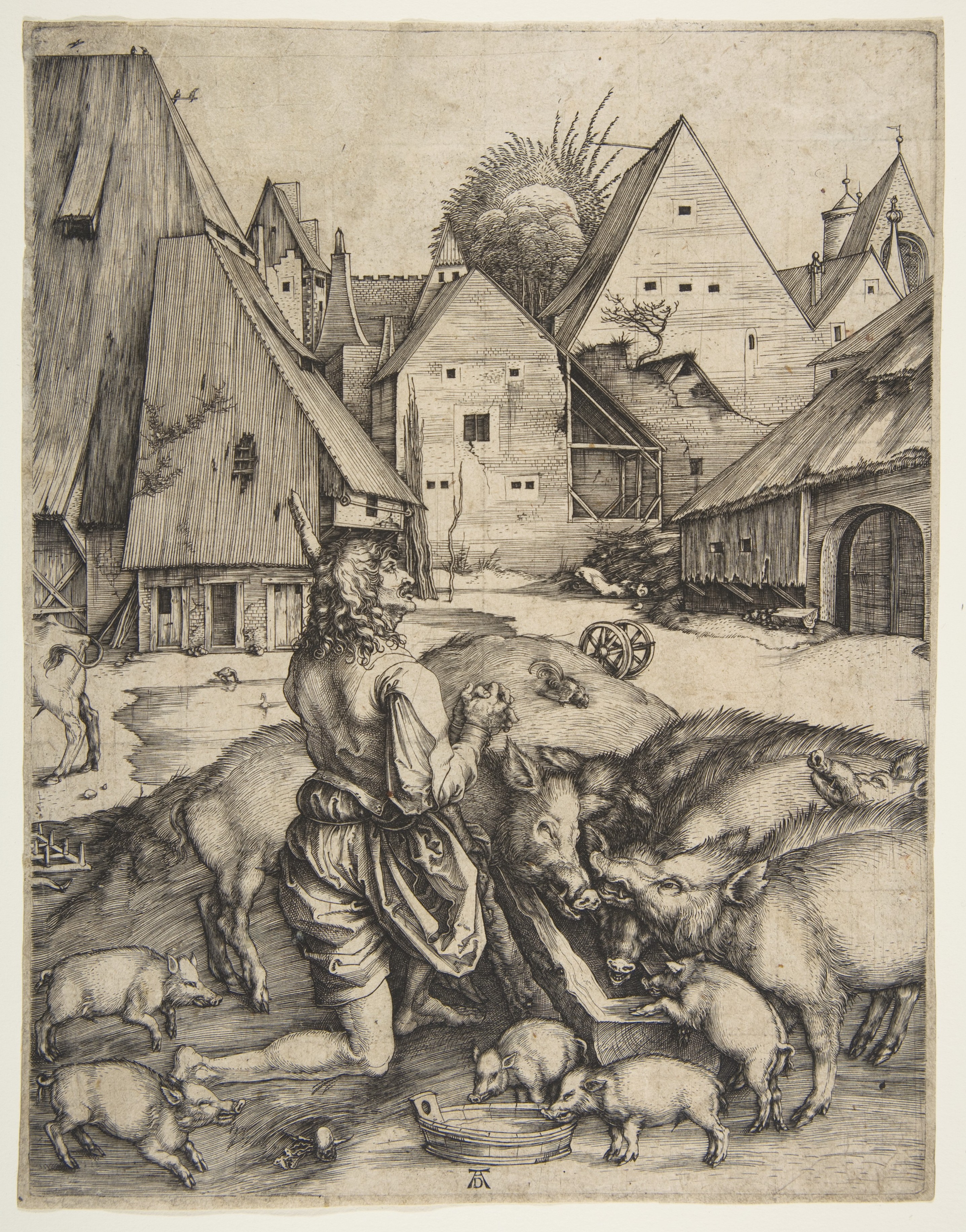




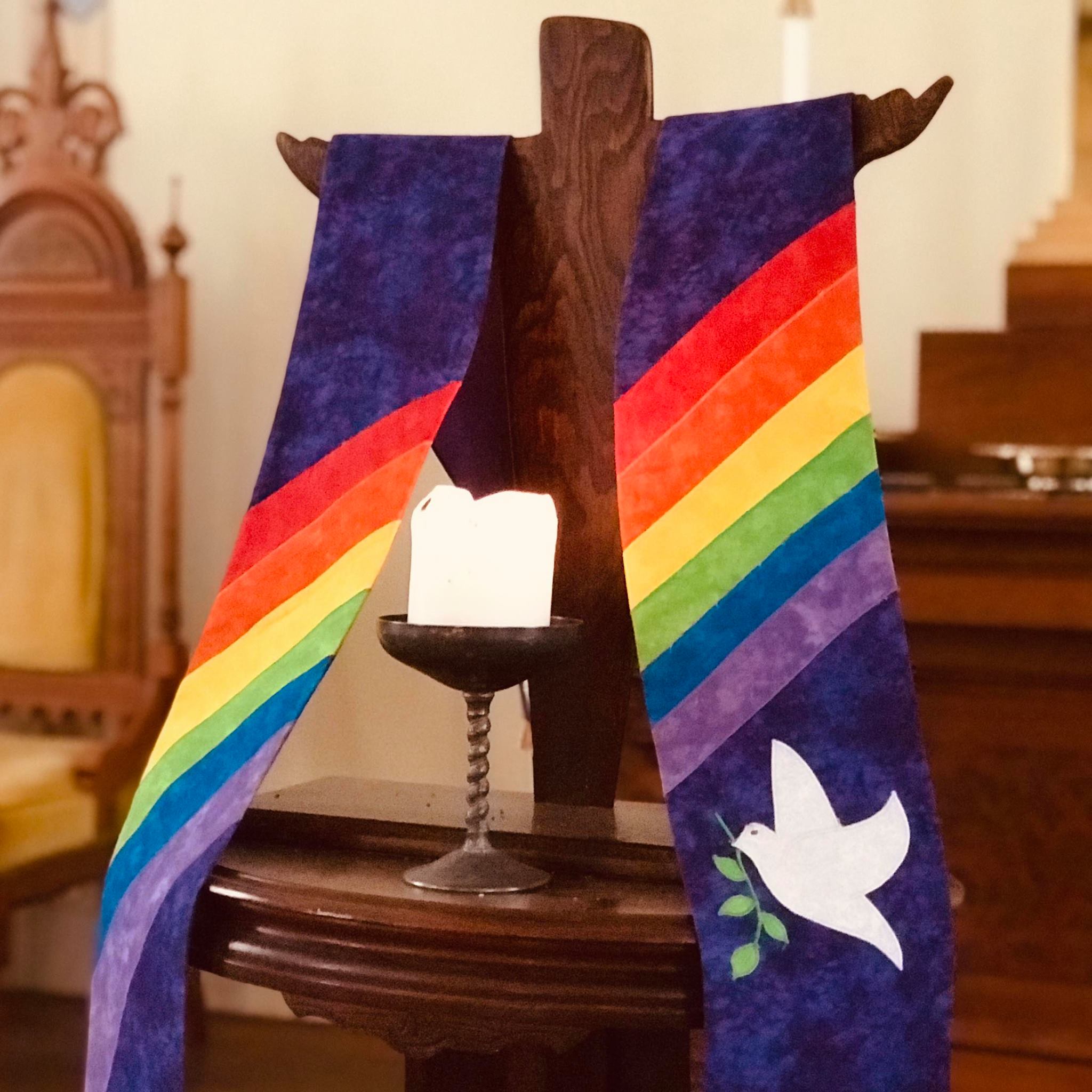
 Distracted Pastor Ramblings