Una Canción Nueva: Violence as pressure

In October we remember Domestic Violence Awareness Month. I am reading and reflecting on both my experiences and the thoughts of others about domestic violence during this month. This action is important to me as a survivor of domestic violence.

One book I’m reading for Domestic Violence Awareness Month is “Telling the Truth: Preaching about Sexual and Domestic Violence,” which was written in 1998. In the chapter titled “The Wounds of Jesus, the Wounds of my people, M. Shawn Copeland writes the following:

Violence entails the direct or indirect exercise of “physical, biological or spiritual pressure” by one person [or group] on another. When that pressure exceeds a “Certain threshold [it] reduces or annuls [human] potential for performance, both at an individual and group level.”

M. Shawn Copeland

It’s true. I am a grateful recovering alcoholic. My life was awful when I lived in fear. It was better when I was separated from my abuser. In the past, I thought my only hope was a bottle because my life was miserable. When I heard that no one loved me, I believed it was true. The problem was that it wasn’t true.

Now my life is blest compared to my past. It’s great to live with love and see my life with hope. It’s possible because violence is not in my everyday life.

No one needs to live in fear. No one needs to live with someone else’s evil crutch. You can walk away and it can get better. It may not be easier, but it will be a lot better.


En Octubre recordamos el mes de concientización sobre la violencia doméstica. Estoy leyendo y reflexionando sobre ambas mis experiencias y los pensamientos de otra sobre violencia doméstica durante este mes. Esta acción es importante para mi como un sobreviviente de violencia doméstica.

Un libro estoy leyendo para el mes de concientización sobre la violencia doméstica es “Decir la verdad: Predicando sobre la violencia sexual y doméstica”, que fue escrito en 1998. En el capítulo titulado “Las llagas de Jesús, las llagas de mi pueblo”, M. Shawn Copeland escribió lo siguiente:

La violencia implica el ejercicio directo o inderecto do una “presión fisica, biologica o espiritual” por parte de una persona [o grupo] sobre obra. Cuando esa persión excede un “cierto umbral, reduce o anula el potencial [humano] de desempeño, tanto a nivel individual como grupal”.

M. Shawn Copeland

Es verdad. Soy un alcohólico agradecido en recuperación. Mi vida fue malisima cuando vivia en mieda. Fue mejor cuando me separaba de mi abusadora. En el pasado, pensaba que mi unica esperanza era una botella porque mi vida era misera. Cuand escuchaba que nadie me amaba, creía que era verdad. El problema es que no era verdad.

Ahora, mi vida es bendusumas en comparción con mi pasado. Es estupendo vivir con amar y ver mi vida con esperanza. Es posible porque la violecia no está en todos mis dias.

Nadie necesita vivir en miedo. Ninguna persona necesita vivir con la muleta malvada de otra persona. Puedes alejarte y puede mejorar. Tal vez no sea más fácil, pero si mucho mejor.

Una Canción Nueva: Mark 10:11-12

“He said to them, ‘Whoever divorces his wife and marries another commits adultery against her; and if a wife divorces her husband and marries another, she commits adultery.’ ”

Mark 10:11-12, Common English Bible

In October we remember Domestic Violence Awareness Month. I am reading and reflecting on both my experiences and the thoughts of others about domestic violence during this month. This action is important to me as a survivor of domestic violence.

In the past, when I thought about divorced people, I didn’t understand that a divorced person is a person who needs to be loved. I didn’t understand how much pain a person could feel when life separated them from their spouse. The pain is horrible. I didn’t understand and read Jesus’ words without compassion.

When I read Jesus’ words today, I understand that Jesus rarely spoke about life in order to teach people to help bring harsher laws into their lives. Divorced people need compassion and Jesus wanted people to avoid grief and sorrow.

When I think about these words today, I have compassion for divorced people, including myself. I needed physical, spiritual, and mental security that I didn’t have. Jesus loves me and would be glad that I chose to live when I wanted to crawl into a hole forever.


«El que se divorcia de su esposa y se casa con otra, comete adulterio contra la primera —respondió—. Y si la mujer se divorcia de su esposo y se casa con otro, comete adulterio.»

Marcos 10:11-12, Nueva Versión Internacional

En Octubre recordamos el mes de concientización sobre la violencia doméstica. Estoy leyendo y reflexionando sobre ambas mis experiencias y los pensamientos de otra sobre violencia doméstica durante este mes. Esta acción es importante para mi como un sobreviviente de violencia doméstica.

En el pasado, cuando pensaba sobre personas divorciadas, no entendí que una persona divorciada es una persona que necesita que se ame. No entendí cuánto dolor una persona podía sentirse cuando la vida lo separaba de su parido.  El dolor es horrible. No entendí y leí las palabras de Jesús sin compasión.

Cuando leo las palabras de Jesús hoy, entiendo que Jesús hablaba raramente sobre la vida para enseñar a las personas a ayudar traer leyes más crueles en sus vidas. Las personas divorciadas necesitan compasión y Jesús quería que las personas evitaran el duelo y la pena. 

Cuando pienso sobre estas palabras hoy, tengo compasión por la gente divorciada, incluyendo a mí. Necesitaba seguridad física, espiritual, y mental que no tenía. Jesús me ama y estaría contento de que yo elija vivir cuando fuí a querer meterme en un agujero para siempre.

Querido Jesús: Marcos 5:21-43

«No tengas miedo; nada más cree» Macros 5:36, NVI

Querido Jesús, te quiero decir cuanto te escucho, pero tengo miedo en mi vida. Yo creo cosas otras; a veces contra mi deseos. Me deseo ir rumbo a la perfección, pero a menudo no progreso. Tu hablaste pero a menudo yo no comprendí y todavía no comprendo.

¿Cuanto tiempo más tengo que esperar a comprender? ¿Cuando el el momento de mi comprensión? Te amo pero mi acción no es graciosa para mi. Me amas pero a veces no me amo porque a menudo no hago el bien que quiero. Estoy muy frustrado conmigo.

A veces me pregunto de qué color fue tu manto. ¿Pude tocar tu manto? ¿En ese momento, pude comprender las cosas que no comprendo? ¿Soy la mujer enferma o la niña que está murienda? ¿Soy son ambas personas?

O estoy equivocada y soy la persona que tú mandas a las que te amas. Tú mandas unda persona que comprende que esta vida es difícil. Tú mandas a ir una persona que comprende que a menudo este mundo no es bello o bueno para todas las personas. Les amas y invatame a les amo.

Últimaente, es posible que ambos sean posibles. Les amas y me amas. Yo no comprendo pero es posiblemente que no es necesario para mi saber. Te amo y quiero progresar a la perfección en tu amor. Gracias para escuchas me. Amén


“Do not be afraid; believe nothing else.” Marcos 5:36, translated from NVI

Dear Jesus, I want to tell you how much I listen to you, but I have fear in my life. I believe other things; sometimes against my wishes. I want to be on the path to perfection, but I often don’t make progress. You spoke but often I did not understand and I still do not understand.

How much longer do I have to wait to understand? When is the time for my understanding? I love you but my action is not funny to me. You love me but sometimes I don’t love myself because I often don’t do the good I want. I’m very frustrated with myself.

Sometimes, I wonder what color your cloak was. Could I touch your cloak? At that moment, could I understand the things I don’t understand? Am I the sick woman or the dying girl? Am I both persons?

Or I’m wrong and I’m the person you send to those you love. You send a person who understands that this life is difficult. You send a person who understands that often this world is not beautiful or good for all people. You love them and invite me to love them.

Ultimately, both may be possible. You love them and you love me. I don’t understand, but it is possibly not necessary for me to know. I love you and I want to progress to perfection in your love. Thanks for listening to me. Amen.

Querido Jesús: Salmo 9:9-20

«Al Señor se le conoce porque imparte justicia; el malvado cae en la trampa que él mismo tendió» Salmo 9:16, NVI

Querido Jesús, ¿Cuál es tu discernimiento de mi? Cuando tú caminas en este mundo, tu traes justicia contigo. ¿Te traes justicia para mi o contra mi? Estoy haciendo lo mejor que puedo con mi vida pero soy un humano normal. ¿Que traes para mi?

Estoy esperanzando que tú traes cosas mejor de que merezco. No me conozco adónde obtengo esta esperanza, pero tengo esperanza de que me amas y quieres mejores cosas para mi acá en esta vida. Merezco nada en mis ojos, pero te escucho tus canciones de amor y gracia. ¿Quién puede decir alguna cosa contra tus palabras de amor y gracia?

Si, que verdad. San Pablo escribi: «Pues estoy convencido de que no la muerte no la vida, no los ángeles ni los demonios, no lo presente no lo por venir, no los poderes, no lo alto ni lo profundo, no cosa alguna en toda la creación podrá apartarnos del amor que Dios nos ha manifestado en Cristo Jesús nuestro Señor».

Si, es verdad y estoy en esta Creación. No puedo apartarme del poder del Espíritu Santo. No merezco que me amas pero es verdad. Gloria a Dios. Hallelujah. Amén.


“The Lord is known because he dispenses justice; the evil one falls into the trap that he himself set.” Psalm 9:16, translated from NVI

Dear Jesus, what is your discernment of me? When you walk in this world, you bring justice with you. Do you bring justice for me or against me? I’m doing the best I can with my life, but I’m a normal human. What do you bring for me?

I’m hoping that you bring better things than I deserve. I don’t know where I get this hope, but I have hope that you love me and want better things for me here in this life. I deserve nothing in my eyes, but I hear your songs of love and grace. Who can say anything against your words of love and grace?

Yes, how true. As Saint Paul wrote: “For I am convinced that neither death nor life, neither angels nor demons, neither things present nor things to come, nor powers, nor height nor depth, nor anything in all creation will be able to separate us from the love that God has shown us in Christ Jesus our Lord.”

Yes, it is true and I am in this Creation. I cannot depart from the power of the Holy Spirit. I don’t deserve that you love me but its true. Glory to God. Hallelujah. Amen

Querido Jesús: 1 Samuel 17:32-49

《Dios guardará tus entradas y salidas desde ahora y para siempre.》 Salmo 125:8 en El Libro de Oración Común (Protestant, Episcopal Church, 2022)

Querido Jesús, las batallas en mi vida no son mis batallas. Mis manos pueden golpear las personas que me atacan, pero  no necesito responder con violencia. Las batallas en mi vida son para el Señor.

Yo recuerdo tus palabras para nuestras vidas en mi biblia:《esos confían en sus carros de guerra, aquellos confían en sus corceles, pero nosotros confiamos en el nombre del Señor nuestro dios.》

Yo recuerdo la verdad en mi vida que no neceisto responderle a personas rotas con violencia o furiosa. Las batallas en mi vida son del Señor y para el Señor. Puedo responderle a las personas y problemas con fuerte confío en el Nombre del Señor nuestro dios. Jesuscristo, no  necesariamente me necesito a responder cuando te puedes.

Jesucristo, tus palabras son basta para las situaciones en mi vida. Tu proteges mis entradas y salidas desde las batallas espantosas ahora y mañana y siempre. Amén


God will guard your comings and goings from now on and forever.” Psalm 125:8, Translated from “El Libro de Oración Común”

Dear Jesus, the battles in my life are not my battles. My hands can hit people who attack me, but I don’t need to respond with violence. The battles in my life are for the Lord.

I remember your words for our lives in my Bible: “Some trust in their chariots, some others trust in their warhorses, but we trust in the name of the Lord our God.”

I remember the truth in my life that I do not need to respond to broken people with violence or fury. The battles in my life are from the Lord and for the Lord. I can respond to people and problems with strong trust in the name of the Lord God. Jesus Christ, I don’t necessarily need to respond when you can.

Jesus Christ, your words are enough for the situations in my life. You protect my comings and goings from the dreadful battles now, tomorrow, and forever. Amen.

Recovery and Struggles

“Before his conversion, St. Paul gained notoriety for harassing, arresting, and even stoning the followers of Jesus. He believed he was doing God’s work. Later the tables would be turned, and Paul himself would be harassed and ultimately put to death at the insistence of religious leaders. It was worshipers of the old Roman gods that cheered as the Christians were fed to the lions. But soon, Christian bishops were using the ‘keys to the Kingdom’ to anathematize and excommunicate those who didn’t conform to their understanding of the faith. Over the centuries it was religious leaders, or secular leaders appealing to the religiosity of their people, that led the Crusades, the Inquisition, the pogroms, the religious wars, burnings at the stake—all in the name of a crucified Messiah who called people to love their enemies.”

Rev. Adam Hamilton,“Simon Peter: Flawed but Faithful Disciple

I often struggle with one reality of life as a believer in recovery. I don’t speak on behalf of any twelve-step group, including the one I self-identify as belonging to as a member. I even hesitate to identify the group, but I will state that I am far from the only alcoholic in recovery.

As a member of that group, I tend to regularly come across individuals who claim to have been harmed by the church. Listening to their stories, I can even identify with how the church could have very well harmed those people in those situations over the years. I might occasionally have come to another conclusion in their shoes, but those aren’t my shoes. I listen and think about their words carefully.

In those settings, I am not a defender of the church or the behavior of Christians, which makes me grateful as there are very few things more difficult than making an alcoholic see their side of things even after they enter into recovery. Allow me to take a moment to thank God for the fact that my sponsor still tries to help me see the light. One might say it is almost impossible to convince another person to look in the mirror when they are certain they have been done wrong by anyone or any institution.

It is with that perspective in mind that I have to acknowledge that the church has certainly done harm even as I also acknowledge that the church itself has faced harm from others. At this point in history, most of the Christians I personally know have always lived in either a Christian or post-Christian culture where they have been relatively safe. I have lived most of my life and ministry in a post-Christian culture while working with those who spent most of their lives in a fairly homogenous culture with a decidedly Christian flavor.

In public conversation, it rarely ends well to point out the fact that Christianity was once the underdog and that in some ways it is becoming more of an underdog. Christians still engage in crucifying others even as they claim victimhood. Are they victims? I am sure I am not qualified to be the judge of that situation.

Still, I can see the disconnect in perspective from my daily reality. Even as certain groups on the outside look at Christianity and see the big buildings and assume that they are full of militant and angry people like someone they met forty years, twenty years, five years, or even a week ago, it probably is an impossible task to convince them to see what I see. They see their pain and don’t see inside the sometimes empty buildings behind those doors. Few people realize how many churches are full of well-intentioned people who often want little more than to live life in peace, share their faith, and to get a call from their grandkids now and again. Few angry people realize that’s what is occasionally the situation behind those shiny doors and a few people who do are cheering that reality.

I know that it is often challenging to live as a person of faith in these days. Many of us who follow the crucified Messiah see the damage of the past even as we acknowledge that our own past has a history of struggle and pain. We acknowledge it even as we remember the promise made to us: we can follow if we take up our cross. If we have a certain mindset, which I do not generally own or like, we would point out that a mindset of a world in “total depravity” means that most, if not all of us, will suffer from the brokenness of humanity. Still, I don’t find that either theologically appealing or even helpful. It is easy to point out that that group did the harm instead of acknowledging the fact that we each, in recovery terms, have to mind our own side of the street.

This is a lengthy blog entry. In the end, I hope you find that it begins with an echo of the initial sentiment which I wrote very carefully.

We each come across places where we have seen other people hurt by and hurting others. In those moments, I find it best to listen and take note of where I might play a similar role in the lives of another person. If I am blessed, I can move on with a conscious decision to avoid perpetuating the cycle of harm. In the end, I can’t fix the pain caused by another person. I can work to be a different person who is seeking to be more and more like the Christ who refused to cast the first stone.


Our church is offering a short-term Bible study for the season of Lent. While many studies for the season traditionally focus on spiritual practices or on the stories of holy week, this year we are reading “Simon Peter: Flawed but Faithful Disciple” by Rev. Adam Hamilton. The idea of the study is that we might consider how we follow Christ in our lives while considering the life of this flawed follower. These blog posts are designed with a principle I have learned from recovery work: “We identify with the stories of others and try not to contrast.” We grow more and live with greater serenity when we look for what we share in common with someone with whom we might otherwise disagree.

The Value of Memorization

“Jesus said to them, ‘All who want to come after me must say no to themselves, take up their cross, and follow me. All who want to save their lives will lose them. But all who lose their lives because of me and because of the good news will save them. Why would people gain the whole world but lose their lives? Whoever is ashamed of me and my words in this unfaithful and sinful generation, the Human One will be ashamed of that person when he comes in the Father’s glory with the holy angels.’ “

Mark 8:34-38, CEB

A strange thing happened the other day. My two children and I were having one last dinner before they returned to their sibling and mother in Springville when I asked an innocent question. I asked my child if they were looking forward to going back to be with their mother. My six-year-old looked me in the eye and said “I don’t want to go back to Springville. I want to live in Trumansburg with you.”

My heart raced. What do you say in that moment? Do you stop everything and record the conversation? Do you call your lawyer? Do you call the child’s lawyer? What happens in those moments defines the kind of person we are in this life. What should I do?

I told my child that her mother would be really sad if she just stayed here. I invited her to go home and tell her mother how she felt. I invited her to talk with her mother because I believed her mother would be really sad if suddenly her child weren’t a part of her daily life. I said this as an authority because that’s exactly what happened to me. I invited my child to do the kind thing and speak with her mother about how she felt instead of just violently ripping the child out of her mother’s life. I did let both my former partner and my attorney know about the exchange, but I left the matter in the hands of God.

Would I have been in the right to treat my former partner the way she showed that she wanted to be treated in her actions towards me? I honestly don’t think so. I have been trying to teach my children to treat other people like they’d like to be treated their whole lives. While Hope did express her feelings to me, I think the reality is that she needs to tell her mother. Even at six, there’s power in Hope sharing her truth with her mother.

Today I was memorizing the passage above for this weekend. I was listening to the words as I memorized and realized the simple truth that if I had ignored my spiritual training and instead done the very human thing of striking back, I wouldn’t just be wrong. I would be ashamed. What good would it be to gain the whole world (i.e., my children back into my life) if it meant that I would lose my soul? What could I possibly give back to regain my soul’s life after I did such an awful thing to another human being? It doesn’t matter that she’s done those things to me. How could I possibly make amends for that kind of sin? How could I even begin to sleep at night knowing how shamefully I had acted? How could I look anyone in the eye?

I don’t want Jesus to be ashamed of me. I’m not ashamed of his words even when they are hard to follow. I’m sometimes called to say no to myself, take up my cross, and follow even when that means I’m alone in my home with just an old dog again today. What could I possibly do differently since I know these are the very words God has brought into my life? What could I give to pay the very price for my defiance?

Memorization is not just about rote learning. Memorization helps us to learn the scriptures and then apply them to our lives. It is really very difficult to skirt past words we don’t like when they are right in front of us. I am thankful that I spent so much time in my life learning the scriptures so that when I need to know them, they’re a part of me.

Joy as a Subterranean Spring

“True joy is not a thing of moods, not a capricious emotion, tied to fluctuating experiences It is a state and condition of the soul. It survives through pain and sorrow and, like a subterranean spring, waters the whole life. It is intimately allied and bound up with love and goodness, and so is deeply rooted in the life of God. Joy is the most perfect and complete mark and sign of immortal wealth, because it indicates that the soul is living by love and by goodness, and is very rich in God.”

Quaker theologian Rufus Jones, “The Inner Life”, 1916

Today I returned two of my three kids to their mother after too short a visit. My ride home was marked by tears and a blessing as it was the first time in years I had not ridden alone. Upon reaching our destination I still had to wash off saline streaks from my face, but it was an improvement.

Jones wrote about joy filling our lives like a subterranean stream. Such watering keeps the soil moist even through moments where everything is dried out under the harsh light of sadness. I want to feel such joy in my life. I do feel such joy even if it feels fleeting at times.

God, grant me your joy.
Even as the harsh winds howl,
soak arid taproots
and keep green in me the hope
by which my core first sprouted.

Walking in the dark

Tonight I took a long walk for the first time in a week. I have been working a lot this week. I haven’t really had the time on nice days to be outside between a funeral and some ongoing issues with work situations.

I could have turned around earlier and made it back to the car before dark, but I kept going. I was almost halfway through the walk when the sun went behind the hills. I walked nearly an hour and a half after the sunset without a flashlight.

It is strange how familiar the paths have become over the past few years. I used to stumble and trip even in the middle of the day. I walked over three miles in the darkness without a light and my feet walked firmly even as I couldn’t see everything in front of me.

I remembered as I walked. I thought about writing poems about hiking in the snow in one space and took a picture of beautiful leaves in the sun\set in another place. I remembered where my dog drank water in one place and remembered the lightning crashing in another place. I walked with firm steps. FitBit informed me at one point that I had shaved a couple seconds off of my average mile split. I walked faster in the darkness than I used to walk in the light.

Why? You can see in the darkness once your eyes adapt. You can see in the darkness once the moon comes out. You can see in the darkness when you have enough time in a space. You can do a lot with over a year of practice walking in a space.

This reality applies to other parts of life as well. You can walk in the darkness after you have spent time living alone. You can walk in the darkness when the phone doesn’t ring and your children don’t reach out. You can walk in the darkness when you face challenges because you know the sort of person you have become.

I owe a lot to the practice I have done. Some would even say I have a discipline built from making choices. That discipline teaches me to be who I am today and I am grateful both for the lessons I have learned and the confidence that comes from doing the next right thing time and time again.

On Weirdness of Body

I have been working most of the day with the exception of a personal errand this evening. I have been battling technology for most of the day and annoyed at least one person by putting the wrong link in an email. It has been a very stressful day and there’s still absolutely no progress on the car. Over seven days after the accident there still isn’t even an appointment for the insurance company to look at the car.

To be entirely honest, I am a bit frazzled tonight as I look over what rests on my docket for tomorrow. Bible study, worship, and leadership are the start of the day. The afternoon and evening are marked with taking care of personal needs and then volunteer service in my recovery program. When the sun has long set tomorrow night, it will be with a whole week of needs obligations ahead of me even without the car dramatics.

It is going to be a week, but I am honestly stuck in the last week. A friend sent me copies of pictures of my children and they appear happy and well fed. Honestly, I am so grateful they appear happy and wellfed. It makes me really happy even as I am struggling with the opposite situation. I was lightly lectured by a doctor this week because I haven’t had enough protein. It is significant enough that it showed up in my bloodwork as a form of malnutrition. Yeah, to a certain extent, my body composition is changing partially because of nutritional deprivation.

The day after I had that conversation with my doctor I was looking in the mirror while I was putting another set of holes into my belt. The muscles looked good, but the skin drooped strangely. The shoulders looked great and my jawline was sharp, but the skin around my belly was loose. Although others don’t often see it, I can see it every single day. I’ve long since left behind the moments of absolute and sheer joy to a slight grimace when I look in the mirror.

Still, what can a person do? Do I argue for less child support and risk my children going without? Do I advocate for myself knowing that the kids may need a father who hasn’t gone without protein for so long that it is having an effect on his health? Do I even speak honestly about it with people like my father or my brother who might see this as one more area where I fall short of the ideal by which I was raised to live? Do I even let my elder children know what’s going on if they knew all those shiny toes under the tree and those brimming pots full of food that they share with their mother are systemically related to my weight loss?

Do I even remain silent because it is embarrassing to the church? I can tell you that they’re more than generous, but when 36% automatically goes to child support and your partner won’t pay her portion of the insurance, things are tight. It isn’t the church’s job to be more generous than that kind of burden. It isn’t the church’s job to bail me out after I married the woman I married. Do I remain silent because it is bad enough their minister wears baggy clothes and won’t go to Thursday breakfast at the falls because the cost is too great? What do I do when they read this which will lead to another round of “Why won’t you go to the food pantry we hold in our church?”

Do I remain silent because I do have a role to play in all of this? I know one person in particular loves to say I don’t own my part in things. Yeah, I exercise a lot. Yeah, I weightlift. Why? I do enjoy the way it makes me look but I also realized a while back that all of that weight loss was coming at the expense of musculature. Yes, I hit a use it or lose it point a few months back and that’s why I am working so hard to build muscle. All of that means I need more calories, but the honest truth is that I buy meat maybe once or twice a month because that’s what I can afford. Yay for tofu and beans… I don’t get extra visits in part because I don’t feel safe in Springville but also because some of the visits come with the choice of paying for gasoline or paying for groceries. Still, I could just let the muscles go, exercise less, and need fewer calories. I could choose to sit home more, read more, and just let my body shrink down to a level I can afford to feed with rice, beans, and whatever greens I manage. I guess I could do that and I guess I’m guilty for not making that choice.

There’s all sorts of stuff I could do and there are reasons to remain silent, but should I stay silent? A lot of harm is often done by good people staying silent. Am I the only person going through difficult times? Do their stories matter less because they do not have the same privileges as me? Is it, in fact, a disservice to remain silent when there are so many people struggling without a voice? My words echo a lot of people’s experiences and I know many of them have no space, place, or voice to say what’s happening in their lives. Some of those people are good people who just cannot share. I would know because I come across those people often in recovery, in ministry, and as a person who actually enjoys and even loves the people at the edges of society. Do I do a disservice to them if I remain silent?

In the scriptures, the stories of God’s provision are told time and time again. There are stories where God shows up in the midst of the wilderness to provide for the families and prophets in need. A widow is given enough to survive by Elijah in the midst of 1 Kings 17. She has enough, but what of the people who live under the rule of a wicked ruler? Were all of those people wicked? Did they all deserve to go without? Probably not, but one of the sad realities of scripture is that the world presented reflects reality instead of the utopia we all desire.

Time and time again, through the scriptures the faithful people and even the innocent bystanders go through life without the very things they need. Do you know those videos of people overseas struggling? Those “for a dollar a day” videos? For generations, even the lands of the faithful looked like those videos when famine and drought came through the land. Sometimes deprivation is simply how life works even within the scriptures. As our society continues to shift, it sadly seems as if the sad reality of struggle told in the scriptures is increasingly apparent in our days as automation cuts the bottom rung of employment out here in the name of profits.

Even as we acknowledge that truth, do we lose hope in the midst of deprivation? We could, but I have always leaned into stories and words of hope from books like Habakkuk. There’s no grain in the field and the barns are empty, but we praise the Lord anyway. Things don’t look great and the choices are both dire and sad, but we praise the Lord anyway. Faith isn’t faith if one knows everything will work out perfectly. It is faith precisely because we do not see the way forward. We have to trust it is there.

So I believe. Lord, help me in my unbelief.

Expectations and Disappointments

“Christ always shows a very slender appreciation of any act of religion or of ethics which does not reach beyond the stage of compulsion. What is done because it must be done; because the law requires it, or because society expects it, or because convention prescribes it, or because the doer of it is afraid of consequences if he omits it, may, of course, be rightly done and meritoriously done, but an act on that level is not yet quite in the region where for Christ the highest moral and religious acts have their spring.”

Quaker Theologian Rufus Jones, 1916

What does it mean to have an expectation of other people? Is expecting them to do their best an empty expectation doomed to failure? Is expecting them to live up to their principles and their vows an expectation based upon madness? Is expecting someone else to keep their word the very same as building a house on shifting sands? Do we actually expect it will stand when the rains come?

Sadly, experience tells me that trusting others is perhaps an act of folly. At the same time, while there are times when promises fall flat and it can be insanity to trust other people to do what they say, it is perhaps best to consider the fact that none of us are precisely and perfectly sane all of the time. The religious way of stating this has been that all have sinned and fallen short of the glory of God. If we expect others to be perfect, then we are expecting a perfection that we ourselves know we are incapable of executing. While we can do all things through Christ who strengthens us, most people in the faith I truly respect understand that they are going towards perfection and are not actually absolutely perfect at the moment.

So, how do we know whether or not we should trust others? How do we know whether or not we should place our trust in someone after our heart is broken or promises tossed aside as chaff? I think that Rufus Jones had a wise thought that applies here. Jones points out in “The Inner Life” that there are people who legalistically attempt to live up to the rules of religion. In particular, he takes umbrage with those who take the passage about going the second mile too literally. Surely any religious practice that is willing to literally go another mile without going deeply into the meaning behind the request is looking only at the wrapping paper on the present of Jesus’ words.

Is it good to go the extra mile? Probably! Still, Jones points out a grievous reality within that obedience: “But there was no spontaneity in his religion, no free initiative, no enthusiastic passion, no joyous abandon, no gratuitous and uncalculating acts. He did things enough, but he did them because he had to do them, not because some mighty love possessed him and flooded him and inspired him to go not only the expected mile, but to go on without any calculation out beyond milestones altogether.”

Doing things because they’re just enough is valuable at some level, but that’s not the goal. Similarly, keeping one’s word just because one must or because a person is commanded to do so by some sort of authority is not nearly the same thing as doing something because you are motivated by spontaneous love, free choice, and the gracious life that comes from Christ. There’s a distinct difference between doing something right because one must and doing so because one’s being is expressed through those actions.

This perspective is valuable to me as I continue to question my own ability to make commitments after a past of difficulties. For neither love nor money can I convince someone from my past to give me appropriate access to my children despite their best interests. To be entirely honest, the court system seems equally impotent at showing her any sort of accountability to a standard of behavior. It is like the wild-west to be anywhere near the person from that relationship and it is safer to be out in the desert than walking down the street with all those tumbleweeds.

At one level Jones’ words seem inapplicable. There’s what Jones suggests as Christian behavior, what Jones sees as legalistic behavior, and then there’s just that level of behavior we’re dealing with where both Jesus and the Pharisees would likely shake their heads in disgust. “Go and sin no more” seems like a bit of an understatement.

At another level, consider the fact that the person I want to trust in my life has done none of the things my former partner has done. She has acted honorably, charitably, and graciously. She does things like ask me for my consent and lets me admit that I am just broken without treating me like someone from the isle of misfit toys. She’s doing all the right things and she’s doing them because it comes from the heart and not some pharasitical set of rules. At the moment, she’s the whole package: someone who I like, adore, and who would be an awesome blessing to me and someone I want my children to know.

So, how do we learn to trust? I think the only answer is the one I learned in recovery. We choose to trust one day at a time. When things don’t add up, we remember our own past and the mistakes of our past, consider our own part in things, and, whenever possible, try again. We make consensual amends when our character defects harm others and we are willing to let others make consensual amends to us. We choose to care and to try while understanding that the person we meet today or tomorrow may not be the person that we once met in the past, especially if they are literally not the same person who broke our hearts.

Aiming at dissolving

“Persons of the blessed life, Christ says, are the saving salt of the earth. They carry their wholesome savor into everything they touch. They do not try to save themselves. They are ready like salt to dissolve and disappear, but, the more they give themselves away, the more antiseptic and preservative they become to the society in which they live. They keep the old world from spoiling and corrupting not by attack and restraint, not by excision and amputation, but by pouring the preservative savor of their lives of goodness into all the channels of the world. This preservative and saving influence on society depends, however, entirely on the continuance of the inner quality of life and it will be certain to cease if ever the salt lose its savor, i.e. if the soul of religion wanes or dies away and only the outer form of it remains.”

Quaker theologian Rufus Jones, “The Inner Life” (1916)

I have an apparently unpopular opinion about the very nature of Christianity. Christianity was never supposed to be a legalistic religion that helps others to “grow” by controlling their actions. The scriptures speak about grafting and pruning branches. John 15 begins by sharing how Jesus is the true vine while we are the branches. There is precedence for grafting and pruning, but the action taken in John 15 is the action of Jesus’ Abba. Authority is not given to the church to make those decisions in John 15.

Are there places where authority is given to the disciples to bind and unbind with authority? Yes, but let’s be clear: that authority is tied intrinsically to remaining in the branches. John 15:7 says in the Common English Bible, “If you remain in me and my words remain in you, ask for whatever you want and it will be done for you.” Speaking a chapter later, John 16:8-11 says: “When he comes, he will show the world it was wrong about sin, righteousness, and judgment. He will show the world it was wrong about sin because they don’t believe in me. He will show the world it was wrong about righteousness because I’m going to the Father and you won’t see me anymore. He will show the world it was wrong about judgment because this world’s ruler stands condemned.”

Again, please note that the Holy Spirit is given the task of conviction, correction, and revelation. The church may testify to the work of the Spirit and seek to share the wisdom first shared through the word of God, but the work ultimately rests with the Holy Spirit. Even if the church is given authority to bind things in heaven and on earth, the primary work of conviction, correction, and revelation lies first and foremost with the Holy Spirit.

If that work is truly reliant upon the work of the Holy Spirit, why do people act on behalf of the church to set about converting the world through legalistic methods? Is it merely a case of audacious people taking too much power into their hands? Is it a natural result of being raised in a world where we have conflated personal opinion with democratic or representative power?

Way back in 1916, Rufus Jones entered into the ongoing conversation with the quote above. Jones spends the paragraphs prior to this section discussing the difference between the church using organization to spread the faith and spreading the faith by becoming spiritually contagious. To be entirely honest, I find Jones’ description of the church to be both amusing and a source of personal melancholy:

“The way of organization, which is as old as human history, is too familiar to need any description. Our age has almost unlimited faith in it. If we wish to carry a live idea into action, we organize. We select officials. We make ‘motions.’ We pass resolutions. We appoint committees or boards or commissions. We hold endless conferences. We issue propaganda material. We have street processions. We use placards and billboards. We found institutions, and devise machinery. We have collisions between ‘pros’ and ‘antis’ and stir up enthusiasm and passion for our ’cause.’ The Christian Church is probably the most impressive instance of organization in the entire history of man’s undertakings.”

Rufus Jones, 1916

I say it makes me a bit sad because I have seen how the church as an organization often seeks to guide others through legislation. I once served on my Conference’s Social Holiness team and worked with the Peace with Justice program because I had yet to come to my current understanding that legislation does little to nothing to change things. Even now, I only submit resolutions for consideration that are about considering and promoting ideals and conversation. I do not seek specific legalistic changes or purposes but instead, seek opportunities for conversation and growth.

The church is great at organizing in this way and it can be helpful to organize this way when we are in conversation about how we live together in the community, but I don’t see this as an effective strategy when interacting with the world outside of the church community. Partially I hold this viewpoint because I have seen the church organize to exercise shears in pruning the world around it. Partially I hold this viewpoint because I agree with Jones when he talks about how the church was meant to work in a different way.

Rufus Jones uses the simile of comparing the church to salt within a world that needs a preservative. On one level, this isn’t my favorite simile as there are things that need alteration instead of preservation. The church should not, for example, act as a preservative for institutions that are inherently antithetical to the gospel. For example, people aren’t property or disposable assets, so all people must have the same rights if we truly believe that those rights are given to all people by God.

If one parent has a right to see their child and be a part of their life, then, when all things are equal before a God who created both parents, both must have the same rights. If a white defendant is given the right to proper advocacy because they grew up in one community, then a bipoc defendant must have the right to the same advocacy if we are to argue that both matter equally before the throne of God. If a religious person is given the right to exercise their faith freely before everyone because that is their right as discerned by our nation, then as a people we must give the same right to a person without the same beliefs as those freely exercising their faith.

So, the salt analogy is not a perfect analogy, but it is a pretty good one. Sometimes our call is to understand that we may not be able to force our way and definitively should not force our ways upon other people. There are times when our call is to suffer so that others may one day live without the same struggles. There are times when we suffer, our families suffer, and even people with mental illness are supported in their dysfunction by a system that is blind to its own brokenness. It is only through suffering publicly that change can come. Sometimes we need to stand up and get in the way with the understanding that we will likely be crushed before the institutions speeding towards us.

So, how do we live that out? We do not necessarily organize a legalistic campaign, Sometimes our strongest advocacy comes from growing in strength, light, and power without using marketing tools, focus groups, or even laws. We seek to let our goodness fill us and pour into the world around us. It is easy to run over a traffic cone in the lane of life, but it is another matter when that obstacle has a face, has a space, and is an inherently good part of the world around it. Sometimes the way of the martyr only works because we let it happen while living to the best of our ability.

So, is the way that Jones suggests living necessarily easy? No, it certainly is not easy. It is especially difficult when we consider the fact that some of us live in situations that are unjust and that suffering for the sake of the gospel compounds into the suffering we already experience on a regular basis. It might even be worth saying that those who can choose to suffer alongside others perhaps have an imperative to act like salt when it means that those who are already dissolving need not dissolve alone.

“It was 10:30” Haibun

It was 10:30 PM, late at night, when the possum ran across the road. The dog was in hot pursuit and its human was a few steps behind. The human called out, but the possum was there, and the dog ran on in pursuit from behind the bush and brush. They tore across the road in an age-old chase repeated throughout time.

It was 10:30 PM, late at night, when the driver of the car listened to Defensive Driving advice from years before. The car went straight and the human and possum were unharmed. The dog in the rear of the car panicked and scrambled as the radiator began to pour fluid, the oil started to pour out, and the gasoline began to drip. The minister behind the wheel cried out and guided the car to the side of the road. He had been driving below the speed limit, but he didn’t see until the possum and dog broke through the brush onto the road. He was shaking as the gasoline fumes tickled his nose.

It was a few minutes after 10:30 PM, late at night, when the officer had a call to go to the site of an accident. He never had to put down a family’s pet before. He found the pastor who had been driving the car holding his dog as the one from the road screamed. He was shaking as he remembered the woman he almost hit and understood that if he had been a moment slower or faster, things would have possibly been far better or terribly worse. Why didn’t he stop for groceries? “All things in God’s time,” the officer told the minister who mumbled about free will half-heartedly. Even then, in the midst of grief, the minister knew this wasn’t the time to take away the officer’s comforting theology. He had practice at saying the right things even with a broken heart.

It was a few minutes after 10:30 PM, late at night, when the girlfriend hopped in her son’s car to come to the rescue. Just a few hours earlier the boyfriend behind the wheel had been helping her find a new car because her timing belt had gone awry in her steady old car. The car would be ready Monday, but it was the blackest of Fridays. It was nearly midnight when the borrowed car brought the two now carless people back to a quiet home with a frazzled dog. She sat with him until he was done shaking and crying about the fact that if things had gone wrong the dog owner could have died. She listened as he thought and sobbed about what would happen if the dog or woman had crashed through the window without setting things right with his son. It took a while.

It will be a little after 10:30, not so early in the morning thirty-six hours later, when the minister rises to share about how we, as a people, remember that Christ will come again in a moment. It will be a moment when he thinks about how the bell almost rang for him, a woman he doesn’t know, and did call home what looked to be a very enthusiastic dog whose family’s love showed he was a good boy. He probably won’t shed a tear, but he will hear the sound of a dog howling in the night.

Oh, when you come down
May that dog run home again 
to her happy tears.

Until you come down
May I never cause again
such awful pained cries.

“For everyone born, a place at the table…”

I went to bed humming in my heart last night. Just before I drove away from my girlfriend’s house, we posted a picture together for the first time. I had brought a delicious acorn squash pie with gingersnap crust for dessert and spent the day getting to know her family a bit better. I met her mother, sister, nephew, and niece. Her kids were a riot to be around as usual.

She’s in a different space than me in her life with grown kids, but we share a lot of things in common. She knows what it is like to go through a troubled marriage and a divorce. She knows the value of having space at the table. She let me be there with her through all the Thanksgiving stuff that every family has and even let me kindly invite her to simply be in the moment with me and her family.

In other words, I felt like I belonged yesterday. As I wake up on the sixth birthday of my littlest turkey today, I know that I won’t see her for over another month at this point. I had to ask her sibling to have her call me as the phone number I have for my child is never answered when I call. J says the tablet has power issues and barely works. I can’t help but think of the new tablet sitting on a shelf here that I bought for her months ago only to be told that the broken tablet she has is good enough even though I can’t contact my child through it. I asked her while I talked with her if she received the postcards I sent my kids while traveling. I sent six. Their mother let them see one of them. I can’t even write cards to my kids with the expectation they will receive them. Joint custody apparently means I can’t even write them…

My eldest still won’t talk to me and the answer remains: an hour a month for virtual therapy to rebuild a relationship is too much time in his busy schedule even as he applies to a foreign exchange student program. He has time to travel the world but not time for an hour a month with his father.

I’m thankful J still obviously loves their father and takes the time to talk with me on occasion, but it shouldn’t fall on a thirteen-year-old to be the adult in a family of a single mom, a fifteen-year-old, and a six-year-old. It especially shouldn’t be so when there are grandparents and other relatives around who should be able to speak reason to power. It would be wrong of me to ask J to be the conduit for conversation and J shouldn’t have to be put in that position. Unfortunately, when you can’t even write the other kids with the expectation they’ll get their mail, the option seems to be to put your child in an impossible situation or lose a relationship with all of them.

There’s a difference between what I experienced yesterday and my experience even of married life. The feeling of actually being accepted and having my girlfriend’s mother ask about my children was heartbreakingly kind. I mean, there are two Halloween gifts waiting for them on the shelf upstairs from my girlfriend’s mother who decided my kids deserved love before she even met me. They welcomed me so warmly and all I had to do to belong was just be me: someone who cared for someone at the table who also cared for me.

It is such a different experience than getting phone calls about church members being concerned that I was being yelled at in a gas station or hearing complaints about my partner arguing with PPRC members in a local restaurant when they said something she disagreed with. It is sad that it took me years to see they weren’t just complaining about someone they didn’t like: they were scared for me. In hindsight, I get it. I wish I had understood then.

People tell me to keep trying and to not give up, but that’s pretty hard advice to actually follow. Perhaps someone would understand if they were actually in my shoes. I’m exhausted and tired of pretending everything is fine. Heading down south recently on the Civil Rights pilgrimage and seeing the evidence of people who knew what was right and who were willing to get in good trouble… I wish I knew how to advocate for myself and others in the way that they did with such power, presence, and moral authority. I wish I could change things, but that’s a long journey I don’t know how to travel. It is literally easier to walk thousands of miles in a year than to know how to handle things. I can say that one from experience.

In the meantime, yeah. I baked a pie, I shared space, and I allowed my cold heart to open a little more to actually living life. Is the “cold still in my bones?” Yeah, they’re cold and brittle, but there’s also something else: that faintly glowing fire… (Yes, that’s a Five Iron Frenzy reference: “Blizzards and Bygones (All Frost and No Thaw Version)” is a gem that has been my unofficial soundtrack while walking the wintry woods over the past few years).

Original recipe: https://www.thekitchenmagpie.com/acorn-squash-pie/
Adaptations: For the filling, I used fresh ginger and grated nutmeg into slightly larger pieces than the powdered stuff. For the crust, I processed the gingersnaps through a grinder for uniformity and then melted a little more than the specified butter (2 extra TBSP) in the glass pie dish in the oven. I then poured the butter into the crumbs and brown sugar only after swirling the pie plate so that the entirety of the crust had a buttery layer to keep the crust from sticking. That process also made certain each bite had a touch of buttery goodness. I also used a dough blender to uniformly break up any buttery clumps and to make certain the brown sugar spread throughout the crust instead of being in chunks.

Different ways of walking

“There is no one exclusive ‘way’ either to the supreme realities or to the loftiest experiences of life. The ‘way’ which we individuals select and proclaim as the only highway of the soul back to its true home turns out to be a revelation of our own private selves fully as much as it is a revelation of a via sacra to the one goal of all human striving. Life is a very rich and complex affair and it forever floods over and inundates any feature which we pick out as essential or as pivotal to its consummation. God so completely overarches all that is and He is so genuinely the fulfillment of all which appears incomplete and potential that we cannot conceivably insist that there shall be only one way of approach from the multiplicity of the life which we know to the infinite Being whom we seek.”

Quaker Scholar Rufus Jones, “The Inner Life” (1916)

I took a day trip with someone very close to me yesterday to the Zoo. I shared my love of trying to eat slippery Chinese food with chopsticks on the way up to Syracuse and we enjoyed a fish fry on the way back. We had lots of time to talk, to ponder life, and to enjoy the animals. It is amazing how much fun it can be to go to the zoo even when you’re not pursuing a small child. We finished the night decorating the Christmas tree I have not put up since 2020.

Towards the end of the evening, we were talking about some of the challenges that come with trying to recover from a divorce. Both of us have had difficult circumstances in our lives and we both have things we did similarly and things we have done differently.

For me, a lot of the journey has revolved around physical ways of pursuing wellness. Recovery from the trauma that led to my divorce included a lot of physical wellness activities as I tried to respond to the stress, fears, and painful sorrows by doing the next right thing in my life. I reinforced my sobriety practices by sticking close to people who had been through difficult times in their programs, worked the twelve steps, and continued to regularly go the therapy and my doctor to make certain everything in the background was running well so I wouldn’t trip over inconsistencies within my own body and mind.

Beyond sobriety, I adopted old spiritual practices that were impractical with kids around to complicate certain activities. I’m pescatarian on Wednesdays and Fridays as a partial fast in the pattern of the Orthodox and in the pattern of early Methodists of fasting on those days. I write out my gratitudes every night and effectively do a version of the Examen blended with a tenth-step inventory. I journal every day.

Also, I walked thousands of miles and began to work my muscles by weightlifting. I dropped over 160 pounds so far! I took my sorrow and I put it in the furnace. I walked through sleet and snow burning through my anger like coal. I did everything I could to take the broken sorrowful parts and to use them as fuel for a self-improving fire to forge a new self instead of turning that anger and sorrow on anyone else, especially avoiding bringing that frustration anywhere near my former partner. There’s a reason there are giant holes in my blog and why I’m not on social media. Heck, I avoid emails in part because it is too easy to let my anger out.

I have done all of these things and I am grateful for all of them. Also, the person I spent time with yesterday did things very differently than me. They handled their sorrow for a longer time and have used their experiences to forge someone I hold dear without some of the tools I have used. Their circumstances were different but similar. As a result of some of those variations, our paths look different and honestly, there are some ways in which the other path looks great. That path looks fantastic when you see what’s beyond the surface of the cheerful things I wrote above.

My shoulders hurt constantly. My body dysmorphia makes it feel like I’m larger than I am and sometimes I reach up to my shoulders and it feels like the bones just beneath my skin shouldn’t be there. It feels like I’m more skeleton than man some days. I sometimes feel incredibly self-conscious and even my muscles aren’t enough to sometimes make me feel safe. Those great phone calls and good friendships in my life are the converse of the grief which threatened to bust down the door if I didn’t get out there and connect with others. It has not been easy.

Sitting with someone who has been through similar things yesterday I heard an invitation to not only be vulnerable but to tell the truth about the fact that my bones ache, my shoulders are sore, and my back is so tight it feels like I have two plates of armor between my shoulder blades and my hips. A lot of things hurt and sometimes it feels as if the pain will never cease.

I have worked so hard to carve my way out of my sorrows and it has been wonderful in so many ways. It also is not the only way forward. I can live a life where my bones hurt less and my shoulders ache less constantly. As a new year dawns, I can set a different goal for something gentler on my body like swimming or rowing. I am not forced to walk this one way. My friend has a different path and their way is worthy of emulating in many ways. Perhaps I need to be slow enough to see where the path diverts and runs slightly askew in the same direction.

Curbside Prayer

I remember you.
I was once discarded too.
Lets sit on this curb
We are both children of God
May my love show you God’s love.

You sleep under stars
as I go to bed tonight
in my comfy bed.
May my resolved be as firm
as the cement where we sat.

“Tumbling Rocks”

Some friends recently blessed me with a rock tumbler. Although it seems strange, it was quite thoughtful. I wander around in the wilderness often these days. You do not need a full wallet to enjoy the forest. You do not need a credit card to walk on stone covered beaches. Living in a space with gorges and wilderness means there are plenty of places to search for rocks.

Today the first stage of tumbling came to an end: rocks gathered on New Year’s have spent a week tumbling together through the new possibilities. I have checked on them as they tumbled through the days: rotating over and over, first visible but then swallowed in the slurry of grit and water. In time, even bits of themselves joined in the chaotic tumbling. Washed, dried, and looked over, each rock is the same yet different. With reluctance, they are tumbling again with finer grit. There is a lot of tumbling in their future.

I sympathize with a rock for the first time in my life. I journey in shoes that have walked down long roads. My feet have grown calloused only through painful blisters and my legs have known spasming muscles waking me from the deepest slumber. My heart and soul have wounds to match as the days have not been nearly as beautiful as I once imagined. There are pieces of me that I will never have back and there are edges rounded off of my heart through night after night of tumbling through life’s grit-filled wasteland. Aye, there is beauty, but that beauty has come at a great cost.

Tumbled and jostled
through the dark days and cold nights
as life grinds it all

An Aside about Alcoholism and Zoom Bombing

You know, I don’t talk a lot about what happens in my program of recovery. I put in work daily and that’s really all I want to say. If you want to know more, I ordinarily invite people to go to an open meeting of a twelve step recovery program and learn more for themselves.

That being said, I get tired of people thinking they’re funny or cool and Zoom Bombing meetings. A lot of people in the rooms are in a lot of pain. Some have lost everything, others are in grief, and others are just doing their best to fulfill their twelfth step obligation to pass along what they’ve learned to others. There are tons of people in a lot of different vulnerable positions.

It isn’t okay to come into the rooms and tell people to kill themselves. It just isn’t acceptable to do your best to knock down people who are already hurting. It is awful and if you think it is funny, it really isn’t. You could kill someone by putting your hatred into the head of someone who is suffering from a disease which is related to choice but is not wholly a condition of volition.

As an aside to an aside, be nice to people in recovery if you’re a “normie.” You wouldn’t believe the stuff people throw at alcoholics for trying to recover.

Remembering a rough year

What is freedom when life begins again?
How does one measure the ways one lives life
after all you have loved is burned in strife?
Where are the sprouted seeds in the ashes?
Is life renewed when one walks down the path
through sleet, snow, rain, thunder, and burning sun?
Is it renewed when you start to have fun?
If so, perhaps the pain was a herald.
Does the heart revive as one strikes the bag
as thuds echo and skin begins to break
while blood, sweat, and tears fall as shoulders quake?
Was it life throbbing beneath the blisters?
Is it in awe from looking at one's work
and seeing hundreds of moments you cared
writing letters from the good heart you've bared
even as it mended from shattering?
Does life grow as the shutter shares moments
where eyes opened to see good in the world?
Even as the bad news whooshed, howled, and swirled
visions of goodness just kept giving life.
Is it in sermons, poems, or rambles?
Is life found in meetings, coffee, or work?
Is it where I laughed and shared a small smirk?
Is life found in all of these good places?
Okay, it was a hard year, but not bad.
I bent and swayed: my good soul did not break
through all of the storms I stretched out to take
a bit of my soul back from the abyss.
Now a new year is about to break forth
over a good land where I will survive
and at times even slowly start to thrive
as this phoenix rises on hopeful wings

Icy Poem

Treading over these icy paths 
I feel these steps are familiar
and none strike me as peculiar
as I balance my weight.

Life itself requires close watching
as one connects as through the ice
to ground oneself in world less nice
requires careful balance.

Still, the path waits for bold and brave:
Neither under the summer sun
nor after Jack Frost's cruel fun
are things ever perfect.

One foot, one step, one day, move on.
Keep moving through the winter's cold
and face the heat with a heart bold
as you keep your balance

Dedicated to the two people riding bikes past me. Now that’s dedication and bravery. Also, one of them apparently thought it was just as ludicrous as I did by the panic and joy in her eyes.

Different Holidays

One of the strangest things about the holidays is dealing with the expectations of other people. I say that it is a strange thing, because it can be quite surreal and odd at times. People have expectations about what it means to celebrate holidays that are often reinforced by the culture at large. Holidays are meant to be “happy.” There are expectations that people will be spending time with loved ones and friends.

Everyone has an image of what the holidays are meant to be, but on occasion they come across someone like me: a person-shaped stumbling block between them and their ideal vision of the world. People are meant to be with people they love at the holidays, but that person over there has no great plans. People are supposed to see their loved ones and families, but my only close family in state is traveling to see the rest of my family while I remain behind to work. People are going out of the way to see kids and grandkids while I am waiting for a court order to take effect that hasn’t even been filed at this point. If everything works out, I just may see some of my kids for the New Year weekend, but I’m not even bothering to assume that will happen at this point.

Some people try to fix the problem by inviting me to come and join their holidays, which is lovely, but I want to see my family for the holidays. Some people try to fix the problem by suggesting a new legal strategy or by urging me to somehow force other people to do things they are not willing to do. Some people get quite frenetic about fixing things.

They can’t fix things though. To use recovery language, there are things I can change and things I cannot change. For the people trying to help, there are things they can change and things they cannot change. I would love it if they had a solution based on the things that they can do, but the reality is that there is no solution that falls under the category of “feasible.”

As my attorney put it, there is a system of order in our country, not a system of justice. The system is biased and unfortunately it would take a truly criminal act on behalf of my former partner for me to even be heard. It doesn’t matter if my former partner is, in the words of my attorney, the least cooperative and least Christian person he has seen while working in the family court system. The system does not care and that’s not going to change today. As one person put it quite clearly: “Family courts don’t separate children from their mothers. Period. Hard stop.”

In truth, without going into the religious aspects of things, there’s only one person who could truly change any of this: my former partner. If she had some kind of Christmas Carol experience things might change, but dreams of vengeance seem to be the only dreams she has carried for most of a decade. I’m no stumbling block on the path to her happy holiday, for I am the refuse tossed by the side of the road to be discarded and forgotten by her, her children, and everyone she knows.

So, yeah, there’s no amount of turkey and stuffing that will make this a happy holiday. There’s no party or gift that will suddenly make things better. There isn’t even the possibility of cupid coming on the scene with hope for the future, for even the idea of trusting someone in those ways is beyond my grasp. Every time that idea even comes to the surface it is shot down with extreme prejudice. I simply am a stumbling block between others and their ideal vision of the world.

My holidays are different and they’re not suddenly going to get better regardless of what you do. In a few weeks I’ll get another year older, another year wiser, and thanks to circumstances, I will probably be a little more of a miser who needs to pinch every penny so he can pay for his kids to have another happy year without him as he remains out of sight and out of mind. These holidays are going to be hard and there’s no getting around that reality.

I wish you could fix my holiday too, friend. Unfortunately, the only thing I want for Christmas is something nobody can provide.

Poem in need of expression

I don’t have my own “word salad”:
My thoughts often get quite jumbled
and forgetting leaves me humbled,
but my soul is quite clear.

I care for people with my heart
and my head runs away at times.
If that is the worst of my crimes
then let me live in peace

If I could clear out hateful words
and live as if my life mattered
instead of this feeling scattered 
I might come to find peace.

Instead I hear her voice shredding
any confident words I share
as I seek to just show I care
I hear: “its word salad”

Good Tears

Today I found myself driving down the road towards my home when a song started playing from deep within “My Likes” in YouTube Music. Years ago I was obsessed for a time with the movie Brave. I watched it with my kids, listened to the music as I drove around with them, and acted generally as a fanboy for team Merida. Even when Anna and Elsa came on the scene, I looked down my nose at them. I had found my favorite Disney Princess and she was a raucously independent archer who had all of the confidence and self-assurance that I wished for my children.

So today, the song “Touch the Sky” began to play and I listened to the lyrics.

When the cold wind is a-calling
And the sky is clear and bright
Misty mountains sing and beckon
Lead me out into the light

I will ride, I will fly
Chase the wind and touch the sky
I will fly
Chase the wind and touch the sky

Where dark woods hide secret
And mountains are fierce and bold
Deep waters hold reflections
Of times lost long ago
I will hear their every story
Take hold of my own dream
Be as strong as the seas are stormy
And proud as an eagle’s scream

Songwriters: Alex Mandel / Mark Andrews
Touch the Sky lyrics © Reservoir Media Management Inc, Walt Disney Music Company

The last few days I have been feeling very strange. This week I will learn if the court is going to help me see my kids before the year ends. I haven’t had the visitation the court set in place since July and I don’t have a ton of hope that suddenly the court will start to care, so I have been down in the dumps. Tack on the amount I have been working and the reality behind why I don’t feel safe conversing with my former partner even over kid issues (see any of the posts about Domestic Violence from October and they’ll paint a picture in broad strokes even if they never describe things in detail (on purpose)) and I have been really really really down in the dumps.

I have been trying desperately to get a hold of my feelings and my emotions to get them in check before any further bad news pushes me down further. I have been trying to understand what’s happening within as something kept feeling off.

I found myself crying as I drove in the car today because I had a moment and finally understood what was happening. Why haven’t I been hitting the punching bag as aggressively and why have I been taking more pictures of nature? Why did I choose to take my camera on my long walk today and why did I spend most of it texting another father in my fatherhood support group? Why?

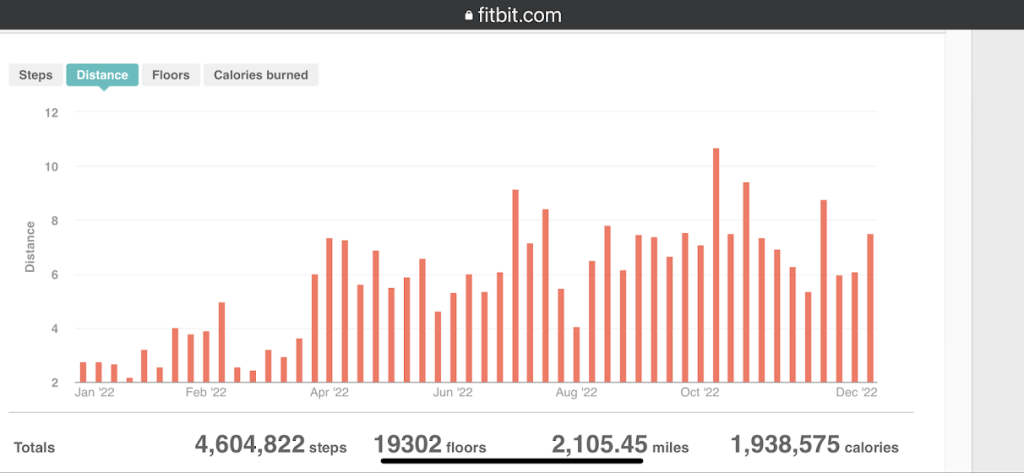
As I had been walking earlier an angry song came on my phone and I reached within to connect with what has felt like an endless pit of anger for over a year. When everything else was lost, I could dip into that pit to find fuel to walk another mile, punch the bag for one more set, or even to just stew while driving. It has been so constant and a companion for many miles as I have walked. That deep sense of grief, anger, and sadness has been there for the 1,915 miles that I have walked this year (according to Fitbit). The anger has been as constant as hunger, thirst, and soreness as I have walked on and on.

I had reached in and nothing was there. The bucket hit the bottom and I had been worried that I was broken. What does it mean when you reach in to find the angry part of yourself and find nothing is there? Does it mean that you’re doomed to be unfeeling and lost?

I started crying as the words to the song to Brave came on because I recognized something in them: “When the cold wind is a-calling and the sky is clear and bright, misty mountains sing and beckon: lead me out into the light.” Do you know that there’s a growth on a tree on the Catharine Valley Trail that looks like a snail?

There’s also a ton of damage to the ash trees, likely from a combination of ash borers and woodpeckers. The sight is truly tragic, but also beautiful when you are walking around the woods and suddenly bleach white branches pop out of the woods that are so brown!

Do you know that there are green things that are neither evergreen nor willing to turn brown? Do you know that there are these weird bamboo looking things popping out of the ground in the middle of December? Do you know that the moon is almost full and it can look like fingers of bare branches are reaching into the sky to caress the moon as it rises? Do you know how amazing things are out there in the woods today on the edge of winter? Even as the sun continues to fade for a few more days, do you know how beautiful things are our there?

I cried because I reached down within me to find anger and only found the bottom of a well that hasn’t been empty for a while. I cried because I realized that I understood the lyrics to that song at last. In the midst of the cold wind, I heard the beckoning call to open my eyes and see what God had created. Legs that have walked miles have grown strong enough, skin that has known sun and darkness is thick enough, and even my own sense of fortitude has grown elastic enough that I can take time, even in grief, and see beautifully amazing things.

The song has a second verse that goes ” Where dark woods hide secret and mountains are fierce and bold, deep waters hold reflections of times lost long ago. I will hear their every story: take hold of my own dream. Be as strong as the seas are stormy and proud as an eagle’s scream.”

I’m filled with grief and sorrow, but there’s another part of me that has grown as strong as the seas are stormy. I’m frustrated I need the court’s help to even see my children, but I know what it means to walk miles and see the beauty in the depths of the woods with the endurance to decide that 6 miles into a hike is exactly the time to go wandering down a hill to get a closer look at that bleached white tree down the hill.

Even now, I want to cry because there actually is pride in the person I am becoming. I reached down for anger and found nothing, but I opened my ears and heard a reminder that I am becoming the person I once dreamed of being. Mile by mile, step by step, I am being reforged into someone that my children and I can look upon with joy and pride. I don’t have to be sorrowful today, for I am becoming exactly the kind of person I would have been proud to be when I was young.

This isn’t the road I would have chosen, but it is the road I have, and I am walking it well.

A Strange Advent Feeling

I don’t really have a Christmas tree desire this year. I love a good Christmas tree and have a lot of fond memories over the years, but this year I am probably not going to put up a tree. There’s a wreath by my garage door and I’ve got my ugly Christmas sweater game on point. No tree though.

Trees are for presents. Trees are for gifts. Trees are for family and I’m not the kind of pet owner who will put presents under the tree for my dog or the fish. I’m getting presents for others, but there’s really no need for a tree.

Instead, this is the year of the Advent Wreath. I’ve put together a really cheesy electric wreath from an inexpensive five candle window candelabra. Three dollars of cheap paint and putting the “wreath” on a smart switch: we’re good to go!

As you can see, cheap is the name of the game, but the other side of things is that it is meaningful to me. Each time I have seen the wreath since I have put it up, I have begun singing the Advent Song from The Faith We Sing: “Candle, candle, burning bright: shining in the cold winter’s night. Candle, candle, burning bright: fill our hearts with Christmas light.”

I don’t need presents. but I do need light. I don’t need wrapping paper, but I do need to be wrapped in hope. I don’t need a continual reminder that there’s nobody here, but I do need to see the light growing week after week.

What do I want for Christmas? Hope, love, joy, and peace. Burn candles, burn.

The Stumbling Block

I wrote this poem while thinking of the passage from Matthew 18:6-9, which says that it is better to be drown in the sea than to cause someone else to stumble. I am trying to come to a place of peace with the frustration which is continuing to take root in me despite my best efforts. I am working as hard as I can to burn off the anger through diet, exercise, and even spiritual disciplines, but there are times when things are simply wrong and more than an irritation. There are times when people do real harm to you and that pain becomes a thorn in the side that will not go away.

Even if there may be divine punishment for the person who causes another person to stumble, it still hurts deeply to be the person with broken toes, scraped knees, and a noticeable limp. I don’t doubt for a second that all that is happening is noticed and noted in the Book of Life and any equivalent book with opposite purpose. It would still be nice if there could be some relief.

Broken heart longs for them
The hugs, smiles, and dumb jokes
as joy is hard to coax
when you're alone

Prayers flow as I walk
Burn the anger with fat.
I look more and more flat
but rage lives on.

Walking, praying, fasting:
I curse this stumbling block
as on the Door I knock
and ask for help.

Even so, upon further reflection, a better passage to consider might be Romans 14:12-19 which is far more balanced in perspective. What I mean by balanced is that Paul does a decent job in Romans in balancing the concerns. Yes, it is wrong when someone else causes us harm, but Paul writes in a way that invites people to look inside before looking at one’s neighbor. It is not right for your neighbor to harm you, but first consider whether or not you will be ashamed when you give your account to God about how you lived your life and what you did, which is different from what your neighbor did to you.

So, how do I live with this pain in my side and sorrow in my heart? I see wisdom in Paul’s words in 2nd Corinthians 12:7-12. I have asked time and time again for this thorn to be removed, but it hasn’t budged. I guess that God’s strength is shown in my weakness, so I’ll keep trudging down the road while remembering the simple truth from a few verses earlier in Romans 14:7-10:

“We don’t live for ourselves and we don’t die for ourselves. If we live, we live for the Lord, and if we die, we die for the Lord. Therefore, whether we live or die, we belong to God. This is why Christ died and lived: so that he might be Lord of both the dead and the living. But why do you judge your brother or sister? Or why do you look down on your brother or sister? We all will stand in front of the judgment seat of God”

Romans 14:7-10, Common English Bible

This life I live with thorn-gifted pain is the life that I have to live. My “neighbor” may look at me with disdain or judgment, keep me from my children in defiance of the court order, and teach them that it is dangerous to speak with me (since I might call Child Protective Services if something goes wrong and the kids are in danger). Even with that sorrow and pain, I am called to live, so I will live. When the day of my death comes, even if I am alone I will die in the Lord with hope in my heart that:

“We have access by faith into this grace in which we stand through him, and we boast in the hope of God’s glory. But not only that! We even take pride in our problems, because we know that trouble produces endurance, endurance produces character, and character produces hope. This hope doesn’t put us to shame, because the love of God has been poured out in our hearts through the Holy Spirit, who has been given to us.”

Romans 5:2-5, Common English Bible

Thorn in my side or not, I will live in hope and I shall not be ashamed of the Lord. I will seek hope all of my days, even with broken bones in my soul, for God loves me and will make all of this right one day. Even with broken places in my soul, I am still fearfully and wonderfully made and God loves me. I am God’s child and I trust that my Parent will hold me as close as I wish I could hold my children.